China · Guangdong · rural heritage and the diaspora
Choosing Which Villages and Diaolou Towers to Visit in Kaiping
Kaiping’s diaolou are not isolated scenery: they are fortified homes, farming villages and a material record of migration. Choosing the right cluster matters more than trying to squeeze them all into a few hours.
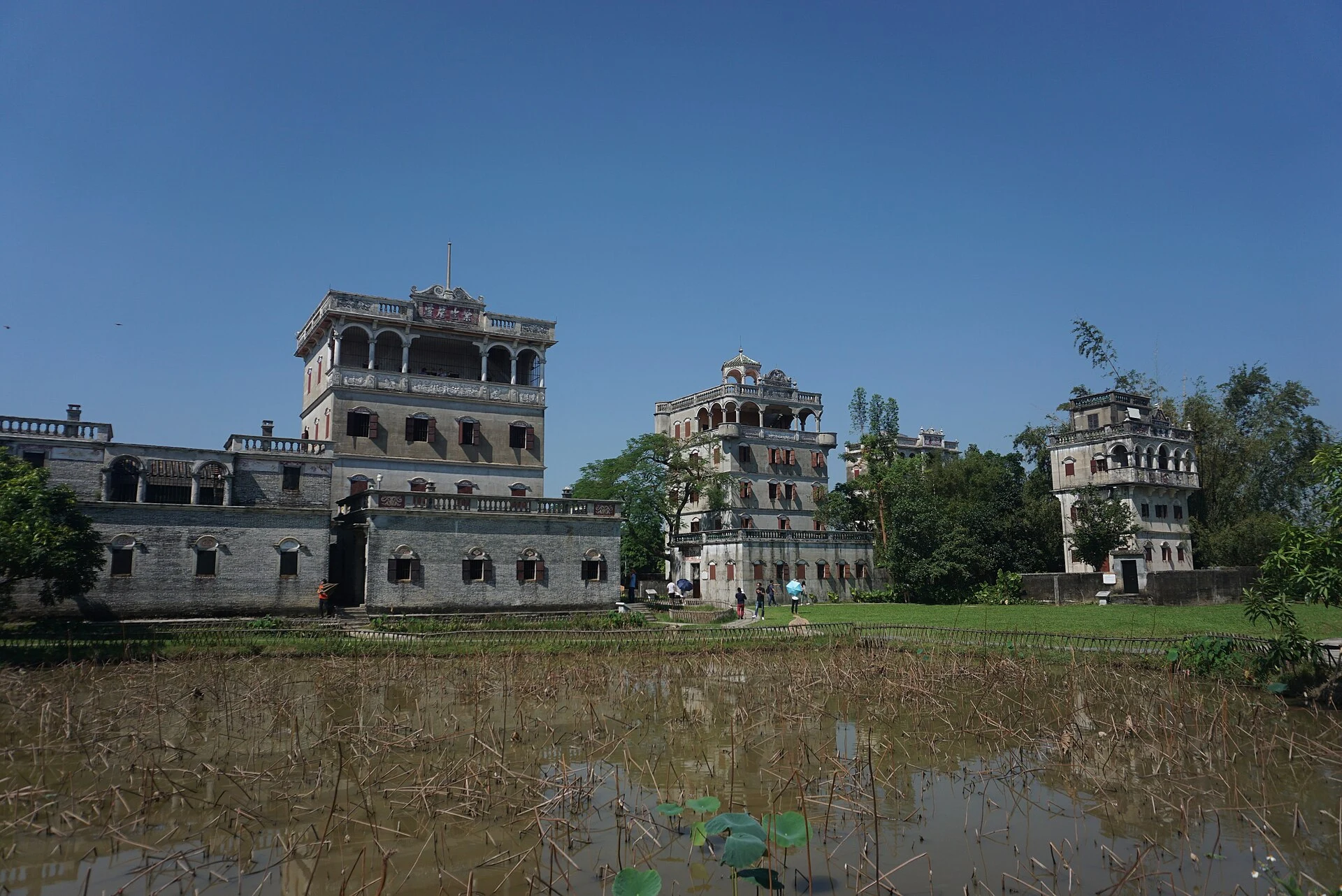
A few hours from the major cities of the Pearl River Delta, Kaiping requires you to change the usual question from “which tower is the prettiest?” The UNESCO-listed site comprises four distinct areas—Zili, Majianglong, Jinjiangli and Sanmenli—where diaolou are understood alongside homes, crops, waterways and migration stories from the late 19th and early 20th centuries. They are neither imported castles nor simple “Western” façades: they combine local solutions with architectural references brought back by Kaiping’s emigrant communities.
Listen to China
A documented soundscape that complements this guide to China. Kaiping’s diaolou are not isolated scenery: they are fortified homes, farming villages and a material record of migration. Choosing the right cluster matters more than trying to squeeze them all into a few hours.
Audio by CarlosCarty · Openverse · CC BY 4.0 · Duration: 00:41
First: decide which story you want to be able to read
Diaolou served different purposes: collective refuge, fortified residence and lookout post. That diversity explains why a visit focused only on climbing a tower or photographing a dome misses the essentials: the relationship between insecurity, flooding, wealth sent home from abroad and village life. UNESCO protects the architecture and its surrounding rural landscape, not isolated buildings.
For that reason, if you have only one day, choose one main cluster and leave time to walk slowly. Forcing in additional sites often turns a landscape of scattered villages into a succession of car parks and entrances.
Choose Zili if it is your first visit and you want to compare towers
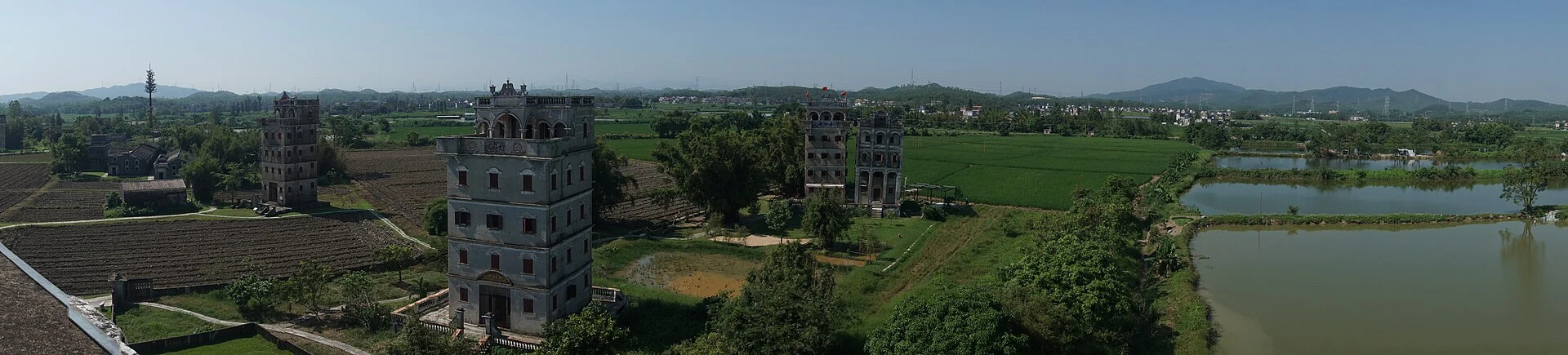
Zili (Zilicun) is the clearest choice for visitors arriving without much context: the towers rise among rice paddies, ponds and homes, making it easy to observe defence, residence and the productive landscape at the same time. The local administration identifies the cluster as one of the central elements of Kaiping’s cultural area; another public provincial source notes that many of its towers were built in the 1920s and 1930s in response both to threats of violence and to flooding.
The trade-off is obvious: it is also the cluster most closely associated with promotional images and film shoots. If you go, do not reduce it to finding a cinematic location. Look at the narrow openings, the lookout features and the way the low houses, water and fields give meaning to the towers’ height.
Choose Majianglong if you prefer a village to a monument
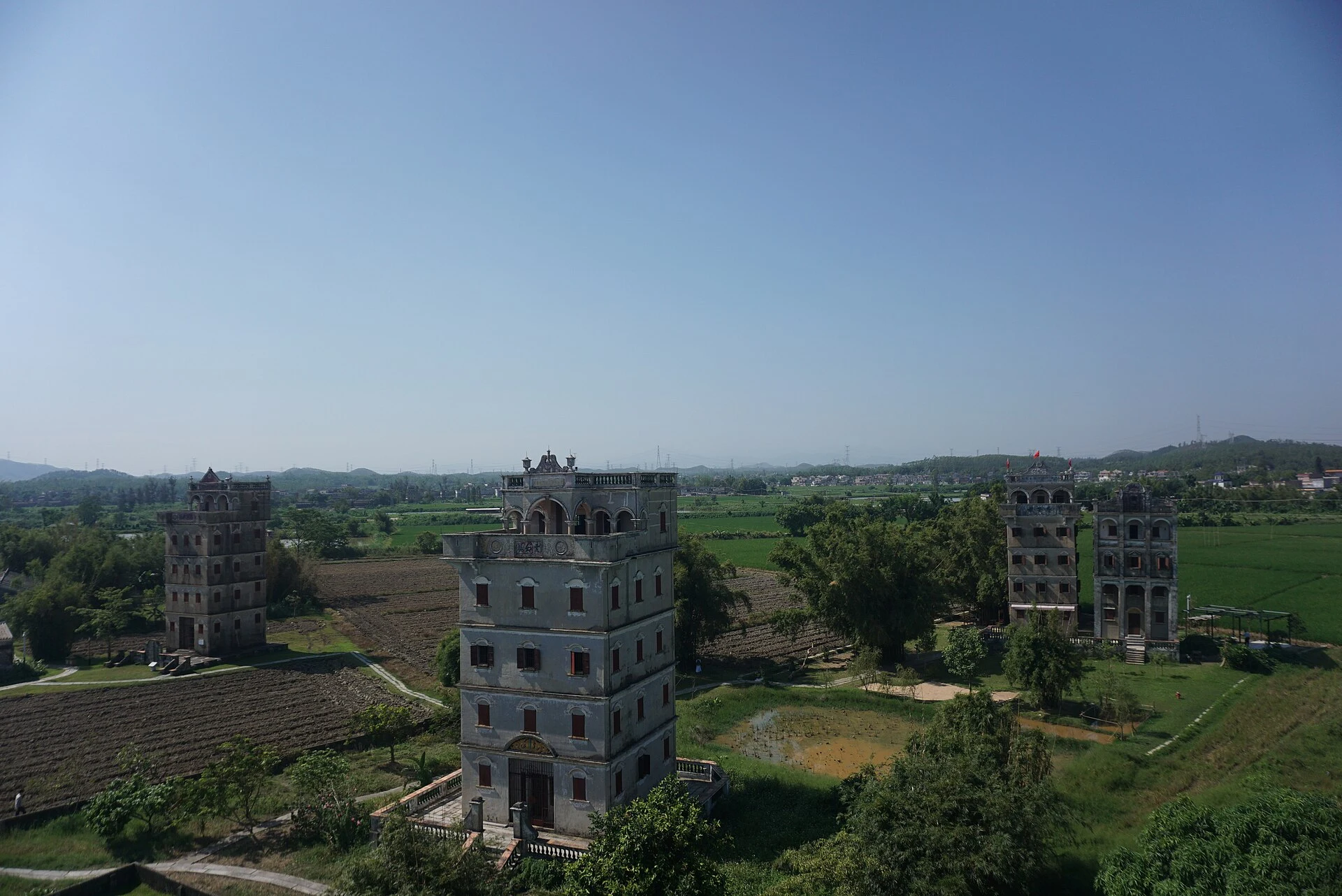
Majianglong works best for visitors who want to explore a village network rather than collect interiors. Its diaolou and villas are scattered among bamboo and several settlements; the provincial tourism-resource inventory records five natural villages and 176 homes in the cluster.
It is an especially good choice if you have time to walk without an immediate photographic objective. The trade-off is that its interest depends less on a single spectacular tower and more on paying attention to distances, paths, vegetation and inhabited homes. Respect entrances, courtyards, farmland and residents’ privacy: being in a heritage site does not turn a village into a setting available for intrusive portraits.
Save Jinjiangli for a vertical reading; Sanmenli for the defensive origins
Jinjiangli suits visitors who want to focus on a large-scale tower and on the ornamental vocabulary of emigration: municipal cultural information highlights Ruishi Lou, a nine-storey tower, and its combination of Greek-influenced columns with Lingnan-style grey decoration. It is a focused stop, not necessarily the most complete way to understand the village landscape.
Sanmenli, by contrast, makes sense as a historical counterpoint. Yinglong Lou, located there, is presented by the municipal administration as Kaiping’s oldest surviving diaolou, more than four centuries old. Choose this visit if you want to see an earlier, more restrained form of defensive architecture; combine it with Zili or Majianglong to perceive the later evolution rather than treating it as a compulsory stop on its own.
A realistic strategy: one base, two clusters and your journeys planned in advance
For a first short stay, a sensible combination is Zili + Majianglong: the first makes architectural comparison easier, while the second shifts the focus back to the village and bamboo. Jinjiangli adds value if you are specifically looking for Ruishi Lou; Sanmenli if you want to complete the chronology. The municipal tourism plan itself presents these places as a territorial network, not as adjoining attractions.
Do not assume that you can comfortably connect them on foot or that useful public transport will be available for every leg. Before setting out, confirm the day’s access arrangements, local transport, last admission times, partial closures, reservations and fees with the official operator or your accommodation; these details change and should not be decided using old guides. If you hire a car with a driver, agree on waiting times and pick-up points, not just a list of names.
How to visit without erasing what the site protects
Kaiping’s beauty comes from the coexistence of towers, homes, paths, fields and migration memory. Do not fly drones without permission, cross raised fields for a photograph or treat interiors as props. UNESCO considers the site’s authenticity to include both the towers and the villages and agricultural landscape around them.
For visitors with reduced mobility, prams or difficulty climbing stairs, plan a partial visit: rural paths, thresholds and tower floors may involve uneven paving and changes in level. Ask the site you choose for specific accessibility information before buying tickets. A short, well-prepared visit is preferable to trying to cover four clusters at a pace incompatible with the place.
References consulted during editorial review. Times, requirements and advisories may change: always confirm with the official source.
- https://whc.unesco.org/en/list/1112whc.unesco.org
- https://whc.unesco.org/en/tentativelists/5815whc.unesco.org
- https://whc.unesco.org/en/statesparties/cnwhc.unesco.org
- https://whc.unesco.org/en/list/1112/whc.unesco.org
- https://whc.unesco.org/en/list/1112/indicators/whc.unesco.org
- https://whc.unesco.org/en/documents/104657whc.unesco.org
- https://whc.unesco.org/uploads/nominations/1112.pdfwhc.unesco.org
- https://whc.unesco.org/document/104657whc.unesco.org
- ChinaWikidata · CC0 1.0 · Wikidata · Q29520
- ChinaWorld Countries — mledoze · ODbL 1.0 · World countries dataset by mledoze and contributors · ODbL 1.0
- ChinaWorld Bank Open Data · CC BY 4.0 · World Bank
- ChinaDBpedia · CC BY-SA 3.0 · DBpedia