Mongolia · Orkhon Cultural Valley
Kharkhorin brings together a museum, ruins and Erdene Zuu in the Orkhon Valley
A well-planned visit to Kharkhorin reveals the medieval capital, the living monastery and the pastoral landscape that connects them.
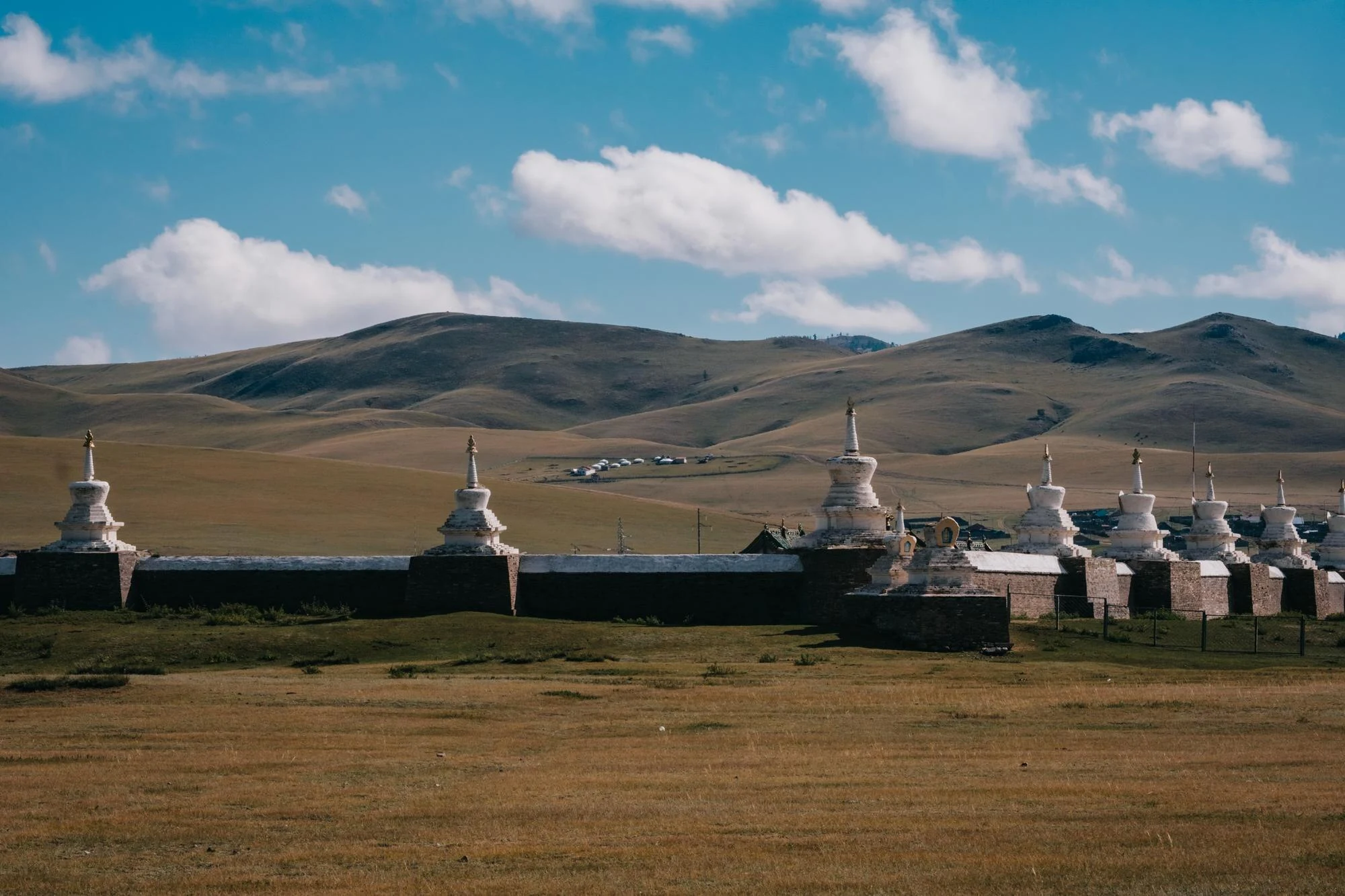
Kharkhorin works best when you are not looking for an intact medieval city. The former Kharakhorum is now understood through modest archaeological remains, museum pieces and a monastery whose religious life gives the site another dimension. In the Orkhon Valley, the key is to read the whole area as a living cultural landscape: empires, pastoral mobility, Buddhism and conservation share the same territory.
The itinerary fits comfortably into a relaxed day once you are staying in Kharkhorin, although spending the night avoids turning it into a rushed stop from Ulaanbaatar. To explore other monuments and landscapes in the Orkhon basin, plan on arranging local transport: rural distances completely change the pace of a visit.
Start at the Kharakhorum Museum
The Kharakhorum Museum is the best first stop because it gives names and substance to an archaeological site that requires imagination when seen outdoors. Its permanent and temporary exhibitions bring together finds and context about the Mongolian capital, exchange networks and the cultures that occupied the valley before and after the empire of Chinggis Khaan.
Spend time with the archaeological objects before heading to the ruins: it will then be easier to understand how a city of international importance can survive today as traces in the ground, low walls and excavated areas. Do not expect a monumental reconstruction; the value lies in relating the objects to the open scale of the steppe and to the successive capitals that occupied the basin.
The museum’s opening hours change between the warm and cold seasons. Check the current schedule directly with the museum before planning your day, especially if you are travelling between October and March.
Read the ruins as a plan, not as a stage set
From the museum, continue to the archaeological area of ancient Kharakhorum, capital of the Mongol Empire in the thirteenth century. The visit makes more sense when you think of a city of administration, craftsmanship, trade and diplomacy rather than a collection of preserved buildings. Research documents a diverse population and contacts reaching different regions of Eurasia.
Walk slowly, stay on the indicated routes and avoid climbing on structures or excavation edges. Here, the experience depends on interpretation rather than on accumulating photographs: the terrain lets you perceive the extent of the former city and the relationship between its setting, the Orkhon River and the steppe routes.
There are public plans for urban transformation and new facilities in the Kharkhorin area. For that reason, check construction work, access and signage with the local administration before setting out; they may affect the immediate route without changing the site’s historical importance.
Finish at Erdene Zuu with another idea of continuity
The contrast with Erdene Zuu is essential. Founded in 1586 beside the ruins of the imperial capital, the complex shifts the visit from archaeology towards monastic architecture and the continuity of Mongolian Buddhism. Its walls, stupas and temples invite you to observe both the layout of the complex and its present religious uses.
Enter as a visitor, not as a spectator at a set: dress respectfully, speak quietly in worship spaces, ask before photographing people or ceremonies and follow any instructions about entering interiors. The monastery suffered political repression in the 1930s and was later protected and restored; that history explains why conservation, museum functions and religious practice coexist here.
The proximity of the museum and monastery makes a local walking route possible, but it does not turn the entire Orkhon Valley into a walkable destination: outside Kharkhorin, heritage sites are widely dispersed.
Decide whether an extra night genuinely adds value
A single day is enough for the museum, ruins and Erdene Zuu if you arrive early and accept a concentrated pace. Add a night if you want time to take in the valley without rushing, talk with local accommodation providers and drivers about road conditions, or continue to other places within the heritage inscription, such as Shankh or the Tuvkhun hermitage.
The second option requires rural logistics and realistic expectations: not every point is connected by public transport that is useful for independent visits, and some journeys depend on track conditions, the season and the vehicle. Do not make bookings or set a rigid itinerary without confirming these details locally.
Travelling with a lighter impact here means not driving across country, leaving no waste on the steppe and not presenting herding families as an attraction. Pastoralism is not scenery: it is part of the territorial continuity that gives the valley its meaning.
References for checking current information
- UNESCO World Heritage Centre: scope of the Orkhon Valley Cultural Landscape, protected components and historical context.
- Administration of the Orkhon Valley Cultural Landscape: list of sites, museum and local routes; useful for confirming access and services on the ground.
- Kharakhorum Museum and the local heritage administration: exhibitions, location and seasonal opening hours; confirm any changes directly before travelling.
- Kharkhorin local government: context on Erdene Zuu, local facilities and possible changes resulting from urban projects.
References consulted during editorial review. Times, requirements and advisories may change: always confirm with the official source.
- https://whc.unesco.org/en/list/1081whc.unesco.org
- https://whc.unesco.org/uploads/nominations/1081rev.pdfwhc.unesco.org
- https://orkhonvalley.gov.mn/Museums/2orkhonvalley.gov.mn
- https://ncch.gov.mn/museum/20ncch.gov.mn
- https://whc.unesco.org/fr/documents/209476/whc.unesco.org
- https://montsame.mn/en/read/260754montsame.mn
- https://whc.unesco.org/?cid=278&criteria=mongolia&l=en&maxrows=180whc.unesco.org
- https://whc.unesco.org/en/list/1440whc.unesco.org
- MongoliaWikidata · CC0 1.0 · Wikidata · Q711
- MongoliaWikidata · CC0 1.0 · Wikidata · Q5651926
- MongoliaWikidata · CC0 1.0 · Wikidata · Q3875368
- MongoliaWorld Countries — mledoze · ODbL 1.0 · World countries dataset by mledoze and contributors · ODbL 1.0
- MongoliaWorld Bank Open Data · CC BY 4.0 · World Bank
- MongoliaDBpedia · CC BY-SA 3.0 · DBpedia