Eastern Serbia · Danube · heritage and landscape
Golubac and Lepenski Vir: Understanding the Serbian Danube
A journey through the gateway to Đerdap combining a medieval fortress, a prehistoric settlement and realistic decisions about time, terrain and transport.
Conditions described in the guide: confirm current requirements and access with the official source before travelling.
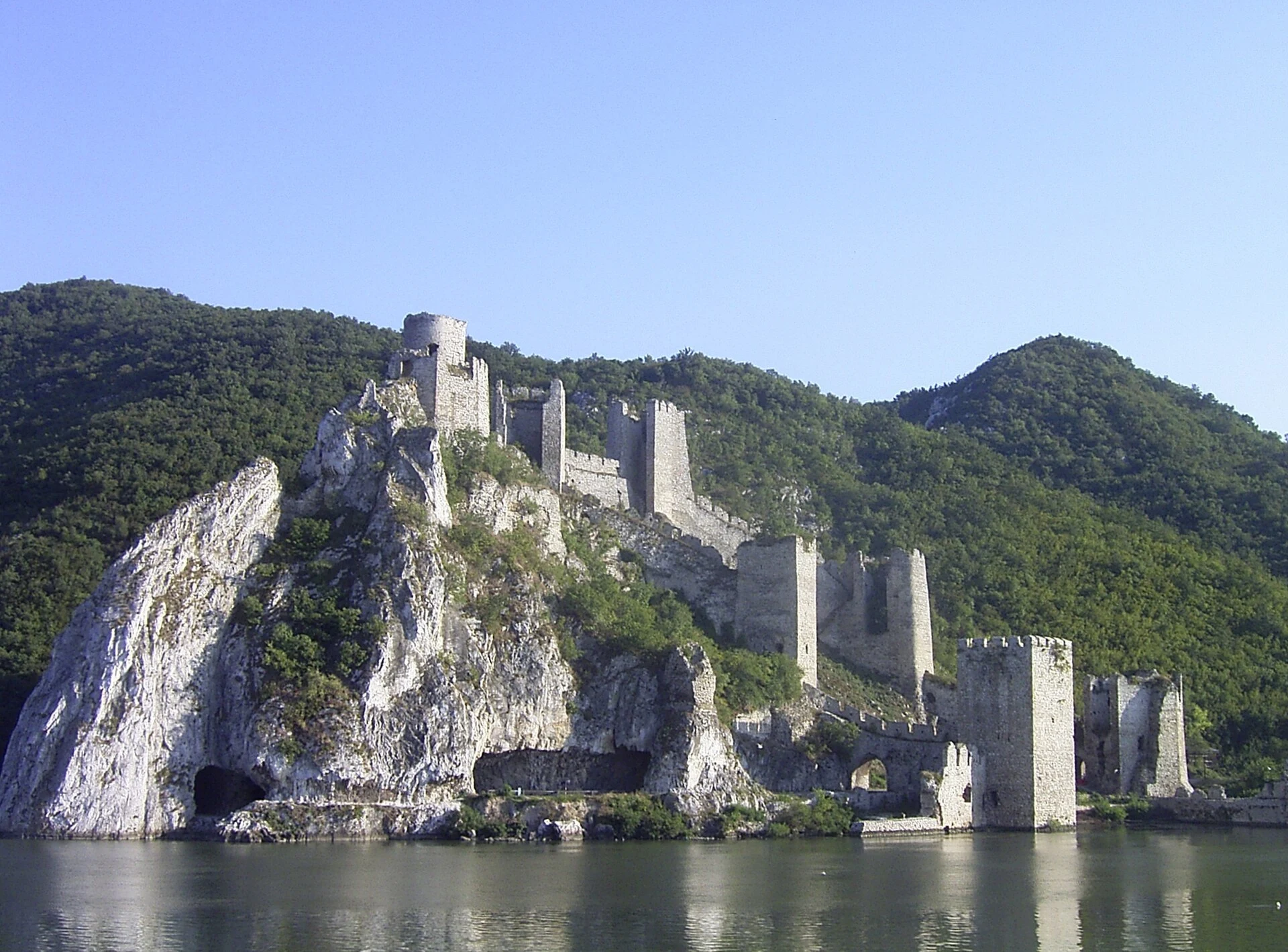
Golubac and Lepenski Vir are not interchangeable stops along the Danube: they offer two very different scales of time. The fortress is explored as vertical defensive architecture; the archaeological museum asks you to pause and consider the relationship between settlement, river and landscape. The most practical choice is to allow a full day with your own vehicle or an organised transfer, or to stay in the area if you want to add an authorised walk inside the park.
Listen to Serbia
A documented soundscape that complements this guide to Serbia. A journey through the gateway to Đerdap combining a medieval fortress, a prehistoric settlement and realistic decisions about time, terrain and transport.
Audio by Tomlija · Openverse · CC BY 3.0 · Duration: 02:17
A fortress to choose according to the terrain
Golubac occupies a strategic narrowing at the entrance to the Đerdap gorge. Its nine towers, walls and palace explain why controlling this point meant watching both the river and the land routes. Do not imagine a uniform visit: the Green Zone contains the basic route, visitor centre and interpretation rooms; it is the sensible option for travellers short on time, families with children or people with limited mobility.
The upper zones radically change the experience. The Blue Zone includes towers reached by a moderately demanding route; the Red and Black routes require an assigned escort and involve greater difficulty, exposure and capacity restrictions. These are routes for adults who are confident on stairs, uneven ground and at heights, not an extra to pursue simply to complete the visit. Wheelchair access is limited to the palace, so adjust your expectations before setting out.
Upper access, ticket sales and availability may change because of weather, visitor capacity or operational conditions. Check the current arrangements directly with the fortress, especially if you are travelling in a group or if the ascent is the main reason for your visit.
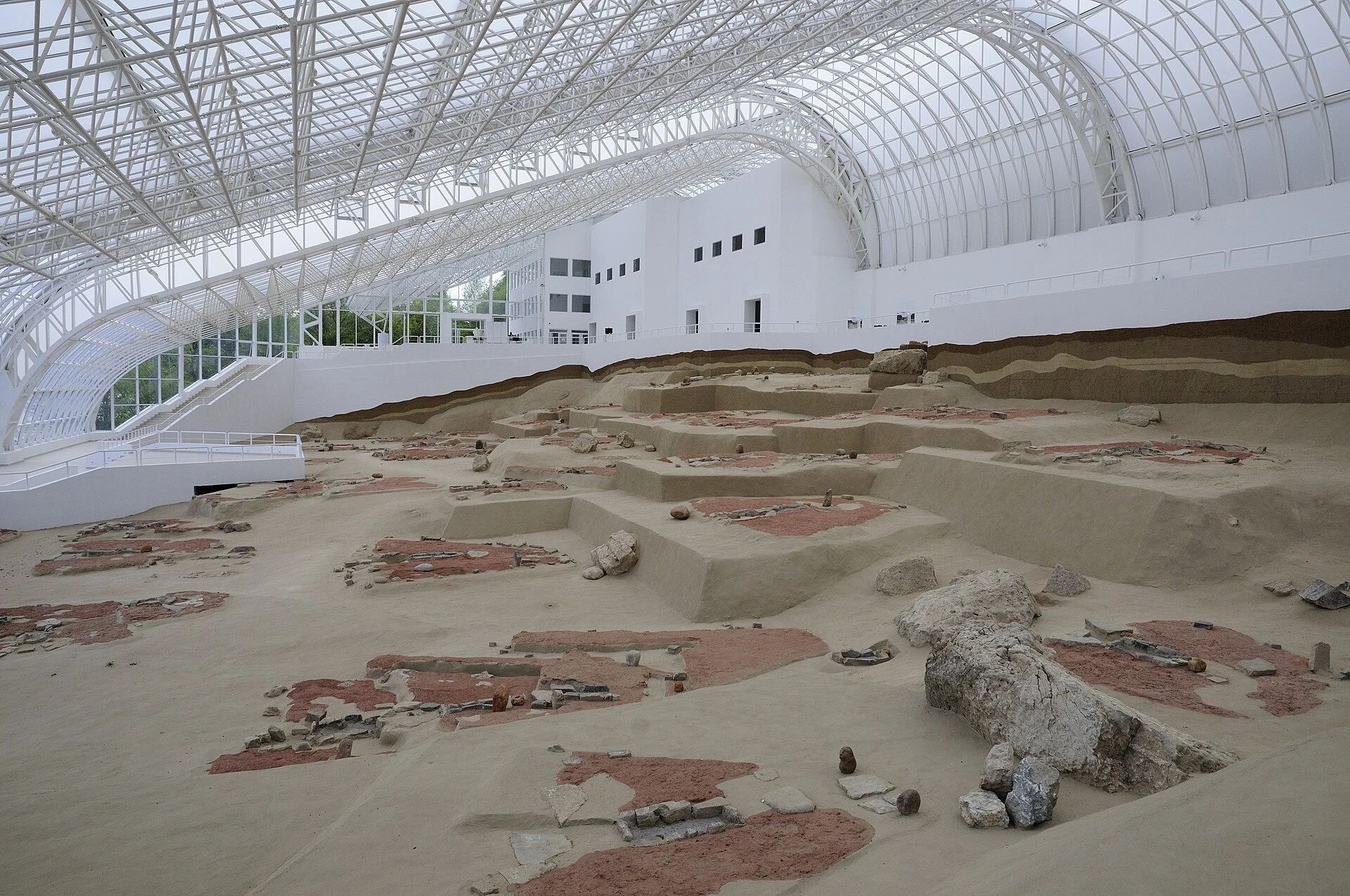
Lepenski Vir changes the question: from monument to settlement
On the banks of the Danube, near Donji Milanovac, Lepenski Vir preserves the remains of a Mesolithic and Early Neolithic community beneath a large protective roof. The interest lies not in looking for a spectacular open-air ruin, but in observing the pattern of trapezoidal dwellings, hearths and stone sculptures within a space that allows you to read the site as a whole.
Allow time for the models, panels and sculptures: they help explain that the river was not merely a backdrop, but a material condition of everyday life, rituals and the organisation of the settlement. This stop works particularly well after Golubac: first you see a medieval control point on the Danube; afterwards, a much older way of inhabiting it.
The museum accepts groups and school visits by prior arrangement. For an individual visit, check the calendar, the language of available interpretation and any temporary changes to access in advance.
The order that makes the day workable
If you have only one day, start at Golubac and continue downstream to Lepenski Vir. This places the most vertical and physically selective part of the day first, while you can still decide whether the Green Zone is enough or whether conditions allow an upper route. Afterwards, the museum offers a slower, sheltered pace.
For a weekend break, stay in Golubac or Donji Milanovac. The extra flexibility allows the fortress and Lepenski Vir not to compete with a short walk or time by the river. Do not base your plan on improvised connections: both places are reached by the Danube road, and Lepenski Vir is also listed on EuroVelo 6 and among the boat-access points, but the exact combination depends on how you travel and on services that must be confirmed.
Avoid turning the journey into a race between landmarks. Trajan’s Tablet, viewpoints and other park sites require additional logistics; adding them only makes sense if you have already planned transport, timings and the relevant visiting conditions.
Walking in Đerdap requires permission and restraint
Đerdap National Park is not a park where you can leave the itinerary at will. Apart from the Zlatno jezero educational trail, the maintained trails marked by the administration fall under a protection regime involving organised, controlled visits and mandatory accompaniment. This includes routes such as Mali and Veliki Štrbac, Ploče and the Boljetin canyon.
The responsible alternative is not to give up on the landscape, but to choose a walk that is formally available and request it in advance. Stay on marked paths, take your waste back with you, avoid disturbing the flora and do not harass wildlife. Silence here is not a tourist aesthetic: it helps reduce pressure on a protected area.
Do not confuse a visit to Golubac with an independent excursion through the park. The first can be a half-day cultural visit; the second requires specific planning, confirmation of an escort and an honest assessment of your physical condition.
Which experience suits you
Choose this route if you want to understand the Danube as a frontier, corridor and place of settlement, and if you accept that its reward lies in moving between scales: tower, wall, riverbank, prehistoric dwelling and gorge. It is a good choice for a trip through Serbia by car, on a well-prepared long-distance bicycle or with a hired driver.
Choose Golubac alone if you want a brief cultural visit or if uneven terrain limits your day. Prioritise Lepenski Vir if you want archaeology interpreted at a calm pace and prefer to avoid climbs. Combine both when you can devote the full day and accept that travel time is part of the experience, not empty space between attractions.
You do not need to climb the highest tower or string together every viewpoint for the journey to be meaningful. A well-paced visit leaves room to look at the river and understand why these shores have been, for millennia, places of passage and permanence.
Check before travelling
Opening hours, prices, weather conditions, visitor capacity and rules for each fortress zone: consult the official information from Golubac Fortress.
Access, group schedule and visitor information for the Lepenski Vir Museum: consult the National Museum of Serbia.
Permits, mandatory accompaniment on protected trails and rules of conduct: consult the administration of Đerdap National Park.
Historical context and local guidance in Golubac: consult the Golubac Tourist Organisation.
References consulted during editorial review. Times, requirements and advisories may change: always confirm with the official source.
- https://npdjerdap.rs/en/service-information/npdjerdap.rs
- https://www.serbia.travel/en/stories-items/serbia-without-filters-by-bike-and-on-foot/www.serbia.travel
- https://www.serbia.travel/sr-lat/nacionalni-park-djerdap/www.serbia.travel
- https://www.serbia.travel/wp-content/uploads/2025/05/MOJ-DUNAV-eng.pdfwww.serbia.travel
- https://npdjerdap.rs/servisne-informacije/?pismo=latnpdjerdap.rs
- https://npdjerdap.rs/servisne-informacije/npdjerdap.rs
- https://www.serbia.travel/tr/stories-items/filtresiz-sirbistan-bisikletle-ve-yuruyerek/www.serbia.travel
- https://www.serbia.travel/it/stories-items/serbia-senza-filtri-in-bicicletta-e-a-piedi/www.serbia.travel
- SerbiaWikidata · CC0 1.0 · Wikidata · Q403
- SerbiaWikidata · CC0 1.0 · Wikidata · Q37438143
- SerbiaWikidata · CC0 1.0 · Wikidata · Q99292310
- SerbiaWorld Countries — mledoze · ODbL 1.0 · World countries dataset by mledoze and contributors · ODbL 1.0
- SerbiaWorld Bank Open Data · CC BY 4.0 · World Bank
- SerbiaDBpedia · CC BY-SA 3.0 · DBpedia