Exploring Bagerhat’s Mosques and Ponds at Your Own Pace
Historic Khalifatabad is not a single mosque or a site that can be covered on foot in one sweep. This guide helps you decide which part of Bagerhat to prioritise, how to connect separate sites and how to visit a living religious landscape without reducing it to a checklist of domes.
The popular name Sixty Dome Mosque is a poor guide if it leads you to think that Bagerhat comes down to one building. The Historic Mosque City of Bagerhat, inscribed by UNESCO in 1985, preserves mosques, tombs, ponds, roads and other elements of former Khalifatabad, a fifteenth-century city associated with Khan Jahan. Its monuments do not form a compact monumental square: UNESCO itself distinguishes two principal areas, separated from one another, while the local archaeological inventory brings together remains scattered across the wider territory.
Visual context for BangladeshContext video selected for this guide; it does not by itself identify every place mentioned.Video by Somogro Bangladesh · Pexels · Pexels License · Duration: 00:18
♫
Listen to Bangladesh
A documented soundscape that complements this guide to Bangladesh. Historic Khalifatabad is not a single mosque or a site that can be covered on foot in one sweep. This guide helps you decide which part of Bagerhat to prioritise, how to connect separate sites and how to visit a living religious landscape without reducing it to a checklist of domes.
Cultural or ambient audio selected as context; it does not necessarily represent every place mentioned. Audio by arundasstp · Openverse · CC BY 4.0 · Duration: 00:3701
First, get the scale right: this is not about “seeing mosques”
The visit makes more sense when Bagerhat is understood as settlement infrastructure: brick architecture, stored water, roads and religious uses that continue in the present. UNESCO describes the property as a medieval city rather than an isolated monument; it also stresses that several structures still serve religious and community purposes. That is the practical reason not to plan a race between stops: the value lies as much in the relationships between buildings and ponds as in their interiors.
Nor should you take the name Shait Gumbad—the “Sixty Dome Mosque”—as a literal count. The regional Archaeology Department’s listing records 81 vaulted roof structures, including seven chauchala roofs in the central row. The nickname is useful for orientation, but it does not explain the building.
Choice 1: Shait Gumbad, the museum and Singair if you have only half a day
Choose this cluster if it is your first visit, you have limited time or you want to understand the scale of the construction before travelling farther. Shait Gumbad contains the great hypostyle space; the Bagerhat Museum is in the same compound and brings together archaeological material from the area, placing the architecture within a broader history. A short distance away is the small, single-domed Singair Mosque: seeing it after the larger building offers a more illuminating comparison than adding numerous stops without context.
This is the most efficient option, not an “incomplete version” of Bagerhat. Stop here if your main interest is architecture and the museum, or if travelling between areas would force you to rush a visit that calls for slow observation.
Choice 2: Khan Jahan’s tomb and the Nine-Domed Mosque if you are interested in a landscape of devotion and water
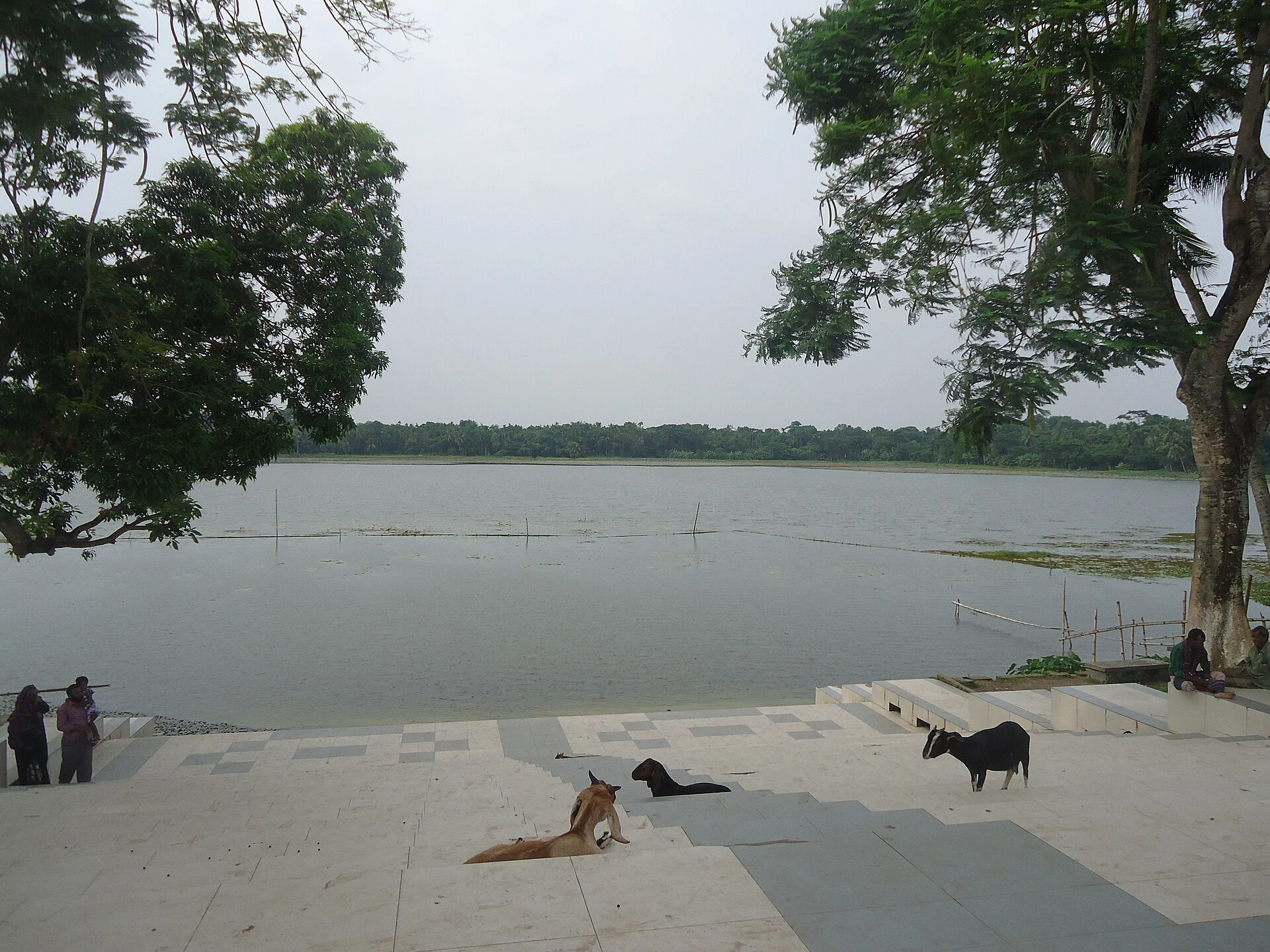
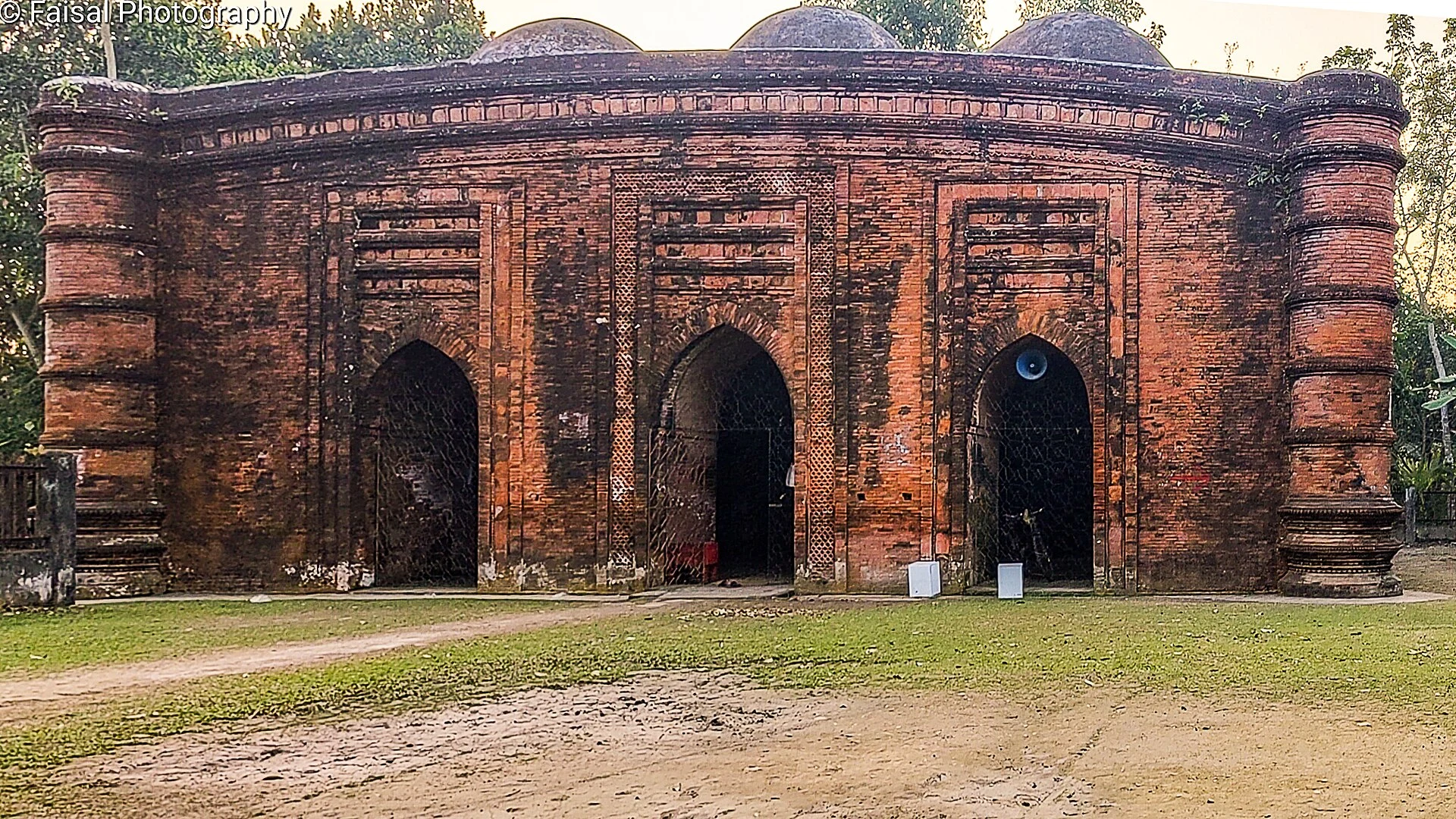
Set aside a second part of the day for Khan Jahan’s tomb and the area around Khan Jahan Dighi, where the Nine-Domed Mosque stands. Here the question changes: less “How many buildings can I photograph?” and more “How do memory, pilgrimage, pond and architecture relate to one another?” The tomb remains a place of devotion, while the nine-domed mosque stands beside the pond and retains its interior organisation in nine domed bays.
Do not treat this leg as a decorative extension of Shait Gumbad. Dress modestly, make room for people who have come to pray or visit the shrine, and ask permission before photographing anyone. If a religious celebration or a large local gathering is under way, accept that your route may need to change: in a living site, the priority is neither the photograph nor speed.
04
Choice 3: the scattered mosques only if you have a full day and arranged transport
Bibi Begni, Chunakhola, Reza Khoda, Ranvijoypur and other remains show that Bagerhat was an extensive city, not an enclosed compound. They are a choice for visitors with time, confirmed local transport and a preference for unhurried comparison over the spectacle of a single landmark. The regional Archaeology Office lists these monuments among the surviving remains and notes that they are spread across a broad area; UNESCO also identifies western and eastern groups within the heritage property.
The price of this choice is logistical: transfers take time away from looking closely and can turn the day into a sequence of arrivals. If you have only one day, prioritise two clusters—Shait Gumbad/museum/Singair and the tomb/Nine-Domed Mosque—before adding a third. Do not try to “complete” Bagerhat: much of the historic city no longer survives, and the meaning of the place does not depend on collecting every name.
05
How to get around without promising yourself a route that does not exist
The district administration indicates connections from Bagerhat bus station to Shait Gumbad, Khan Jahan’s tomb, Singair and the Nine-Domed Mosque by local transport, including autorickshaws, e-rickshaws and other vehicles. Use this as access guidance, not as a timetable: arrange a vehicle for the journeys between clusters if you want to link several areas, and confirm locally the availability, duration and pick-up point.
For visitors with reduced mobility, a pushchair or difficulty coping with frequent transfers, the most sensible choice is to concentrate on the Shait Gumbad compound and museum, then consider one additional transfer. Do not assume universal accessibility between the scattered monuments; check the condition of paths, access points and toilets directly with the regional Archaeology Office before setting out.
06
What to check before you go
Opening times, festival closures, access requirements, transport availability and the ticketing system can change. In January 2026, the regional Archaeology Office reported the launch of e-ticketing for Shait Gumbad and the Bagerhat Museum; check the current procedure there and do not base your plans on prices or opening hours published by third parties.
Responsible visiting here does not mean claiming that tourism automatically “helps”. The most recent periodic report available to UNESCO says that visitor management exists but can still be improved, and that ticket revenue was not contributing to site management according to the reported response. Reduce your impact in practical ways: do not climb on historic structures, touch bricks or reliefs, leave waste behind or buy anything unless the exchange is clear, voluntary and directly useful to local businesses.
Sources and checks
References consulted during editorial review. Times, requirements and advisories may change: always confirm with the official source.