Chile · Living heritage and slow planning
A Route to Chiloé’s Churches in Dalcahue, Quinchao and Lemuy
The Churches of Chiloé are a serial site: their meaning lies in the relationship between community, navigation, wood and worship—not in completing a map. This guide offers three route decisions to see fewer churches, understand more and avoid depending on whether a door happens to be open.
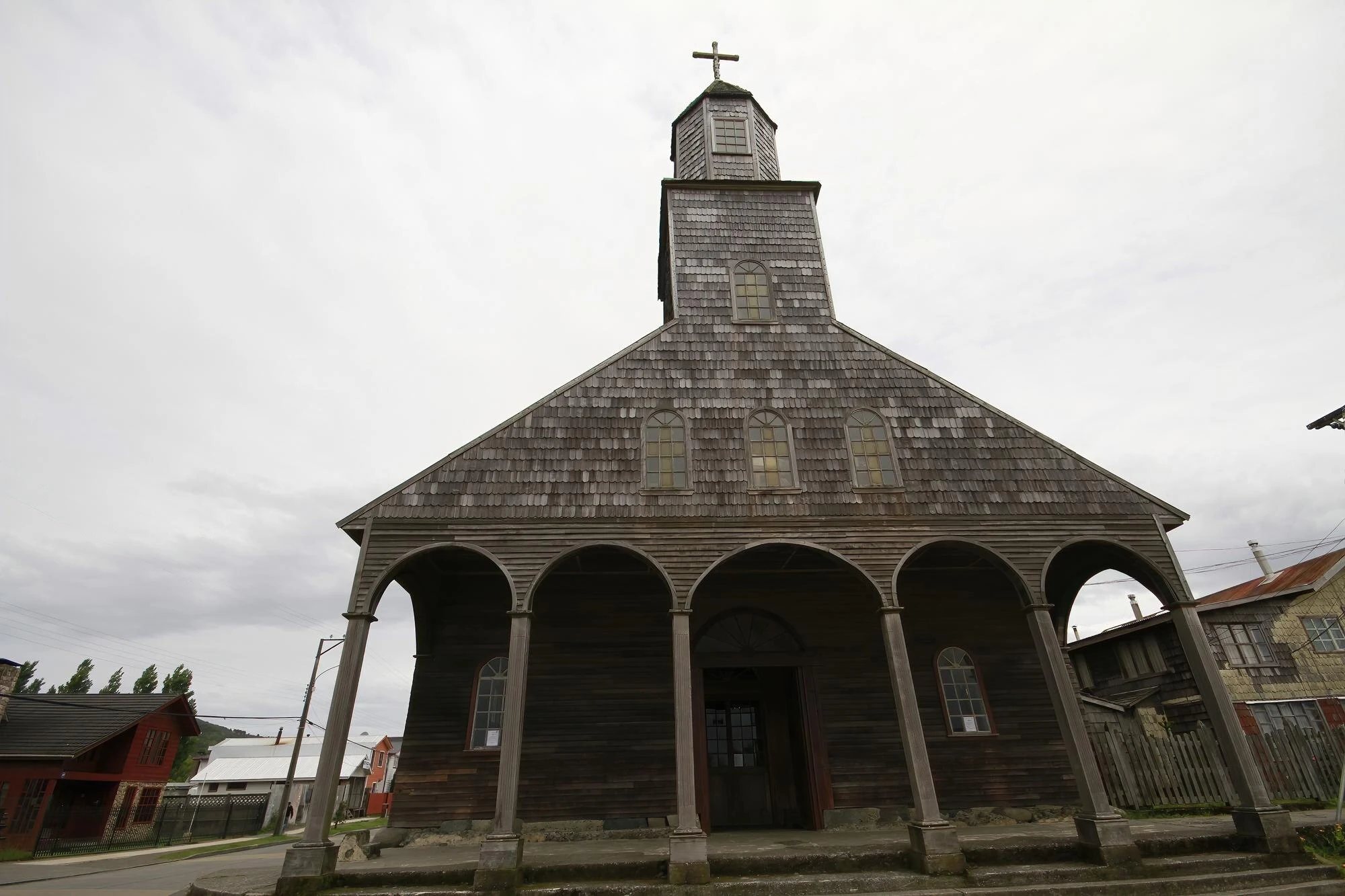
The 16 churches inscribed by UNESCO do not form a linear museum or a circuit designed for checklist-style travel. They are spread across the main island and other islands in the archipelago, across six municipalities, and still serve active religious and community functions. The best visit begins by accepting one limitation: interior access depends on local chapel committees, especially in rural areas. A closed church is therefore not a failure of your trip, but a reason to also look at its square, its relationship with the water and the town that sustains it.
First decision: don’t choose “the most famous”; choose the scale you can actually cover
For a first visit with limited time, the Dalcahue–Achao–Quinchao axis is the most efficient option. Dalcahue is on the main island; Achao and Quinchao require the crossing to Quinchao Island. In a single day, you can compare a church connected to a port town with two island churches, without making transport the main subject of the day. Chile Travel identifies ferry crossings and local roads as structural elements of this route, not minor logistical details.
The trade-off is clear: this axis is the easiest to fit in from Castro or Dalcahue, but it also attracts more visitors. If you want to understand the architecture in the quiet of small villages, set aside another day for Tenaún, San Juan and, if your transport and schedule allow, Colo. Chile Travel’s official route presents them as a northern group connecting church, bay, rural roads and navigation; here, stopping in two or three places matters more than chasing impossible timetables.
Lemuy—with Aldachildo, Ichuac and Detif—is the choice for travellers who have already accepted a slower pace. It involves an additional ferry, more coordination and less leeway when weather or transport conditions change. Don’t treat it as a quick extension from Castro: make it the focus of a full day or spend a night in the area. This is a travel decision, not a filler excursion. The churches of Lemuy are part of the UNESCO site, but their island setting makes the logistics substantially different from those of Castro or Dalcahue.
What to look at at each stop: the church begins before the façade
UNESCO recognises these churches for a tradition of wooden religious architecture that emerged from itinerant missions and continued for centuries, but also for community practices, festivities and forms of mutual aid such as the minga. So before going inside, observe the building’s orientation, the atrium or square, the nearby channel and the scale of the settlement. These are not isolated objects: the architecture is integrated into an island landscape shaped by travel on land and water.
In Achao, look for the interior woodwork if the church is open; the Foundation of Heritage Churches identifies it as the oldest surviving Chiloé church. In Dalcahue, the portico and position facing the water help you read the church as a threshold between town and shore. In Tenaún, the three towers and the church’s setting offer a chance to compare a more theatrical presence, without allowing that image to replace the rest of the visit.
Use precise language when interpreting this heritage. Official sources describe a fusion of Indigenous and European traditions linked to Jesuit and Franciscan evangelisation; that does not turn today’s communities into a recreation of the past. These are Catholic churches in active use, built and maintained by local communities. Avoid entering during a service as if it were a guided tour, blocking entrances, flying a drone or assuming that every interior may be photographed.
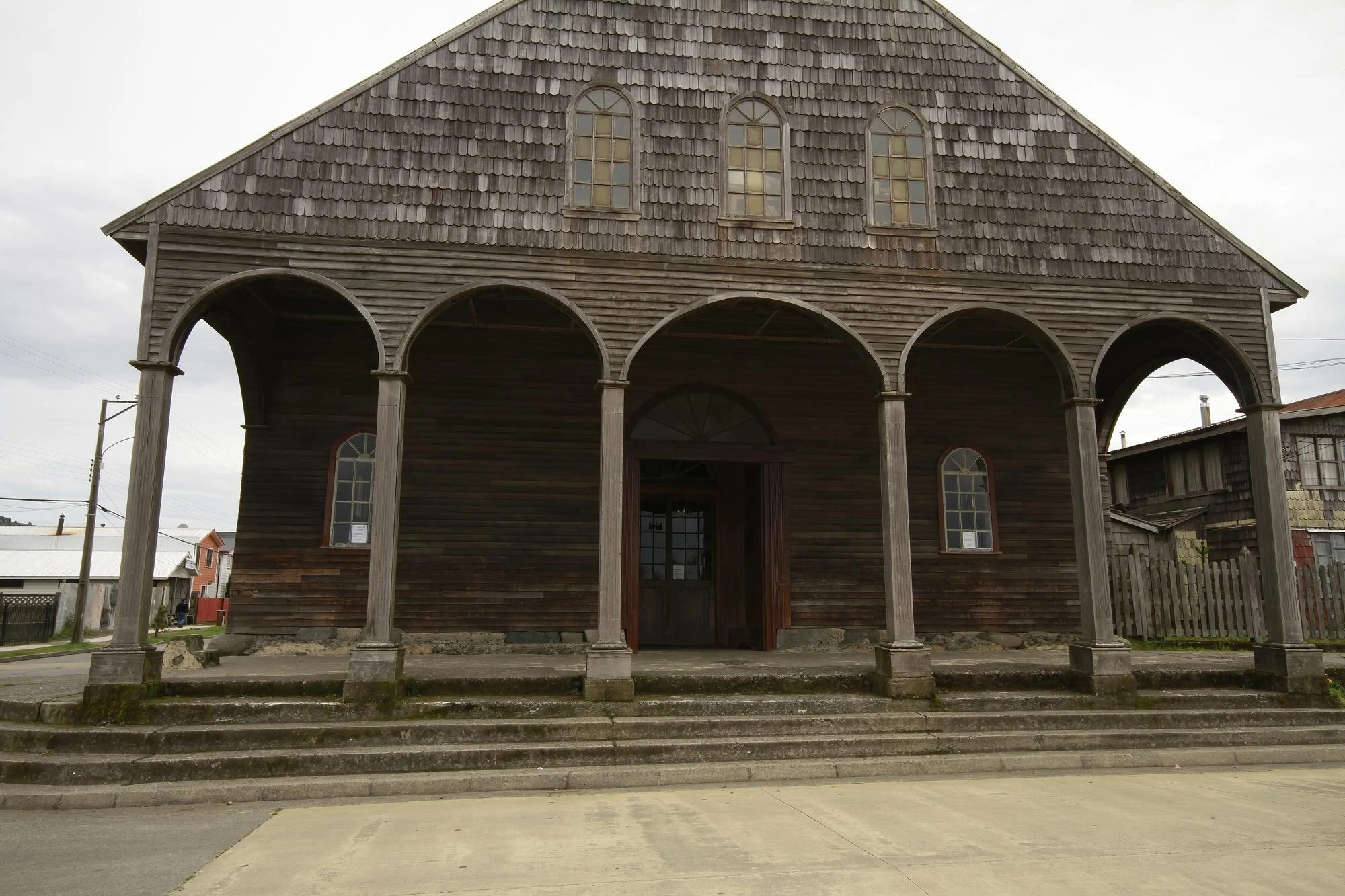
How to organise a realistic two- or three-day route
With two days, choose two geographical areas, not six. One sensible combination is a day on the Dalcahue–Achao–Quinchao axis and another on a main-island route: Castro or Nercón for an urban contrast, plus Rilán, Tenaún or San Juan depending on the time available. Castro is useful as a service base, but it should not replace the towns where the territorial dispersal defining the site is most apparent. Chile Travel’s official three-day route specifically links the areas of Colo, Tenaún, San Juan and Dalcahue rather than presenting all 16 churches as an express circuit.
With three days, add Lemuy or the northern rural axis—not both, unless you have a vehicle, flexible timing and are willing to skip some stops. For independent travel, a car gives you more flexibility on secondary roads; without one, prioritise Dalcahue, Castro, Nercón and one coordinated island outing. Chile Travel recommends planning ahead because the site combines paved roads, local roads and ferries.
Before setting out each morning, check with the Foundation or the official heritage-management channel whether interior access, services, restoration work and crossings will be possible. Do not base your day on schedules posted by blogs or map services: the heritage authority explicitly states that entry depends on chapel committees and must be coordinated in rural areas. Check ferry services with the local operator as well, since frequencies and weather conditions can change.
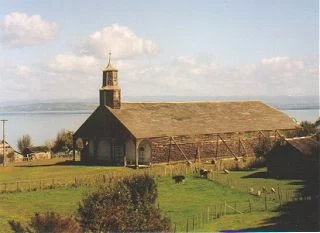
Accessibility, weather and a more responsible way to be there
Do not assume universal accessibility. These are historic wooden buildings, with thresholds, steps, uneven floors and entrances that may vary from church to church. Ask in advance about reduced mobility, toilets, nearby parking and the possibility of entering. If someone in your group cannot access the interior, the exterior, square and landscape can still make for a meaningful visit, provided places of worship are not disturbed. Prior coordination is not merely logistical: it protects both the traveller’s experience and the everyday care of the church.
Bring waterproof clothing and suitable footwear for wet ground, but do not use the weather as a reason to rush. Chile Travel warns that rain is part of planning the route and recommends arranging accommodation and services in advance during the busiest period, from December to February. Instead of adding kilometres for a sunny photograph, leave time to wait for a ferry, have coffee in the town or accept that a door will not open that day.
A responsible contribution means spreading your spending: stay a night outside Castro when the itinerary warrants it, buy directly from local craftswomen and producers, and donate only when the community has an authorised mechanism. Above all, do not ask for a church to be opened outside the agreed arrangements or treat religious heritage as scenery. The continuity of these churches depends on the tangible and intangible values that UNESCO links to their communities, not on how many visitors manage to enter.
The quick choice: three traveller profiles
Choose Dalcahue–Achao–Quinchao if you have one day, want a first comparative reading and need to concentrate your transfers. Choose Tenaún–San Juan–Colo if you already know Castro or prefer rural roads, bays and less pressure to “see everything”. Choose Lemuy if you can give it dedicated time, are comfortable with ferry-dependent planning and want to understand that this heritage is also distributed across smaller islands. Caguach and Chelín require smaller boats: do not add them out of ambition to complete the list; include them only if reliable local coordination makes the crossing worthwhile.
References consulted during editorial review. Times, requirements and advisories may change: always confirm with the official source.
- https://www.monumentos.gob.cl/patrimonio-mundial/actual/iglesias-de-chiloewww.monumentos.gob.cl
- https://chile.travel/atractivos/iglesias-de-chiloe/chile.travel
- https://whc.unesco.org/en/list/971/whc.unesco.org
- https://whc.unesco.org/fr/list/971whc.unesco.org
- https://www.monumentos.gob.cl/monumentos/monumentos-historicos/iglesia-de-chelinwww.monumentos.gob.cl
- https://www.monumentos.gob.cl/sites/default/files/sitios_patrimonio_mundial_baja.pdfwww.monumentos.gob.cl
- https://whc.unesco.org/en/statesparties/cl/whc.unesco.org
- https://chile.travel/actividades/cultura-y-patrimonio/patrimonios-de-la-humanidad/chile.travel
- ChileWikidata · CC0 1.0 · Wikidata · Q298
- chileWikidata · CC0 1.0 · Wikidata · Q165199
- ChileWorld Countries — mledoze · ODbL 1.0 · World countries dataset by mledoze and contributors · ODbL 1.0
- ChileWorld Bank Open Data · CC BY 4.0 · World Bank
- ChileDBpedia · CC BY-SA 3.0 · DBpedia
- FrontmatterCrossref · Metadatos públicos; derechos específicos por campo cuando correspondan · Crossref
- ÍndiceCrossref · Metadatos públicos; derechos específicos por campo cuando correspondan · Crossref
- PresentaciónCrossref · Metadatos públicos; derechos específicos por campo cuando correspondan · Crossref
- Desafíos de futuro de la Educación Superior en ChileCrossref · Metadatos públicos; derechos específicos por campo cuando correspondan · Crossref