Heritage and planning
A Route Through Megalithic Malta from Valletta to Gozo
The best way to understand Malta is not to collect coves and fortresses, but to follow the thread of a Neolithic culture that left behind temples, hypogea and exceptional objects. This three- to five-day route arranges visits around context, reservations and accessibility.
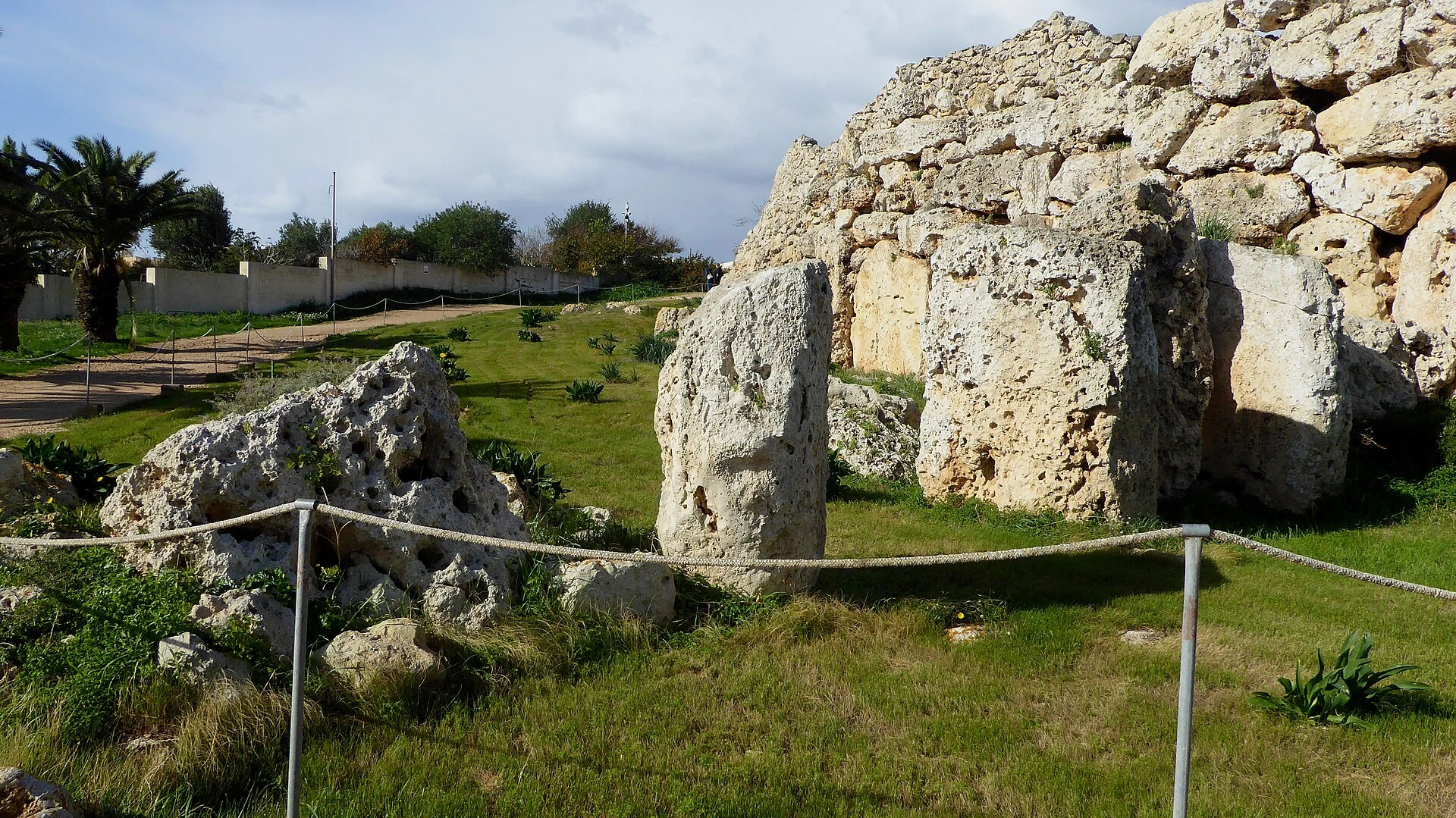
The Megalithic Temples of Malta comprise six sites—with seven temples—built between the 4th and 3rd millennia BC; UNESCO considers them among the world’s earliest free-standing stone buildings. Rather than trying to see them all in a rush, combine a museum, open-air monuments and a night in Gozo: each place then contributes a different piece to the same story.
The decision that changes the trip: choose a route, not a list of “must-sees”
For a first visit, prioritise four stops: the National Museum of Archaeology in Valletta, the Ħal Saflieni Hypogeum, Ħal Tarxien and the Ħaġar Qim–Mnajdra archaeological park; add Ġgantija in Gozo if you have a fourth day or a night there. This is a selection, not a ranking: it lets you see original objects before visiting the sites, an underground funerary space and different architectural solutions in stone. Among other finds, the museum houses the Sleeping Lady, the Malta Venus and Tarxien’s colossal statue.
The advantage of staying in Valletta or another well-connected base on the main island is logistical: it brings the museum and the sites at Paola, Tarxien and Qrendi within reach. Spending one night in Gozo reduces dependence on maritime timetables for Ġgantija. This is a planning inference based on the location of the sites and on the fact that the Valletta–Gozo fast ferry runs frequently but with seasonal variations; always confirm the itinerary and any disruptions in the official journey planners before making non-refundable bookings.
Start in Valletta: look at the objects before looking at the ruins
Set aside a morning for the National Museum of Archaeology. It does not replace the sites; it gives them a human scale. The museum contains tools, pottery, figurines and remains from the archipelago’s main Neolithic sites, including the temples and the Hypogeum. The museum states that it is fully accessible and offers quiet spaces at certain times; check the current conditions and opening hours with Heritage Malta before visiting.
Afterwards, avoid chaining museums together. Use the rest of the day to walk without a rigid archaeological agenda, rest or check the next day’s journeys in the tallinja app. The network provides journey planning, GPS tracking and service-disruption notices; these tools are more useful than a printed bus route, especially when seasonal networks change.
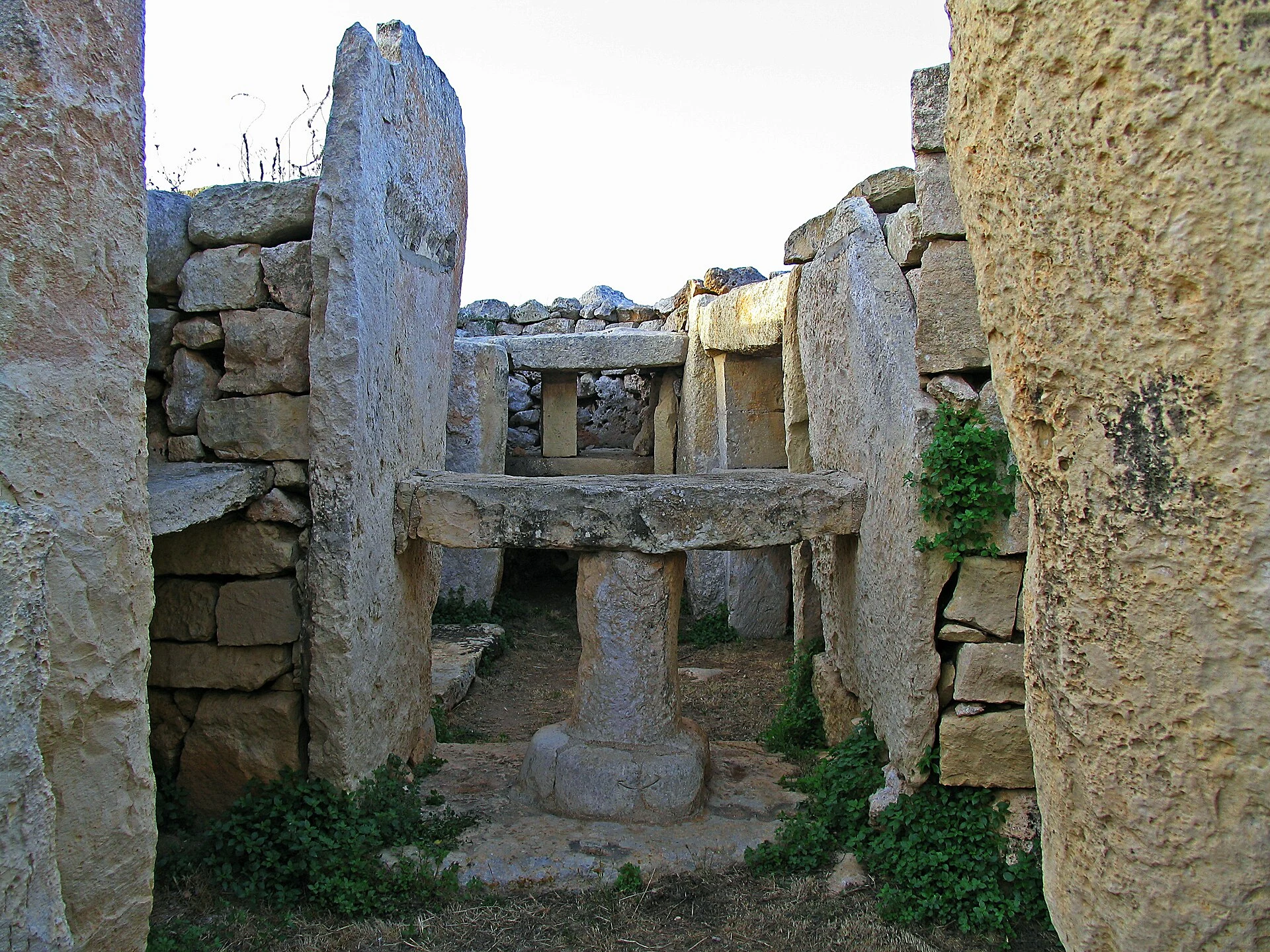
The Hypogeum: book first, then build the trip around it
The Ħal Saflieni Hypogeum in Paola is the only visit that should determine the order of your itinerary. Heritage Malta recommends booking in advance and limits groups to ten people to control environmental factors such as CO₂, temperature and humidity. If no regular ticket is available, an alternative audiovisual experience exists; availability, times, conditions and prices vary and must be checked on the official page when booking.
Do not treat it as an interchangeable attraction: it is a rock-cut funerary complex spread across three levels, and the visit involves enclosed spaces. Photography is not permitted inside for conservation reasons. Many visitors will also want to know that Heritage Malta indicates partial accessibility, does not admit children under six and warns of humidity and slippery areas; consult the access document if you travel with reduced mobility, claustrophobic sensitivity or sensory needs.
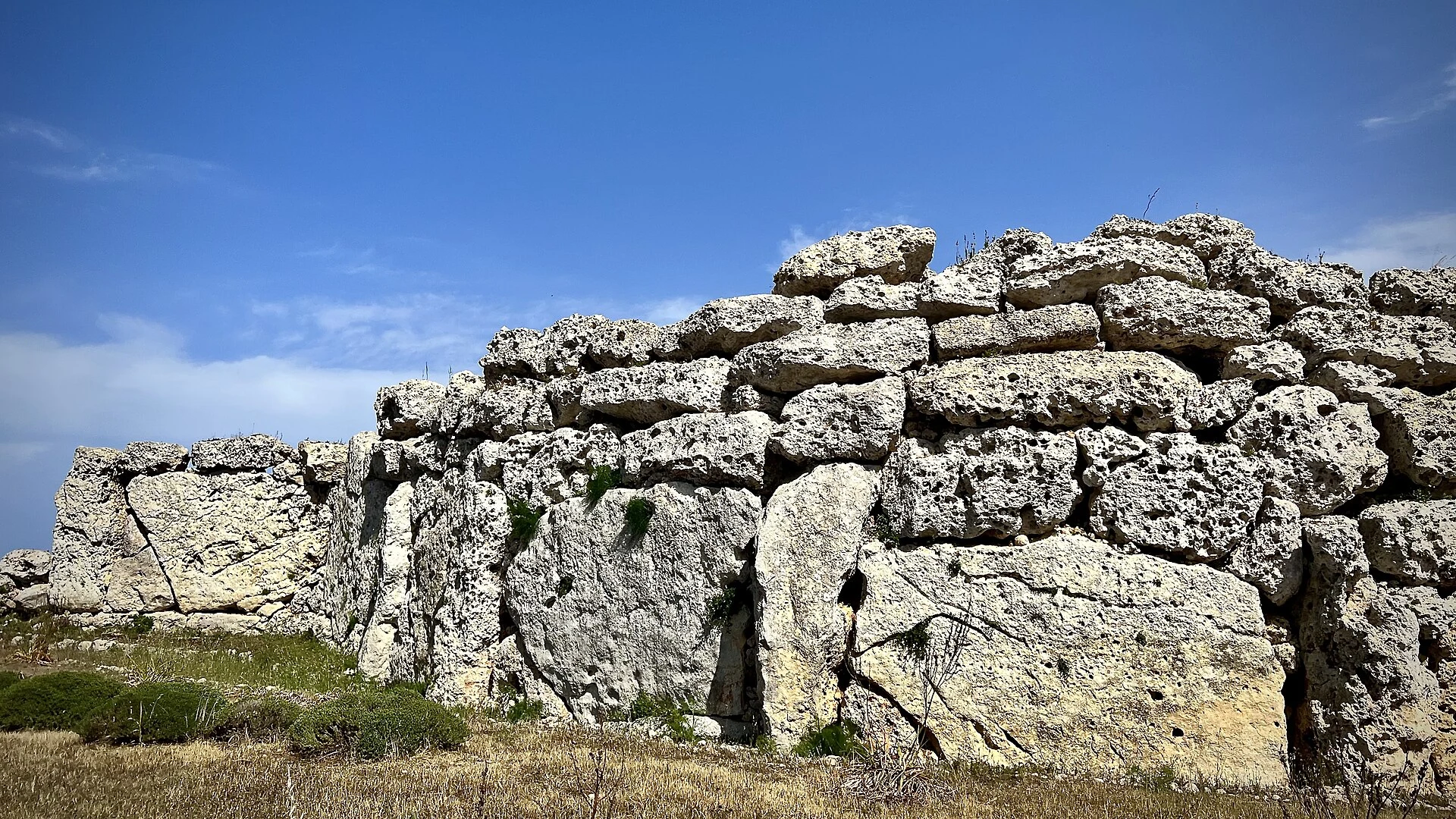
Tarxien and Ħaġar Qim–Mnajdra: two ways of reading the same tradition
Give Ħal Tarxien a short but attentive visit. Its four structures reveal architecture, reliefs of spirals and animals, and later reuse during the Bronze Age. It is a good choice if you need a site with an easier physical route: Heritage Malta describes all its areas as accessible to people with reduced mobility and places the nearest bus stop about a five-minute walk away.
Allow a generous time window for Ħaġar Qim and Mnajdra: the site manager estimates between 90 minutes and three hours. The two are linked by a roughly 500-metre path, with Mnajdra downhill from Ħaġar Qim. Their interest lies precisely in the comparison: they are not copies; their plans, stone and settings vary, and Mnajdra preserves alignments associated with sunrise at the equinoxes and solstices. The shelters covering the temples are not decoration: they were installed to slow the deterioration of structures exposed after excavation.
Gozo for Ġgantija: add time, not just a ferry
Ġgantija, in Xagħra, completes the story from Gozo and deserves more than a quick stop. Its interpretation centre brings together objects from the island’s Neolithic sites, and the outdoor route leads to the monument. The fast ferry connects Valletta with Gozo, but its timetable includes seasonal and weekend notes: check the outbound sailing, the last useful return and any operational notice on the company’s website on the same day.
In terms of accessibility, Ġgantija offers ground-level entry and exhibition spaces, an adapted sloping access route and rest areas; however, ramps within the archaeological area are limited because of the monument’s sensitivity. The practical conclusion is not to assume that “accessible” means identical access to every part of the temple: share your needs with the park before travelling.
Travel with care: the limit is part of the meaning of the visit
These places do not need to be “conquered” in a single day. At the Hypogeum, limited capacity is part of its conservation; at Ħaġar Qim and Mnajdra, the shelters respond to the vulnerability of the stone. Book only time slots you can honour, arrive with a margin, stay on marked routes and accept that an object seen in the museum or an audiovisual experience can be a valuable alternative when physical access is limited.
If you are travelling without a car, build each day around a single area and use Malta Public Transport’s official planner. For the crossing to Gozo, check the ferry and its accessibility separately. Do not build a chain of connections around a generic frequency: timetables, works, alerts and access conditions can change.
References consulted during editorial review. Times, requirements and advisories may change: always confirm with the official source.
- https://heritagemalta.mt/explore/hal-saflieni-hypogeum/heritagemalta.mt
- https://gozohighspeed.com/pages/schedulegozohighspeed.com
- https://heritagemalta.mt/news/the-hal-saflieni-hypogeum-to-re-open-on-15th-may/heritagemalta.mt
- https://heritagemalta.mt/app/uploads/2021/10/HypogeumTermsandConditions.pdfheritagemalta.mt
- https://www.publictransport.com.mt/visiting-malta/www.publictransport.com.mt
- https://heritagemalta.mt/app/uploads/2022/06/Hypo-Access-Statement_REV1-003.pdfheritagemalta.mt
- https://gozohighspeed.com/pages/travel-info/accessibilitygozohighspeed.com
- https://heritagemalta.mt/news/tickets-for-the-new-audiovisual-show-at-the-hal-saflieni-hypogeum-available-online/heritagemalta.mt
- MaltaWikidata · CC0 1.0 · Wikidata · Q233
- MaltaWikidata · CC0 1.0 · Wikidata · Q37151700
- MaltaWorld Bank Open Data · CC BY 4.0 · World Bank
- MaltaDBpedia · CC BY-SA 3.0 · DBpedia
- Cidade e turismo: o valor de consumo da (contra)paisagem cultural cariocaCrossref · Metadatos públicos; derechos específicos por campo cuando correspondan · Crossref