Sri Lanka · Cultural Triangle
Anuradhapura on a scale of monasteries, reservoirs and pilgrimage
Sri Lanka’s ancient capital is not a single site: divide it into zones, understand its sacred spaces and allow time to travel between them.
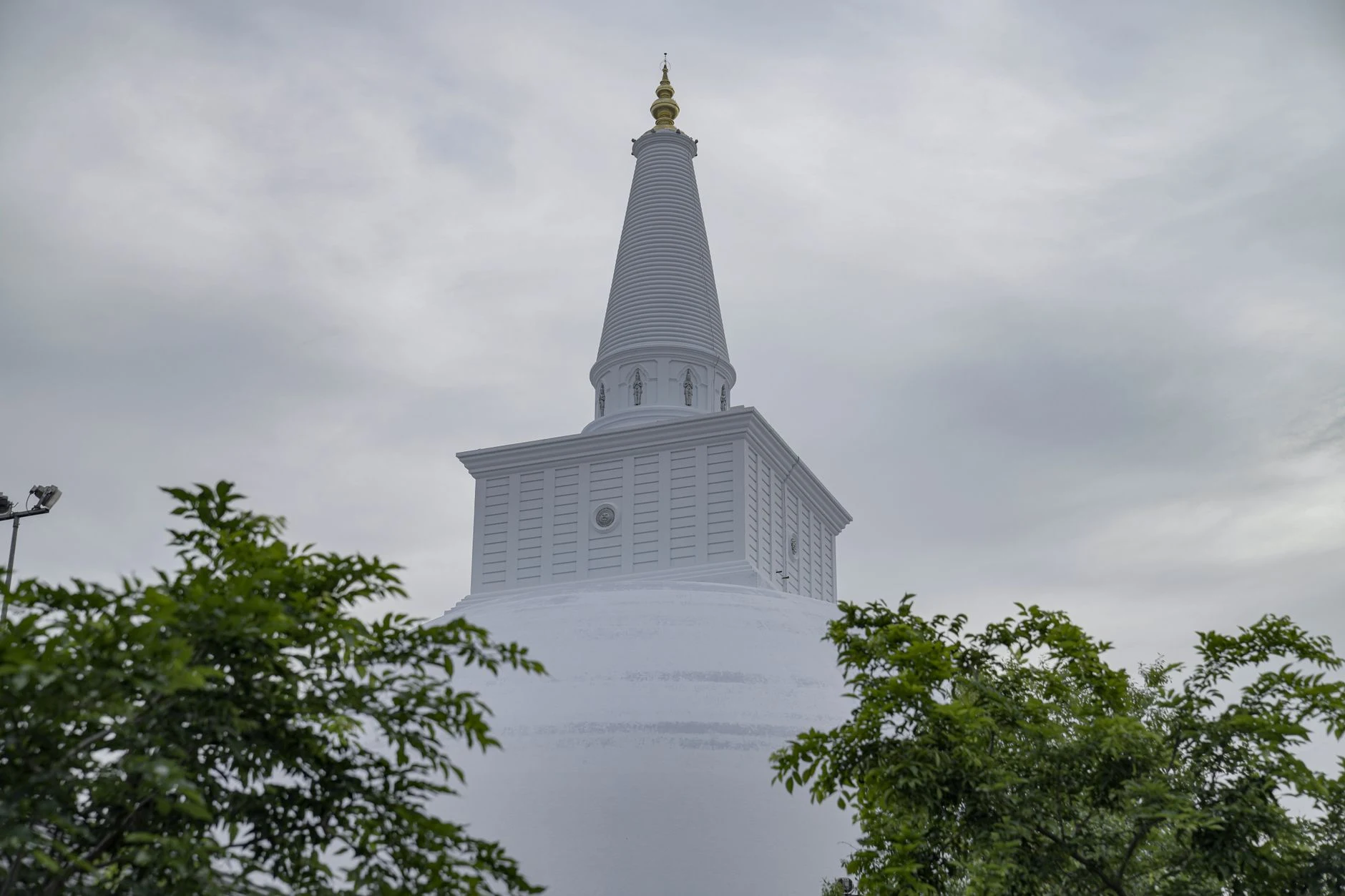
Anuradhapura rewards a slow, piecemeal visit rather than a race between stupas. It was a political and religious capital for centuries, but it remains a place of pilgrimage: the Sri Maha Bodhi tree and the great dagobas call for a respectful attitude as well as time to find your bearings. The most useful approach is to treat the ancient city as an extensive landscape of monasteries, water and architecture, using the modern city as a practical base.
Do not try to link all the monuments on foot. Group visits by proximity, reserve the early hours for religious sites and arrange transport between sectors in advance. Opening hours, access arrangements, fees, train services and possible closures should be confirmed just before setting out.
Listen to Sri Lanka
A documented soundscape that complements this guide to Sri Lanka. Sri Lanka’s ancient capital is not a single site: divide it into zones, understand its sacred spaces and allow time to travel between them.
Audio by florianreichelt · Openverse · CC0 1.0 · Duration: 02:40
An ancient capital best visited in layers
Anuradhapura was a centre of power and religion for around 1,300 years. Its scale explains why the experience changes once you abandon the idea of “scattered ruins”: this is a landscape of monasteries on a huge scale, ponds, residences, sculptures, shrines and hydraulic systems that supported a living city.
Start with the Sri Maha Bodhi, Ruwanweliseya and Lovamahapaya complex—the so-called Brazen Palace—to understand the relationship between devotion, the monastic community and monumentality. Then move on to Abhayagiri and Jetavanaramaya: these are not merely photographic stops, but complexes that allow you to compare architectural ambitions and religious organisation. The citadel and archaeological excavations add another layer: Anuradhapura was not simply a succession of shrines, but also a long-lived urban space.
This order helps avoid a common mistake: seeing the great dagobas as isolated pieces and missing the logic of the landscape that connects them.
Two days work better than one
For a short stay, divide the visit into two geographical halves. On the first day, spend the morning in the sacred area around Sri Maha Bodhi, Ruwanweliseya and Lovamahapaya; continue to Isurumuniya if you would like to pause over its reliefs and rock-cut temple. This is a day for close observation: steps, guardstones, moonstones, sculptures and ongoing rituals matter just as much as the grand silhouettes.
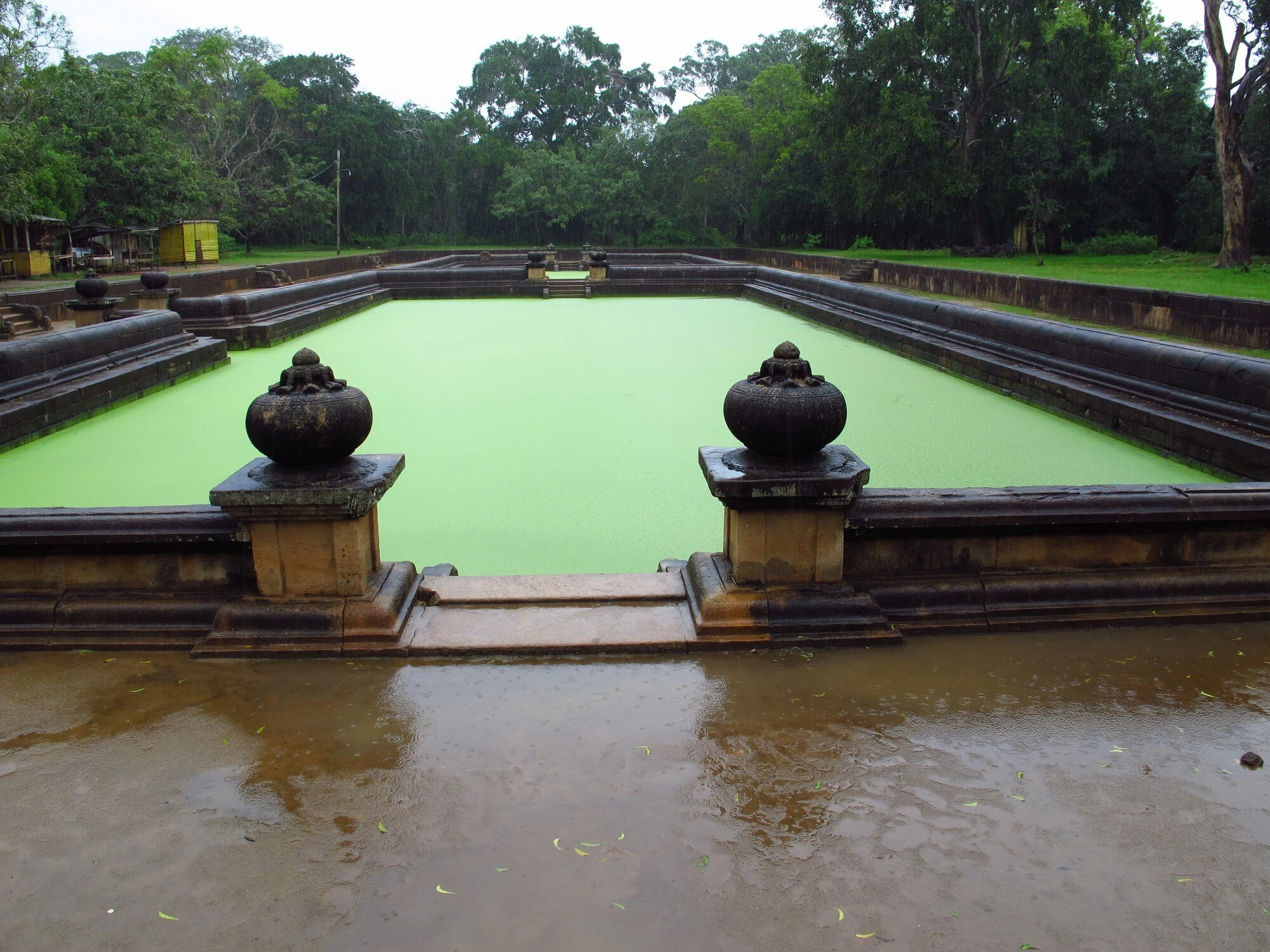
The second day can focus on Abhayagiri, Jetavanaramaya and Kuttam Pokuna, the twin ponds associated with the monastic world. Distances are greater here, and exposure to the sun matters: arrange a local vehicle, bicycle or driver for connections, and keep the walking sections within each complex. Carry water, sun protection and footwear that is easy to remove.
If you have only one day, choose one of the two blocks and accept what you will miss. Seeing less, with pauses and context, is preferable to rushing past every site.
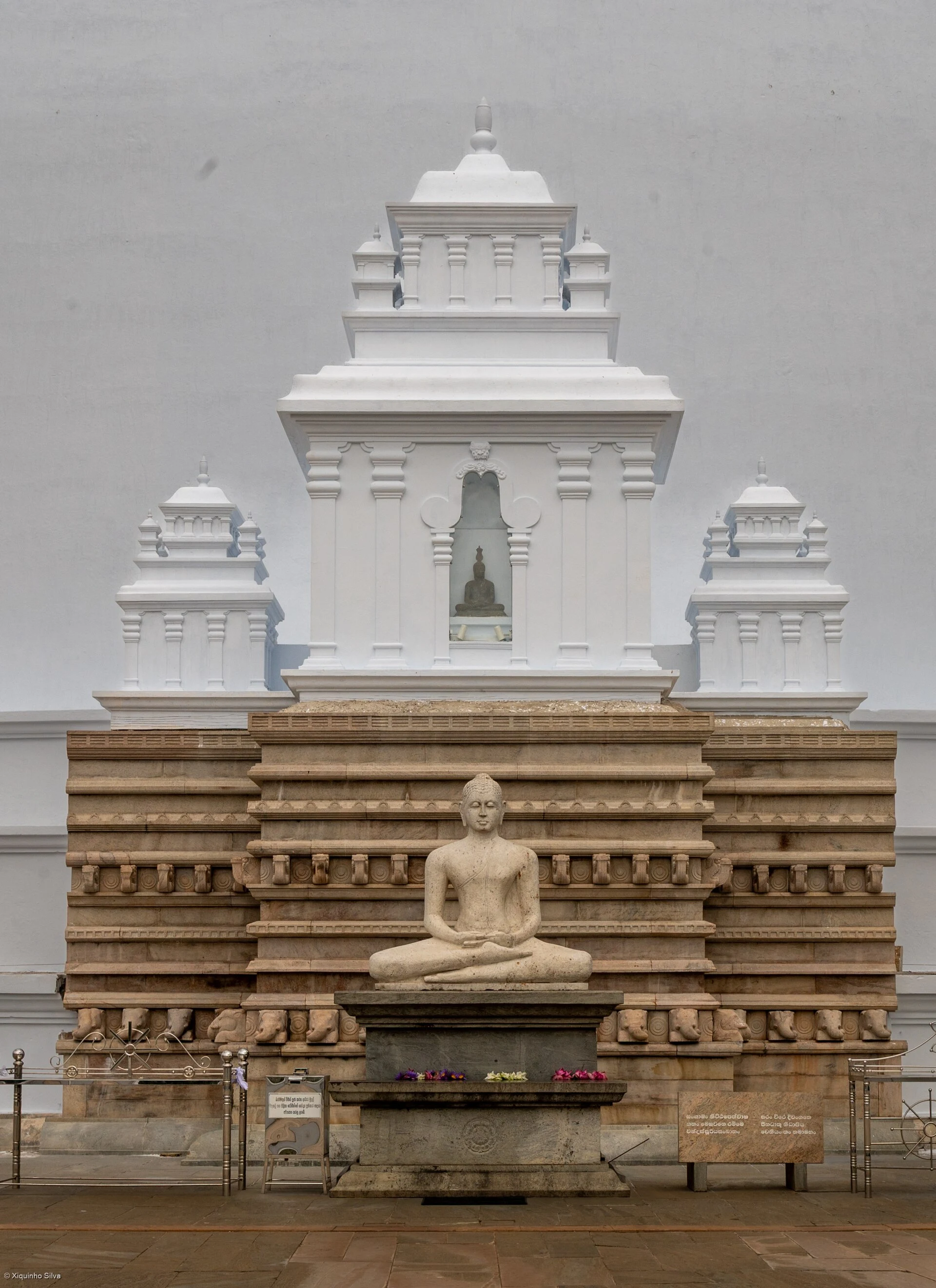
Water helps you read the city
Anuradhapura’s grandeur does not depend on its stupas alone. The ancient reservoirs and ponds reveal infrastructure that made urban life, agriculture and monastic communities possible in the dry zone. This is a city where water organises the heritage: looking at its edges, channels and surfaces of water changes the way you read what might otherwise seem purely ceremonial.
Include Kuttam Pokuna for its two stone ponds and set aside time to look at the large nearby reservoirs, without turning them into a checklist of viewpoints. The connection between engineering, maintenance and the use of the landscape is an essential part of the site. It also helps explain why the religious structures belong to a territory much wider than the perimeter of any one monument.
Behave carefully: do not climb structures, leave no litter and do not treat active places of worship as scenery. The site’s value depends as much on its present use as on the preservation of its material remains.
Clothing, getting around and practical limits
At Sri Maha Bodhi, stupas and other places of religious practice, dress modestly, covering your shoulders and legs; be prepared to remove your shoes and hat where indicated. A scarf or socks can be useful on hot surfaces, but always follow the rules for the particular site and the instructions of those responsible for the grounds.
From Colombo, the official tourism information includes road and rail connections to Anuradhapura. The train can suit travellers looking for a slower arrival, but it does not solve the problem of moving between all the archaeological complexes. Plan local transfers for that, and do not assume that a continuous walking route is realistic. Independence here means dividing the day well, not avoiding all transport.
Travellers who need routes with few changes in level, frequent breaks or step-free access should check the conditions at each site directly before booking accommodation. Uneven surfaces, heat and the area’s size can significantly alter the experience.
Before you leave: what to check officially
Department of Archaeology of Sri Lanka: check the status of the Anuradhapura Archaeological Museum; as of September 2026, it reported a temporary closure for maintenance and announced that the reopening would be published on its official website. It is also the institutional reference for museums and archaeological heritage.
Sri Lanka Tourism Promotion Bureau: review indicative travel times from Colombo, clothing recommendations and practical notices for travellers. Its transport estimates do not replace the actual timetables on the day of travel.
Sri Lanka Railways: confirm train times, line changes, availability and reservations before relying on rail travel to arrive or continue north.
UNESCO World Heritage Centre: consult the Sacred City of Anuradhapura entry to understand the chronology, heritage scope and mapped boundaries of the inscribed property.
Sources consulted:
References consulted during editorial review. Times, requirements and advisories may change: always confirm with the official source.
- https://archaeology.gov.lk/archaeology.gov.lk
- https://archaeology.gov.lk/about/sections/museumsarchaeology.gov.lk
- https://srilanka.travel/heritage-discover-the-past?article=29srilanka.travel
- https://archaeology.gov.lk/index.php/about/historyarchaeology.gov.lk
- https://archaeology.gov.lk/books/citadelbookp2/tmpl/files/basic-html/page3.htmlarchaeology.gov.lk
- https://archaeology.gov.lk/books/citadelbookp1/tmpl/files/basic-html/page8.htmlarchaeology.gov.lk
- https://www.srilanka.travel/buddhist-places/resources/images/documents/Aitken-Spence-Buddhist-Tour-1.pdfwww.srilanka.travel
- https://www.railway.gov.lk/web/index.php?lang=en&limitstart=10&option=com_content&view=frontpagewww.railway.gov.lk
- Sri LankaWikidata · CC0 1.0 · Wikidata · Q854
- Sri LankaWikidata · CC0 1.0 · Wikidata · Q4526612
- Sri LankaWorld Countries — mledoze · ODbL 1.0 · World countries dataset by mledoze and contributors · ODbL 1.0
- Sri LankaWorld Bank Open Data · CC BY 4.0 · World Bank
- Sri LankaDBpedia · CC BY-SA 3.0 · DBpedia