Tajikistan | archaeology and cultural landscape
A day at Sarazm and Ancient Panjakent near Panjakent
A day at Sarazm and Ancient Panjakent covers almost four millennia of urban history—provided you do not mistake a proto-urban site for a Sogdian city. The key is to set realistic expectations: read the understated structures in the landscape and allow time for the objects preserved in museums.
Viajalo Atlas
Photography pending verification
In the Zeravshan Valley, present-day Panjakent brings together two archaeological sites from very different periods and of very different scales. Sarazm points to the beginnings of proto-urban settlement in Central Asia, from the 4th to the end of the 3rd millennium BCE; Ancient Panjakent, by contrast, was a Sogdian city active between the 5th and 8th centuries CE. Visiting both is not simply a matter of collecting ruins: it is a way to understand how housing, exchange, production and urban life changed along the same mountain-and-valley corridor.
Two stops that call for different questions
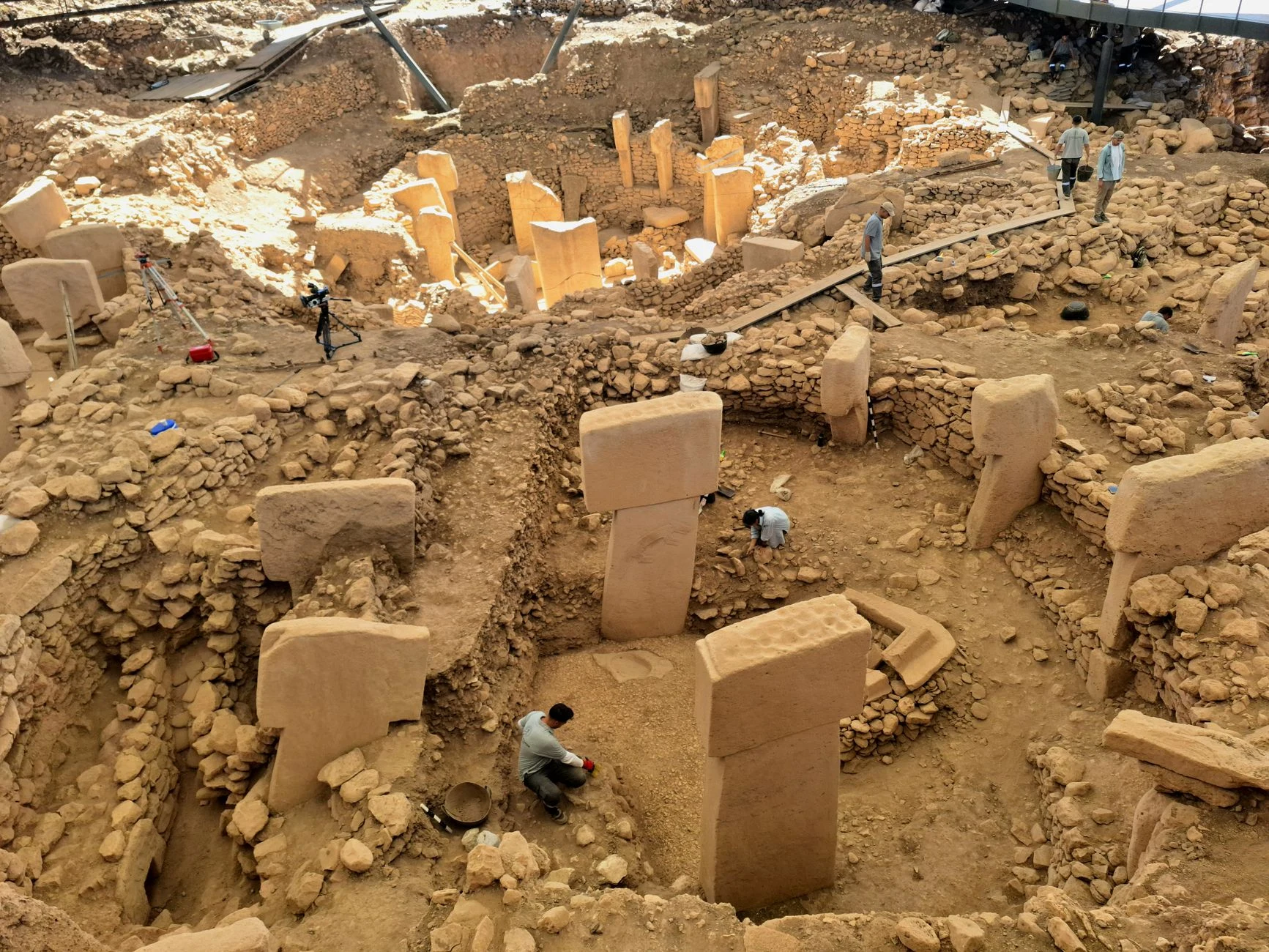
Begin with Sarazm if you are interested in the origins of a settled community. Its remains speak of early architecture, agriculture, livestock herding, metallurgy and exchange networks linking Central Asia with distant regions. Do not expect reconstructed façades or a monumental complex: the interest lies in recognising the scale of the settlement, the excavated areas and the relationship between the cultivable plain and the mountains.
Ancient Panjakent calls for a different perspective. Here, the layout of a city is easier to read: the citadel, walls, neighbourhoods, temples, houses and necropolis help you imagine a Sogdian centre of the 5th to 8th centuries. Take time to walk around slowly, following changes in level and looking for the logic of its enclosures rather than treating it as a quick photo stop. Depending on the transliteration, its name may appear as Panjakent, Penjikent or Pyanjekent.
What the ruins do not preserve at first glance
The decisive difference between the two sites lies in the objects. At Sarazm, the site's value depends greatly on archaeological interpretation: the structures and their position tell the story, but they do not replace the tools, pottery and other finds studied away from the site.
Something similar applies to Ancient Panjakent, with one important nuance: the murals, sculptures and reliefs that made the city famous should not be sought only on the excavated walls. The National Museum of Antiquities of Tajikistan in Dushanbe preserves murals from Ancient Panjakent as well as archaeological materials from Sarazm. If your itinerary includes the capital, this visit provides a very concrete complement to what you see in the field; check beforehand which rooms are open and which objects are on display.
A realistic day from present-day Panjakent
Use the modern city as your base and plan Sarazm and Ancient Panjakent as two separate visits within the same day. Sarazm lies west of Panjakent, near the valley's main road; the other site is on the outskirts of the city. This proximity avoids long transfers, but it does not make the day logistics-free: arrange a car with driver or a local taxi, and agree in advance on waiting time, the return journey and payment.
Walking inside the sites can be slow, with uneven ground. Bring water, sun protection, shoes with good grip and a light layer for the wind. A local guide with archaeological training can add valuable context, but do not assume that one will be available or that tours will be offered in a particular language. If you cannot arrange one, arrive with a clear sequence: Sarazm for the 4th–3rd millennium BCE; Ancient Panjakent for the Late Antique and early medieval Sogdian city.
Leaving Haftkul for another day improves the itinerary
The Haftkul gorge, also known as the Seven Lakes, is included among the tourist routes around Panjakent and offers a powerful natural contrast to the archaeological sites. Its seven lakes follow the gorge of the Shing River; the distance between the first and seventh is more than 14 kilometres, with a considerable change in elevation and an unpaved section requiring you to plan for the vehicle and road conditions.
Do not try to squeeze it in as a rushed addition after Sarazm and Ancient Panjakent. Set aside another day, especially if you want to continue to the higher lakes or stop in the valley villages. Before setting out, confirm the condition of the track, transport availability, the expected weather and any local operational restrictions.
Visiting an archaeological landscape without wearing it down
At Sarazm, the shelters and protected areas are not scenery: they respond to the fragility of exposed structures. Stay on the marked routes, do not climb walls or rest equipment on archaeological surfaces. At Ancient Panjakent, avoid treating the adobe and stone remains as viewpoints; an image taken from the path will usually convey the scale of the complex better than an unnecessary climb.
The best souvenir from this route may be a comparison rather than a collection of photographs: at Sarazm, an early settlement connected to long-distance exchange; at Panjakent, a city with much more clearly defined religious, domestic and funerary spaces. This reading also helps you decide how much time you need: a short visit may be enough to get oriented, but an unhurried day allows you to understand why both places matter.
Sources to check before travelling
- UNESCO World Heritage Centre: the Sarazm entry, its protection as a historical and archaeological reserve, and its chronology.
- UNESCO World Heritage Centre: documentation on the ancient city of Pyanjekent, including descriptions of the citadel, temples, houses and necropolis.
- National Museum of Antiquities of Tajikistan: information about the Ancient Panjakent murals held in its collection.
- Committee for Tourism Development of Tajikistan and Tajikistan's diplomatic representation: information on the inclusion of Haftkul gorge in tourist routes and the general characteristics of the Seven Lakes. Check with these institutions, or with an accredited local operator, for current road access, opening hours, fees, transport and conditions.
References consulted during editorial review. Times, requirements and advisories may change: always confirm with the official source.
- https://sevenlakes.tj/en/tours/seven-lakes-haft-kul/sevenlakes.tj
- https://mfa.tj/en/berlin/view/9105/haftkul-seven-lakesmfa.tj
- https://sevenlakes.uz/en/sevenlakes.uz
- https://sevenlakes.tj/en/terms/sevenlakes.tj
- https://ctd.tj/en/2023/04/19/tourist-routes/ctd.tj
- https://www.mia.tj/1101-marguzor-lakes-seven-beauties-of-shinga.htmlwww.mia.tj
- https://ztda-tourism.tj/trek/seven-beauties-of-shing/ztda-tourism.tj
- https://bunyodtour.tj/images/Catalog.pdfbunyodtour.tj
- TayikistánWikidata · CC0 1.0 · Wikidata · Q863
- TajikistanWorld Countries — mledoze · ODbL 1.0 · World countries dataset by mledoze and contributors · ODbL 1.0
- TajikistanWorld Bank Open Data · CC BY 4.0 · World Bank
- TajikistanDBpedia · CC BY-SA 3.0 · DBpedia