Samoa · Savaiʻi
Western Savaiʻi by ferry: Falealupo and volcanic coast
A two-night route from the ferry linking the Taga blowholes, Falealupo Forest and village rhythms without turning the island into a race.
Western Savaiʻi works best as a two-night journey rather than a rushed excursion from Upolu. The ferry leaves travellers in Salelologa, in the southeast, while Falealupo lies at the western tip: the coastal road connects the two, but the point of the journey is to follow the pace of the villages and understand that fa’a Samoa is not an attraction added to the landscape, but the everyday framework of the visit.
Two nights so the ferry does not consume the trip
The key decision is logistical: arrive in Savaiʻi via Salelologa and book your first night in the island’s southern or western half; spend the second around Falealupo or at a base from which you can return to the wharf without stringing together stops. That way, the Alofaaga blowholes and the forest do not compete for the same afternoon.
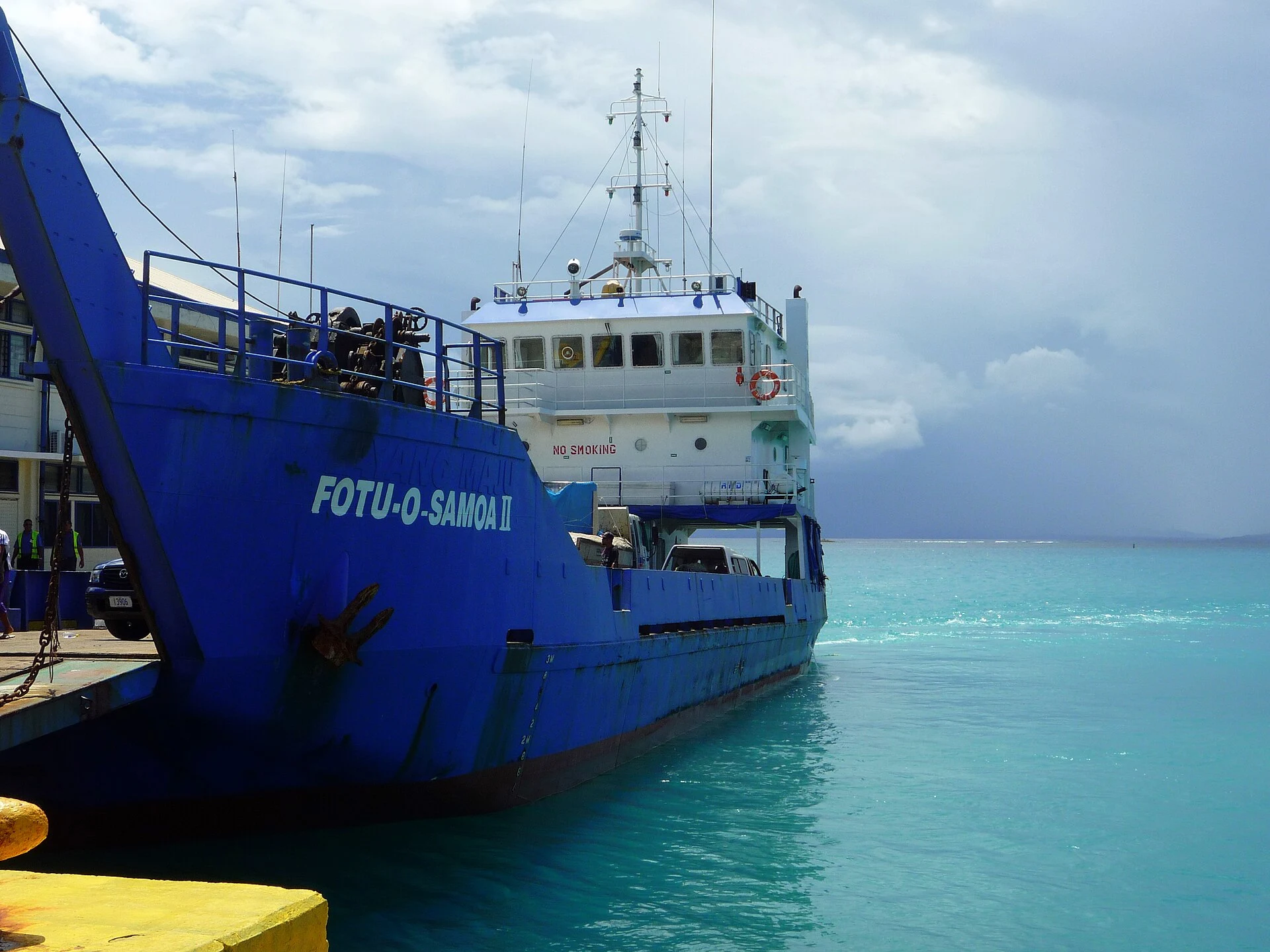
The crossing between Mulifanua, on Upolu, and Salelologa usually takes 60 to 90 minutes, but departure times, frequency and operating conditions should be checked immediately before travelling. If you are bringing a vehicle, ferry space requires separate planning; do not assume there will be room on the same day.
A rental car or hired driver lets you stop where it makes sense and carry a change of clothes for village visits. The bus can work for occasional trips from Salelologa, but it has no fixed stops on the island: for a route to Falealupo, treat it as a flexible option and ask at your accommodation rather than relying on a fixed timetable.
Taga concentrates the volcanic coast into a short stop
On the southwest coast, Taga’s Alofaaga Blowholes show how waves are compressed into lava channels and emerge as vertical jets. Observe them from the designated areas, without approaching the openings or turning the surf into a swimming activity.
The visit may include Pa Sopo’ia Cave, traditionally associated with the journey of spirits towards Pulotu. This reference does not require turning a living belief into an anecdote: if you want to approach, ask for local guidance and accept that access or interpretation may depend on the community.
Bring cash in tala for locally managed entrance fees and avoid scheduling this stop late in the day. The light changes, the sea sets the terms and the driving time to the next base matters more than adding another waterfall to the itinerary.
Falealupo combines an elevated canopy and a community forest
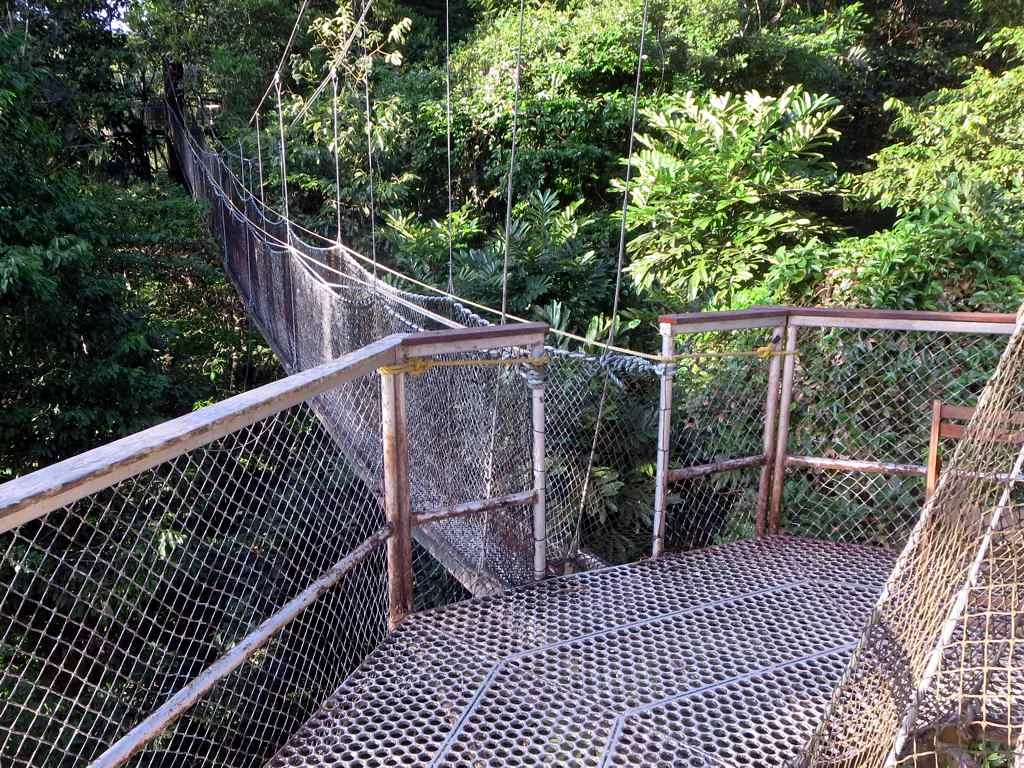
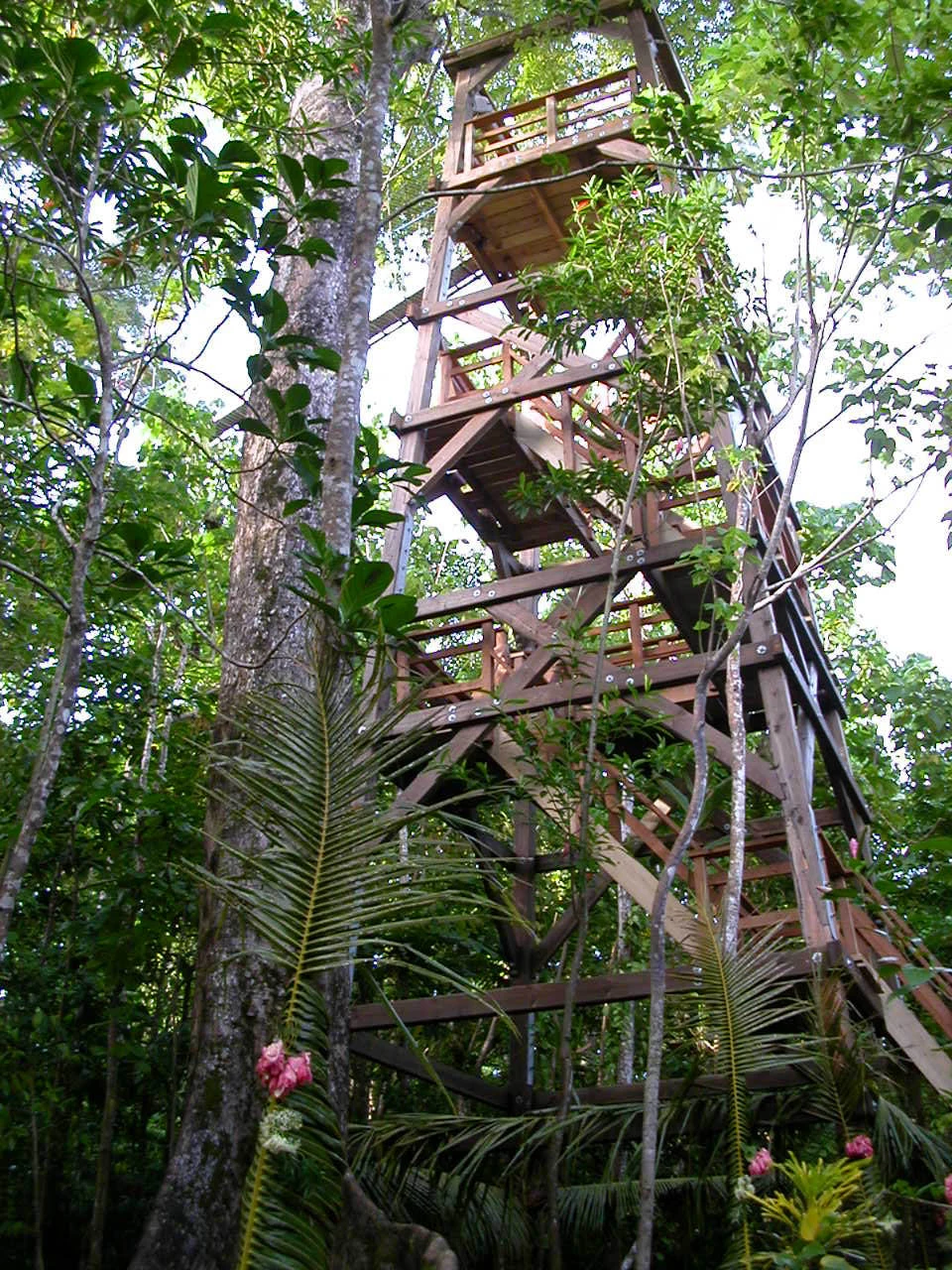
Falealupo’s appeal is not simply reaching one end of Savaiʻi. The Canopy Walkway crosses the forest canopy around 40 metres above the ground, among large banyan trees. It suits visitors who are comfortable on elevated structures; anyone with a fear of heights may prefer to experience the forest from the ground rather than force a visit that would lose its meaning.
Falealupo Forest is a community conservation area. It is therefore best understood as access to a locally managed environment, not as scenery available without conditions. Follow local instructions, stay on the designated paths and check the access situation that day, especially after rain or maintenance work.
Allow time for the coastal road and its simple stops: the value of this stretch lies in alternating forest, lava, village and shoreline, not in collecting viewpoints. Carry a reusable water bottle and take all your waste with you; this is a small, practical contribution on an island where many services are far from the next settlement.
Village protocol sets the pace better than any map
In Samoa, beaches, lagoons and other spaces may be subject to the customary rights of a village or family. Before entering, wait for a local person, ask permission and assume that an access contribution may be requested. Do the same before photographing people, homes, churches or everyday activities.
Swimwear belongs in the water: change or cover up before walking through a village. Bring a lavalava or clothing that covers your shoulders and knees; inside a fale, remove your shoes and follow the guidance of your hosts. These are practical gestures of respect, not accessories for a travel photo.
Avoid passing through villages during Sa, the afternoon prayer pause usually announced by a bell or conch shell. Sundays call for even greater calm: many activities, shops and services may be reduced or closed. Rather than using that day to chase attractions, leave time to rest at your accommodation, attend a religious service only if you are welcome and adapt your plans to the community.
Your choice of transport changes the kind of route
With your own or a rental vehicle, you can connect Salelologa, Taga and Falealupo in one continuous journey, but you should allow for fuel, the return to the ferry and any temporary driving permit required of visitors. In villages, drive slowly and watch for people, animals and everyday activity along the road.
With a taxi or driver, agree the itinerary, waiting time and return journey in advance; it is a sensible option if you do not want to drive, although it depends on prior coordination. By bus, keep your stay geographically modest and confirm at your accommodation where it runs, when it operates and whether there is service on your chosen day.
The best version of this route is slow and reversible: if the ferry changes, the weather worsens or a community is busy, reduce the number of stops. Falealupo is worth the journey when there is enough room to accept those adjustments without putting pressure on the people who live along the road.
References to check before setting out
- Samoa Tourism Authority: pages on Savaiʻi, cultural protocols, transport, the ferry, Alofaaga Blowholes and trails. Check attraction opening times, access contributions, local conditions and clothing guidance.
- Samoa Shipping Corporation: consult the current Mulifanua–Salelologa sailing schedule, conditions for foot passengers and vehicle bookings.
- Samoa Ministry of Natural Resources and Environment: review environmental information on Falealupo Forest and its conservation area, as well as any conservation or access notices.
Verify these details close to your travel date: ferry departures, fares, vehicle availability, fuel, whether the elevated walkway is open and any weather-related or community restrictions.
References consulted during editorial review. Times, requirements and advisories may change: always confirm with the official source.
- https://www.samoa.travel/plan-book/activities/to-sua-ocean-trenchwww.samoa.travel
- https://www.samoa.travel/discover/our-people/www.samoa.travel
- https://www.samoa.travel/samoa-travel-advice/cultural-protocols/www.samoa.travel
- https://www.samoa.travel/discover/our-culture/www.samoa.travel
- https://www.samoa.travel/discover/our-culture/cultural-experiences/www.samoa.travel
- https://www.nps.gov/npsa/planyourvisit/upload/NPSA-Visitor-Guide_web-January-2015-edited-2.pdfwww.nps.gov
- https://www.samoa.travel/experience/short-breaks/www.samoa.travel
- https://www.nps.gov/npsa/planyourvisit/basicinfo.htmwww.nps.gov
- SamoaWikidata · CC0 1.0 · Wikidata · Q683
- SamoaWikidata · CC0 1.0 · Wikidata · Q2213899
- SamoaWikidata · CC0 1.0 · Wikidata · Q37170609
- SamoaWorld Countries — mledoze · ODbL 1.0 · World countries dataset by mledoze and contributors · ODbL 1.0
- SamoaWorld Bank Open Data · CC BY 4.0 · World Bank
- SamoaDBpedia · CC BY-SA 3.0 · DBpedia