Guyana · Rainforest
Iwokrama for combining canopy, river and a meaningful hike
A short Iwokrama itinerary works best when you choose between arriving by land or air, climbing Turtle Mountain and allowing enough real time to observe without unrealistic expectations.
Conditions described in the guide: confirm current requirements and access with the official source before travelling.
Iwokrama is not a place for collecting sightings: it is a vast forest where the journey, the Essequibo River and the silences are all part of the experience. The practical choice is to set aside at least three days and accept that wildlife must be sought patiently, not guaranteed. This protected territory, associated with management, research and the Macushi communities, rewards those who arrive with a slow and flexible plan.
One base, three perspectives on the forest
River Lodge lets you organise your stay from the banks of the Essequibo, with short outings along trails, by canoe and on night cruises. It is the right option for travellers who prioritise observation time and breaks between activities rather than moving on every night.
The excursion to Turtle Mountain adds physical exertion: you reach it by boat and follow a trail up to a summit of around 290 metres. The hike usually takes about one to one and a half hours, but mud, humidity and the incline affect how demanding it feels. Choose it if you are confident walking on natural terrain, and bring water, rain protection and footwear with good grip.
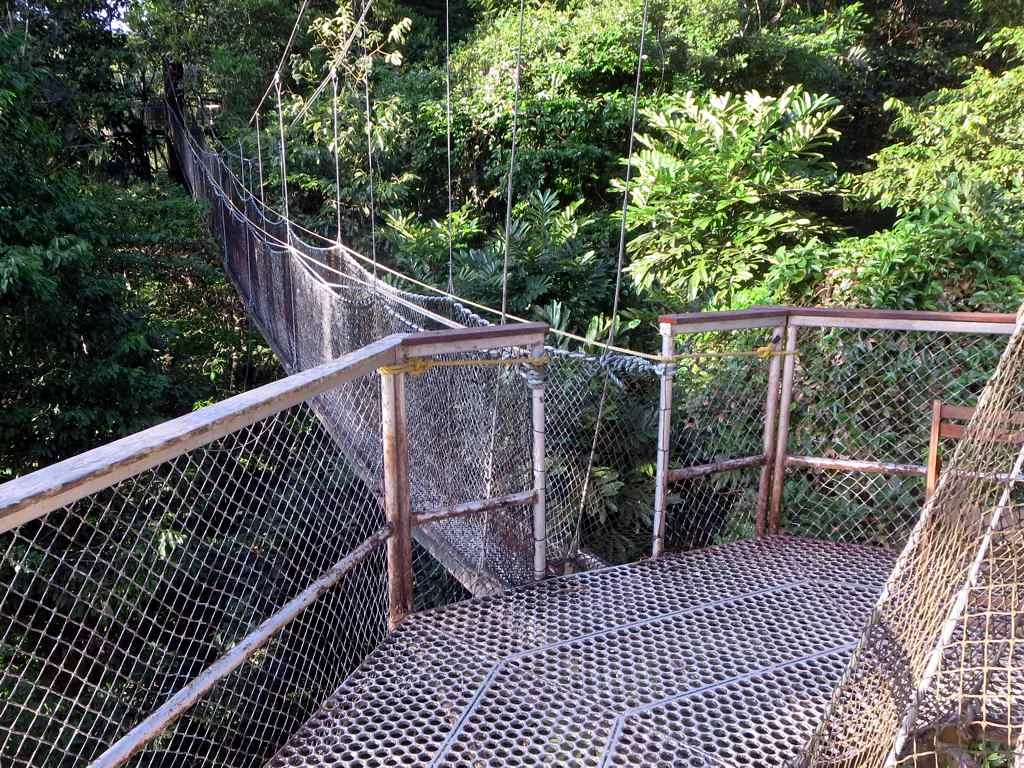
The Canopy Walkway, located towards Atta, offers a third perspective: that of the forest canopy. It is a different outing from the climb to Turtle Mountain, not a substitute. From the elevated walkway, the main focus is bird and mammal activity at height; from the mountain, the reward is a broad panorama of the river and the unbroken forest.
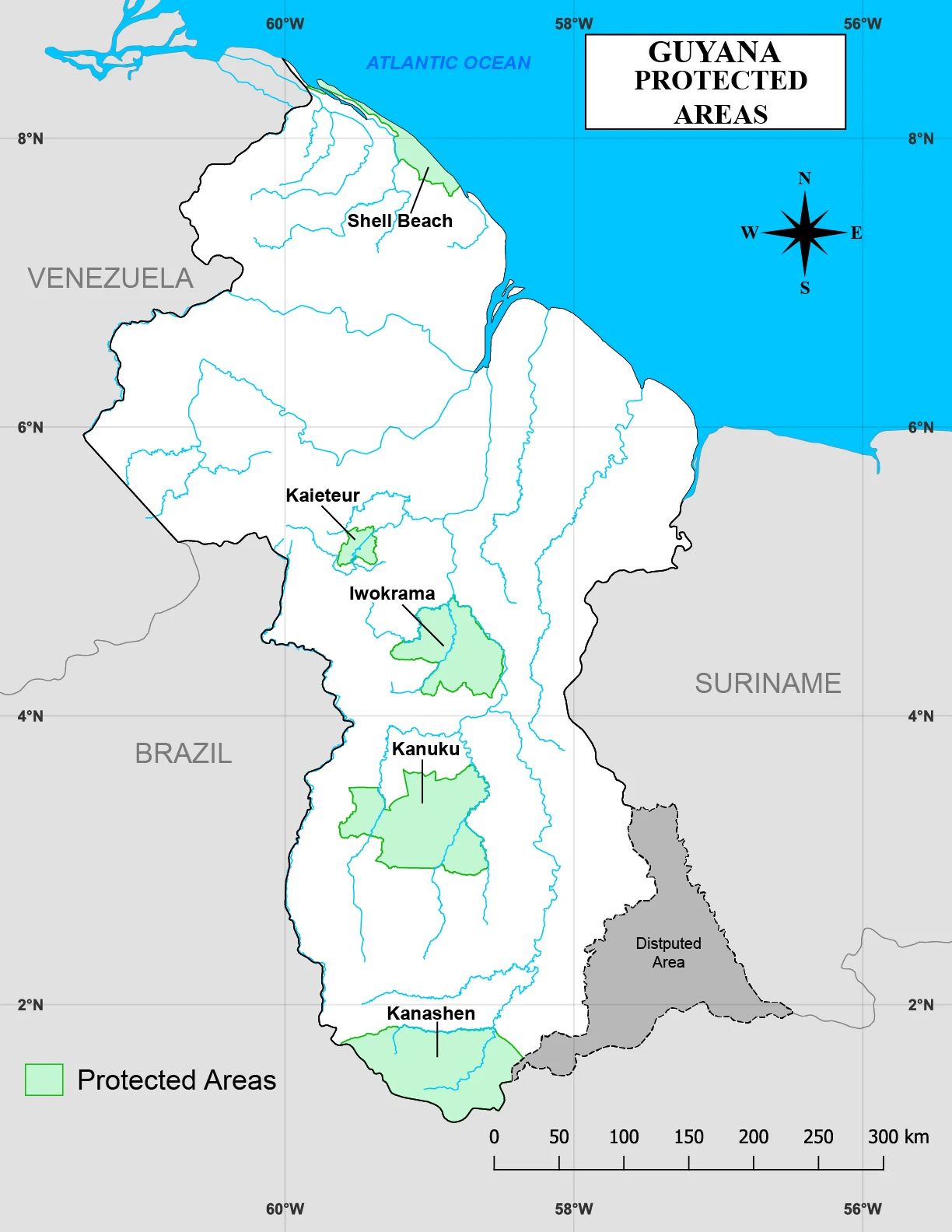
The sensible minimum is three calendar nights
A two-day programme can work as a first introduction, but it forces you to choose and leaves little room for transport delays or rain. To combine a hike, the river, nearby trails and the Canopy Walkway without turning the stay into a race, it is wiser to allow three full days in the area or add an extra night.
Anyone travelling from Georgetown by road should treat the transfer as a day in itself. The duration depends heavily on the condition of the track and can increase because of damaged or washed-out sections. Flying shortens the journey, but you need to confirm the available service, the airstrip being used, baggage weight limits and the final transfers.
There is a minibus option connecting with the Essequibo crossing, but it requires independent coordination, overnight travel and a later pick-up. It may suit travellers comfortable with open-ended logistics; for a first visit or anyone needing predictable schedules, an organised transfer reduces uncertainty. Check before paying the timetables, road conditions and flight arrangements.
Wildlife: observe without expecting a jaguar
Iwokrama is a strong place to learn how to look: dawn calls, tracks, birds along the river’s edge, nocturnal reptiles and changes in vegetation matter just as much as a spectacular sighting. Dawn, dusk and night outings make use of different moments, but no guide can turn wild animals into a guaranteed appointment.
Searching for jaguars from a vehicle, taking night cruises and walking with a guide work best when understood as field time, not as a species checklist. Ask which activity best matches your main interest—birds, primates, river landscapes or nocturnal life—and leave room to repeat it if conditions are favourable.
Responsible behaviour is simple: keep your distance, do not play sounds to attract animals, never feed wildlife and follow the guide’s instructions. The best photograph does not justify leaving the trail or prolonging an approach that disturbs an animal’s behaviour.
Petroglyphs and Fair View: add context, rather than consume a cultural stop
The petroglyphs near Kurupukari offer an entry point into the territory’s long human history. Their visit depends on water levels, so they should not be treated as a fixed activity on every itinerary. If they matter to you, ask specifically about availability when booking and have an alternative in mind.
A scheduled visit to Fair View can broaden the stay with contemporary Macushi perspectives. It is not a cultural backdrop: it is a community with its own daily life and its own boundaries. The appropriate approach is to book the visit through the local programme, listen to the interpretation provided and ask before photographing people, homes, work or community activities.
This dimension helps explain that Iwokrama is more than an area to explore. Its management combines research, conservation and defined uses of the forest; travellers therefore gain more by paying attention to who interprets the place and which practices support the visit.
What to confirm just before setting out
Do not base your decision on old rates or a static description of access. Before booking, confirm with the accommodation or operator: the dates and actual duration of the transfer, the availability of flights or vehicles, which meals and activities are included, the baggage policy, cancellation terms and trail conditions.
Also ask about the Turtle Mountain hike if you are travelling with an injury, limited mobility or concerns about steep ground. Guides do not remove the physical demands of the terrain. For the Canopy Walkway, mention in advance if heights may be an issue.
Bring a practical mindset: clothes that can get wet, a dry bag for electronics, insect repellent, sun protection, a torch and some time in hand at the end of your journey through Guyana. Logistical flexibility is not poor planning in Iwokrama; it is a realistic way to travel through the country’s interior.
References and checks before booking
- Guyana’s Protected Areas Commission: forest status, approximate area, the Macushi meaning of Iwokrama and the management framework.
- Iwokrama International Centre: conservation, research, tourism and links with communities.
- Iwokrama River Lodge: access by road, flight or minibus; changing route conditions; activities, Canopy Walkway and Turtle Mountain. Confirm all operational and commercial information here.
- Visit Guyana: an updated overview of the destination within the country’s nature-travel offering.
References consulted during editorial review. Times, requirements and advisories may change: always confirm with the official source.
- https://iwokrama.org/iwokrama.org
- https://iwokrama.org/about/iwokrama.org
- https://iwokrama.org/iwokrama-policies/iwokrama.org
- https://iwokrama.org/wp-content/uploads/2016/01/2012Rates.pdfiwokrama.org
- https://iwokrama.org/wp-content/uploads/2025/06/2024-AR-Sml.pdfiwokrama.org
- https://iwokrama.org/our-work/sustainable-tourism/tourism-updates/iwokrama.org
- https://iwokrama.org/news-article/his-excellency-brigadier-david-granger-visit-iwokrama/iwokrama.org
- https://iwokrama.org/wp-content/uploads/2026/04/IIC-Annual-Report-2025-email.pdfiwokrama.org
- GuyanaWikidata · CC0 1.0 · Wikidata · Q734
- GuyanaWorld Countries — mledoze · ODbL 1.0 · World countries dataset by mledoze and contributors · ODbL 1.0
- GuyanaWorld Bank Open Data · CC BY 4.0 · World Bank
- GuyanaDBpedia · CC BY-SA 3.0 · DBpedia