Egypt · Fayoum
Wadi al-Hitan with a permit, guide and a fossil trail
The Valley of the Whales requires access to be planned before leaving Cairo: a protected visit on foot, with clear safety decisions.
Conditions described in the guide: confirm current requirements and access with the official source before travelling.
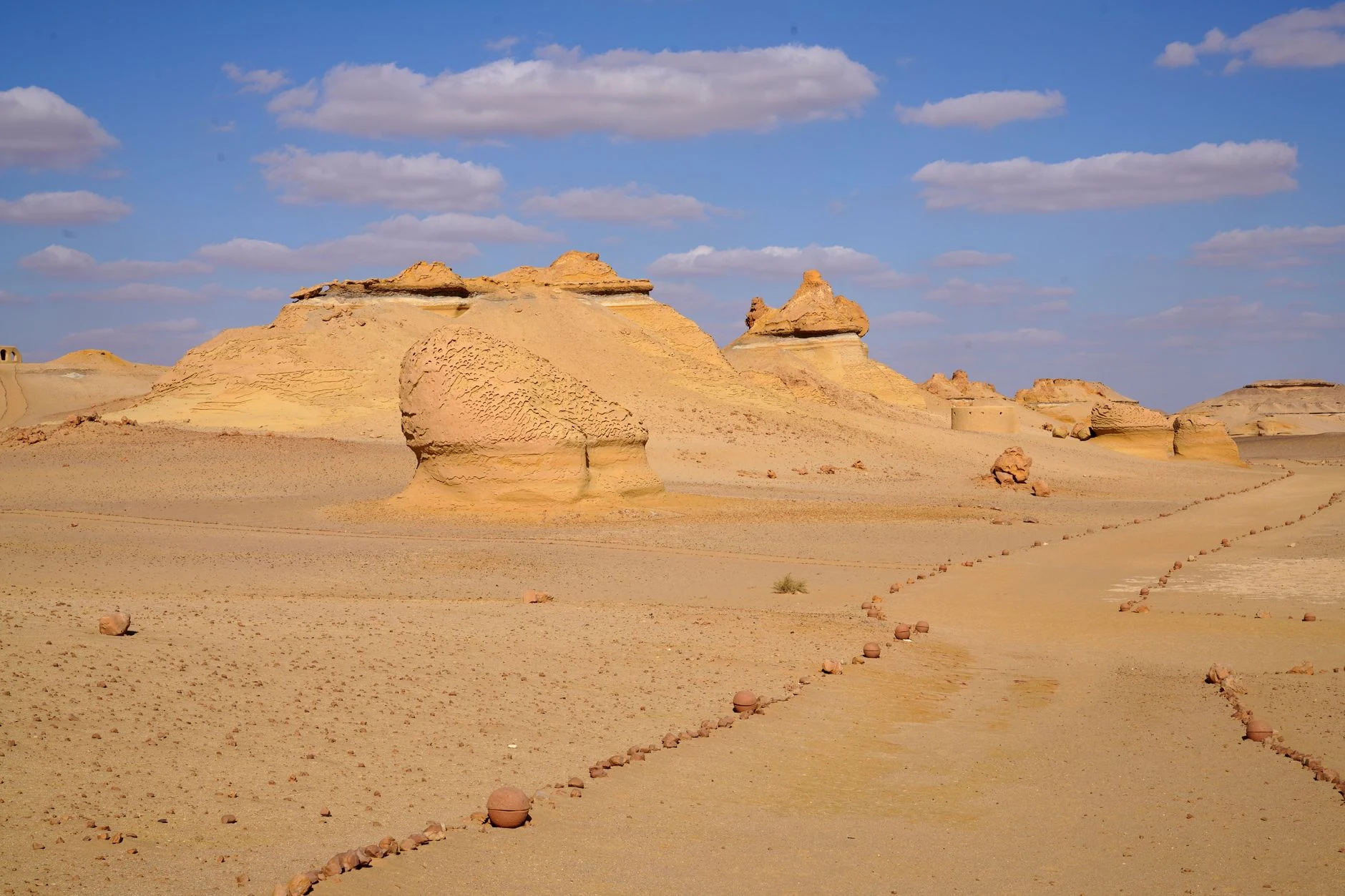
Wadi al-Hitan, in Egypt’s Western Desert, is not a site to rush through or an excursion to improvise from Cairo. Its Eocene cetacean skeletons remain in the landscape where they were found and explain an exceptional evolutionary transition: that of land mammals moving towards marine life. The visit is most meaningful when understood as an encounter with a protected scientific site, not as a dune-driving activity.
The key decision comes before booking accommodation in Fayoum: access must be coordinated in advance, with an authorized guide and transport, and you must accept that the final stretch is not designed for independent travel. If those conditions do not fit your itinerary, it is better to spend the day at other sites in Fayoum and leave Wadi al-Hitan for another occasion.
Listen to Egypt
A documented soundscape that complements this guide to Egypt. The Valley of the Whales requires access to be planned before leaving Cairo: a protected visit on foot, with clear safety decisions.
Audio by AhmadAiuby · Openverse · CC0 1.0 · Duration: 01:04
Why the fossils can be seen in the desert itself
Around 40 million years ago, this area formed part of a marine environment connected to the ancient Tethys Sea. Today, layers of rock and sand preserve the remains of Archaeoceti, early whales that were already adapted to water but still carried traits inherited from their terrestrial ancestors.
The visit becomes more rewarding when you look for this specific evidence: exposed skeletons, skulls, vertebrae and, in some specimens, the small hind limbs that help explain the transformation of whales. There is no need to turn the walk into a paleontology lesson; it is enough to distinguish between looking at an isolated skeleton and understanding why it remains in its geological context.
The site’s value is not limited to whales. Other fossils and sedimentary formations help reconstruct the ancient coastal environment. Allow time for the guide’s explanations and for the interpretation center if it is operating on the day of your visit.
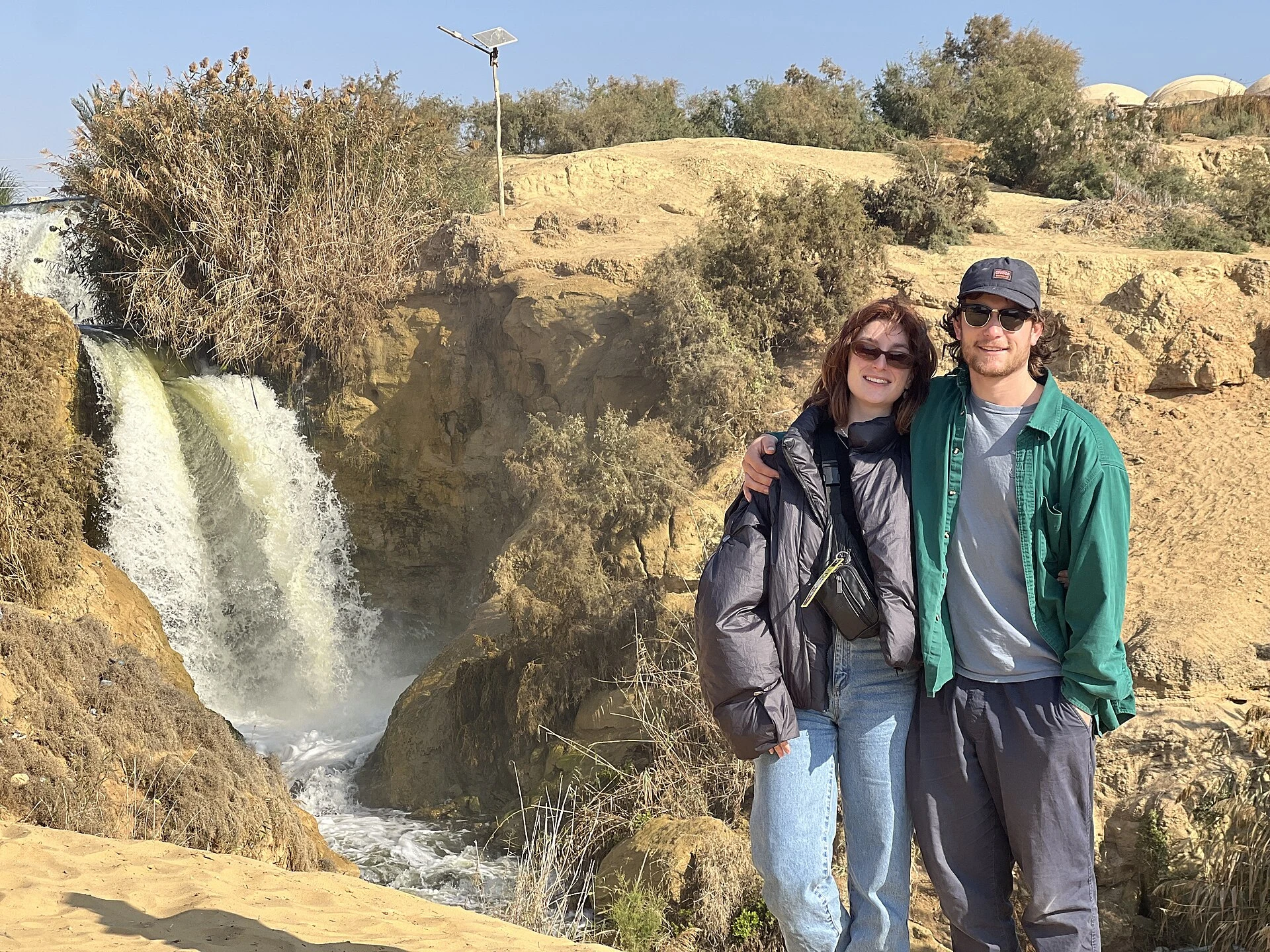
The visit is a controlled trail, not a free-roaming safari
Wadi al-Hitan is part of the Wadi El-Rayan protected area, and vehicle access is restricted within its World Heritage-designated zone. The route follows defined trails, a measure that prevents damage to both the fossils and the terrain that contains them.
This changes the logistics: a vehicle may take you to the facilities, but it does not replace the walking portion of the visit. Wear closed, supportive shoes, use sun protection, carry enough water and bring a light layer for wind and dust. Do not lean on fossils, leave the walkways or turn any geological fragment into a souvenir: even a small action can damage an irreplaceable record.
Do not treat the visit as a highly demanding trek, but do expect sun exposure and uneven ground. Anyone with reduced mobility should request specific information in advance about distances, surfaces, shade and the realistic possibilities for assistance; do not assume that a remote natural area offers universal adaptations.

Access is what determines whether the trip works
Fayoum lies southwest of Cairo, but Wadi al-Hitan is much farther into the desert than the governorate’s urban and agricultural areas. The journey requires generous time margins and coordination between the driver, guide and protected-area reservation. For that reason, an overly compressed day trip often sacrifices both context and the peace of mind needed to comply with access controls.
The official protected-areas platform lists Wadi al-Hitan among the sites that can be reserved. The site’s management documentation also establishes prior authorization and accompaniment by park staff. Confirm the current procedure before paying an intermediary: the season, visitor quotas, weather, track conditions and operational decisions may alter the visit.
For travelers from the United States, the current official recommendation of the U.S. Department of State advises against travel to the Western Desert except with an authorized professional tour company. Even if you hold another nationality, this warning offers useful guidance for a prudent decision: do not arrange the journey independently, check your own country’s advisories and ask the operator for proof of licensing, the itinerary, the vehicle and the local contacts responsible.
What to combine —and what not to— in Fayoum
Wadi al-Hitan can form part of a stay in Fayoum alongside Lake Qarun, the Wadi El-Rayan reserve or the village of Tunis, known for its pottery production. However, trying to visit all these places in one day tends to turn the valley into a photographic stop and adds hours of driving.
A more sensible option is to separate the fossil visit from water-based activities, agricultural landscapes or workshops. That way, you can give priority to a slow reading of the site and leave local journeys for another time. If you stay overnight in Fayoum, ask your accommodation whether the departure is coordinated from there or from a meeting point agreed with the operator; do not assume pickup arrangements or driving times without confirmation.
Choose providers that respect authorized routes, minimize waste and do not promise off-trail access. The visitor’s best contribution is simple: arrive prepared, follow instructions and accept that conservation deliberately limits what can be done.
Official checks before setting out
Booking and access conditions: consult the Egyptian Ministry of Environment’s booking platform for Wadi al-Hitan and confirm the date, meeting point, guide, permitted transport and any operational closures directly.
Protected-area rules and fees: review the information provided by the Egyptian Environmental Affairs Agency. Fees, permits and camping conditions can change and must be checked before travel.
Scientific context and protection: consult the UNESCO World Heritage Centre entry for Wadi al-Hitan to understand the site’s boundaries, the vehicle ban in the heritage zone and the value of the fossils.
Safety and travel in the Western Desert: review the U.S. Department of State’s travel advisory for Egypt, issued on July 15, 2025 and subject to change, as well as the official recommendations of your own country.
References consulted during editorial review. Times, requirements and advisories may change: always confirm with the official source.
- https://www.eeaa.gov.eg/Topics/85/36/66/Detailswww.eeaa.gov.eg
- https://whc.unesco.org/document/168874whc.unesco.org
- https://whc.unesco.org/document/187014whc.unesco.org
- https://www.experienceegypt.eg/en/city/30/fayyoumwww.experienceegypt.eg
- https://parks.moenv.gov.eg/bookingparks.moenv.gov.eg
- https://fayoum.gov.eg/Tou/Protect/ElHitan/default.aspxfayoum.gov.eg
- https://mota.gov.eg/mota.gov.eg
- https://www.eeaa.gov.eg/News/22944/Detailswww.eeaa.gov.eg
- EgiptoWikidata · CC0 1.0 · Wikidata · Q79
- EgiptoWikidata · CC0 1.0 · Wikidata · Q202311
- EgiptoWikidata · CC0 1.0 · Wikidata · Q404844
- EgyptWorld Countries — mledoze · ODbL 1.0 · World countries dataset by mledoze and contributors · ODbL 1.0
- Egypt, Arab Rep.World Bank Open Data · CC BY 4.0 · World Bank
- EgyptDBpedia · CC BY-SA 3.0 · DBpedia
- EN TORNO A LOS APORTES DEL EGIPTO ANTIGUO A LA CULTURA OCCIDENTALCrossref · Metadatos públicos; derechos específicos por campo cuando correspondan · Crossref
- EL FUNDAMENTALISIMO ISLÁMICO EN EGIPTO (II).Crossref · Metadatos públicos; derechos específicos por campo cuando correspondan · Crossref
- EL FUNDAMENTALISMO ISLÁMICO EN EGIPTO (I).Crossref · Metadatos públicos; derechos específicos por campo cuando correspondan · Crossref
- El Alma de una Civilización. Retazos de una Cultura Milenaria. EgiptoCrossref · Metadatos públicos; derechos específicos por campo cuando correspondan · Crossref