Namib-Naukluft, Namibia
Planning a visit to Sossusvlei and Deadvlei around heat and access
A well-planned visit to the Namib’s *vlei* depends less on collecting dunes than on resolving your base, the final stretch and the heat before setting out.
Conditions described in the guide: confirm current requirements and access with the official source before travelling.
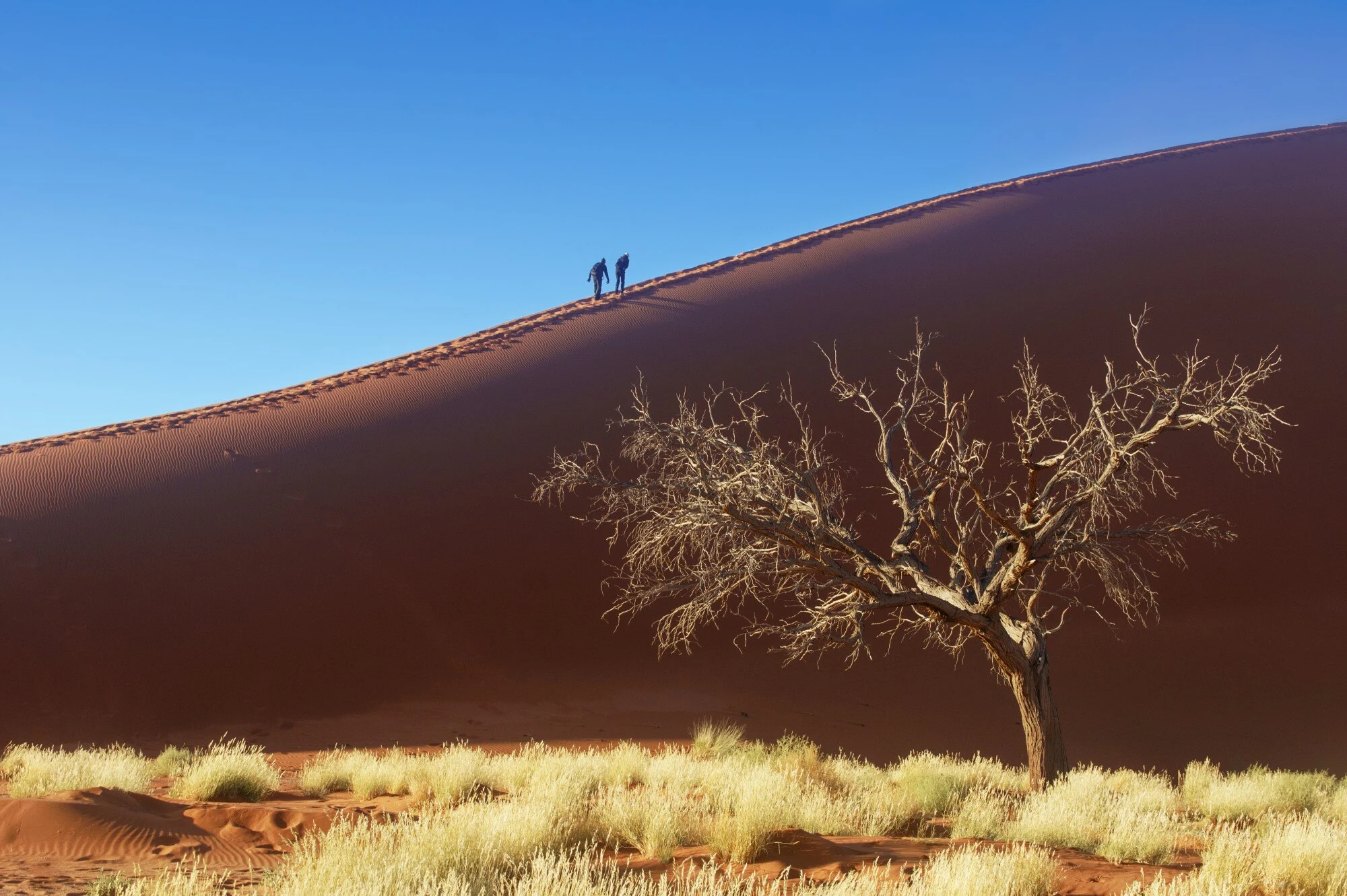
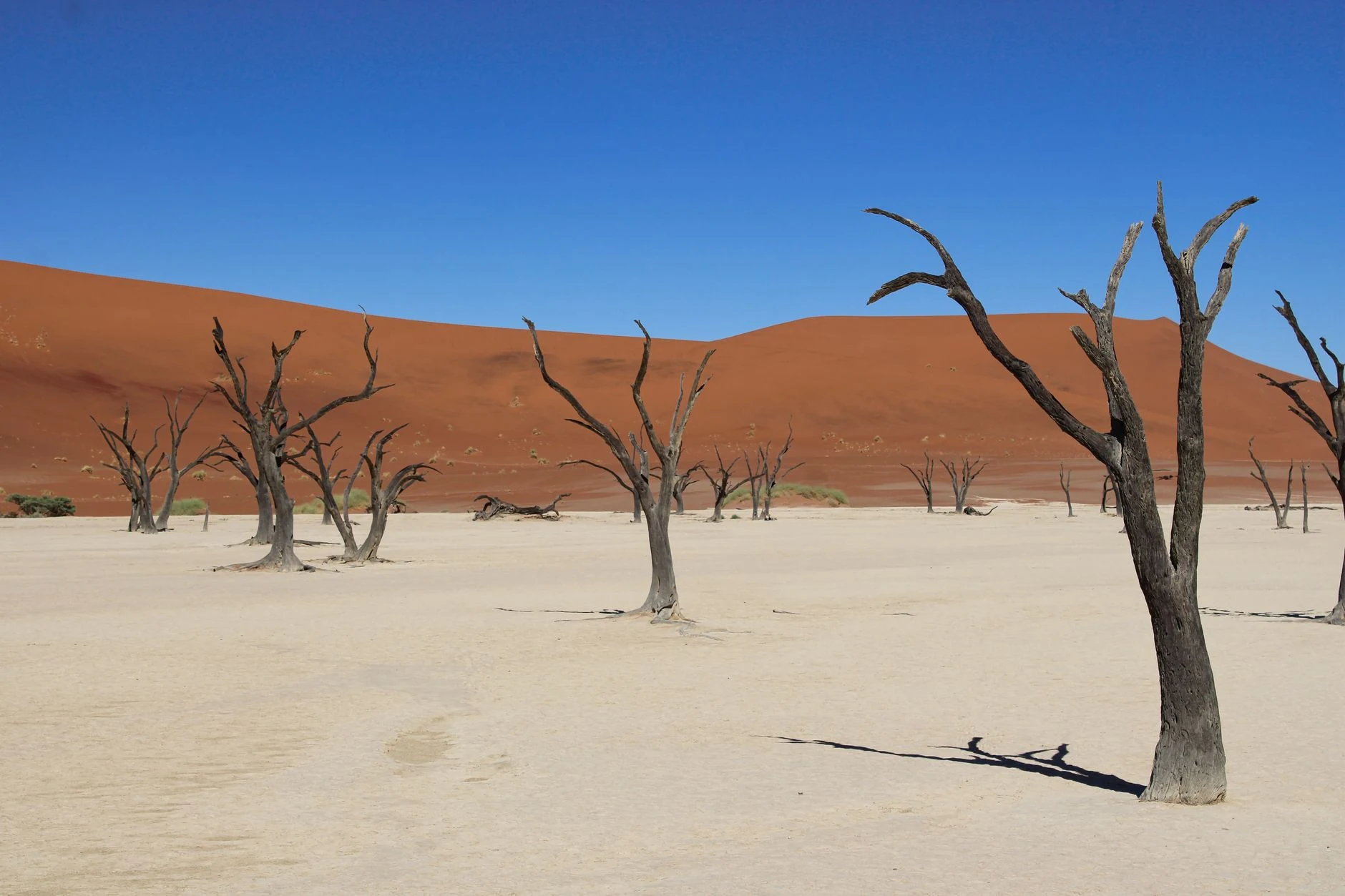
Sossusvlei and Deadvlei are two different stops within the same landscape of sand, riverbed and clay. Understanding the difference helps you plan a more realistic, less hurried visit: Sossusvlei is the terminal depression associated with the Tsauchab River, while Deadvlei is the pale basin with dead acacias that usually draws most attention. The key decision is not which dune to climb, but how to fit early light, access and walking on sand into a day of demanding temperatures.
A desert of fog, sand and ephemeral riverbeds
The area forms part of the Namib Sand Sea, listed as a World Heritage Site for its geological and ecological processes. It is not a motionless backdrop: winds shape active dunes, while Atlantic fog supplies moisture to an extremely arid system. Seeing the landscape as a process, rather than merely as a postcard, changes the experience.
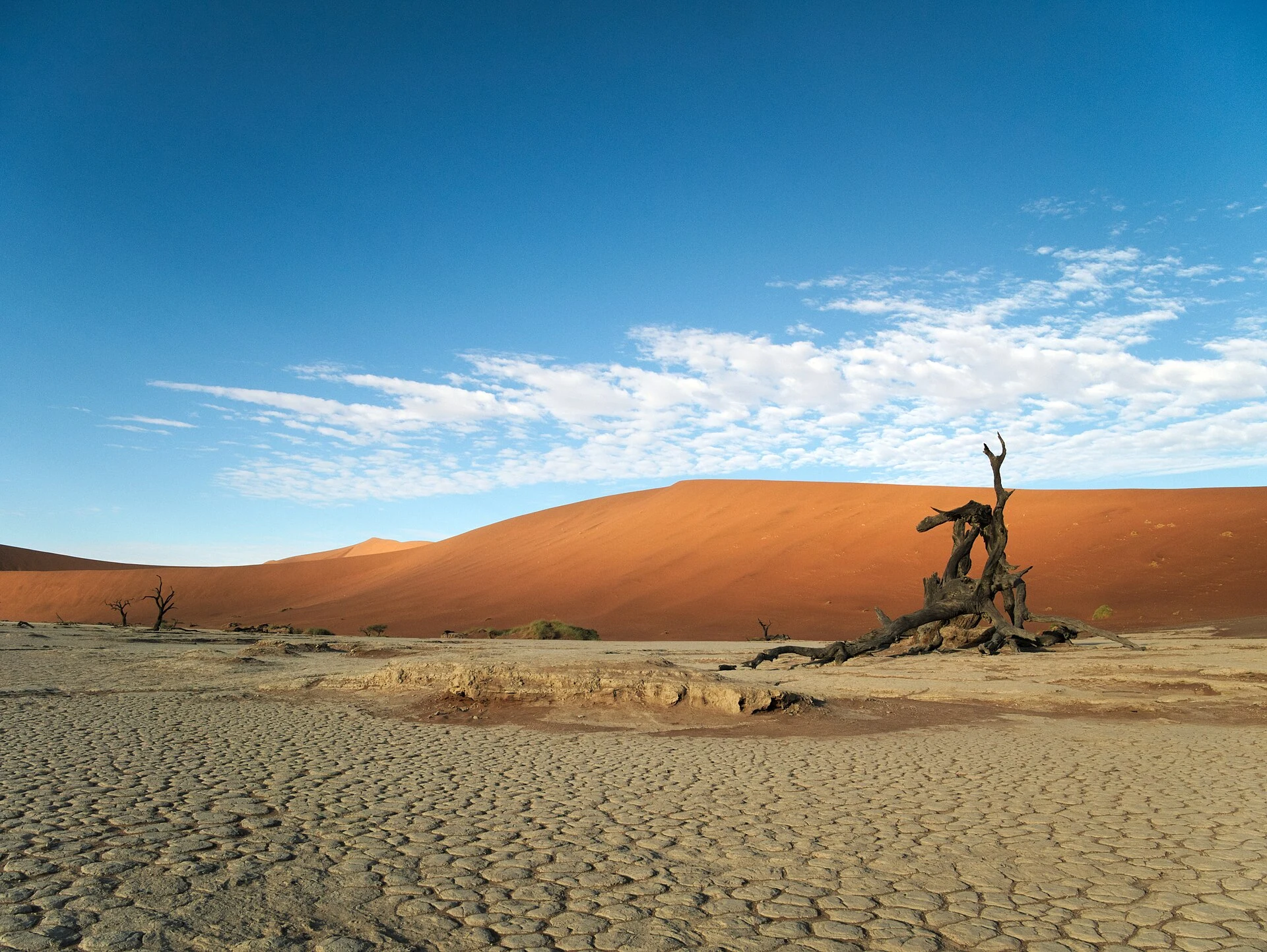
The road from Sesriem leads towards the dunes and vlei, but the best-known places follow different rhythms. Deadvlei involves a short walk over sand to its clay floor; Sossusvlei depends on the occasional flow of the Tsauchab and can look very different after exceptional rains. Do not assume there will be water or that sand conditions will match those shown in recent images.
Your base determines how many useful hours you have
Sesriem serves as the gateway and offers practical facilities, including camping and basic supplies. It is the logical choice for travellers who prioritise an early departure without adding a major transfer before entering the park. From there, the stated distance to Sossusvlei is about 60 kilometres: treat it as a substantial part of the day, not a brief detour.
Staying inside the park may offer another operational advantage. The Namibia Wildlife Resorts property located inside the park advertises access to Sossusvlei before sunrise and return after sunset, with guided excursions. That difference in opening hours may matter more than the accommodation category if your priority is making the most of the first and last light.
Before paying, confirm opening hours, road conditions, fuel, campsite services and accommodation availability directly with the official operator. These details can change with the season, roadworks or management decisions.
Decide on the final stretch before you drive
The final approach from the conventional-vehicle parking area towards Deadvlei and Sossusvlei crosses deep sand. A shuttle service runs from the 2WD car park to Deadvlei, and guided excursions are also available from accommodation in the area. Do not turn your vehicle into a gamble: decide in advance between the shuttle, an authorised guide or whatever access is expressly permitted on the day of your visit.
The rules governing this stretch have recently been the subject of administrative clarification. Namibia’s ministry has stated that registered operators and accommodation providers may transport their clients, but the precise arrangements for independent visitors, authorised suppliers and transfers must be checked before departure. Do not base your plan on forum posts, old videos or rates published by third parties.
From the drop-off point, Deadvlei requires approximately 1.1 kilometres on foot over sand. Carry enough water, sun protection and footwear that can handle hot sand, and allow plenty of time. Climbing a dune is optional, not a requirement for understanding the place: if energy, heat or mobility are limiting factors, walking to the vlei may be the more sensible experience.
Responsible travel is reflected in small decisions
In a system of moving dunes, tyre tracks and shortcuts are not neutral acts. The Namib Sand Sea management plan restricts driving outside designated areas and includes monitoring and closure of tracks when necessary for their recovery. Stay on authorised routes and corridors, even when other marks in the sand seem to invite you to follow them.
It is also worth adjusting your photographic expectations. The silhouettes of the trees and the dunes are best enjoyed without rushing between viewpoints or entering fragile areas in search of an isolated composition. Do not remove sand, touch or climb the dead trees, leave litter or fly drones without the appropriate permission. The scale of the Namib is better appreciated when your route leaves as little trace as possible.
Official sources to check before departure
- Namibia’s Ministry of Environment, Forestry and Tourism: check the current notice on the Sossusvlei concession and transfers, as well as park access rules.
- Namibia Wildlife Resorts: review gate hours, availability in Sesriem and at Sossus Dune Lodge, excursions and the operational conditions for transfers.
- UNESCO World Heritage Centre: read the Namib Sand Sea entry to place Sossusvlei within the protected landscape.
- Visit Namibia: cross-check the description of Deadvlei, the walk and general information about the southern region.
Just before travelling, verify opening hours, fees, track conditions, vehicle rules, transfers and bookings with these organisations.
References consulted during editorial review. Times, requirements and advisories may change: always confirm with the official source.
- https://whc.unesco.org/en/list/1430whc.unesco.org
- https://whc.unesco.org/en/list/1430/documents/whc.unesco.org
- https://whc.unesco.org/en/statesparties/na/whc.unesco.org
- https://whc.unesco.org/document/152659whc.unesco.org
- https://www.unesco.org/en/world-heritage/listwww.unesco.org
- https://www.sossusvlei.org/about/www.sossusvlei.org
- https://www.sossusvlei.com/en/formation/www.sossusvlei.com
- https://namibian.org/frequently-asked-questionsnamibian.org
- NamibiaWikidata · CC0 1.0 · Wikidata · Q1030
- NamibiaWikidata · CC0 1.0 · Wikidata · Q10594225
- NamibiaWorld Countries — mledoze · ODbL 1.0 · World countries dataset by mledoze and contributors · ODbL 1.0
- NamibiaWorld Bank Open Data · CC BY 4.0 · World Bank
- NamibiaDBpedia · CC BY-SA 3.0 · DBpedia