Tobago | Nature with planning
Main Ridge and Little Tobago: forest, birds and sea from Speyside
A well-planned day between Main Ridge Forest Reserve and Little Tobago, using Speyside as a base and birds as the common thread.
Conditions described in the guide: confirm current requirements and access with the official source before travelling.
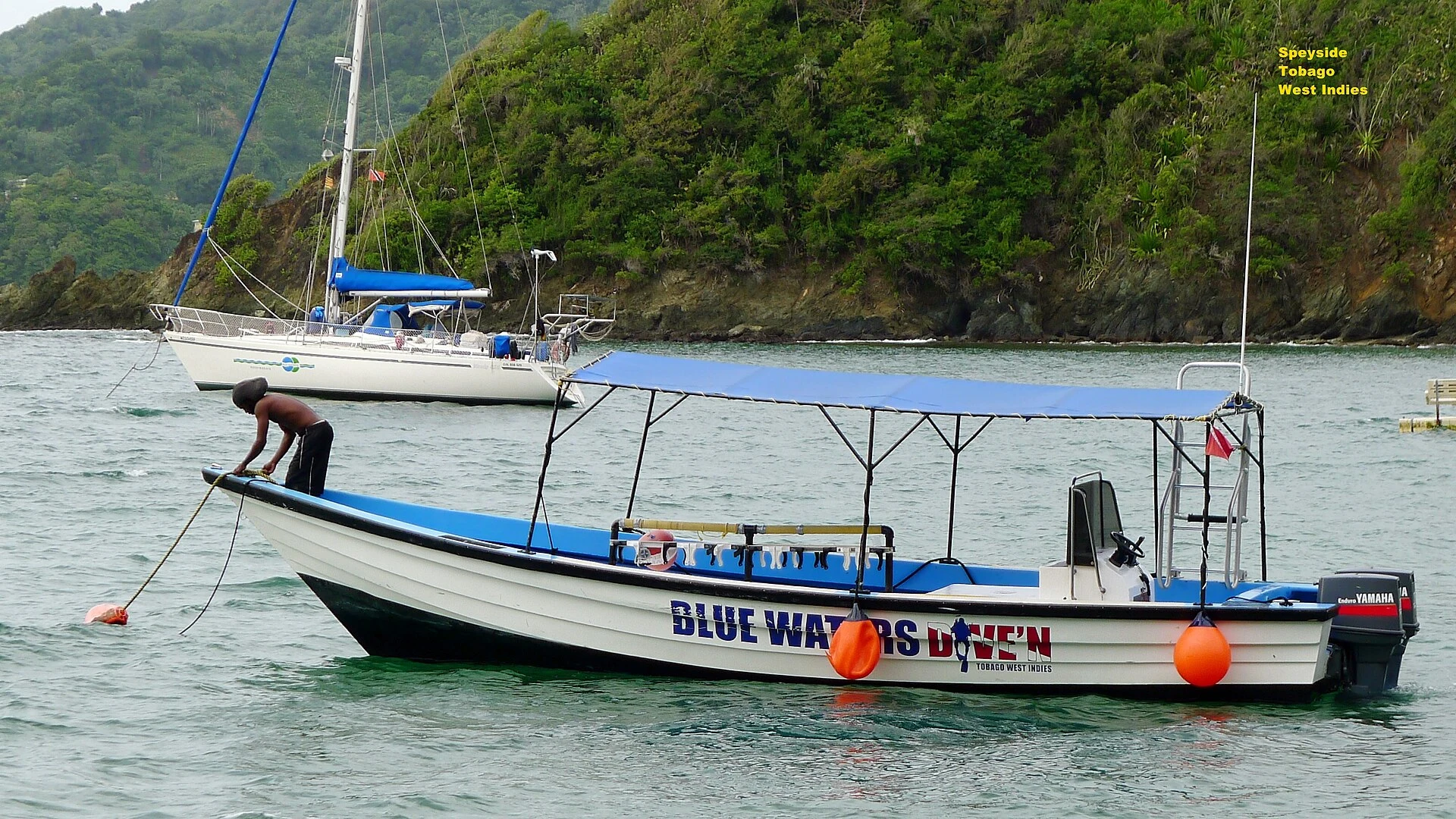
Northeastern Tobago makes it possible to combine mountain rainforest, coastline and breeding islets in one area, but it should not be treated like just another beach excursion. Main Ridge Forest Reserve and Little Tobago belong to a terrestrial and marine landscape of great ecological value; the best way to travel here is slowly, observing without chasing sightings and leaving room for the weather. Speyside is a logical base for connecting both environments, although it does not replace advance planning for transport and boat trips.
Understanding what northeastern Tobago protects
Main Ridge Forest Reserve runs along Tobago’s mountainous spine and was legally protected in 1776 to preserve its role in water catchment. Today it forms part of the Tobago Northeast Biosphere Reserve, recognised by UNESCO since 2020. This is a territory that brings together forest, coastal communities, reefs and mangroves.
It is important to use the names accurately: Main Ridge is not an inscribed World Heritage Site. It appears on the country’s tentative list for a possible nomination, while the current UNESCO recognition applies to the Tobago Northeast Biosphere Reserve. This does not make the area less interesting; it helps explain that the visit should focus on an inhabited, connected landscape, not just an isolated trail.
For travellers with binoculars, the contrast is the reward: beneath the forest canopy, look for species such as the white-tailed sabrewing, the Blue-backed Manakin and the trogon; offshore, Little Tobago concentrates seabirds. Do not plan the day as a species checklist: silence and distance are part of responsible wildlife observation.
A day in two environments, with Speyside as a base
Spend the morning at Main Ridge and set aside another part of the day for Little Tobago, depending on the boat schedule and sea conditions. Gilpin Trace is one of the best-known routes for observing birds in the forest. It can be a sensible option for walkers who want a shaded trail, but humidity, mud and exposed roots change the experience considerably after rain. Bring grippy footwear, water, rain protection and a dry bag for your camera or phone.
The practical choice is straightforward: if you want to identify calls, plants or small birds, hire or consult a local naturalist guide for the forest section. There is no need to turn the whole day into a long hike; covering little ground and stopping to listen often yields more than trying to walk many kilometres.
From Speyside, boat trips to Little Tobago add the second environment. The island is visited by sea and, once ashore, the route includes a short climb to observation areas. This is different from the forest: expect sun exposure, possible swell when boarding and disembarking, and a walk over uneven ground. If the sea is rough, if you have reduced mobility or if you want a visit without elevation gain, consider leaving Little Tobago for another day rather than forcing the trip.
Choosing dates and pace without promising sightings
For birdwatching, December to April generally offers good conditions; March and early April are particularly noted for forest-bird activity and the passage of migrants. This does not make those months a guarantee or rule out other dates: Tobago has resident birds year-round, and a rainy morning may affect the outing more than the calendar.
Stay at least one night in Speyside or the eastern area if your aim is to combine Main Ridge and Little Tobago. This avoids relying on a long transfer from the southwest of the island and lets you adjust the order of activities. Do not schedule a demanding hike and a fixed-time sea crossing back-to-back: leave room for a coastal alternative, a viewpoint or time in the village if conditions change.
The visitor’s most useful contribution is discreet: do not feed wildlife, use sound lures to attract birds, approach nests or leave any waste behind. In a biosphere reserve, the landscape is not an empty backdrop; it also supports small-scale fishing, community life and local practices. Travelling at a slower pace leaves more room for those relationships to continue.
Before you go: sources to check
- Tobago House of Assembly, Division of Tourism, Culture, Antiquities and Transportation: background on Main Ridge Forest Reserve and its trails.
- UNESCO, Man and the Biosphere Programme: boundaries and significance of the Tobago Northeast Biosphere Reserve.
- UNESCO, World Heritage Centre: Main Ridge’s status on the tentative list and the absence of inscribed properties in Trinidad and Tobago.
- Tobago Tourism Agency: guidance on birdwatching, Little Tobago and the recommended season.
Check directly with these organisations or with your chosen operator for trail status, weather conditions, boat schedules and availability, guide requirements and any access changes before setting out.
How to decide
- Choose this area if you are interested in connecting forest and sea, not if you want to string together many beaches in a few hours.
- Speyside works better with a night’s leeway than as a quick stop from the other end of Tobago.
- Main Ridge requires attention to mud, while Little Tobago requires preparation for the sea, sun and a short climb.
- December, January, February, March and April are the most favourable months if birds are your main reason for visiting.
References consulted during editorial review. Times, requirements and advisories may change: always confirm with the official source.
- https://www.thatourism.gov.tt/places/main-ridge-forest-reserve/www.thatourism.gov.tt
- https://visittobago.gov.tt/go-beyondvisittobago.gov.tt
- https://visittobago.gov.tt/tobagos-best-birdwatching-spotsvisittobago.gov.tt
- https://visittobago.gov.tt/blog/how-spend-three-days-tobagovisittobago.gov.tt
- https://visittobago.gov.tt/blog/how-enjoy-ultimate-staycation-tobagovisittobago.gov.tt
- https://visittobago.gov.tt/castara-nature-sets-pacevisittobago.gov.tt
- https://visittobago.gov.tt/blog/discover-one-caribbeans-most-spectacular-and-under-radar-islandsvisittobago.gov.tt
- https://cso.gov.tt/report-on-socio-economic-survey-related-to-protected-areas/cso.gov.tt
- Trinidad y TobagoWikidata · CC0 1.0 · Wikidata · Q754
- Trinidad and TobagoWorld Countries — mledoze · ODbL 1.0 · World countries dataset by mledoze and contributors · ODbL 1.0
- Trinidad and TobagoWorld Bank Open Data · CC BY 4.0 · World Bank
- Trinidad and TobagoDBpedia · CC BY-SA 3.0 · DBpedia
- Trinidad and Tobago/Trinidad y TobagoCrossref · Metadatos públicos; derechos específicos por campo cuando correspondan · Crossref
- Table 5.24. Trinidad and Tobago / Trinidad y TobagoCrossref · Metadatos públicos; derechos específicos por campo cuando correspondan · Crossref
- Table 5.25. Trinidad and Tobago / Trinidad y TobagoCrossref · Metadatos públicos; derechos específicos por campo cuando correspondan · Crossref
- Table 5.25. Trinidad and Tobago / Trinidad y TobagoCrossref · Metadatos públicos; derechos específicos por campo cuando correspondan · Crossref
- Table 5.23. Trinidad and Tobago / Trinidad y TobagoCrossref · Metadatos públicos; derechos específicos por campo cuando correspondan · Crossref
- Table 5.23 / Trinidad and Tobago / Trinidad y TobagoCrossref · Metadatos públicos; derechos específicos por campo cuando correspondan · Crossref