Paraguay · Itapúa · Cultural heritage
Trinidad and Jesús de Tavarangue, two views of Paraguay’s missions
A short distance from Encarnación, Santísima Trinidad del Paraná and Jesús de Tavarangue offer two distinct readings: a mission town that can still be explored and a monumental church left unfinished. Visit them as part of one historical landscape, but not as interchangeable stops.
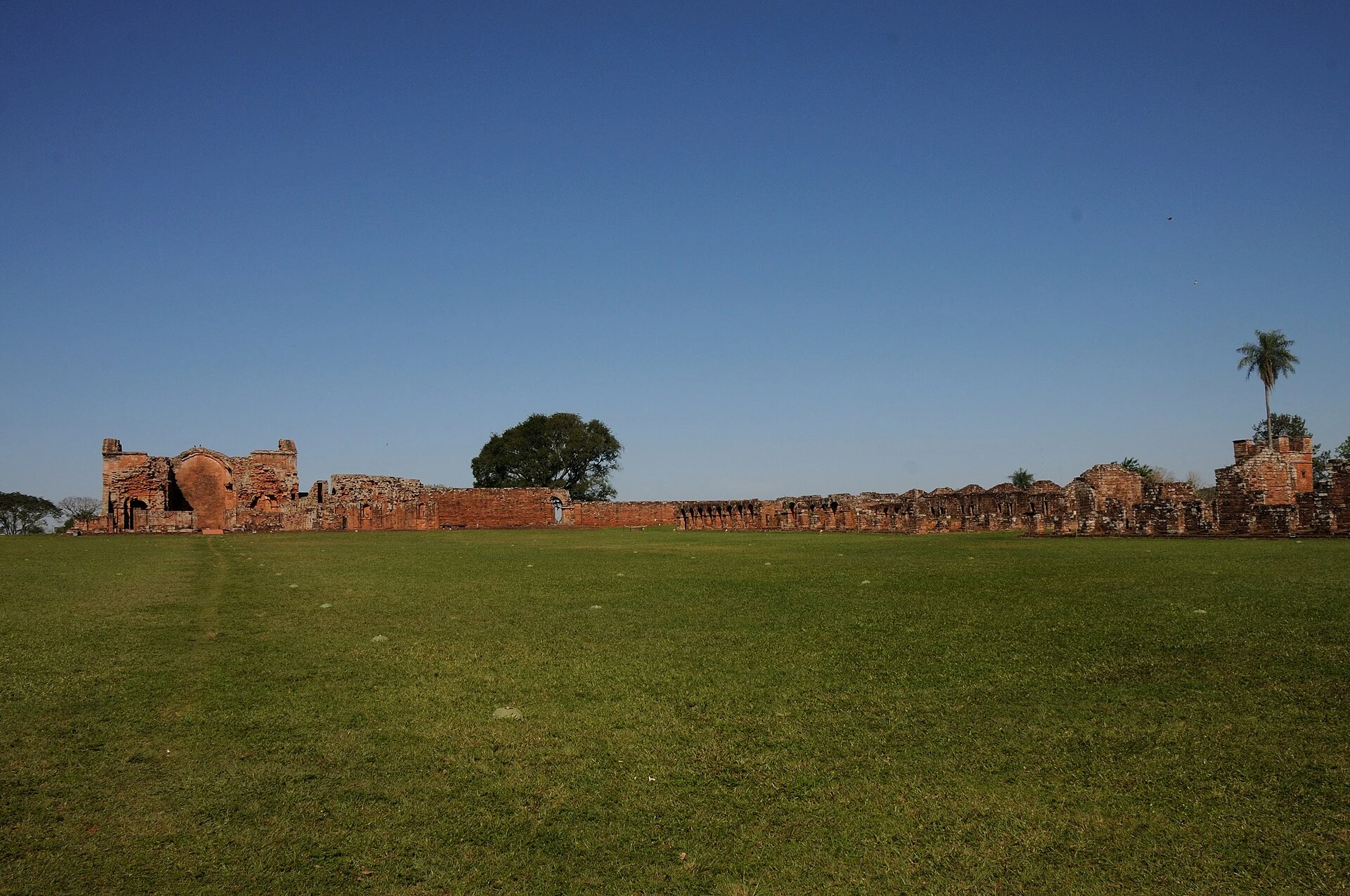
The useful question is not which of the two missions to visit, but how much time to allow for them to explain each other. Trinidad preserves the urban scale of a reducción with particular clarity; Jesús concentrates the power of an unfinished church and its trilobed arches. Together they form a single UNESCO World Heritage property, inscribed since 1993, and lie about 10 kilometres apart, so taking your time at both makes more sense than choosing only the more photogenic one.
Start with Trinidad to understand that this was a city
At Santísima Trinidad del Paraná, do not head straight for the main church. First read the plaza, corridors, school, workshops, homes, burial areas and gardens: the preserved complex makes it possible to understand how a reducción was organised, rather than simply admire a stone church. UNESCO identifies it as the better-preserved and more ambitious of the two urban complexes; the National Secretariat of Culture also highlights its friezes of musical angels, lithic pieces and museums on the site.
This perspective also avoids a common simplification: the missions were projects of evangelisation and colonial reorganisation of Guaraní populations, not a harmonious existence outside history. They involved negotiation, labour, artistic production and the persistence of Guaraní practices within unequal power relations. Read the architecture as evidence of this complex process, not as a European backdrop transplanted intact to South America.
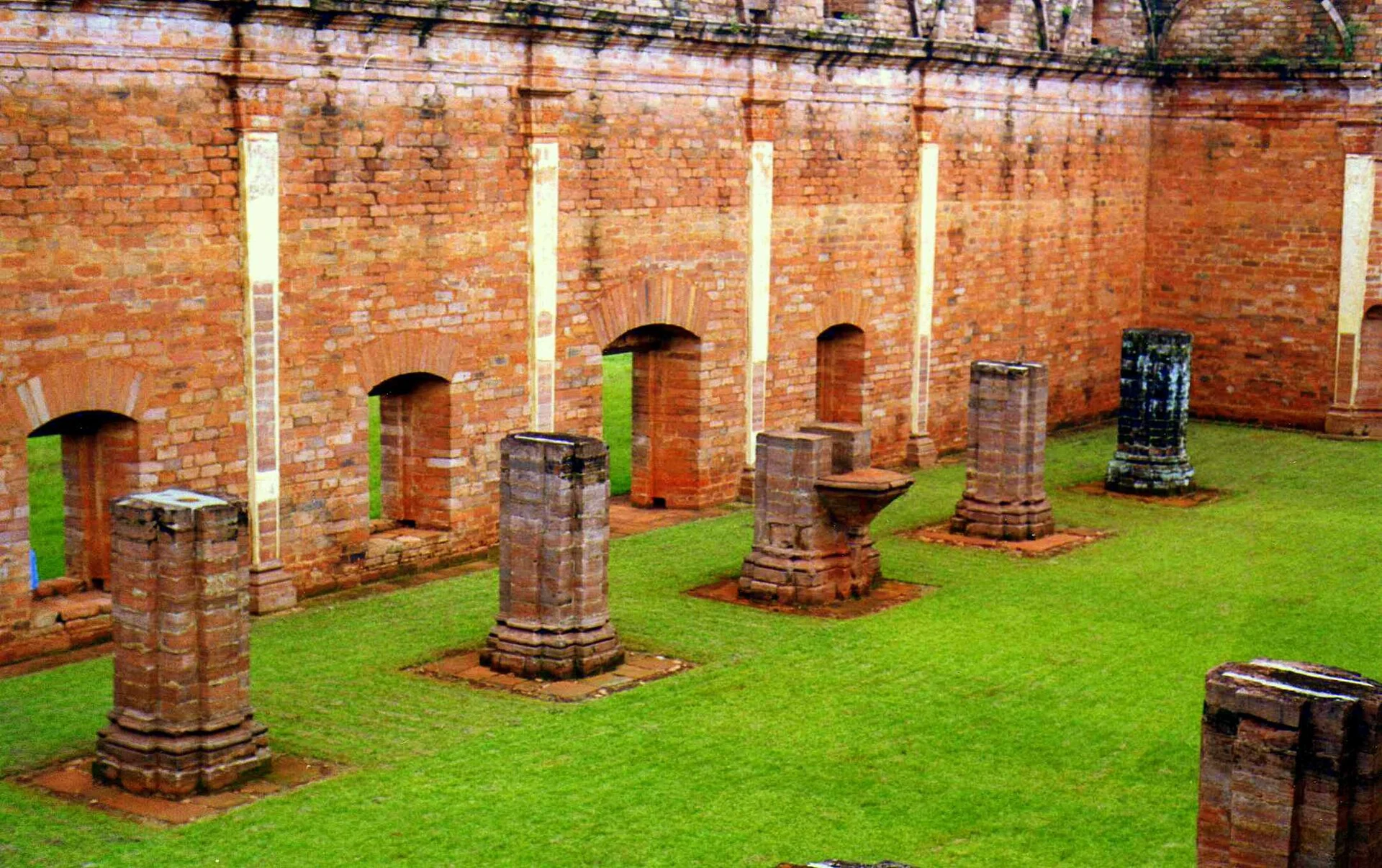
Leave Jesús for the question that remains open
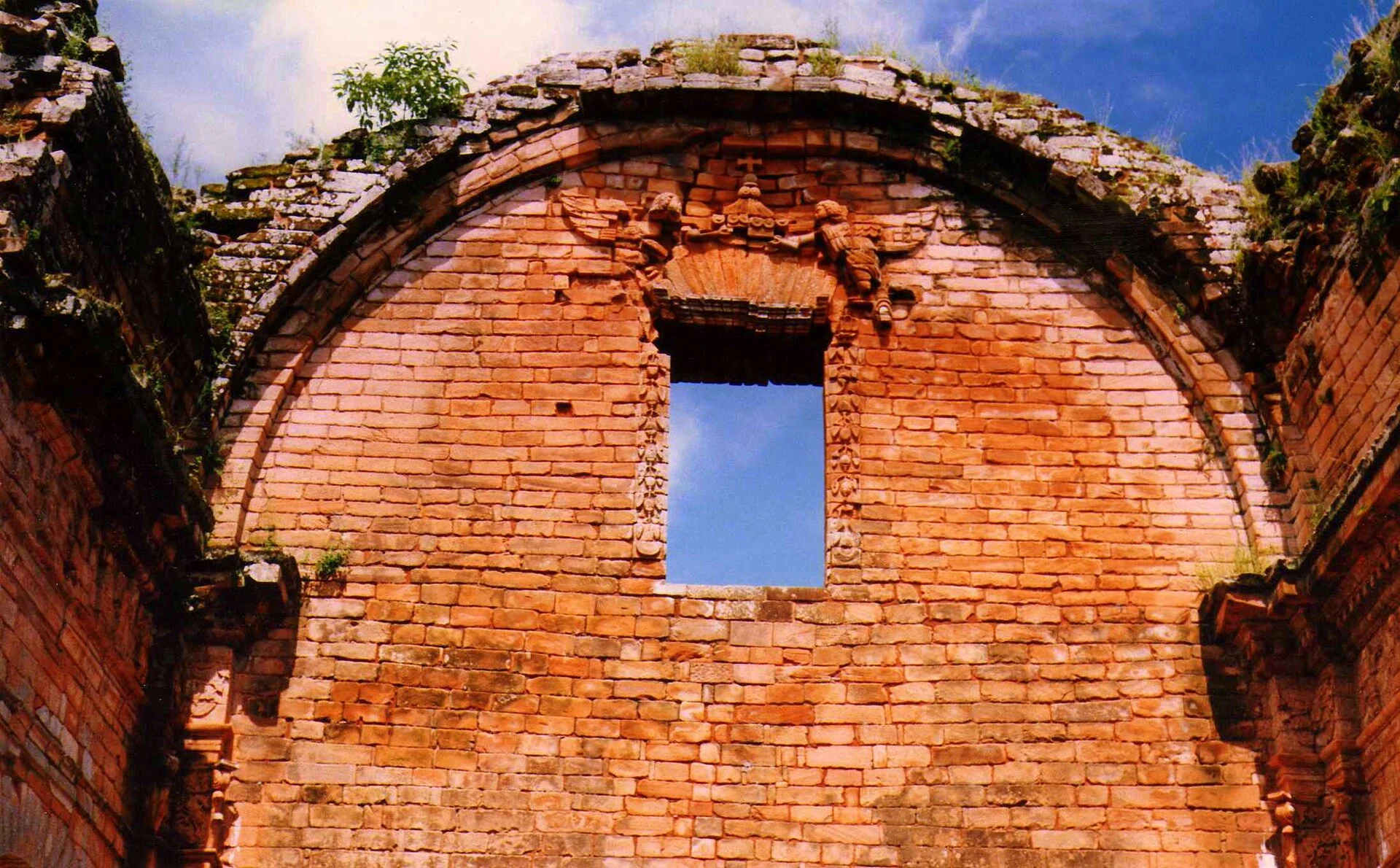
Jesús de Tavarangue works differently. Its great church was never completed after the expulsion of the Jesuits in the 18th century; as a result, its emptiness, proportions and openings are essential parts of the visit. Its trilobed arches, which UNESCO associates with an exceptional Mudéjar expression among the missions of the former Jesuit Province, deserve a pause. Here, the absence of a roof and finished details is not a shortcoming to be hurriedly filled in with the imagination, but the key to observing the project’s ambition.
The comparison is productive: Trinidad answers “how did the settlement function?”; Jesús answers “what happens when an architectural and historical programme is interrupted?” Allow time to walk without looking for a wide-angle composition at every arch. Archaeological structures are fragile, and the site’s value also depends on not climbing, touching reliefs or leaving permitted areas. Heritage management recognises risks related to extreme weather, nearby urban development and tourist pressure.
The practical base: Encarnación, not a dash from Asunción
For an independent visit, Encarnación is the logical base: the municipality places Trinidad 38 km away and Jesús 42 km away along Route PY06. This makes it possible to arrange both in one day with your own vehicle, a hired driver or an excursion booked in advance. Relying on improvised connections can turn a visit to two nearby sites into a day of waiting.
The recommended order is Trinidad in the morning and Jesús afterwards, allowing time for transfers, museums and a guided visit if one is available. If your interest is heritage rather than ticking off attractions, one night in Encarnación and an additional half-day will produce a better experience than hurriedly adding other sights. San Cosme y San Damián belongs to the circuit administered by SENATUR, but it is not part of the UNESCO inscription covering Trinidad and Jesús: include it only if you are specifically interested in its connection with astronomy and can give it time of its own.
Opening hours, night shows and accessibility: check before setting out
Daytime opening hours, Trinidad’s evening light-and-sound performances and Jesús’s videomapping shows, as well as ticket sales, are subject to change. Before travelling, check the official Missions booking portal and SENATUR’s tourism information page; the latter publishes direct contacts for both sites. Do not plan your return transport based solely on a night show advertised on social media or in old guidebooks.
Accessibility measures are in place, including access ramps, adapted toilets, Braille signage and a tactile model at Jesús. Even so, these are extensive archaeological complexes, with outdoor surfaces and routes that may change because of conservation work or weather. Travellers with reduced mobility, low vision or a need for assistance should contact SENATUR directly before travelling to confirm which routes are operating that day and what support may be available.
A responsible visit is measured by attention, not quantity
Buy through official channels, hire local guides when you want interpretation, and eat or stay overnight in Encarnación, Trinidad or Jesús so that your spending remains in the area. At the sites, avoid drones, tripods or other activities requiring authorisation unless you have checked first; do not turn burial, religious or archaeological spaces into fashion-shoot locations. The most practical form of respect is simple: follow the route, do not handle stonework or sculptures, keep your voice down and accept that some areas may be partially closed for conservation.
Do not promise an “untouched” experience: these sites are living heritage landscapes, surrounded by contemporary communities and subject to ongoing maintenance. That is precisely why the best visit does not consume them as isolated ruins, but seeks to understand what they reveal together about Guaraní territory, colonialism, art, labour and regional memory.
References consulted during editorial review. Times, requirements and advisories may change: always confirm with the official source.
- https://whc.unesco.org/en/list/648whc.unesco.org
- https://whc.unesco.org/en/list/648/documents/whc.unesco.org
- https://whc.unesco.org/document/153950whc.unesco.org
- https://whc.unesco.org/es/list/648whc.unesco.org
- https://whc.unesco.org/en/decisions/3345/whc.unesco.org
- https://whc.unesco.org/document/123025whc.unesco.org
- https://whc.unesco.org/archive/advisory_body_evaluation/648.pdfwhc.unesco.org
- https://whc.unesco.org/en/tentativelists/6613/whc.unesco.org
- ParaguayWikidata · CC0 1.0 · Wikidata · Q733
- ParaguayWikidata · CC0 1.0 · Wikidata · Q179396
- ParaguayWorld Bank Open Data · CC BY 4.0 · World Bank
- ParaguayDBpedia · CC BY-SA 3.0 · DBpedia
- Literatura oral y popular del ParaguayOpen Library · CC0 1.0 (registros de catálogo) · Open Library