Mali · Heritage in context
Timbuktu preserves its manuscripts while travel must wait
Timbuktu’s earthen mosques and manuscript tradition deserve thoughtful preparation, but the current situation means postponing tourist travel.
Viajalo Atlas
Photography pending verification
Timbuktu was an intellectual, commercial and religious hub of the southern Sahara, not a city frozen in a desert image. Its mud-brick mosques, mausoleums and historic circulation of manuscripts help explain an urban culture shaped by knowledge, devotion and local building techniques. Today, however, the useful decision for a traveller is not to turn this cultural interest into an immediate itinerary: security conditions require postponing any tourist travel to Mali and following official advisories before reconsidering it.
A city of learning, trade and religious life
Timbuktu’s history is best understood through its networks. Between the 15th and 16th centuries, the city was a centre of Islamic learning and exchange on the trans-Saharan routes, where texts, knowledge, salt, gold, livestock and grain came together. The memory of Sankoré refers not just to a building, but to a constellation of schools and practices for passing on knowledge.
The manuscripts associated with Timbuktu are not scenery for a quick visit. They invite reflection on family libraries, copyists, jurists and readers, as well as on contemporary efforts to protect vulnerable collections. If travel becomes viable again in the future, it will be worth seeking activities that explain this history rigorously and avoiding the treatment of the documents as mere visual curiosities.
Three earthen mosques that demand a different perspective
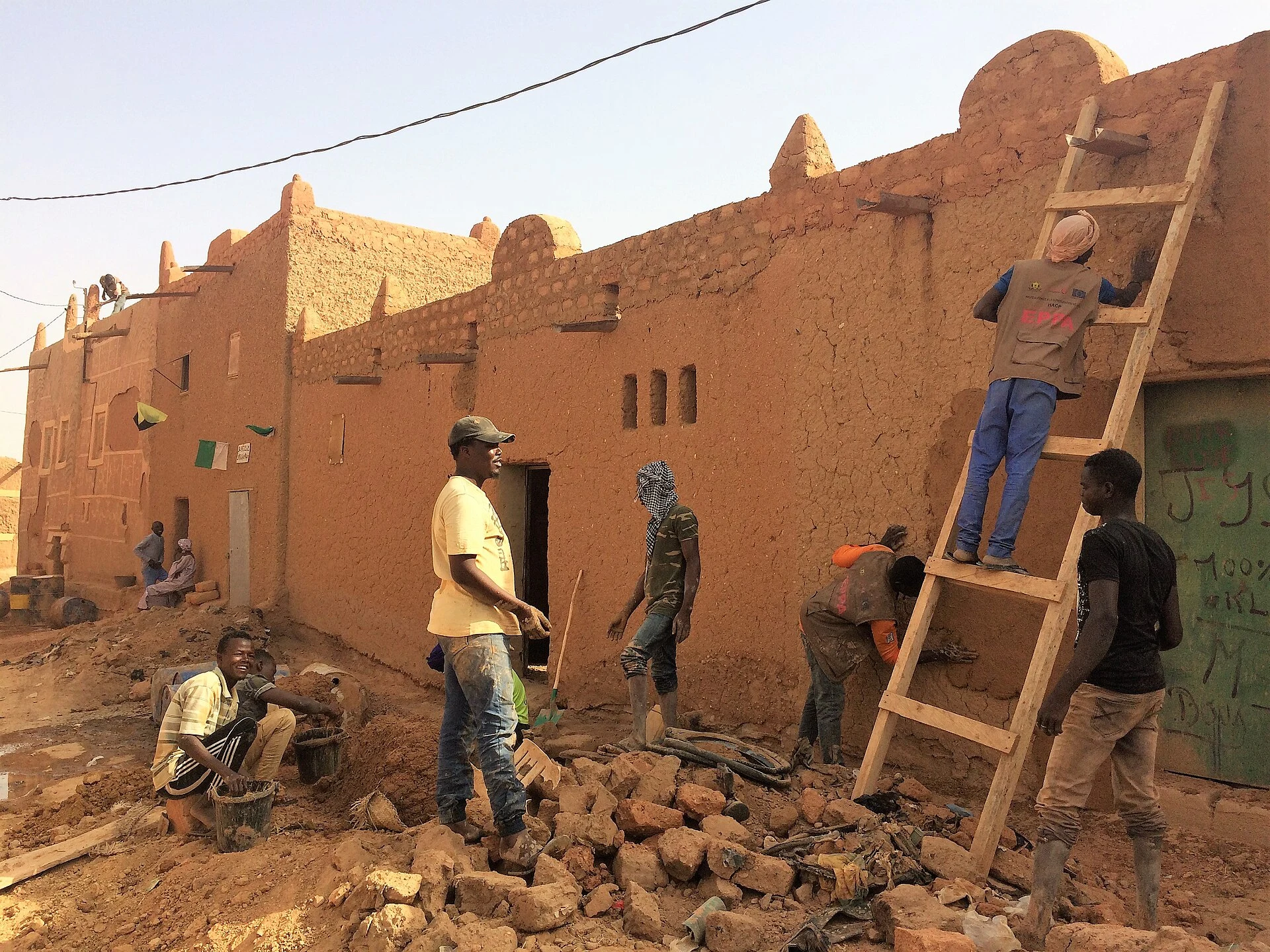
Djingareyber, Sankoré and Sidi Yahia form the monumental core for which Timbuktu was inscribed as a World Heritage site. Their earthen architecture expresses precise technology: walls, buttresses, projecting beams and coatings require regular maintenance to withstand rain, wind and encroaching sand.
This care is neither a neutral restoration nor an exceptional gesture. Mud-brick architecture depends on knowledge passed down through generations and on local labour; the mosques are therefore best understood as living religious spaces and maintained buildings, not ruins. Conservation is also shaped by the attacks suffered in 2012 and the subsequent rebuilding of destroyed mausoleums: a context of memory that deserves respect, not hurried consumption.
Why tourist travel must remain on hold
As of 11 September 2026, consular advisories from several governments recommend against travelling to Mali because of serious and changing risks linked to terrorism, kidnapping, crime, unrest and limited assistance. This recommendation applies to the entire country and makes planning journeys northwards, where Timbuktu is located, especially inappropriate.
The practical consequence is clear: do not book non-refundable flights, tours, accommodation or transfers with Timbuktu as a tourist destination. Nor is it advisable to design an alternative overland route or assume that a stopover in Bamako makes it feasible to continue. Operational security and the ability to respond to an incident cannot be inferred from old travel accounts, maps or social-media posts; they must be checked again when the situation changes.
Preparing without travelling is also a way to draw closer
While travelling there would not be responsible, there are more considerate ways to learn about Timbuktu. Look for editions, exhibitions and documentary projects produced with Malian institutions, specialists in earthen heritage and manuscript custodians. Pay attention to voices that explain the place through religious practice, education, building crafts and heritage protection.
When official advisories no longer discourage travel, the first stage of planning should begin with the real feasibility of access, not with a list of monuments. Connections, entry permits, service availability, local conditions and visiting rules will need to be confirmed directly with the relevant authorities. Until then, the responsible option is to maintain the interest and postpone physical presence.
Mandatory checks before any change of plan
Check your consular authority’s travel advisory again, along with communications from the relevant embassy and updated information from the institutions responsible for Timbuktu’s heritage. Also review any transport restrictions, temporary closures, changes to consular assistance or entry requirements. These details are time-sensitive and may change without notice.
References consulted during editorial review. Times, requirements and advisories may change: always confirm with the official source.
- https://whc.unesco.org/en/list/119whc.unesco.org
- https://whc.unesco.org/en/statesparties/mlwhc.unesco.org
- https://whc.unesco.org/en/list/119/documents/whc.unesco.org
- https://whc.unesco.org/en/story-timbuktuwhc.unesco.org
- https://whc.unesco.org/en/statesparties/ml/whc.unesco.org
- https://whc.unesco.org/en/documents/107981whc.unesco.org
- https://whc.unesco.org/document/123017whc.unesco.org
- https://whc.unesco.org/en/decisions/3684whc.unesco.org
- MaliWikidata · CC0 1.0 · Wikidata · Q912
- MaliWikidata · CC0 1.0 · Wikidata · Q11987935
- MaliWikidata · CC0 1.0 · Wikidata · Q12795573
- MaliWorld Countries — mledoze · ODbL 1.0 · World countries dataset by mledoze and contributors · ODbL 1.0
- MaliWorld Bank Open Data · CC BY 4.0 · World Bank
- MaliDBpedia · CC BY-SA 3.0 · DBpedia