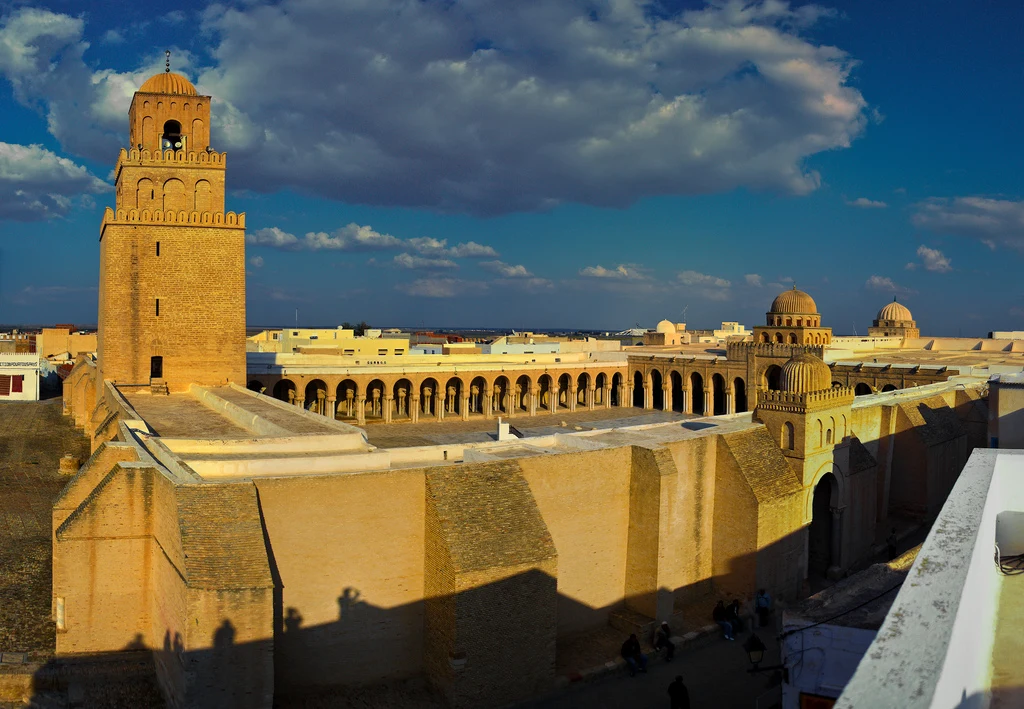
Agadez: Earthen Architecture and Reasons to Postpone Travel
Agadez’s historic centre preserves an urban fabric shaped by ancient encampments, earthen architecture and living political and craft traditions. But as of 5 September 2026, it is not a tourist destination to add to an itinerary: several consular authorities advise against travel to Niger. This guide explains what makes Agadez distinctive and what to check before considering a future trip.
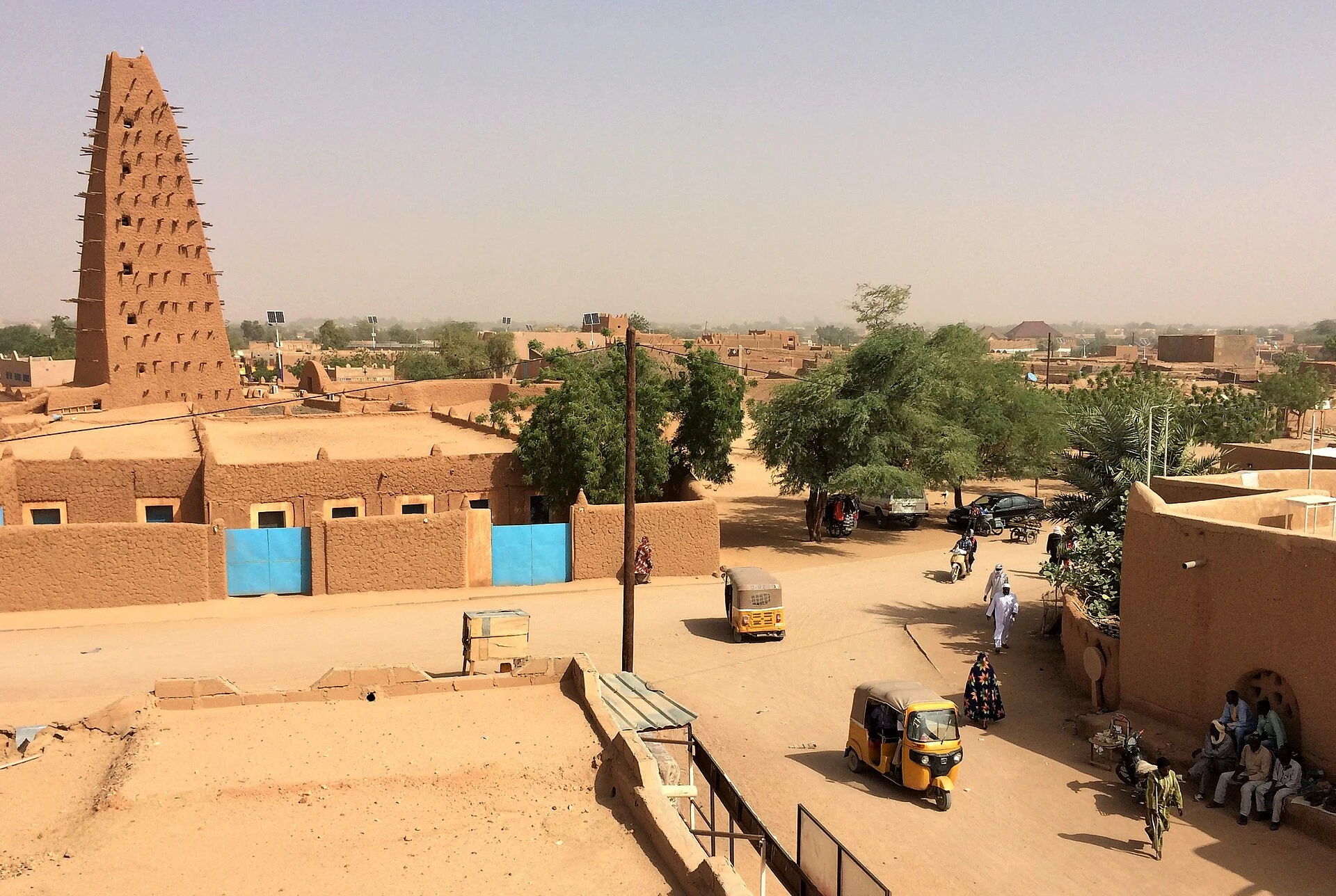
Agadez should not be understood as a gateway to a “desert to conquer”, but as an inhabited city whose urban form, banco houses and religious buildings express centuries of trans-Saharan exchange. Its historic centre, inscribed by UNESCO in 2013, comprises eleven irregularly laid-out neighbourhoods and a mosque with a 27-metre adobe minaret. However, the most useful information for anyone considering travelling now is something else: as of 5 September 2026, the responsible advice is not to plan a visit. The United States maintains a Level 4 “Do not travel” advisory for Niger because of crime, civil unrest, terrorism, health risks and kidnapping; it also notes movement restrictions and mandatory escorts for foreigners travelling outside Niamey.
Visual context for NigerContext video selected for this guide; it does not by itself identify every place mentioned.Video by Askia Mohamed KMS · Pexels · Pexels License · Duration: 00:31
♫
Listen to Niger
A documented soundscape that complements this guide to Niger. Agadez’s historic centre preserves an urban fabric shaped by ancient encampments, earthen architecture and living political and craft traditions. But as of 5 September 2026, it is not a tourist destination to add to an itinerary: several consular authorities advise against travel to Niger. This guide explains what makes Agadez distinctive and what to check before considering a future trip.
Cultural or ambient audio selected as context; it does not necessarily represent every place mentioned. Audio by Dappasolomon001 · Wikimedia Commons · CC BY-SA 4.0 · Duration: 01:2101
First, the decision: do not turn a warning into a logistical challenge
In the current context, Agadez falls outside any reasonable model of independent travel. The UK FCDO also advises against all travel to Niger and specifies that foreigners may travel outside Niamey only with authorisation and an escort from Nigerien security forces; it also reports highway robberies on buses between Tahoua and Agadez and between Agadez and Arlit. France formally advises against all travel to the country and classifies the entire territory as a red zone. An escort, a local contact or a plane ticket does not turn this situation into an acceptable tourist experience. Do not book non-refundable services or plan an overland route to Agadez while these advisories remain in force.
02
What makes Agadez exceptional is not a single monument
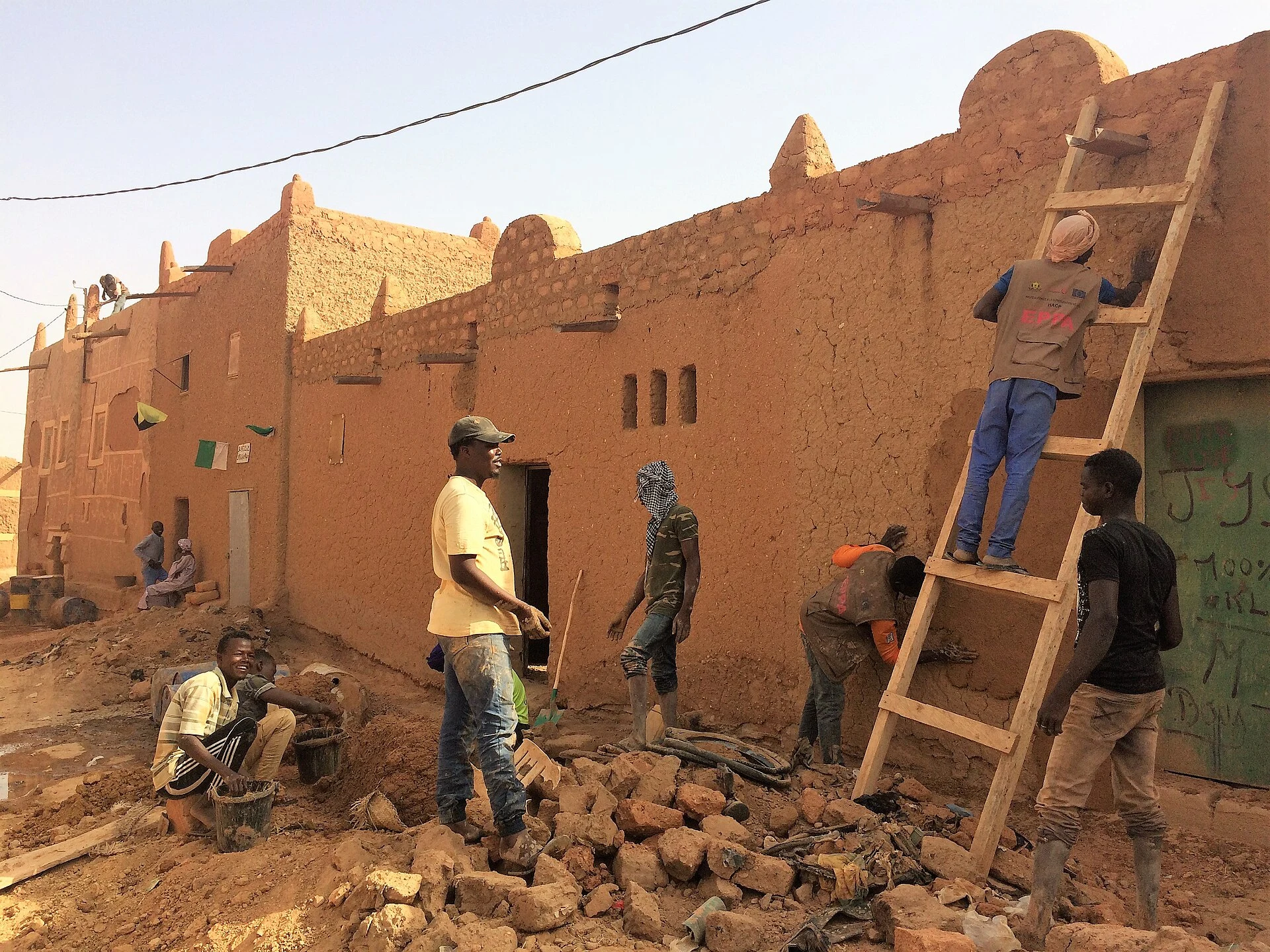
If conditions change in the future, the best way to approach Agadez will be to read it as a living urban fabric. UNESCO links its layout to the settlement of Tuareg groups around former encampments during the 15th and 16th centuries, when the Sultanate of Aïr was established in the city. The result is not a neatly ordered sequence of “attractions”, but eleven neighbourhoods whose streets, earthen homes, palaces and religious buildings form an inhabited historic city. The Great Mosque and its adobe minaret are important, but a visit should not be reduced to a photograph: the site’s value also lies in the commercial, craft and social practices that continue there.
For a future trip: check current conditions rather than reusing old advice
When official advisories no longer advise against travel, start planning again from scratch. Check directly with the relevant authorities on the security situation, permissions to leave Niamey, operating flights, access conditions for religious and heritage sites, visa requirements for your nationality, insurance with medical evacuation and health recommendations. These details are time-sensitive: even flights may be disrupted at short notice. For travellers arriving from the United States, the CDC currently indicates yellow fever vaccination requirements for arrivals aged nine months or older; check this again before any departure, since entry requirements change.
04
A respectful future visit would be slow, discreet and guided by the place
Earthen architecture requires maintenance; it is not a backdrop. If conditions eventually allow a visit, prioritise duly authorised local professionals, ask before photographing people, homes, workshops or religious spaces, and accept a no without pressing. Dress respectfully in a predominantly Muslim society and do not photograph military or government facilities. Nor should you collect or buy archaeological artefacts, fossils, minerals or arrowheads: France Diplomatie warns that their collection and export are prohibited and may lead to confiscation, fines or legal proceedings. The most respectful gesture today is to recognise that understanding Agadez’s value does not require going there immediately.
05
The honest alternative: preserve your interest without manufacturing urgency
Postponing Agadez does not mean erasing it from the cultural map. You can study its UNESCO inscription, follow information on Nigerien heritage and keep a checklist for later. If a responsible travel window reopens in the future, the aim should be to spend time in the city and understand its neighbourhoods, not to string Agadez, the Aïr and the Ténéré together in a race for photographs. Until then, the absence of a travel recommendation is not a planning failure: it is the practical and ethical boundary that should guide every decision.