Santiago, Cape Verde
Cidade Velha from the Fortress to the Port and Its Atlantic Memory
A day in Cidade Velha offers a chance to follow a compact historic layout while engaging thoughtfully with the memory of the Atlantic trade in enslaved people.
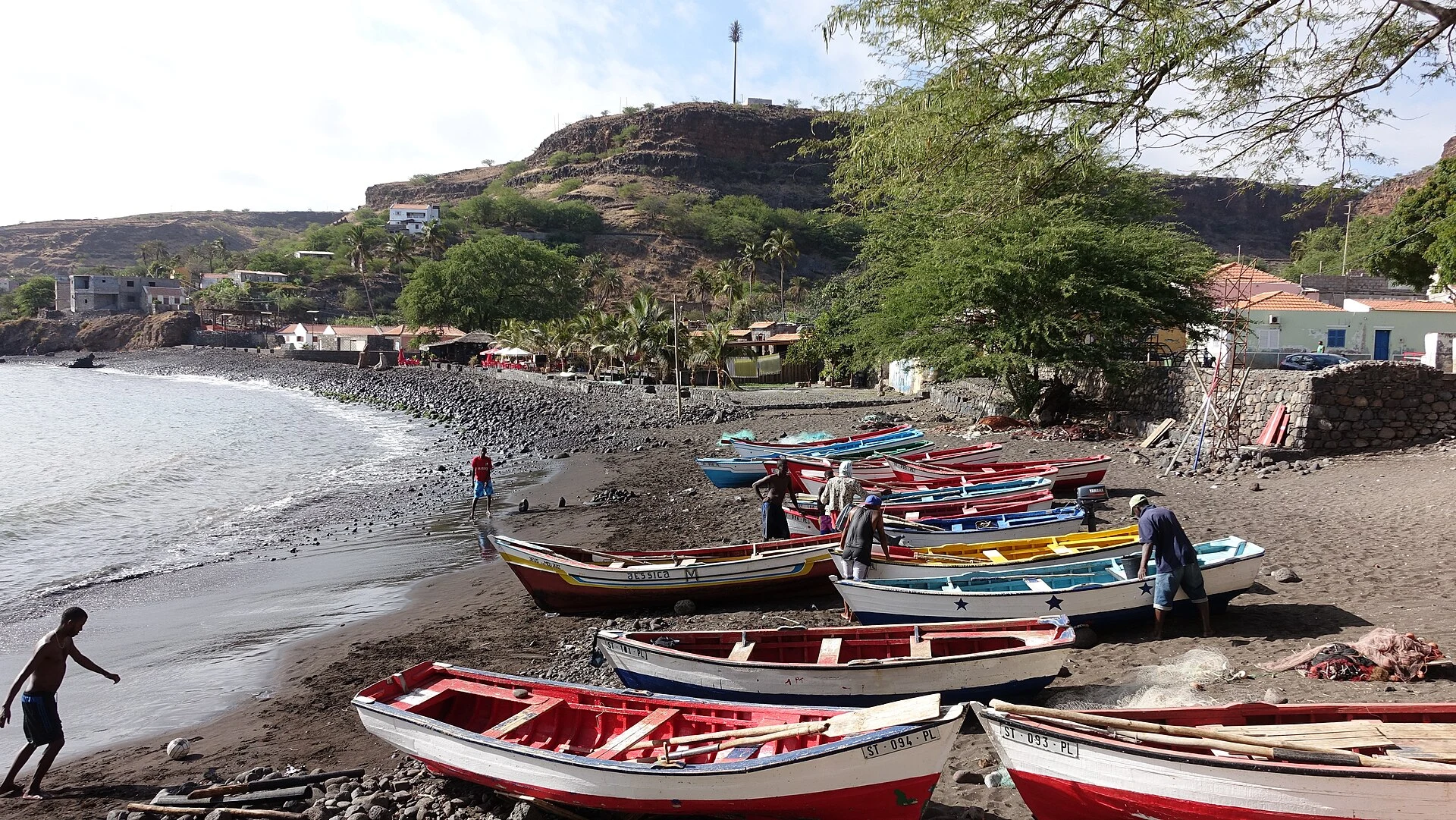
Cidade Velha, on the southern coast of Santiago, can be explored comfortably in a long morning or a full day, but it should not be treated as a succession of photogenic ruins. Its small scale brings together architecture, colonial power and the memory of Atlantic slavery: three key factors when deciding how to pace your visit. The most logical approach is to begin at the top, at the fortress, then descend towards the valley and former port, allowing time to pause at places that require more context.
Why set aside a day from Praia
The former Ribeira Grande—now Cidade Velha—was a decisive point on the Atlantic routes between Africa, Europe and the Americas. It preserves fragments of its urban layout, religious buildings, a fortress and the Pelourinho, but its interest does not lie in bringing together a large number of intact monuments. The site is understood through its connections: its coastal position, colonial administration, evangelisation and the trade in enslaved people.
For those staying in Praia, the visit works as a concentrated excursion, not as a hurried stop on the way to another beach. Official tourism information estimates the journey from the capital at around 20 minutes, although this depends on traffic and the chosen means of transport. If you have only half a day, choose the fortress, cathedral, Pelourinho and Nossa Senhora do Rosário Church; with a full day, you can walk unhurriedly, eat in the town and also include the ruins and the convent.
The practical choice is simple: half a day to get your bearings; a full day to understand. There is no need to add many outside activities for the visit to feel substantial.
A descent that gives the visit structure
Begin in the area of the Fortaleza Real de São Filipe and the interpretation centre. From the heights, you can see the relationship between the settlement, the Ribeira Grande valley and the Atlantic; it is a useful spatial introduction before descending to the urban remains. The fort also makes clear that the city was a contested and defended outpost, not an isolated stage in maritime history.
Continue towards the ruins of Ribeira de Santiago Cathedral and the Pelourinho. Pause here deliberately: the marble column is not simply an ornamental landmark. It is connected to a colonial order in which public punishments were carried out and, together with the former port, helps place the violence that sustained the transatlantic trade in enslaved people.
Then visit Nossa Senhora do Rosário Church, one of the preserved religious buildings in the complex, and finish with the ruins of Nossa Senhora da Conceição and the São Francisco convent and church. Descending in this order cuts down on backtracking and turns the walk into a reading of the landscape, from the elevated defensive position to the civil and religious spaces near the sea.
Seeing heritage without separating landscape from memory
Cidade Velha was a hub of colonial domination and the Atlantic slave trade, but it is also associated with the emergence of Cape Verdean Creole society. This dual identity calls for avoiding two shortcuts: romanticising the Portuguese past or reducing the city solely to its ruins. The history of violence is central; so too are the cultural transformations produced by African and European populations and their descendants under profoundly unequal conditions.
At the Pelourinho and in the religious spaces, adopt an attitude of respectful observation: do not turn symbols of punishment or remains of worship into mere scenery. In the inhabited streets, remember that you are not inside a closed museum. Ask permission before photographing residents, avoid blocking entrances and buy something only if you genuinely want the product or service being offered.
The fragmentary condition of several buildings is part of the experience. The ruins do not need to be completed by the imagination: they help us recognise what was lost, what has been restored and the material fragility of a historic site exposed to everyday use and the coastal climate.
Practical preparation: fewer promises, more flexibility
Wear sturdy footwear for the stone streets and allow enough time for pauses, especially if you start at the fortress and walk through the town. Walking is the right way to read the historic core, but it is sensible to divide the route into shorter stretches if you have reduced mobility, are travelling with small children or prefer to avoid steep sections.
Do not structure the day around opening times, prices, the availability of the interpretation centre or access to monuments mentioned in old articles. These details change. Before setting out, check which spaces are open, whether guided activities are available, the recommended route order and the options for travelling from Praia. A shorter visit still makes sense if you choose only a few places and give them your attention.
For lunch, decide in the town itself, and do not assume that a stop by the sea replaces the historic tour. Making time to talk, walk slowly and return without rushing is a more useful way to support a local, low-intensity visit than trying to cover every point marked on a map.
Official sources to check before setting out
- UNESCO, Historic Centre of Ribeira Grande (Cidade Velha): heritage context, site boundaries and an explanation of its relationship with the Atlantic trade in enslaved people.
- Cabo Verde Tourism, Cidade Velha itinerary in Santiago: sequence of sites, approximate journey time from Praia and suggested duration of the visit.
- Visit Cidade Velha, the municipal platform of Ribeira Grande de Santiago: local access information, contacts and current activities.
- Government of Cabo Verde / Instituto do Património Cultural: updates on the heritage circuit, interpretation centre and monument management.
Confirm opening times, closures, prices, guided tours, access conditions and transport directly through these sources on the day of your visit.
References consulted during editorial review. Times, requirements and advisories may change: always confirm with the official source.
- https://whc.unesco.org/en/list/1310whc.unesco.org
- https://whc.unesco.org/en/documents/114771whc.unesco.org
- https://whc.unesco.org/document/102372whc.unesco.org
- https://whc.unesco.org/document/152321whc.unesco.org
- https://www.visitcidadevelha.cv/enwww.visitcidadevelha.cv
- https://whc.unesco.org/uploads/activities/documents/activity-54-30.pdfwhc.unesco.org
- https://whc.unesco.org/document/182024whc.unesco.org
- https://whc.unesco.org/document/159617whc.unesco.org
- Cabo VerdeWikidata · CC0 1.0 · Wikidata · Q1011
- Cabo VerdeWikidata · CC0 1.0 · Wikidata · Q5015739
- Cabo VerdeWikidata · CC0 1.0 · Wikidata · Q216889
- Cabo VerdeWikidata · CC0 1.0 · Wikidata · Q61240463
- Cabo VerdeWikidata · CC0 1.0 · Wikidata · Q34826012
- Cabo VerdeWikidata · CC0 1.0 · Wikidata · Q125230885
- Cape VerdeWorld Countries — mledoze · ODbL 1.0 · World countries dataset by mledoze and contributors · ODbL 1.0
- Cabo VerdeWorld Bank Open Data · CC BY 4.0 · World Bank
- Cape VerdeDBpedia · CC BY-SA 3.0 · DBpedia
- Turismo e desenvolvimento dos territórios insulares: apontamentos para uma geografia do turismo de Cabo VerdeCrossref · Metadatos públicos; derechos específicos por campo cuando correspondan · Crossref
- Table 5.5 Cabo Verde / Cabo VerdeCrossref · Metadatos públicos; derechos específicos por campo cuando correspondan · Crossref
- Table 4.1 Cabo Verde / Cabo VerdeCrossref · Metadatos públicos; derechos específicos por campo cuando correspondan · Crossref
- A complexa equação Segurança, Turismo e Desenvolvimento Sustentável em Cabo VerdeCrossref · Metadatos públicos; derechos específicos por campo cuando correspondan · Crossref
- Cabo VerdeCrossref · Metadatos públicos; derechos específicos por campo cuando correspondan · Crossref