Pakistan · Punjab
Taxila connects ancient cities, monasteries and a museum
Taxila is not a single ruin to tick off: its museum, Hellenistic city and Buddhist monastery make for a day that works best when you choose only a few stops.
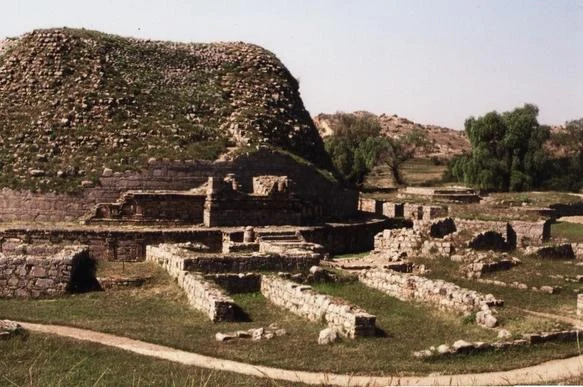
Taxila is a dispersed archaeological landscape, not a single enclosed site. Its interest lies in comparing cities, sanctuaries and excavated objects to trace more than half a millennium of urban change in Gandhara. A first visit is clearer if you limit yourself to three or four nearby places and set aside time for the museum; trying to cover its many components in a few hours usually turns the day into a series of transfers. The logistics also require a decision in advance: check the current security and entry conditions before confirming travel to Pakistan.
Listen to Pakistan
A documented soundscape that complements this guide to Pakistan. Taxila is not a single ruin to tick off: its museum, Hellenistic city and Buddhist monastery make for a day that works best when you choose only a few stops.
Audio by arundasstp · Openverse · CC BY 4.0 · Duration: 00:13
A day with a historical thread
Start at the Taxila Museum. It is not an optional preface: it brings together stone and stucco sculptures, inscriptions, coins, utensils and other finds from the valley’s archaeological sites. Seeing them first makes it easier to understand the function of a shrine, a stupa, a monastic cell or a street when you encounter them later.
From there, Sirkap offers the clearest urban reading. Its layout of streets, walls, houses and religious buildings reveals a planned city from the Indo-Greek period and the contacts between Mediterranean, Central Asian and subcontinental traditions. Walk slowly and do not expect a complete reconstruction: excavations have covered only part of the ancient settlement.
Complete the route at Dharmarajika, a short distance from the museum. The large stupa, votive chapels and monastic area make it clear that Taxila was also a territory of Buddhist pilgrimage and study, not merely a succession of capitals.
What Jaulian adds—and when to leave it for another day
Jaulian is worth the extra distance if you are especially interested in monastic life. The complex preserves a sacred area with a central stupa, small votive structures, courtyards and cells; several sculptures found there are now in the museum. That relationship between the two places is precisely its greatest value: at the site, you understand the spaces, while in the galleries you can appreciate details that are no longer exposed outdoors.
But it stands on a hill, about seven kilometres from the museum, and requires more travel and walking time than Sirkap or Dharmarajika. Do not add it automatically to a short itinerary. If you have a full day, prioritise the museum, Sirkap and Dharmarajika; include Jaulian only if you have organised transport and a realistic margin of time. Mohra Moradu is an interesting alternative for those who prefer a smaller monastery, with stucco remains and clearly legible rooms.
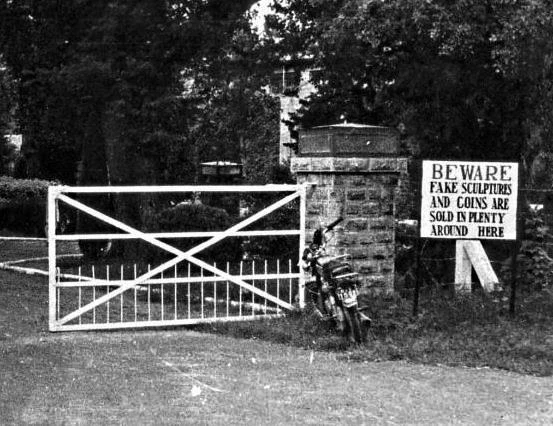
How to get around without fragmenting the visit
The main sites are spread across the valley and do not form a continuous walking circuit. The most sensible option is to arrange a car with a local driver for the day, agreeing the stops and return time beforehand; this avoids relying on improvisation between sites. This is not an excursion designed to be linked on foot from a single entrance.
Use Islamabad or Rawalpindi as a base if you are looking for a day trip, but leave plenty of leeway: driving times, checkpoints, traffic and local conditions can change. Bring water, sun protection and sturdy footwear for uneven surfaces. The museum may be able to advise on access to the sites, although opening hours, fees, partial closures and the availability of guided visits should be confirmed directly before setting out.
Looking at Taxila without simplifying it
Taxila is often reduced to a stop on the Silk Road or described as a “Greek” city—two insufficient formulas. The complex includes earlier settlements, cities linked to Achaemenid, Mauryan, Indo-Greek and Kushan powers, as well as Buddhist monasteries and a medieval Islamic complex at Giri. The richness of the site lies in these layers, not in assigning it to a single civilisation.
Bhir Mound invites you to consider the city that preceded Sirkap; Sirkap shows a different kind of urban planning; Dharmarajika and Jaulian shift attention towards religious practices, teaching and pilgrimage networks. Choose a theme before you arrive—urban planning, Gandharan Buddhism or the archaeology of the valley—and the visit will be more coherent than a race through names and dates.
Decisions to make before booking
The security situation in Pakistan is changeable. As of 12 September 2026, the US recommendation for the country is to reconsider travel; this is not a site-specific assessment of Taxila and does not replace your own judgement, information from your country of nationality, insurance or local contacts. Check updated official advisories just before buying flights, travelling by road or changing bases.
Also verify through official sources the visa requirements applicable to your passport, health documentation, road conditions and any local restrictions. At the archaeological sites, stick to marked routes, avoid climbing walls or structures and do not remove stones or fragments: conservation also depends on restrained visiting. Photographing military buildings, sensitive facilities or checkpoints may cause problems; ask if in doubt.
References to check before travelling
- Taxila Museum and the Directorate General of Archaeology and Museums of Punjab: opening hours, fees, contact details, access to Sirkap, Dharmarajika, Jaulian and Mohra Moradu, plus possible guided visits.
- UNESCO World Heritage Centre, Taxila entry: the property’s composition, general chronology, archaeological values and conservation needs.
- Pakistan Tourism Development Corporation, Buddhist heritage itinerary: Taxila’s context within the heritage route and institutional tourism planning.
- United States Department of State, Pakistan travel advisory: risk level, security conditions, transport, health and requirements for US citizens. Travellers of other nationalities should cross-check it with their own country’s consular authority.
Opening hours, prices, entry requirements, road conditions and security recommendations are time-sensitive: always confirm them with these sources before travelling.
References consulted during editorial review. Times, requirements and advisories may change: always confirm with the official source.
- https://whc.unesco.org/en/list/139whc.unesco.org
- https://taxilamuseum.punjab.gov.pk/node/75taxilamuseum.punjab.gov.pk
- https://whc.unesco.org/document/216186whc.unesco.org
- https://whc.unesco.org/document/164708whc.unesco.org
- https://whc.unesco.org/document/163116whc.unesco.org
- https://tourism.gov.pk/advertisements/Buddhist-Heritage-Trail%20English%20with%20PTDC%20Logo.pdftourism.gov.pk
- https://whc.unesco.org/archive/repburext00.pdfwhc.unesco.org
- https://whc.unesco.org/en/decisions/5504whc.unesco.org
- PakistánWikidata · CC0 1.0 · Wikidata · Q843
- PakistanWorld Countries — mledoze · ODbL 1.0 · World countries dataset by mledoze and contributors · ODbL 1.0
- Middle East, North Africa, Afghanistan & Pakistan (IBRD only)World Bank Open Data · CC BY 4.0 · World Bank
- Middle East, North Africa, Afghanistan & Pakistan (IDA total)World Bank Open Data · CC BY 4.0 · World Bank
- Middle East, North Africa, Afghanistan & PakistanWorld Bank Open Data · CC BY 4.0 · World Bank
- Middle East, North Africa, Afghanistan & Pakistan (excluding high income)World Bank Open Data · CC BY 4.0 · World Bank
- PakistanWorld Bank Open Data · CC BY 4.0 · World Bank
- Middle East, North Africa, Afghanistan & Pakistan (IDA & IBRD)World Bank Open Data · CC BY 4.0 · World Bank
- PakistanDBpedia · CC BY-SA 3.0 · DBpedia