Sambor Prei Kuk from Kampong Thom in Three Temple Groups
A day at Sambor Prei Kuk offers a way to approach ancient Ishanapura without reducing the visit to a succession of ruins: it is worth organizing the three main groups, planning the final leg from Kampong Thom carefully, and leaving time for a slower reading of the forest, brickwork and water.
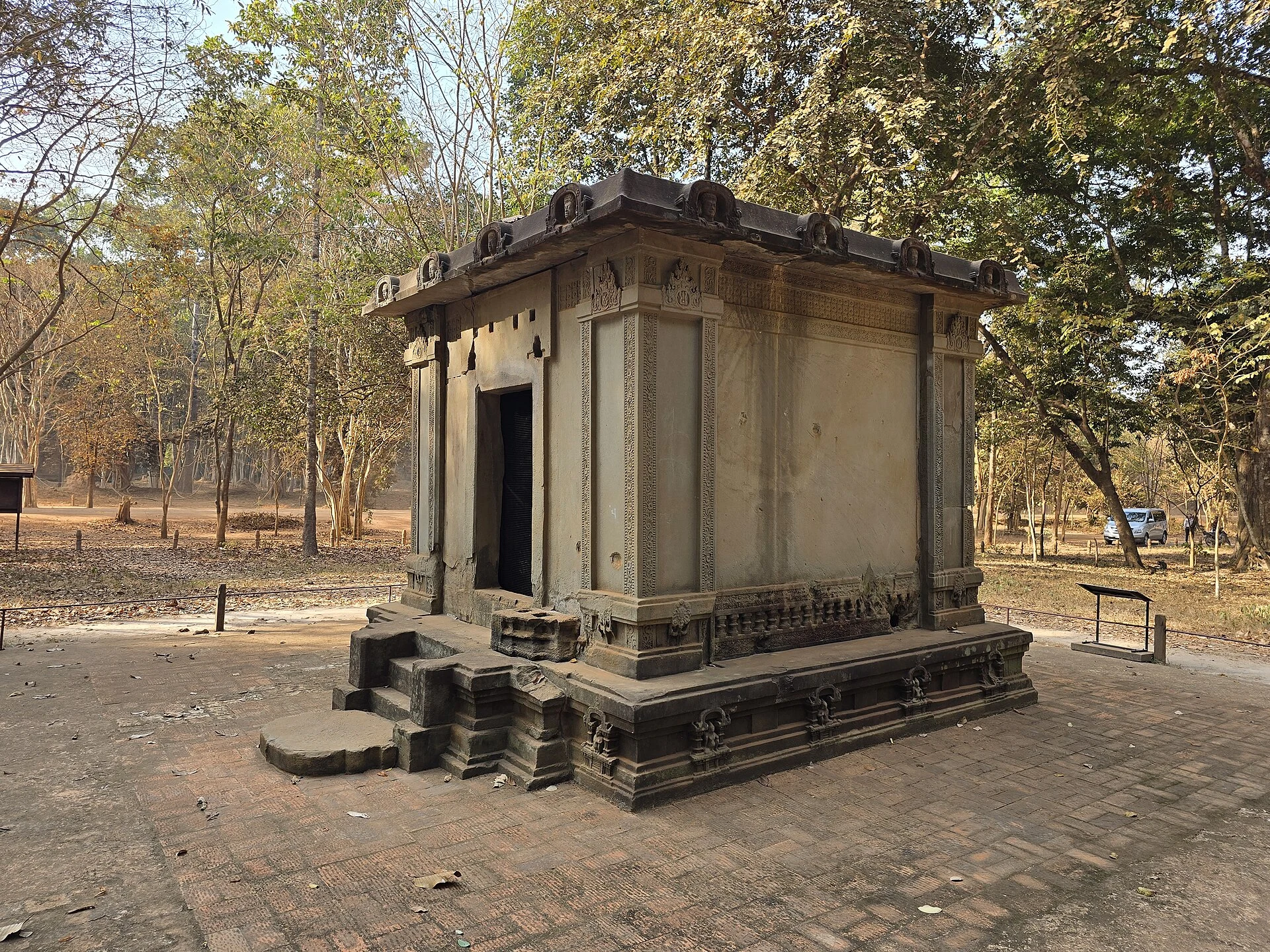
Sambor Prei Kuk rewards travelers with precise expectations: it is not a smaller version of Angkor, but a place where some of the foundations of later Khmer architecture can be understood. Ancient Ishanapura brings together brick sanctuaries, sandstone reliefs, traces of water and forest in a landscape that calls for attention to detail rather than a race to accumulate temples. Its value also lies in the fragility of the structures: treat the visit as an archaeological experience, not as a backdrop to explore without limits.
Visual context for CambodiaContext video selected for this guide; it does not by itself identify every place mentioned.Video by LayG Traveller · Pexels · Pexels License · Duration: 00:07
♫
Listen to Cambodia
A documented soundscape that complements this guide to Cambodia. A day at Sambor Prei Kuk offers a way to approach ancient Ishanapura without reducing the visit to a succession of ruins: it is worth organizing the three main groups, planning the final leg from Kampong Thom carefully, and leaving time for a slower reading of the forest, brickwork and water.
Cultural or ambient audio selected as context; it does not necessarily represent every place mentioned. Audio by Kke802 · Wikimedia Commons · CC0 · Duration: 01:0301
A meaningful stop between Phnom Penh and Siem Reap
Kampong Thom is a practical base for adding Sambor Prei Kuk to an overland itinerary between Phnom Penh and Siem Reap. The important detail is the final leg: intercity buses can get you to the provincial town, but they do not replace an arranged transfer to the site. Do not string together tight connections on the same day; one night in Kampong Thom allows for changes in schedules, rain or driver availability.
Set aside a full day for the archaeological site and arrange the return journey before leaving town. A private transfer, a tuk-tuk booked in advance or a local guide are more realistic options than waiting for regular transport at the entrance. Confirm road access, opening hours and the areas that are open with the site authority or the provincial tourism office: these details may change.
02
Three groups for reading a capital before Angkor
The visit becomes more coherent when organized around the three main groups. The southern group, Prasat Yeai; the central group, Prasat Tao; and the northern group, Prasat Sambor, show how towers, enclosures and platforms are repeated and varied. Do not try to locate every numbered structure: focus on the relationships between buildings, walls and forest clearings.
Look especially for the octagonal brick towers, one of the complex’s distinctive features, and pause at the lintels and sandstone elements that still remain in situ. The scale of the site includes far more than the visible buildings: ancient roads and hydraulic features help show that this was an organized city, not a collection of isolated temples. Start by asking for an up-to-date map and follow the order recommended by site staff according to the conservation condition of each sector.
03
Walking slowly is part of the logistics
The temple groups are explored on foot along dirt paths and through areas with roots, slight slopes and uneven surfaces. Bring water, sun protection and closed shoes with good grip—not because this is a sporting route, but because the terrain is unsuitable for unstable sandals or rushing. The visit requires basic mobility, and anyone who needs to limit walking should ask in advance which vehicle drop-off points and routes are available that day.
The forest shade may make it seem easy to extend your stay, but the route calls for pauses to interpret what you are seeing. A community guide can provide context about the names of the groups, religious decoration and changes in the landscape. Do not climb onto walls or towers, cross temporary barriers or touch reliefs and bricks: some monuments have been consolidated, while others remain vulnerable.
04
A visit that can include community services
In the villages connected with the Sambor Prei Kuk area, community services include guiding, meals, family-run accommodation and activities such as cycling or handicrafts. There is no need to add them all: choose what fits your schedule and agree in advance on what the service includes, the language of the explanation, transport and duration. Booking directly and clearly helps ensure that the day does not depend on improvised intermediaries.
If you decide to stay overnight, keep your expectations simple: this is a rural area, and comfort may differ from that in Siem Reap. That is precisely why it is wise to plan ahead, carry enough cash and ask about the specific conditions for accommodation and meals. Everyday respect matters: dress appropriately for a religious site and its host communities, ask permission before photographing people, and do not leave rubbish on the paths or beside the sanctuaries.
05
Sources to check before setting out
- UNESCO, Sambor Prei Kuk Temple Zone: historical context for Ishanapura, the three main groups, the octagonal temples, the roads and the hydraulic system.
- National Authority for Sambor Prei Kuk and Cambodia’s Ministry of Culture and Fine Arts: conservation, protection rules, management areas and possible restrictions at the monuments.
- Visit Kampong Thom: community services, local orientation and practical destination information. Check opening hours, entrance fees, road conditions and guide availability there before travelling.
- Isanborei Community Tourism Project: ways to contact the community and local transport, accommodation and activity options. Confirm any current booking or service directly.
Sources and checks
References consulted during editorial review. Times, requirements and advisories may change: always confirm with the official source.