Bolivia · Santa Cruz Valleys · Archaeological Heritage
The Ceremonial Rock and Ancient City of El Fuerte de Samaipata
El Fuerte de Samaipata calls for an unhurried visit: first understand the relationship between the ceremonial rock and the ancient city, then decide whether Amboró deserves a separate trip.
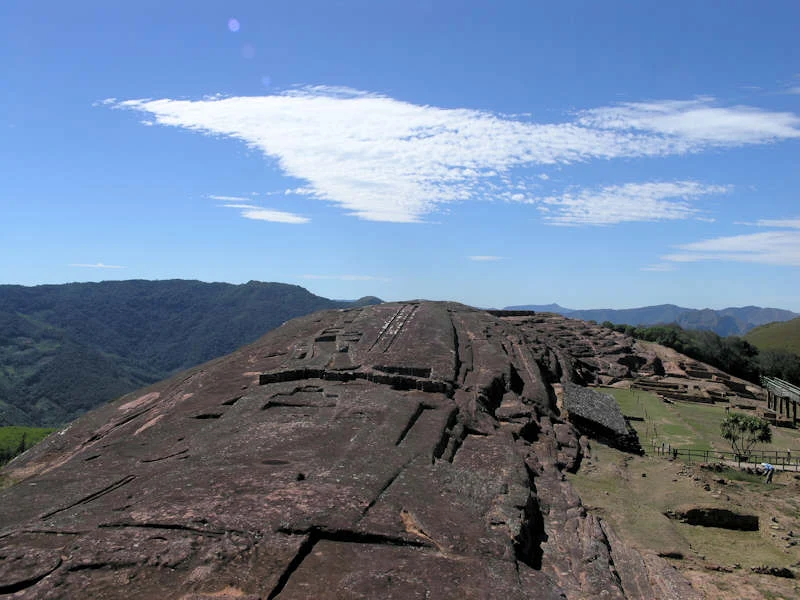
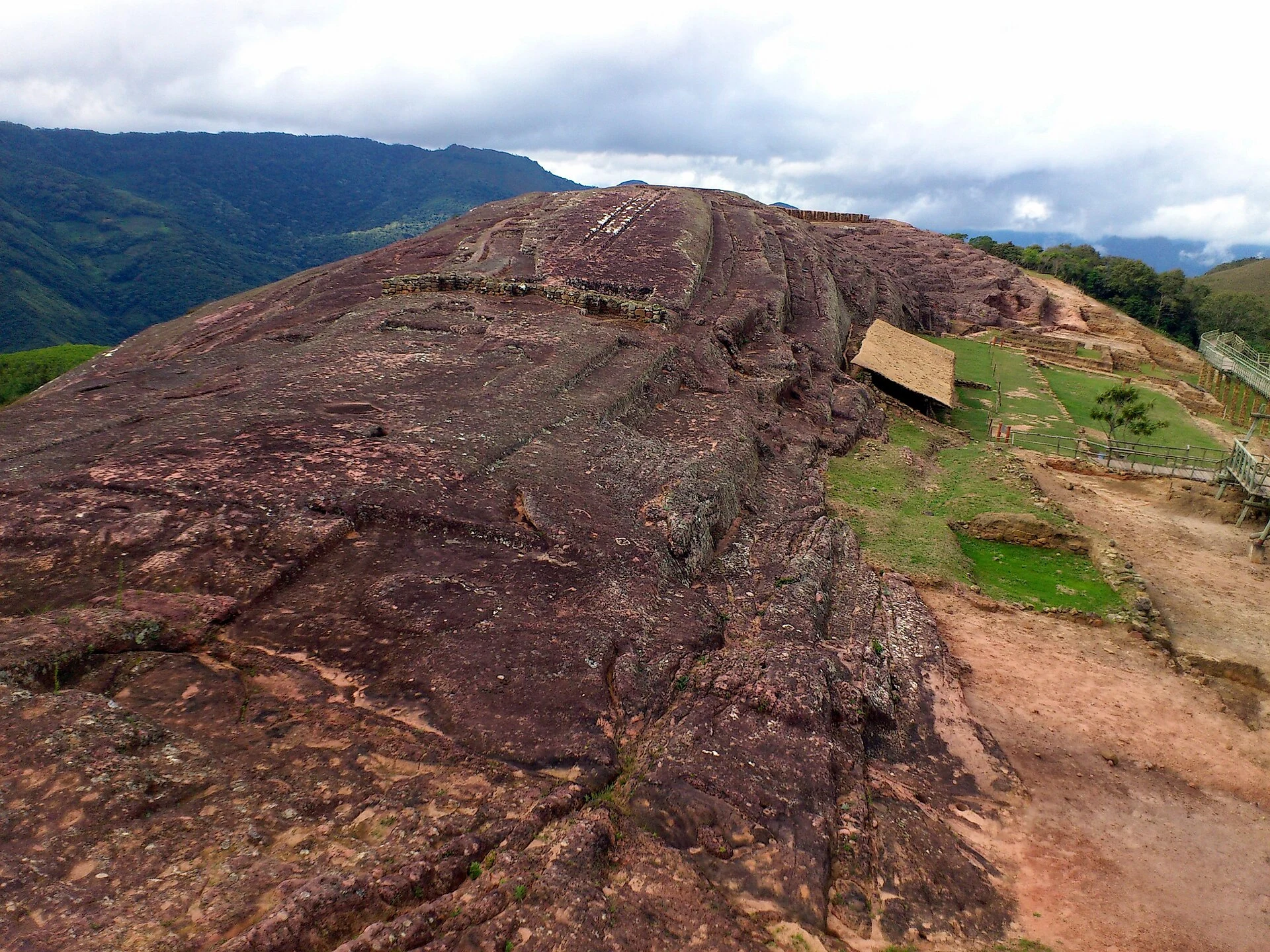
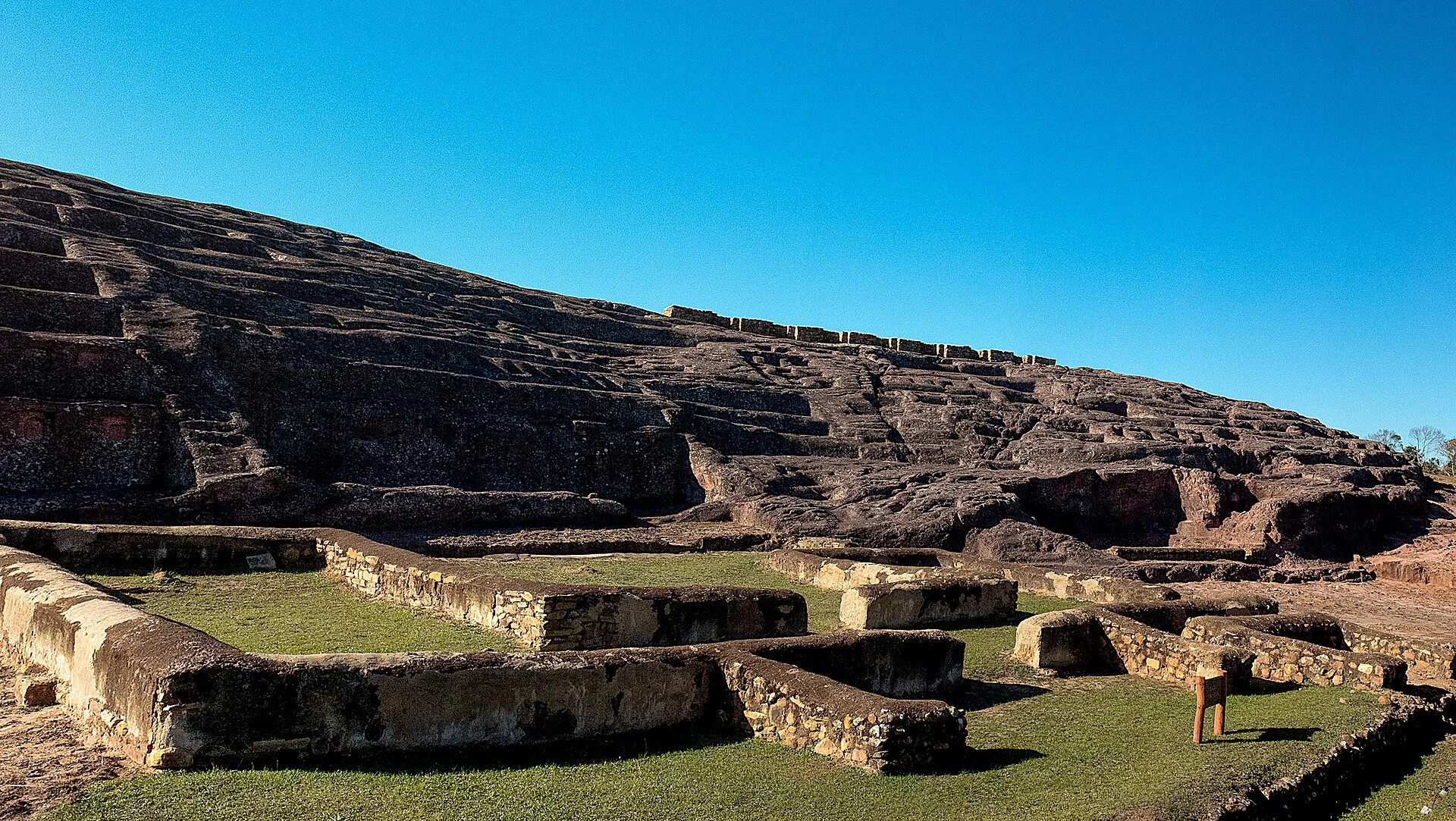
The key to Samaipata is not finding “the largest carved stone,” but accepting that El Fuerte was a complex settlement. UNESCO distinguishes two inseparable parts: the hill of carvings, associated with the ceremonial centre, and the southern sector, which was administrative and residential. This two-part reading turns a photo stop into a visit with context.
Don’t look for a fortress: look at the relationship between rock and city
The popular name may lead you to imagine a defensive building, but it is more useful to view the site as a ceremonial and urban landscape. The red sandstone rock contains channels, niches, animal figures and geometric lines; the residential and political area was organised to the south. UNESCO places the site’s earliest uses at around the year 300, followed by Inca occupation that turned it into a provincial capital. You do not need to work out the meaning of every carving to appreciate the place: observe which elements are carved, how they are oriented and how the rock dominates the rest of the settlement.
A more sensible way to organise two nights
Use Samaipata as a base rather than treating it as a stop of just a few hours from Santa Cruz de la Sierra. The official Bolivia Travel portal publishes information on the Santa Cruz–Samaipata overland connection, but schedules, road conditions, departure points and operators are variable: confirm them before travelling with official sources and locally.
The first day is useful for arriving, arranging transport to the site and allowing for delays. Set aside the second for El Fuerte, without combining it with waterfalls, viewpoints or a long excursion. The third segment—or the second night—lets you decide calmly whether to continue to another valley, return to Santa Cruz or make a separate trip focused on nature. The benefit is not “doing less”: it is avoiding turning a delicate archaeological site into a rushed detour.
Explore the site with a question, not a list of symbols
Before getting close to the details, ask yourself a simple question: which part of this complex belongs to the ritual rock, and which part to the life of the ancient city? Then look for the answers along the designated circuit. Management of the property includes a controlled visitor route, and UNESCO identifies environmental and weather-related erosion as a threat to the material integrity of the carvings. Stay on the marked route, avoid touching or climbing the structures, and do not use the heritage site as a surface for an attention-grabbing photograph.
People with reduced mobility, families with pushchairs and travellers who need frequent breaks should not assume universal accessibility simply because this is an open-air archaeological site. Before going, ask about the actual conditions of the route, parking, toilets and available assistance; these operational details may change.
Amboró is not the “green extra” on the same excursion
The regional proximity of Amboró National Park and Integrated Natural Management Area does not mean the two places have to be combined in one day. They involve different paces, aims and responsibilities: El Fuerte calls for archaeological attention, while Amboró requires protected-area planning. The park’s regulations define tourist operating sites and permitted activities, while SERNAP reminds visitors to register with park rangers and follow safety instructions when visiting protected areas.
The practical decision is simple: if you only have a weekend, prioritise Samaipata and El Fuerte. If Amboró is central to your trip, allow more time, hire authorised services where required and check directly with SERNAP on access, registration, weather conditions and current restrictions. Do not treat the park as a free extension of the archaeological itinerary.
What to check just before setting out
Check with official sources or directly in Samaipata: transport from Santa Cruz, access to the site, opening hours, fees, payment methods, guide availability, route conditions and accessibility services. We do not publish those details here because they are operational and may change. Bolivia Travel’s official destination reference and UNESCO’s World Heritage listing are good starting points for understanding the site and cross-checking local information.
References consulted during editorial review. Times, requirements and advisories may change: always confirm with the official source.
- https://whc.unesco.org/en/list/883/documents/whc.unesco.org
- https://whc.unesco.org/en/list/883/whc.unesco.org
- https://whc.unesco.org/en/statesparties/bowhc.unesco.org
- https://whc.unesco.org/en/decisions/2750whc.unesco.org
- https://sernap.gob.bo/amboro/wp-content/uploads/sites/28/2018/10/ROTE-AMBORO-con-Resoluci%C3%B3n-Administrativa-DE-114-_2011.pdfsernap.gob.bo
- https://whc.unesco.org/uploads/nominations/883.pdfwhc.unesco.org
- https://whc.unesco.org/en/statesparties/bo/whc.unesco.org
- https://whc.unesco.org/en/search/?category=Decisions&criteria=form%3DWSSHRHwhc.unesco.org
- BoliviaWikidata · CC0 1.0 · Wikidata · Q750
- BoliviaWikidata · CC0 1.0 · Wikidata · Q891370
- BoliviaWikidata · CC0 1.0 · Wikidata · Q27925302
- BoliviaWorld Bank Open Data · CC BY 4.0 · World Bank
- BoliviaDBpedia · CC BY-SA 3.0 · DBpedia
- El Agua y la Revolución en Bolivia: Una vista sobre la Cultura Hidráulica DemócrataCrossref · Metadatos públicos; derechos específicos por campo cuando correspondan · Crossref
- Conferencias emitidas durante Seminario Patrimonio Cultural CruceñoOpen Library · CC0 1.0 (registros de catálogo) · Open Library
- Rosca NavideñaOpen Food Facts · ODbL 1.0 · Open Food Facts
- GustitoOpen Food Facts · ODbL 1.0 · Open Food Facts