Estonia · National park
Planning Soomaa amid floods, bogs and boardwalks
In Soomaa, water shapes the experience. This guide helps you choose between canoeing during flood season, two bog trails and a visit that explains the landscape before you explore it.
Conditions described in the guide: confirm current requirements and access with the official source before travelling.
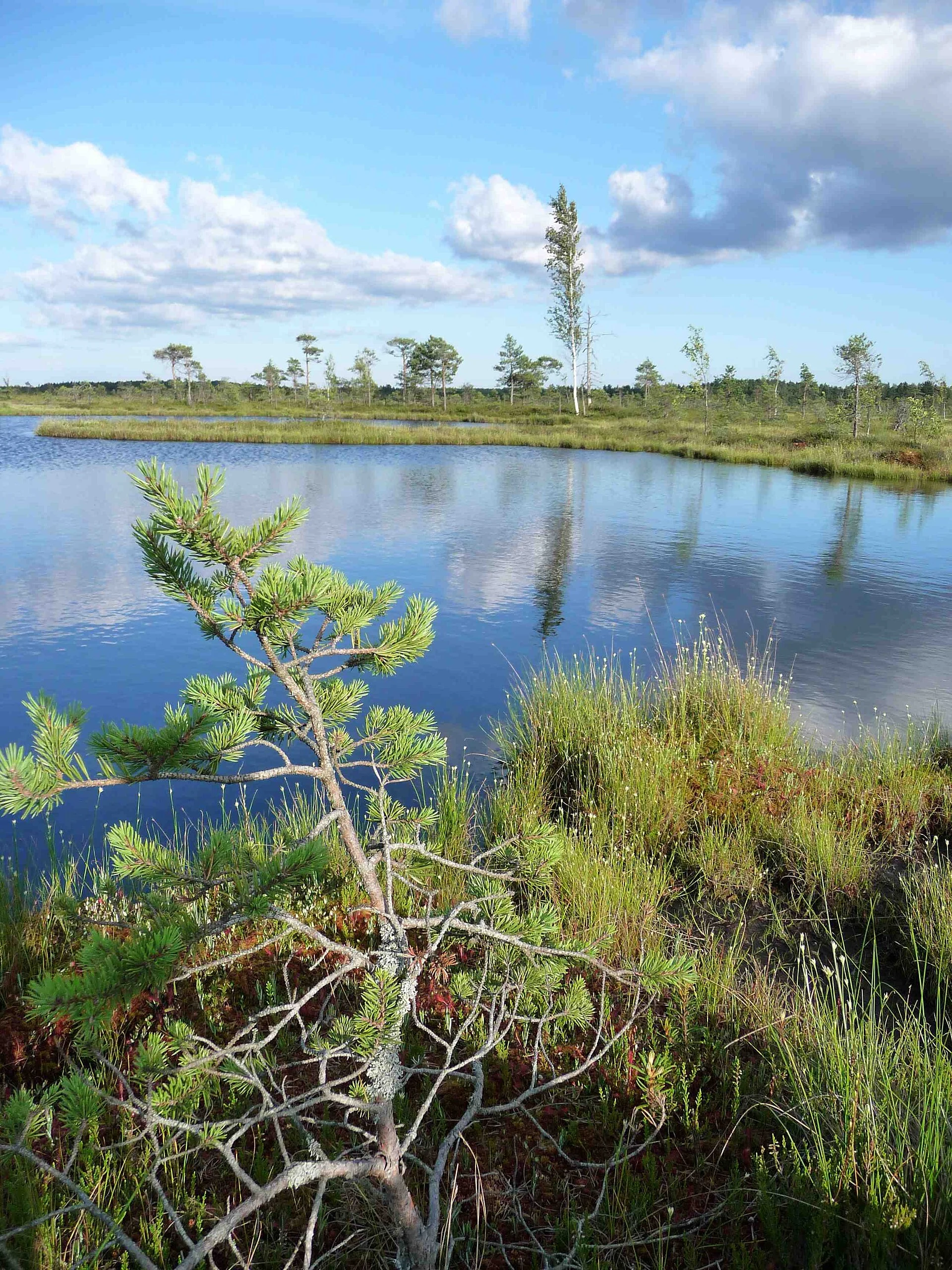
Soomaa does not lend itself to a rigid plan: its rivers, floodplain forests and bogs change both access and the way people move through the park. The useful decision is not to try to see everything, but to choose a priority. Anyone travelling during the fifth season must accept a flexible window and check water conditions; those looking for a more predictable walk will find boardwalks and viewpoints at Riisa and Ingatsi. Between these options, the visitor centre helps explain why a traditional canoe is part of the area’s history, not merely a tourist activity.
Listen to Estonia
A documented soundscape that complements this guide to Estonia. In Soomaa, water shapes the experience. This guide helps you choose between canoeing during flood season, two bog trails and a visit that explains the landscape before you explore it.
Audio by Martineerok · Openverse · CC BY 4.0 · Duration: 03:10
The fifth season calls for flexibility, not a fixed date
The so-called fifth season is the flooding that covers meadows, roads and forests when snowmelt or heavy rain exceeds the capacity of the waterways. It usually occurs in late March or early April, but it can also follow a winter thaw or heavy autumn rainfall. For that reason, book a canoe trip only if you can adjust the day or change your plans.
When there is enough water, the reward is travelling by boat through areas that are normally meadow or forest. The trade-off is clear: a flood does not guarantee access. Before setting out, check with the visitor centre which areas are passable and ask the operator about the meeting point, equipment included and alternative arrangements if the water level changes.
There is little point in turning this experience into a search for one particular photograph. In Soomaa, watching the water rise from land, walking on an open boardwalk or postponing a paddle may be the wisest decision.
Riisa or Ingatsi: two boardwalks for different priorities
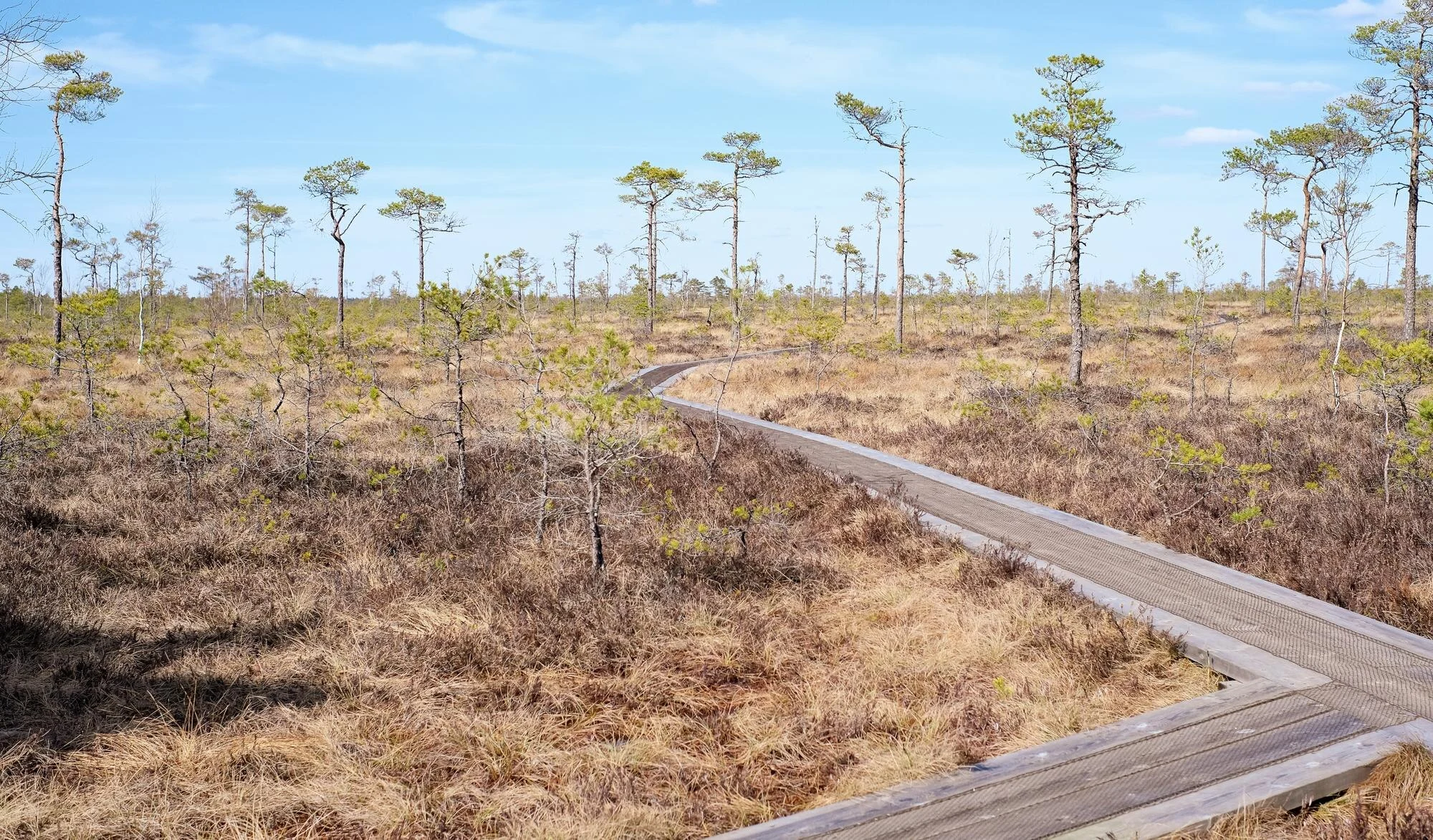
Riisa is the most straightforward option for a first introduction to the bog. Its signposted route is 4.8 kilometres long and combines forest, bog pools, resting areas and an observation tower. The boardwalk reaches the first pool after 1.22 kilometres, with access indicated for wheelchairs and pushchairs; that information should not be extended to the rest of the route.
Ingatsi, at 4.3 kilometres, offers a more pronounced transition: it begins in swamp forest, climbs to the edge of Kuresoo and continues along boardwalks between pools. It is a good choice if you want to see floodplain forest, bog relief and an open horizon from the tower on the same walk. During high water, the beginning may require a different reading of the terrain, so check conditions before going.
For a short visit, choose one of the two and take time to stop at the resting points. Doing both only makes sense if you have a full day, a vehicle and stable conditions: they have different access points, and the landscape rewards attention more than speed.
The haabjas canoe adds a cultural layer to the wetland
Soomaa is not only a park of water and moss. The construction and use of the haabjas, a boat hollowed from a single tree trunk and widened with heat, are recognised as intangible cultural heritage. This relationship between technique, timber, rivers and floods helps us read the landscape as a lived-in territory adapted to water.
The visitor centre presents this tradition in its permanent exhibition. It is especially valuable if you are planning a canoe trip: it helps distinguish contemporary paddling from a local practice with its own knowledge, tools and transmission. Do not assume that every outing will use a haabjas; confirm the type of boat and the focus of the activity when booking.
If the canoe is central to your trip, prioritise a guide who explains both how the water behaves and the boat’s cultural context. If walking is your priority, the exhibition is still a good introduction before entering the bog.
A low-capacity park calls for simple decisions
Soomaa rewards modest logistics: footwear prepared for wet conditions, layers for temperature changes and an alternative trail plan if paddling is not possible. The visitor centre is the best place to ask for advice about routes, rules and local conditions, as well as the starting point for the short Beaver Trail near the building.
Respect the facilities provided. Bog soils are fragile, and the park prohibits driving or parking outside designated roads and car parks. Camp and light fires only in prepared places; non-motorised boats are the ones permitted on the park’s waters. Keep dogs on a lead and avoid leaving the boardwalks or established routes.
There are also conservation areas with seasonal access restrictions to protect wildlife. Do not plan an excursion away from marked trails, and check the current rules before setting out: limits, closures and local conditions matter more than a route saved on your phone.
A realistic way to divide your time
If you have half a day, focus on Riisa or Ingatsi and add the visitor centre. This is the most reliable format when the weather is uncertain.
If you have a full day, combine a bog walk with a second short route or a relaxed visit to the exhibition about the haabjas. Leave time for road journeys and do not turn the day into a succession of car parks.
If you are travelling during the fifth season, deliberately keep your schedule open. Arrive with time to spare, treat canoeing as an option dependent on water levels and have a boardwalk as a back-up. That way, the flood stops being a fragile promise and becomes a way to understand the park.
Official references and details to check before setting out
- Soomaa National Park Visitor Centre, RMK: check opening hours, access to the centre, local conditions and current guidance for trails and flooding.
- Riisa and Ingatsi trails, RMK: confirm the condition of the boardwalks, access, mobility information and road conditions, especially after high-water events.
- Estonian Environmental Board: review restrictions on driving, camping and boating, as well as seasonal closures in conservation areas.
- Visit Estonia: check how the fifth season is developing; late March and early April are a common reference, not a guarantee.
- UNESCO: consult the context surrounding the construction and use of Soomaa’s haabjas canoes.
References consulted during editorial review. Times, requirements and advisories may change: always confirm with the official source.
- https://soomaa.com/fifth-season/soomaa.com
- https://rmk.ee/en/exploring-nature/where-to-go/soomaa-national-park-visitor-center/rmk.ee
- https://soomaa.com/embed/soomaa.com
- https://keskkonnaamet.ee/sites/default/files/documents/2021-06/Soomaa_EN.pdfkeskkonnaamet.ee
- https://visitestonia.com/en/what-to-do/spring-in-estoniavisitestonia.com
- https://visitestonia.com/en/where-to-go/soomaa-national-park-3visitestonia.com
- https://soomaa.com/fifth-season-web-camera-is-live/soomaa.com
- https://keskkonnaamet.ee/sites/default/files/documents/2021-07/A2_soomaa_eng.pdfkeskkonnaamet.ee
- EstoniaWikidata · CC0 1.0 · Wikidata · Q191
- EstoniaWikidata · CC0 1.0 · Wikidata · Q5401432
- EstoniaWikidata · CC0 1.0 · Wikidata · Q17363906
- EstoniaWorld Countries — mledoze · ODbL 1.0 · World countries dataset by mledoze and contributors · ODbL 1.0
- EstoniaWorld Bank Open Data · CC BY 4.0 · World Bank
- EstoniaDBpedia · CC BY-SA 3.0 · DBpedia