Nigeria · Living Yoruba heritage
Osun-Osogbo and the Sacred Forest Outside Festival Season
The Osun-Osogbo Sacred Grove brings together a river, shrines and contemporary sculptures on the outskirts of Osogbo. The key decision is to visit on an ordinary day, with a site guide and a realistic safety plan.
Conditions described in the guide: confirm current requirements and access with the official source before travelling.
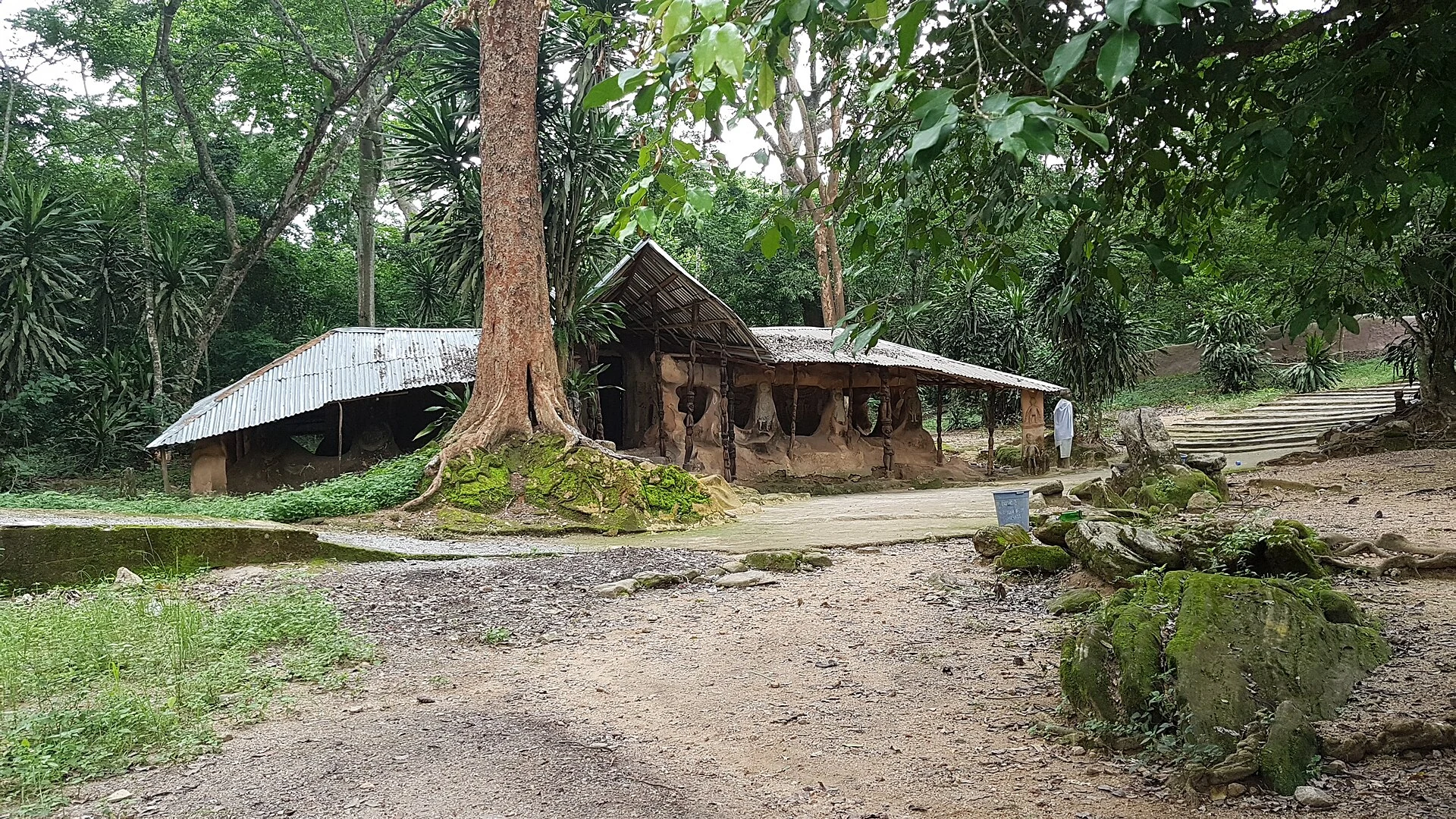
Osun-Osogbo is neither a theme park nor a collection of outdoor sculptures: it is an active ritual space where forest, river, urban memory and Yoruba religion remain connected. The most thoughtful visit is a slow walk with a heritage guide, accepting that some areas and practices are not open to tourist observation and understanding that the grove’s material and spiritual fragility shapes what is appropriate to do there.
Listen to Nigeria
A documented soundscape that complements this guide to Nigeria. The Osun-Osogbo Sacred Grove brings together a river, shrines and contemporary sculptures on the outskirts of Osogbo. The key decision is to visit on an ordinary day, with a site guide and a realistic safety plan.
Audio by Arch-Angel Raphael the Artist · Wikimedia Commons · CC BY-SA 4.0 · Duration: 01:40
Choosing an ordinary day changes the experience
The period of greatest visibility is the annual Osun-Osogbo festival, held around July and August and culminating in a procession that reaffirms the bond between the city and the deity Osun. It is a religious occasion of immense importance, not a spectacle designed for visitors.
For those seeking to understand the site, visiting outside those dates offers a more suitable pace: it allows time to pause at the shrines, paths between the trees and sculptures without adding pressure to a place that already experiences visitor overcrowding during the festival. Do not assume the dates, programme, access controls or procession conditions: confirm them before booking transport or accommodation.
The alternative is not a lesser version of the trip. The grove remains a place of daily worship, and an ordinary visit helps reveal the relationship between the former settlement, the Osun River and the present-day city of Osogbo. If witnessing the festival is your main aim, allow extra time, avoid interrupting devotional practices and accept that the day’s priorities belong to the celebrating community.
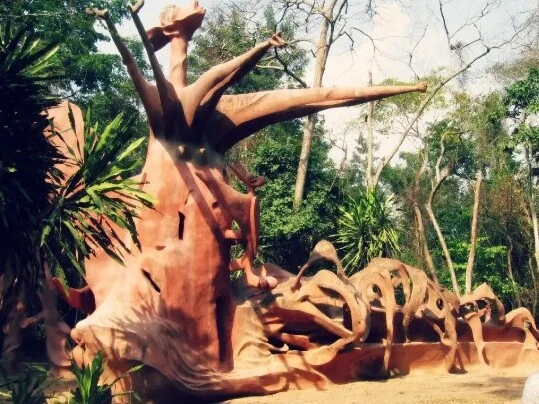
Experiencing the forest as ritual landscape and collective work
What makes Osun-Osogbo distinctive is that its nearly forty shrines, places of worship, sculptures and ceremonial spaces cannot be understood separately. The river winds among them, shaping a landscape associated with Osun and other Yoruba deities.
Twentieth-century sculpture is an essential part of this interpretation. Artists linked to the New Sacred Artists movement, together with Susanne Wenger and creators from Osogbo, helped restore the site through monumental forms in clay, cement, wood and metal. They are not simply photographic landmarks: they were created to reinforce the sacred character of the forest and express a living cosmology.
Ask the visitor centre about a tour with the heritage guides available. This is especially useful because signage and orientation within the grounds may be limited, and because some paths lead to areas with restricted use. Always follow the indicated route, do not touch sculptures, ritual trees or offerings, and ask before taking portraits of people or ceremonies.
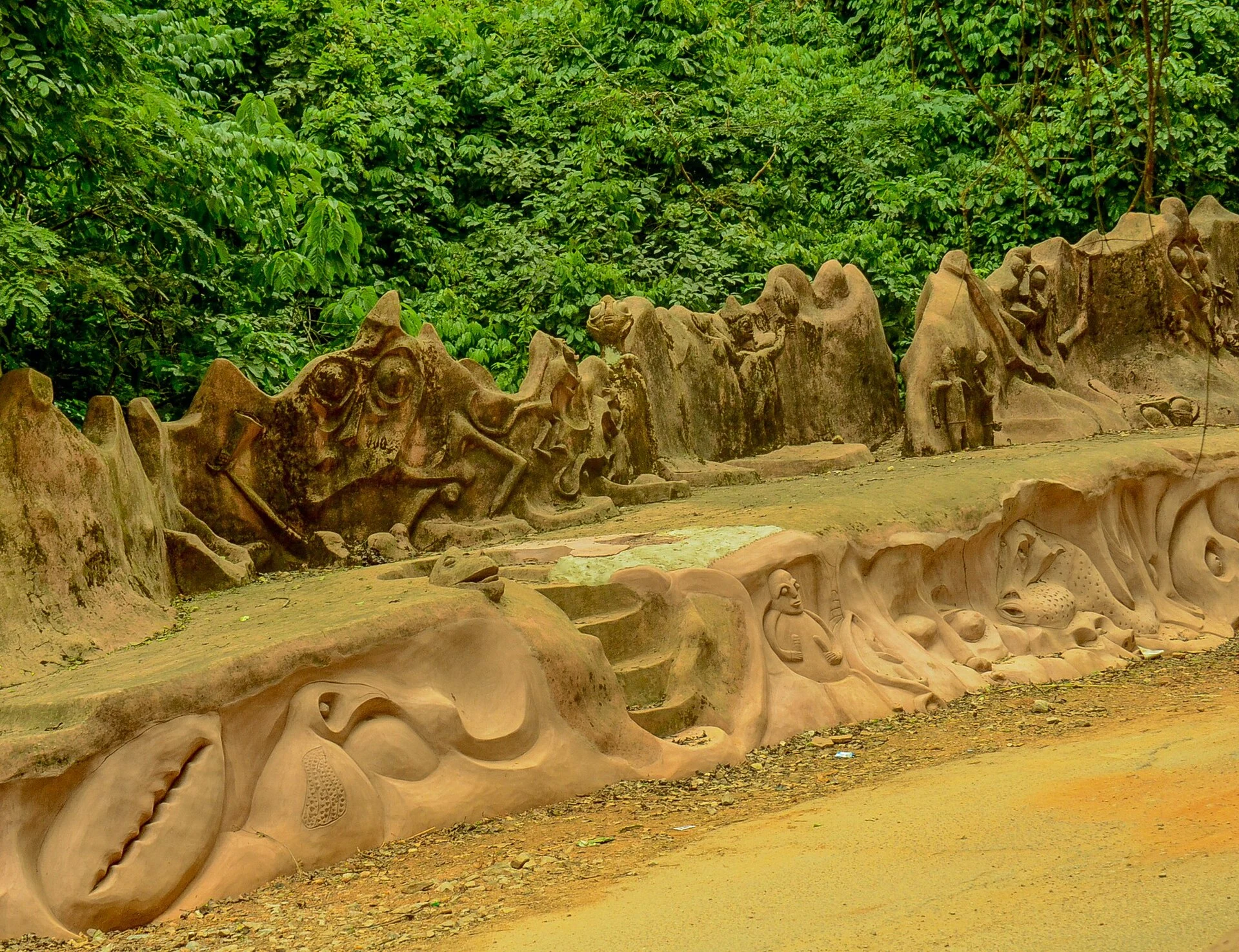
The river calls for a prudent decision
The Osun River is not a decorative feature: it is part of the site’s religious meaning and of the practices of its devotees. It has also been monitored because of pollution concerns and the need for periodic water-quality checks.
For a tourist visit, the responsible rule is therefore clear: do not drink or collect water from the river, and do not present using it as a wellness experience. Respect the fact that other people may relate to the water through devotion, without turning that moment into a scene to document.
Bring your own drinking water, reduce waste from the outset and use bins when available. Avoiding single-use plastics will not solve the conservation challenges on its own, but it does prevent adding rubbish to a forest where visitor pressure, erosion and waste management are already recognised concerns.
Plan Osogbo without improvising your safety
The grove lies on the outskirts of Osogbo, the capital of Osun State, and requires overland logistics that should be arranged before setting out. Do not base your plan on informal connections found on the day: arrange your arrival and return transfers in advance, identify reliable accommodation and avoid travelling by road at night.
Nigeria is currently under a US recommendation to reconsider travel because of crime, terrorism, kidnapping, civil unrest and limited availability of healthcare. Osun State is not among the states expressly listed under the do-not-travel recommendation in that advisory, but this is not a guarantee of safety. The destination is better suited to a trip prepared with strong local contacts, medical insurance including evacuation and enough flexibility to change routes.
Before departure, check official sources for the security situation, entry requirements, vaccinations, site operations, guide availability, fees, transport and the festival calendar. If there are local warnings, protests, road incidents or you cannot guarantee coordinated arrival and departure, postpone the visit.
Sources and checks before travelling
- UNESCO World Heritage Centre: the Osun-Osogbo Sacred Grove property page, heritage values, the relationship between forest, river, shrines and sculptures, and conservation decisions.
- World Heritage Committee, 2026 decision on Osun-Osogbo: conservation monitoring, pressure on the buffer zone, the road crossing the surrounding area and the need for periodic analysis of river water.
- National Commission for Museums and Monuments of Nigeria: the 2025–2029 Conservation and Management Plan, with information on the visitor centre, heritage guides, restricted routes and management challenges.
- Osun State Government: institutional information about Osogbo and the annual festival; confirm any published schedule there.
- US Department of State: travel advisory for Nigeria, issued on 12 June 2026. Check the current version and also consult the official recommendations of your country of nationality.
References consulted during editorial review. Times, requirements and advisories may change: always confirm with the official source.
- https://www.osunstate.gov.ng/tourist-centres/www.osunstate.gov.ng
- https://www.osunstate.gov.ng/o%E1%B9%A3ogbo/www.osunstate.gov.ng
- https://www.osunstate.gov.ng/2025/09/tourism-agenda-governor-adeleke-to-upgrade-cultural-tourist-sites-at-osogbo-ilesa-ife-and-ede/www.osunstate.gov.ng
- https://www.osunstate.gov.ng/2015/08/4-fun-activities-checkout-osun-osogbo-festival/www.osunstate.gov.ng
- https://www.osunstate.gov.ng/2015/08/11-countries-osun-osogbo-festival-2015/www.osunstate.gov.ng
- https://www.osunstate.gov.ng/2014/07/osun-osogbo-groove-best-tourists-destination-africa-says-ncmm/www.osunstate.gov.ng
- https://www.osunstate.gov.ng/2014/07/ncmm-parley-osun-osogbo-festival-committee-enhanced-fiesta/www.osunstate.gov.ng
- https://www.osunstate.gov.ng/2013/09/two-festivals-of-a-kind-rare-moments-from-the-osun-osogbo-festival/www.osunstate.gov.ng
- NigeriaWikidata · CC0 1.0 · Wikidata · Q1033
- NigeriaWikidata · CC0 1.0 · Wikidata · Q23890434
- NigeriaWikidata · CC0 1.0 · Wikidata · Q7032788
- NigeriaWorld Countries — mledoze · ODbL 1.0 · World countries dataset by mledoze and contributors · ODbL 1.0
- NigeriaWorld Bank Open Data · CC BY 4.0 · World Bank
- NigeriaDBpedia · CC BY-SA 3.0 · DBpedia