Costa Rica · Southern Caribbean
Cahuita on foot from Playa Blanca to Puerto Vargas
A visit to Cahuita works best when you separate its three rhythms: the coastal trail, the reef and the cultural life of a Caribbean town.
Conditions described in the guide: confirm current requirements and access with the official source before travelling.
Cahuita National Park brings together coastal forest, beach and coral reef along a short stretch of Costa Rica’s Caribbean coast. But its appeal does not lie in cramming in activities: it is better to choose a land route, calmly decide whether conditions allow you to enter the sea and set aside time to understand the historic relationship between the park and the community of Cahuita. This combination helps avoid a rushed visit and protects a fragile ecosystem.
Two entrances, two ways to plan your day
The entrance beside the town, at Playa Blanca, is convenient if you want to start walking from Cahuita and combine a section of trail with time on the beach. The Puerto Vargas sector offers parking and concentrates park services; it is also the most useful starting point for anyone wishing to prioritise the elevated Los Cativos section.
Do not assume that you will be able to cross the entire park from one entrance to the other: trail conditions, river crossings, the sea and operational decisions may alter your plans. If your aim is a one-way walk, arrange in advance how you will return from the opposite end. Otherwise, it is simpler to plan a round trip from the same entrance.
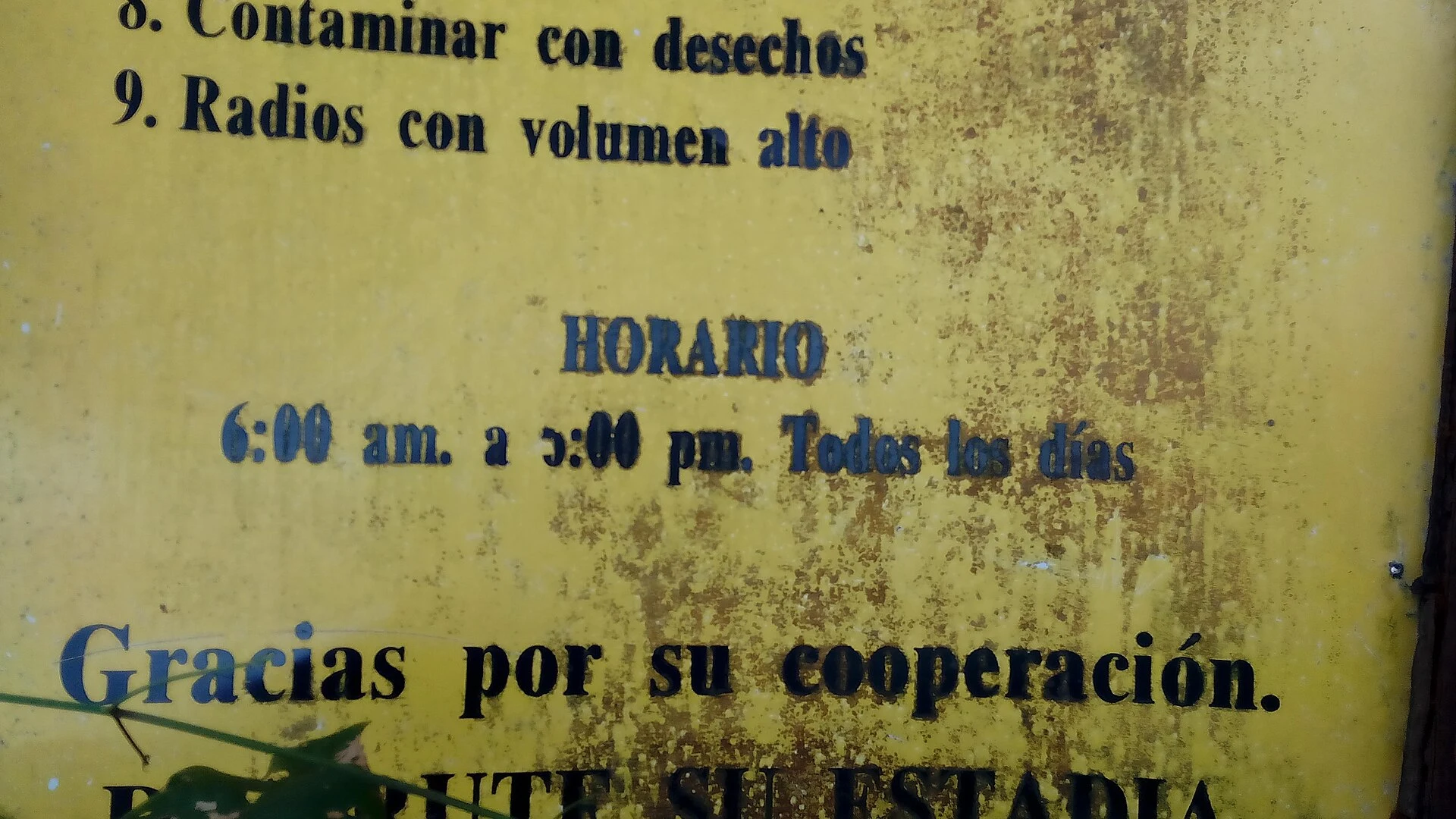
Opening hours, fees, payment methods, open sectors and possible closures are subject to change. Check them on the day of your visit or shortly before travelling in the official Cahuita National Park listing included at the end.
Choose your distance without turning the trail into a race
For a first visit, the section between Playa Blanca and the Suárez River lets you alternate between shade, coastline and unhurried wildlife observation. It is the sensible choice if you also want to leave time for swimming in designated areas or exploring the town.
Those looking for a longer walk can continue towards Punta Cahuita: the round trip from the Playa Blanca entrance is about 7.2 kilometres, according to the official tourism guide. Beyond the Suárez River, the focus shifts towards forest, coastline and observation; do not count on every beach being suitable for swimming.
At Puerto Vargas, Los Cativos offers a 2.2-kilometre alternative on an elevated walkway. The official tourism information describes it as a universally accessible section with rest areas and handrails, but that does not replace checking in advance on maintenance, recent rainfall, available assistance and your own mobility needs. Bring reusable water, rain protection and footwear that can cope with mud or wet boards.
Observe the reef without demanding a picture-perfect scene
The reef is the park’s raison d’être, not a guaranteed snorkelling backdrop. Visibility, waves, currents and safety decisions change; if the sea is not suitable, the trail and coastline still make the visit worthwhile. Rescheduling the water activity may be the best choice of the day.
If the authorities permit the activity, use only designated areas and consider going with a qualified local guide: a guide can help you read the conditions and reduce the temptation to approach or touch marine life. Never stand on coral, even if it looks like rock; do not feed animals and leave no waste behind, including food scraps.
Protection does not depend only on those who enter the water. The official Caribbean guide points to pressure from sediment and pollution on marine resources. For that reason, a responsible visit matters more for the distance it keeps than for the number of species it manages to photograph.
Cahuita does not end at the park entrance booth
Set aside part of the day for the town, without treating its culture as a decorative add-on to nature. Cahuita holds a central place in Costa Rican calypso: the work of Walter Ferguson, recognised for his contribution to intangible cultural heritage, told stories of everyday experiences and used Limon Creole English as its expressive vehicle.
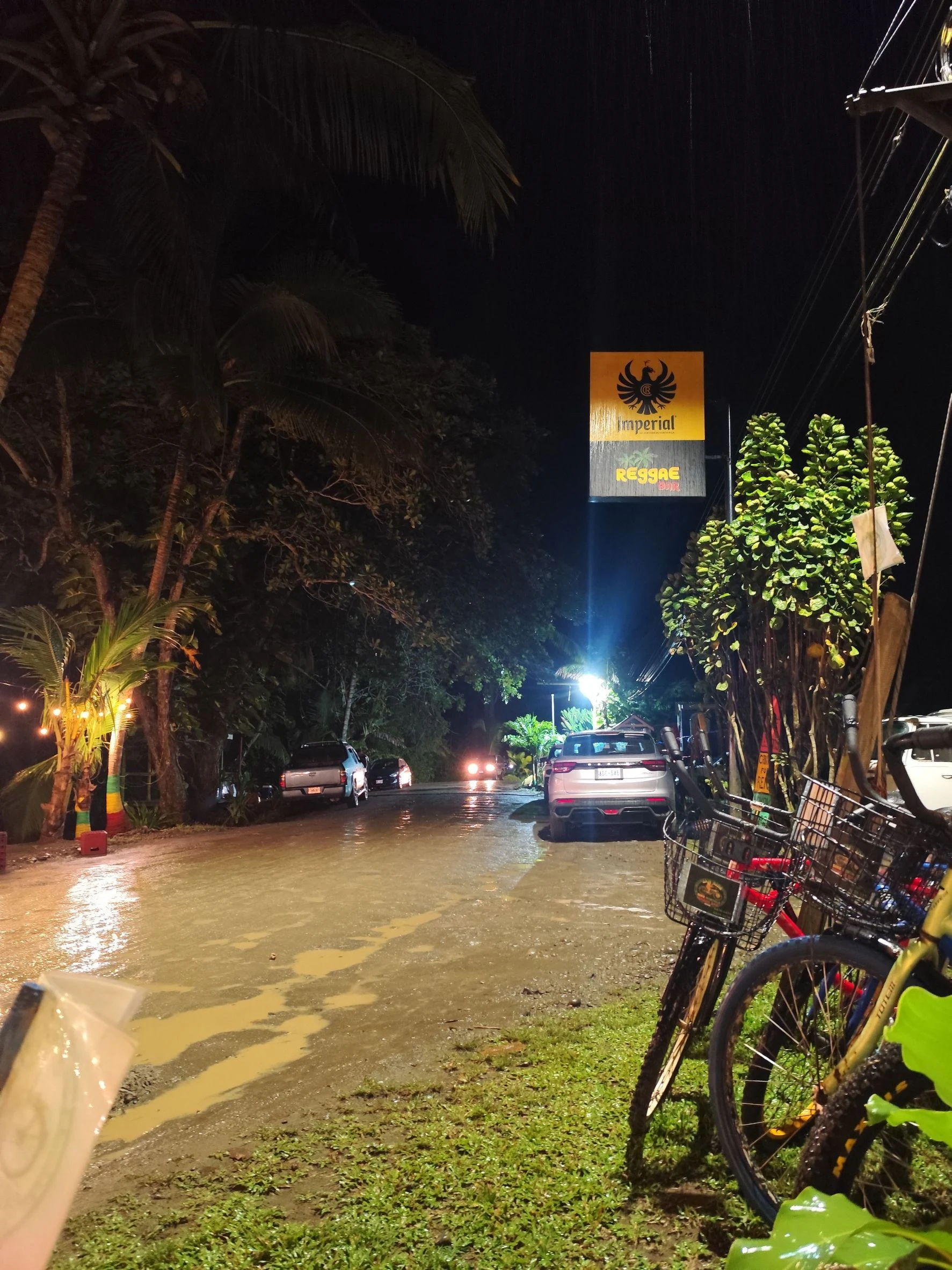
Listening to music, eating at local businesses and talking respectfully can add context to the walk, but do not turn residents into an attraction. Ask before photographing people or private spaces, avoid appropriating local expressions and choose activities led by local residents when you are looking for an interpretation of the area.
The park operates under a model of shared management between public institutions and community organisations. Making a contribution where appropriate, respecting the rules and making informed choices about local services are small decisions that acknowledge this relationship.
References to check before travelling
- National System of Conservation Areas (SINAC), Cahuita National Park: check open sectors, opening hours, fees, rules, trail conditions, swimming conditions and marine activities.
- Costa Rican Tourism Institute, Caribbean Cultural and Tourism Guide: review the public-use map, trail distances and information about the Los Cativos section.
- Ministry of Culture and Youth, Walter Ferguson cultural profile: provides context on Cahuita, Costa Rican calypso and Limon Creole English.
Pay particular attention to verifying any operational information before setting out: weather and sea conditions, the day’s actual accessibility, available services and park-ranger guidance may change.
References consulted during editorial review. Times, requirements and advisories may change: always confirm with the official source.
- https://www.sinac.go.cr/ES/planmanejo/Paginas/pmaclac.aspxwww.sinac.go.cr
- https://www.sinac.go.cr/ES/planmanejo/Plan%20Manejo%20ACLAC/Plan%20General%20de%20Manejo%20del%20Parque%20Nacional%20Cahuita%202016-2026.pdfwww.sinac.go.cr
- https://sinac.go.cr/EN-US/ac/aclac/pnc/Pages/default.aspxsinac.go.cr
- https://www.cahuita.cr/playas-cahuita/www.cahuita.cr
- https://sinac.go.cr/EN-US/atc/cahuita/Pages/default.aspxsinac.go.cr
- https://www.sinac.go.cr/search/Results.aspx?k=Parque+Nacional+Cahuita&s=All+Siteswww.sinac.go.cr
- https://www.sinac.go.cr/es/ac/aclac/pnc/paginas/default.aspxwww.sinac.go.cr
- https://www.ict.go.cr/flipbook/guias/flip-en/GUIA_CARIBE/files/basic-html/page82.htmlwww.ict.go.cr
- Costa RicaWikidata · CC0 1.0 · Wikidata · Q800
- Costa RicaWikidata · CC0 1.0 · Wikidata · Q1024894
- Costa RicaWikidata · CC0 1.0 · Wikidata · Q4559688
- Costa RicaWikidata · CC0 1.0 · Wikidata · Q12889217
- Costa RicaWorld Countries — mledoze · ODbL 1.0 · World countries dataset by mledoze and contributors · ODbL 1.0
- Costa RicaWorld Bank Open Data · CC BY 4.0 · World Bank
- Costa RicaDBpedia · CC BY-SA 3.0 · DBpedia
- Planes de sostenibilidad turística para el turismo rural comunitario de Costa Rica: Metodología para su ElaboraciónCrossref · Metadatos públicos; derechos específicos por campo cuando correspondan · Crossref
- Turismo costero, planificación turística y el conflicto de las demoliciones en el Caribe Sur de Costa RicaCrossref · Metadatos públicos; derechos específicos por campo cuando correspondan · Crossref
- Del modelo conservacionista al patrimonio territorial y el turismo en Costa RicaCrossref · Metadatos públicos; derechos específicos por campo cuando correspondan · Crossref
- Sostenibilidad en los emprendimientos turísticos en la zona norte de Costa RicaCrossref · Metadatos públicos; derechos específicos por campo cuando correspondan · Crossref
- Aportes de la historia aplicada para el estudio de los desastres. El caso del huracán Juana en Costa Rica: 1988Crossref · Metadatos públicos; derechos específicos por campo cuando correspondan · Crossref
- Presentación: Cultura política: Estado, élites y discursos en Costa Rica, siglos XIX-XXCrossref · Metadatos públicos; derechos específicos por campo cuando correspondan · Crossref
- Cecilia ECHEVERRÍA FALLA, Reflexiones en torno al liberalismo, Eds. Promesa (Filosofía, 1), San José (Costa Rica) 2002. Mariano FAZIO, Desafíos de la cultura contemporánea para la conciencia cristiana, Eds. Promesa (Historia, 1), San José (Costa Rica) 200Crossref · Metadatos públicos; derechos específicos por campo cuando correspondan · Crossref