Republic of the Congo · remote nature
Odzala-Kokoua: Choosing Your Camp and Pace in the Congo Rainforest
A stay in Odzala-Kokoua depends less on a checklist of animals than on the type of forest, the walks and the tightly organized logistics linking Mboko, Lango and Ngaga.
Conditions described in the guide: confirm current requirements and access with the official source before travelling.
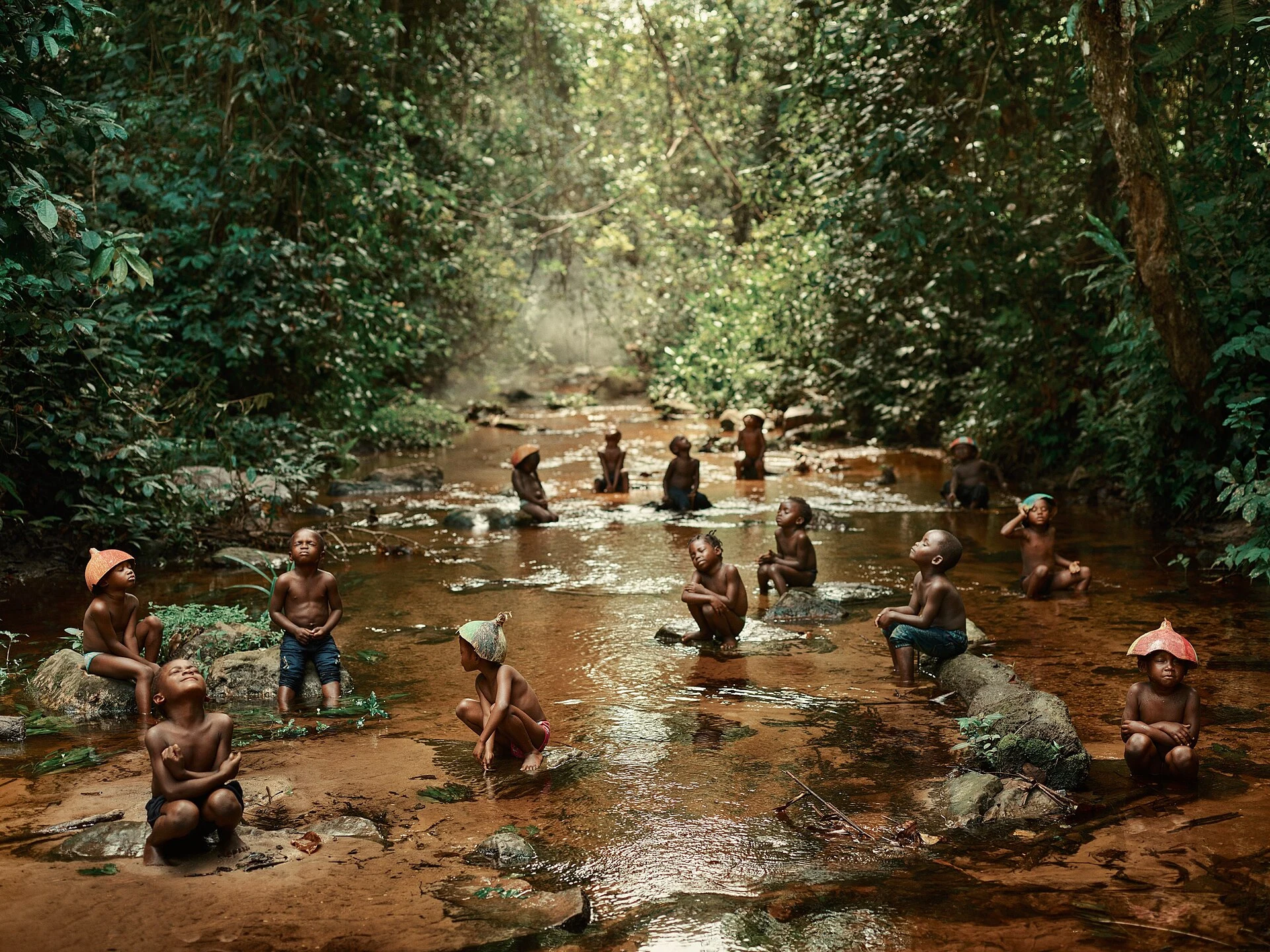
Odzala-Kokoua is neither a roadside safari nor an improvised getaway: it is a vast expanse of rainforest, savanna and forest clearings in the north-west of the Republic of the Congo. Visiting requires accepting concentrated logistics, walks shaped by the terrain and wildlife viewing without guaranteed results. In return, it offers an opportunity to understand the importance of bais—wet clearings where part of the animal life gathers—and to track western lowland gorillas with specialist support. Allowing plenty of margin matters more than trying to see everything.
The forest massif was inscribed as a World Heritage Site in 2023. That status does not make the journey straightforward: the park is far from Brazzaville, medical care outside the capital may be limited, and health, immigration and flight requirements must be checked shortly before departure.
Three bases, three ways of experiencing the landscape
The documented commercial stay is organized around an internal circuit linking Mboko, Lango and Ngaga; these are not interchangeable lodges or places that can be reached freely by road.
Mboko is the air arrival point and the base most open to the mosaic of savanna and forest. It makes sense for travelers seeking a gentle introduction to the area, short transfers and time to adapt to the humidity and the park’s schedule.
Lango looks towards the Lekoli-Mambili river system and a bai. It is the most coherent choice if your main interest is observing the clearing from walkways and platforms, combining this with water-based excursions when conditions allow, and accepting that much of the experience involves waiting. Sightings should not be promised: wildlife moves according to water, food, disturbance and season.
Ngaga is associated with gorilla tracking and a dense forest environment. It is the right base if your priority is following a habituated group with guides, but it also requires the greatest willingness to walk over uneven ground and in the rain. Tracking should not be presented as a guaranteed encounter or as an activity automatically suitable for every level of fitness.
The practical choice is straightforward: prioritize Lango if you are looking for the bai landscape and an observation-led pace; Ngaga if gorilla tracking justifies demanding walks; Mboko if you need a gentler introduction. An itinerary combining all three bases provides contrast, but requires more days, more internal transfers and greater tolerance for operational changes.
The season changes the ground before it changes the landscape
Odzala-Kokoua remains open throughout the year, but walking conditions are not the same in every month. The main dry period, from June to September, generally makes tracking and walking easier, with trails less saturated with water. January and February offer a second relatively dry window, although it is shorter and less predictable.
Rain and mud increase between October and mid-December: tracking may still be possible, but walks can take longer. From mid-March to May, waterlogged ground and flooding may restrict access to some areas; this is the least convenient period for basing a trip on daily forest activity.
June, July, August and September are the most sensible months for travelers who place mobility in the forest first. January and February may suit a trip with fewer visitors and greater flexibility. Even then, bring well-worn boots with good support, quick-drying clothing, waterproof protection for equipment and a dry bag—not as photographic accessories, but as part of everyday practical equipment.
Before paying or issuing flights, confirm trail, river, charter-flight and camp-rotation conditions with the authorized operator. These details are season-sensitive and should not be treated as permanent.
Getting there is not a detail: it is the first condition of the trip
The usual visitor access is arranged through charter flights from Brazzaville to Mboko airstrip and organized internal transport. This makes the trip very different from visiting a park with a rental car: there is less room for delays, baggage transfers matter and an overly tight international connection can jeopardize the entire reservation.
Book buffer nights in Brazzaville before the outbound flight and after returning from the park. This precaution cannot guarantee that nothing will change, but it avoids linking a rigid international connection to a remote journey. Ask about baggage limits, check-in times and what happens if weather disrupts the flight.
The Republic of the Congo and the Democratic Republic of the Congo are different countries. Do not confuse Brazzaville with Kinshasa when checking visas, health alerts or transit requirements. For the Republic of the Congo, review the documents required for your nationality, visa validity, vaccination certificates and airline rules before departure.
It is also advisable to purchase cover that includes medical evacuation in remote areas and to carry enough medication for the entire trip. Malaria prevention and vaccinations should be decided with a travel-medicine consultation, not from a generic online schedule.
A responsible journey also requires attention to its human context
Odzala-Kokoua’s biological importance coexists with communities living around its edges, whose rights, forest practices and histories should not be reduced to scenery for visitors. Area management has acknowledged human-rights abuses committed in some incidents involving Baka community members and eco-guards; an independent investigation concluded in 2025, and the managing organization announced measures for redress, oversight and stronger safeguards.
That background cannot be resolved with a sentence about sustainable tourism. Traveling responsibly here means finding out who manages access, asking specifically about complaint mechanisms and relations with communities, and not turning Indigenous identities into a consumer activity. Reject itineraries that present community visits as entertainment or promise cultural contact without explaining consent, mediation and local benefit.
Wildlife is not a script either. Keep your distance, follow guides’ limits, avoid flash and drones unless expressly authorized, and do not push for closer approaches when an animal moves away. In a forest where visibility is limited, silence and patience are part of the visit, not wasted time.
References to check before booking
Status of the area and its ecological value
- UNESCO World Heritage Centre, the entry and inscription decision for the Odzala-Kokoua Forest Massif.
- UNESCO’s Man and the Biosphere Programme, Kokoua-Odzala profile.
Access, camps, activities and seasonality
- Official Odzala-Kokoua information on accommodation, the Mboko-Lango-Ngaga circuit and the best time to visit.
- African Parks, institutional information and updates on Odzala-Kokoua.
Health, safety and entry to the country
- The United States Department of State travel advisory for the Republic of the Congo.
- The British government’s travel advice and entry requirements for the Congo.
- Traveler health information from the Centers for Disease Control and Prevention.
Human-rights context
- Public statement from the independent Omnia Strategy investigation.
- Response and follow-up plan published by African Parks.
Verify these points just before booking and traveling: visa requirements according to nationality, health certificates, arrival controls, current travel advisories, insurance and evacuation, charter departures, baggage allowance, trail access and tracking conditions.
References consulted during editorial review. Times, requirements and advisories may change: always confirm with the official source.
- https://www.unesco.org/en/mab/kokoua-odzalawww.unesco.org
- https://whc.unesco.org/en/list/692whc.unesco.org
- https://en.wikipedia.org/wiki/Odzala-Kokoua_National_Parken.wikipedia.org
- https://www.unesco.org/en/world-heritage/listwww.unesco.org
- https://core.unesco.org/en/project/3210212211core.unesco.org
- https://whc.unesco.org/document/205802whc.unesco.org
- https://whc.unesco.org/en/decisions/8073whc.unesco.org
- https://www.africanparks.org/the-parks/odzala-kokouawww.africanparks.org
- CongoWikidata · CC0 1.0 · Wikidata · Q971
- CongoWikidata · CC0 1.0 · Wikidata · Q3503
- CongoWorld Countries — mledoze · ODbL 1.0 · World countries dataset by mledoze and contributors · ODbL 1.0
- Congo, Rep.World Bank Open Data · CC BY 4.0 · World Bank
- Sostenibilidad de la pesca artesanal en la comunidad rural de Río Congo, DariénOpenAlex · CC0 1.0 · OpenAlex