Pohnpei, Federated States of Micronesia
Visiting Nan Madol on Foot or by Boat
At Nan Madol, the important decision is not how long to stay, but which access route lets you understand the site without expecting an experience that its conservation status, tides and living cultural significance cannot promise. This guide helps you choose between the land entrance at Temwen and a trip on the water, with realistic expectations.
Conditions described in the guide: confirm current requirements and access with the official source before travelling.
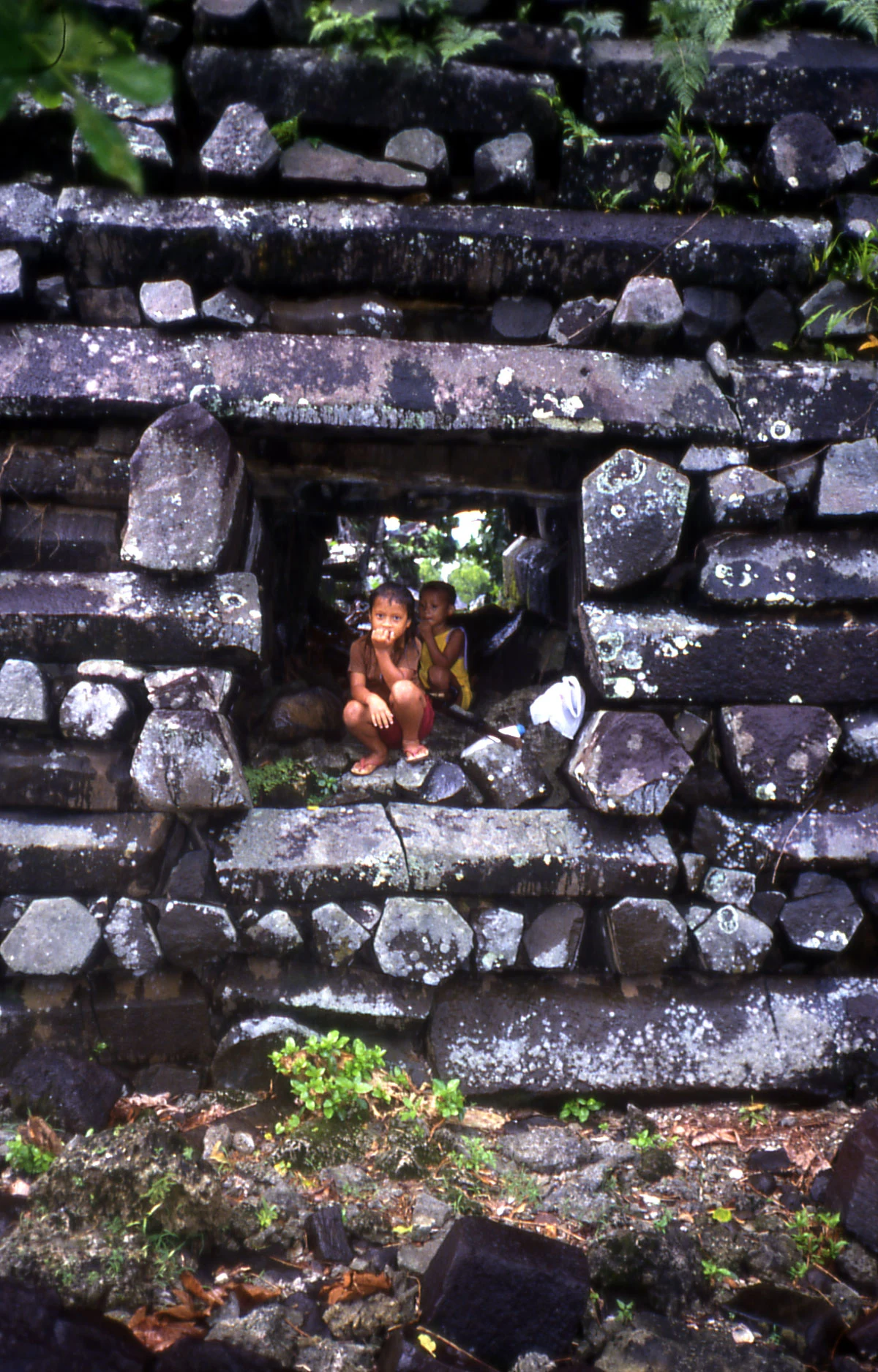
Nan Madol is not a “lost city” staged for visitors. It is a ceremonial centre built on artificial islets in Pohnpei’s lagoon, with religious and traditional significance that continues today. Its basalt walls, canals and enclosures do not make up a fully equipped archaeological park; they form a cultural landscape whose management involves the traditional authorities of Madolenihmw.
The best visit begins by giving up the idea of seeing everything. The site is affected by invasive vegetation, sedimentation, wave action and partial collapses, and it remains on the List of World Heritage in Danger. In 2026, UNESCO recognised progress in reopening some canals, but kept the site on the list and called for priority to be given to opening and operating the visitor centre, as well as improving pedestrian circulation.
It is therefore worth choosing your route according to what you want to understand and what the day allows. The land approach offers a concentrated reading of Nandowas and its funerary architecture; travelling by water, when conditions and the operator make it feasible, helps you understand that the canals are part of the site’s structure, not merely a photographic backdrop.
First, choose a question—not a list of “must-sees”
If this is your first visit and you want a clear introduction to the scale of the walls and the funerary enclosure of Nandowas, prioritise the land access via Temwen. Pohnpei’s tourism office notes that the approach may include stretches of rough track and a short walk across a tidal flat; this is not an urban visit or a route prepared for people with reduced mobility.
Choose a boat or kayak trip if your question is spatial: how the islets, canals and lagoon relate to one another. Do not assume that you will enter, land on or navigate every canal. The January 2026 state report confirms that water access has reopened between Nan Dowas, Pan Kadira and Para Nuii, but also shows that infrastructure and visitor management are still developing. Ask the operator to specify which canal, islet and landing are planned for that day.
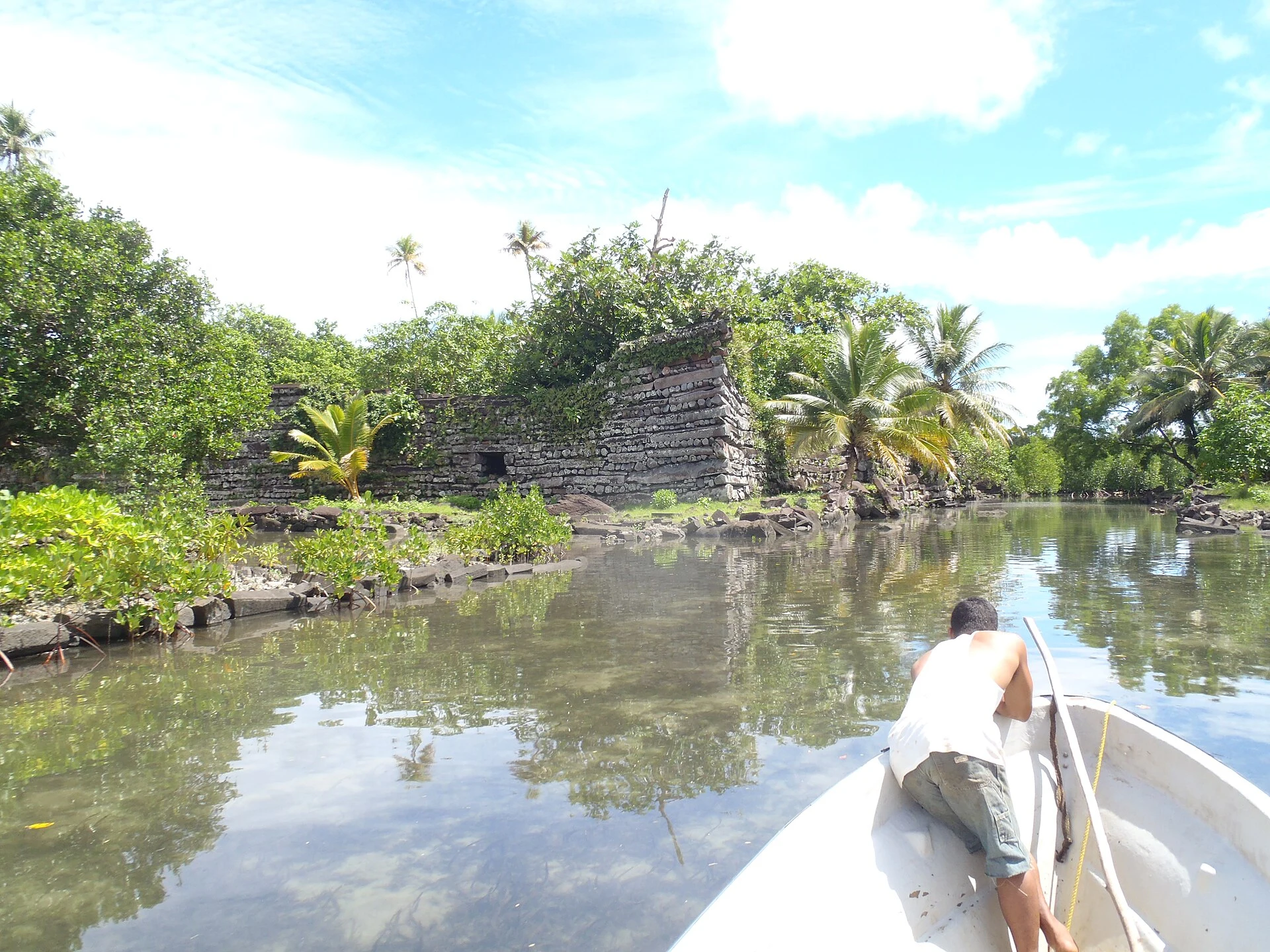
The tide is not a logistical detail: it determines the kind of visit
For the land approach, the local tourism authority itself recommends the mid- to low-tide window. That does not mean that every low-tide hour guarantees an easy crossing: rain, mud, track conditions and local circumstances all change the experience.
Book your visit with enough flexibility to move it to later the same day or the following day. Before setting out, confirm four points with your guide or driver: meeting time, the condition of the tidal crossing, recommended footwear and whether there will be enough water for the proposed route. Bring water, rain protection and footwear that can get wet and has good grip; this is not the place for smooth-soled sandals or for trying to keep your feet dry at all costs.
Do not use the tide as an excuse to cross wherever you like. Protecting the site requires limiting wear on paths, walls and fragile areas; a shorter route is not necessarily an authorised route or a better way to understand the complex.
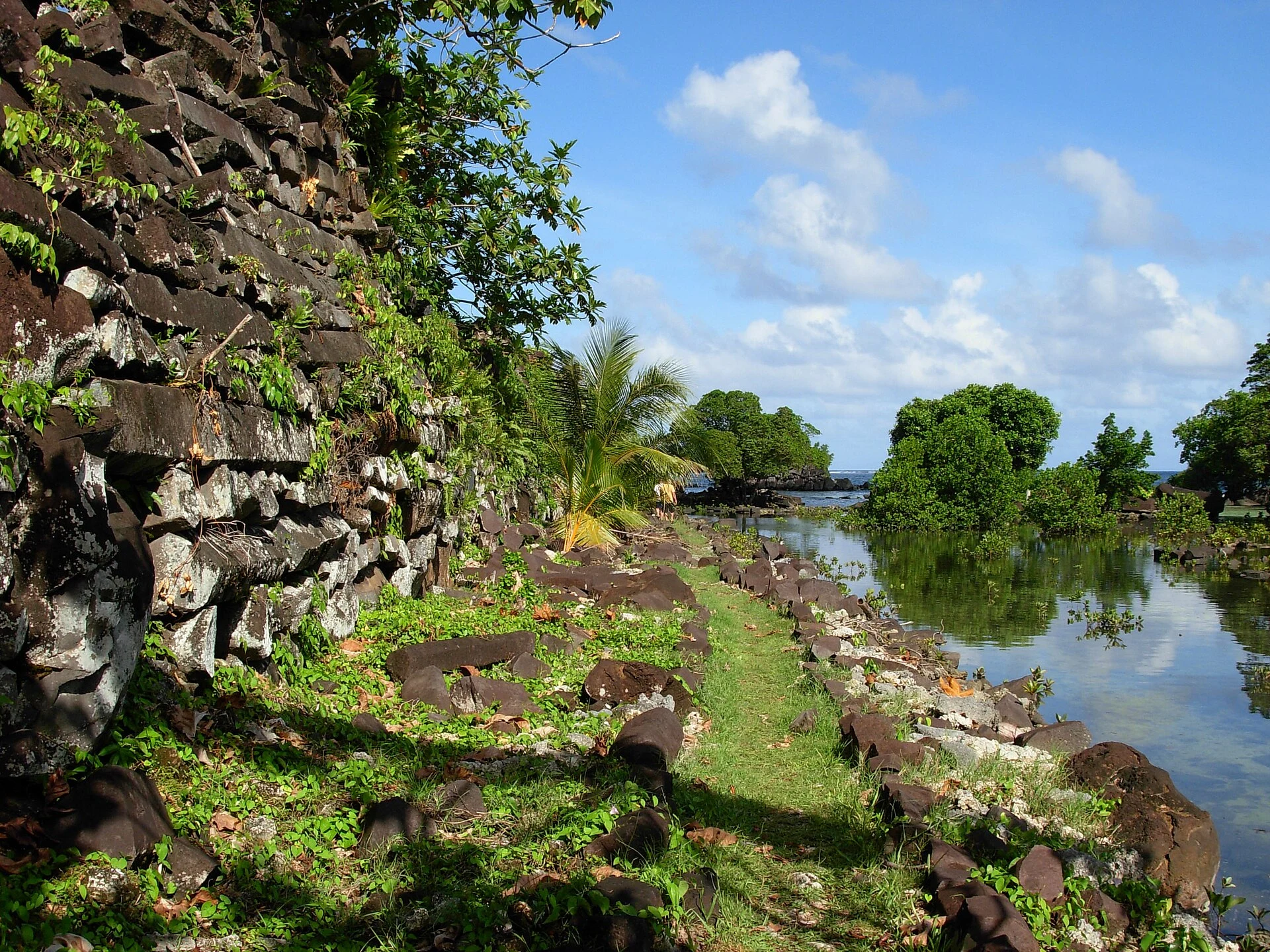
A local guide provides context—and real coordination
At Nan Madol, hiring a guide should not be presented as a ceremonial obligation or a shortcut to consuming “mystery”. It is a practical decision: a guide can help adapt the visit to the tide, explain which areas can be explored and place the architecture within Pohnpei’s political history and traditions. The tourism office recommends a guide for historical and cultural context, and lists operators offering Nan Madol tours by boat, kayak or land.
When making contact, ask specific questions: “Is the excursion on land, by kayak or by motorboat?”, “How much walking is involved?”, “Is admission included or paid separately?”, “What happens if the tide or rain changes?” and “What photography or clothing rules does the community recommend?” Do not assume prices, opening hours or guide availability: these details vary and should be checked with the tourism office or operator before you pay.
Treat the landscape as living heritage, not a ruin set
Nan Madol was the political and ceremonial centre of the Saudeleur dynasty, but it is not a civilisation disconnected from the present. UNESCO recognises the continuity of its religious and traditional significance and notes that the property is also protected through customary interests connected with the Nahnmwarki of Madolenihmw.
That changes the appropriate behaviour: do not climb onto walls for scale in photographs, move vegetation aside, collect coral or stone, or enter closed areas. If you photograph people, villages or private gatherings along the way, ask permission. Pohnpei’s travel guidance also recommends dressing modestly when visiting villages and following hosts’ instructions during cultural practices.
The experience is richer when you accept that some of the complex may remain covered, inaccessible or off route. That limitation is not a failure of the visit; it is the honest condition of a site being conserved, whose management is seeking closer alignment with living Pohnpeian cultural practices.
Plan Pohnpei with a time buffer, not as a minute-by-minute stopover
Getting to Pohnpei depends on regional air connections with limited frequencies. The tourism office advises checking schedules directly with airlines and allowing extra days, because not all connections operate on the same date.
Before fixing accommodation, domestic flights or an excursion, check the current arrival time at PNI, transit requirements for your itinerary, the state of access to Nan Madol, whether the visitor centre is operating, the entrance fee and the payment method. As of September 2026, UNESCO was still asking that the opening and operation of the visitor centre be prioritised; do not treat it as a guaranteed service until you have confirmed it locally.
The most responsible decision is usually simple: book one well-coordinated visit, leave a buffer day in Pohnpei and let the tide determine the order of the day. Nan Madol then stops being a place to “tick off” and can be seen again for what it is: a network of stone, water, authority and memory.
References consulted during editorial review. Times, requirements and advisories may change: always confirm with the official source.
- https://whc.unesco.org/en/list/1503/whc.unesco.org
- https://visitpohnpei.travel/visitpohnpei.travel
- https://whc.unesco.org/document/219132whc.unesco.org
- https://whc.unesco.org/en/decisions/8686whc.unesco.org
- https://visitpohnpei.travel/culture/about-pohnpei/visitpohnpei.travel
- https://whc.unesco.org/document/141702whc.unesco.org
- https://whc.unesco.org/en/list/1503/documentswhc.unesco.org
- https://whc.unesco.org/en/search/?category=State+of+Conservation&criteria=392+393%3Dwhc.unesco.org
- MicronesiaWikidata · CC0 1.0 · Wikidata · Q3359409
- Micronesia, Fed. Sts.World Bank Open Data · CC BY 4.0 · World Bank
- MicronesiaDBpedia · CC BY-SA 3.0 · DBpedia