Discovering Matera Through the Sassi and Murgia Timone
The Sassi are not a single postcard, nor is the Murgia an added viewpoint. This three-area guide helps you decide how far to walk, which history to read and when to skip the canyon so you can experience Matera with greater attention.
Matera requires a decision before you descend the first staircase: do you want to understand a city that is still inhabited, explore its material relationship with rock, or cross into the landscape that made it possible? The UNESCO-listed site brings together the two Sassi and the Park of the Rupestrian Churches, on the other side of the Gravina; it is therefore not an old town that can be separated from its plateau. The site has been occupied and transformed over millennia, with a population evacuation in the 1950s and a gradual return from the 1980s onwards. Arriving with a list of “caves” erases precisely these layers.
Visual context for ItalyContext video selected for this guide; it does not by itself identify every place mentioned.Video by K · Pexels · Pexels License · Duration: 00:16
♫
Listen to Italy
A documented soundscape that complements this guide to Italy. The Sassi are not a single postcard, nor is the Murgia an added viewpoint. This three-area guide helps you decide how far to walk, which history to read and when to skip the canyon so you can experience Matera with greater attention.
Cultural or ambient audio selected as context; it does not necessarily represent every place mentioned. Audio by Skjor1 · Openverse · CC0 1.0 · Duration: 08:0801
First: do not try to cover all three areas as though they were equivalent neighbourhoods
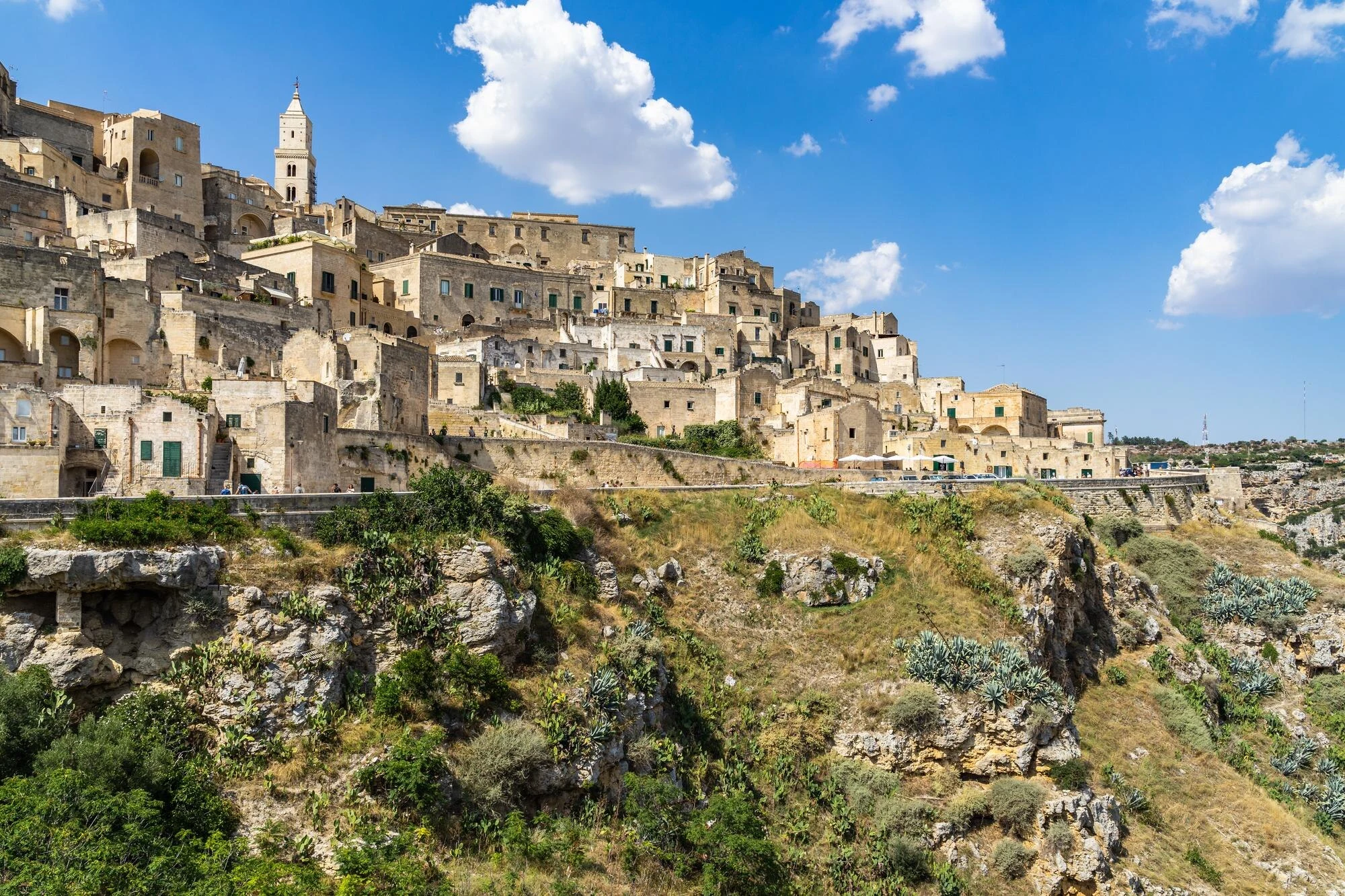
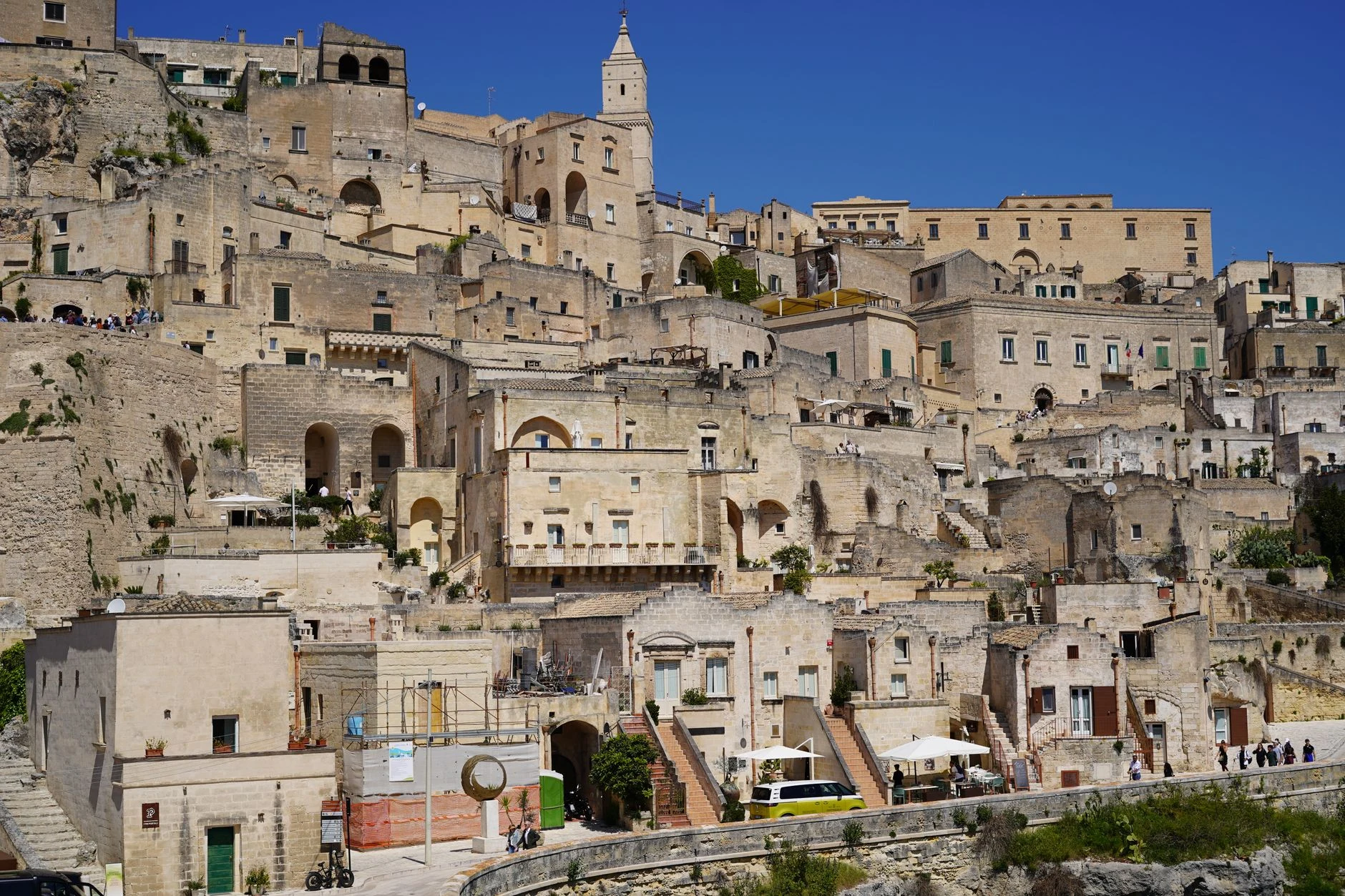
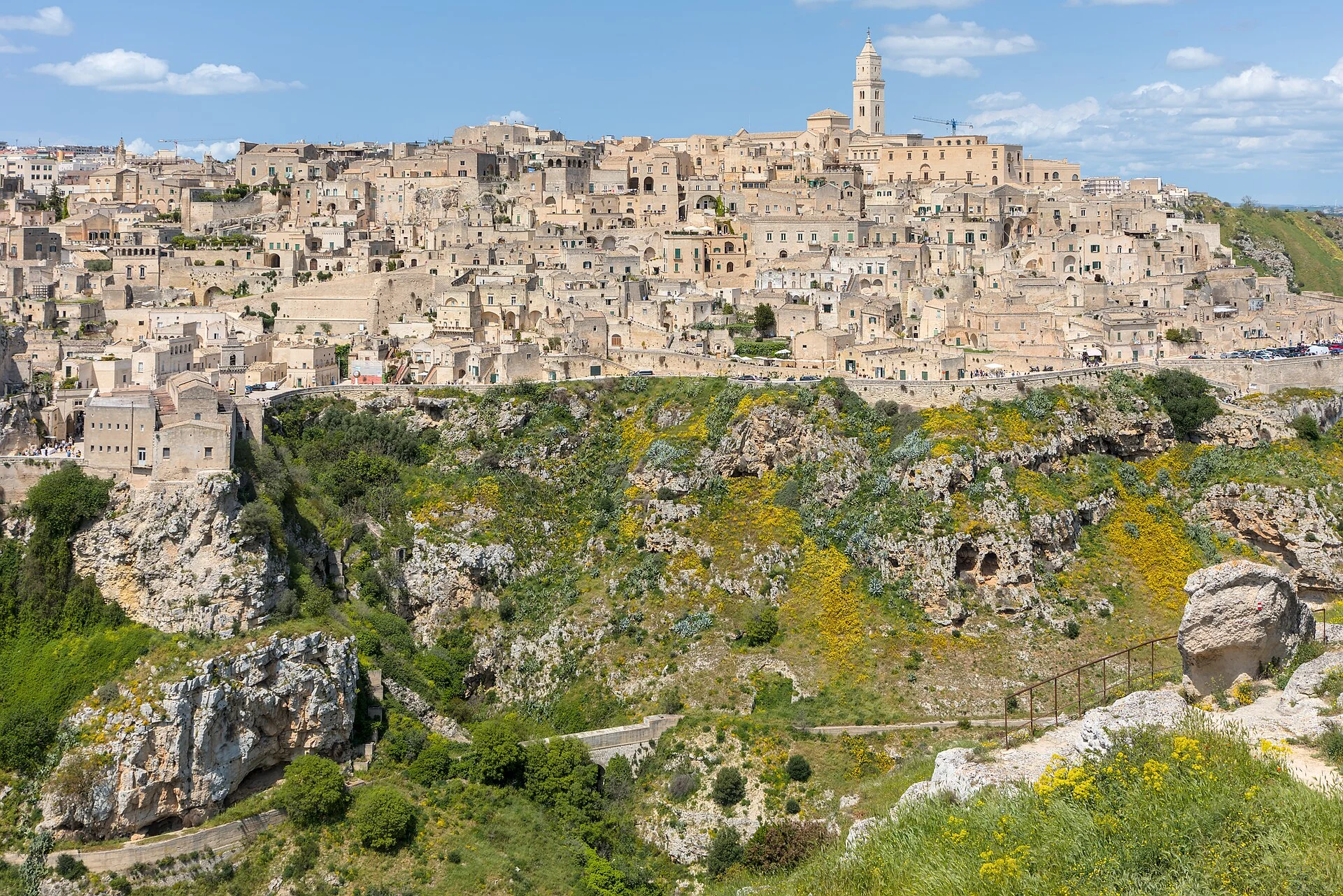
Choose a backbone for the day. Sasso Barisano works best if you have little time or want to read the urban density: tightly enclosed streets, façades built in front of excavations, and a succession of courtyards, accommodation, workshops and everyday life. Sasso Caveoso is the right choice if you want to understand the relationship between rock-cut dwellings, slopes and the Gravina: its opening towards the gorge makes it clearer that Matera was also a system of water, rock and landscape. Murgia Timone, opposite, is not an “extra viewpoint”: it is the site’s other territorial half and requires a hiking outing with its own preparation. UNESCO distinguishes the two Sassi—Barisano and Caveoso—and the Murgia plateau as inseparable parts of the heritage site.
A realistic plan: reserve Barisano and Caveoso for a slow urban day, with pauses and detours; add Murgia Timone only if you have the energy, footwear and time to spare. If you have just one afternoon, do not cross the canyon out of obligation: stay in one of the Sassi and observe how it connects with the Civita, the ridge between them where the cathedral stands.
Choose Barisano to read a city, not to look for an “authentic” cave
Barisano is the most useful option for first-time visitors who want to get their bearings without turning the walk into a continuous physical challenge. What matters here is the layering: excavated rooms, stone façades, narrow passages, stairways and thresholds do not form a uniform set, but a fabric whose uses have changed and which still has residents and economic activity. The site’s preservation also depends on not treating it as an empty stage: UNESCO identifies growing tourism as a pressure that must be managed so as not to damage its presentation and atmosphere.
Trade-off: there is less sense of “open landscape” than in Caveoso, but you gain urban context. Rather than entering many converted private properties, choose one interpretive visit or a single cultural space and leave time to walk slowly. Keep your voice down in the vicoli, do not block doors or stairways for photographs, and remember that a light behind a façade is not a prop: it may be a home or a business.
Choose Caveoso if your question is how people live—and lived—with the Gravina in front of them
Caveoso is better for a visit that puts the shape of the land first. From its edges and squares, you can understand the relationship between excavated homes, stone terraces and the cut of the Gravina. This reading avoids a misleading idea of Matera as an underground city: some of its architecture is excavated, but the whole settlement was also built, repaired, partly abandoned, restored and inhabited. The historical continuity recognised by UNESCO does not mean immobility; it means that the settlement adapted to its surroundings over more than two millennia.
Trade-off: this is the most compelling area for looking towards the canyon, but its gradients, uneven stone and steps can make a short route take far longer than expected. Do not simply describe it as an area “without cars”: Matera has pedestrian areas and limited-traffic zones (ZTL), with specific controls and rules for the Rioni Sassi. If you arrive by vehicle, do not follow the GPS to your accommodation’s door unless the property has confirmed in writing the access procedure, registration-plate requirements and unloading arrangements. Check the current map and regulations from the town council before driving.
Choose Murgia Timone only when you want to walk through the complete landscape
Murgia Timone changes the scale: from the plateau, Matera is viewed across the gorge, and you enter a territory of gravine, trails and protected rupestrian heritage. The Park describes trail 406 from Porta Pistola to the Jazzo Gattini centre as a route of about 6 km, medium difficulty and roughly two hours; it includes the bridge over the Gravina and continues towards the viewpoint and several rupestrian churches.
Trade-off: this is neither an urban stroll nor an accessible alternative to a viewpoint reached by taxi. It requires steady walking, water, sun protection, grippy footwear and a willingness to change plans because of heat, wind, rain or closures. Access to and services at Murgia Timone are being managed on a regulated basis, with an information and control point at Jazzo Gattini; therefore, check the Park’s website for reservations, direction of travel, fees, opening hours and trail conditions for the exact date of your visit.
Do not cross over just to get a photograph of the city if you are not prepared to give the park the time it requires. If the day is short, you are travelling with reduced mobility or the terrain is compromised, view the Sassi from their urban edges and leave the Murgia for another occasion.
05
A two-speed strategy: city one day, canyon the next—or no canyon
For a one-night stay, prioritise an orientation walk through Barisano, Civita and Caveoso in the afternoon, then spend the following morning in whichever area remains. This sequence lets you tackle the slopes without chasing sunset like a race. For two nights, separate an urban day from an outing to the Murgia; that way you will not have to choose between eating, resting or returning before daylight fades.
Matera can be reached via the Ferrovie Appulo Lucane network, which publishes train and bus timetables for the Bari–Matera connection and other services. Timetables vary between weekdays, public holidays and non-school periods: check the current schedule and service notices just before booking non-refundable accommodation or planning a connection.
For visitors with reduced mobility, pushchairs or anyone who cannot manage uneven surfaces, plan the visit from the higher edges and ask museums, accommodation providers and transport operators in advance which specific sections they can guarantee; “accessible Matera” should not be assumed simply because a general route exists. Stairs, slopes and stone paving are part of the site’s physical experience, but they do not have to be compulsory.
06
The responsible choice: fewer interiors, more attention to the place
Matera’s value does not depend on accumulating cave dwellings, rupestrian churches or night views. Choose one or two interiors with interpretation, book the Murgia only if you can walk it carefully, and spread your spending among businesses and projects that maintain local activity beyond the busiest points. UNESCO places the protection of the urban heritage and the plateau within the same management responsibility; travelling slowly is a practical way not to demand that the site function like a theme park.
Sources and checks
References consulted during editorial review. Times, requirements and advisories may change: always confirm with the official source.