Nepal · Heritage and slow travel
Lumbini’s Sacred Garden and Monasteries
Lumbini is best understood as a layered landscape: an archaeological and devotional core, a corridor of monasteries from different traditions, and a cultural zone. This guide suggests a day with pauses, considered choices, and room for the rhythms of a living place.
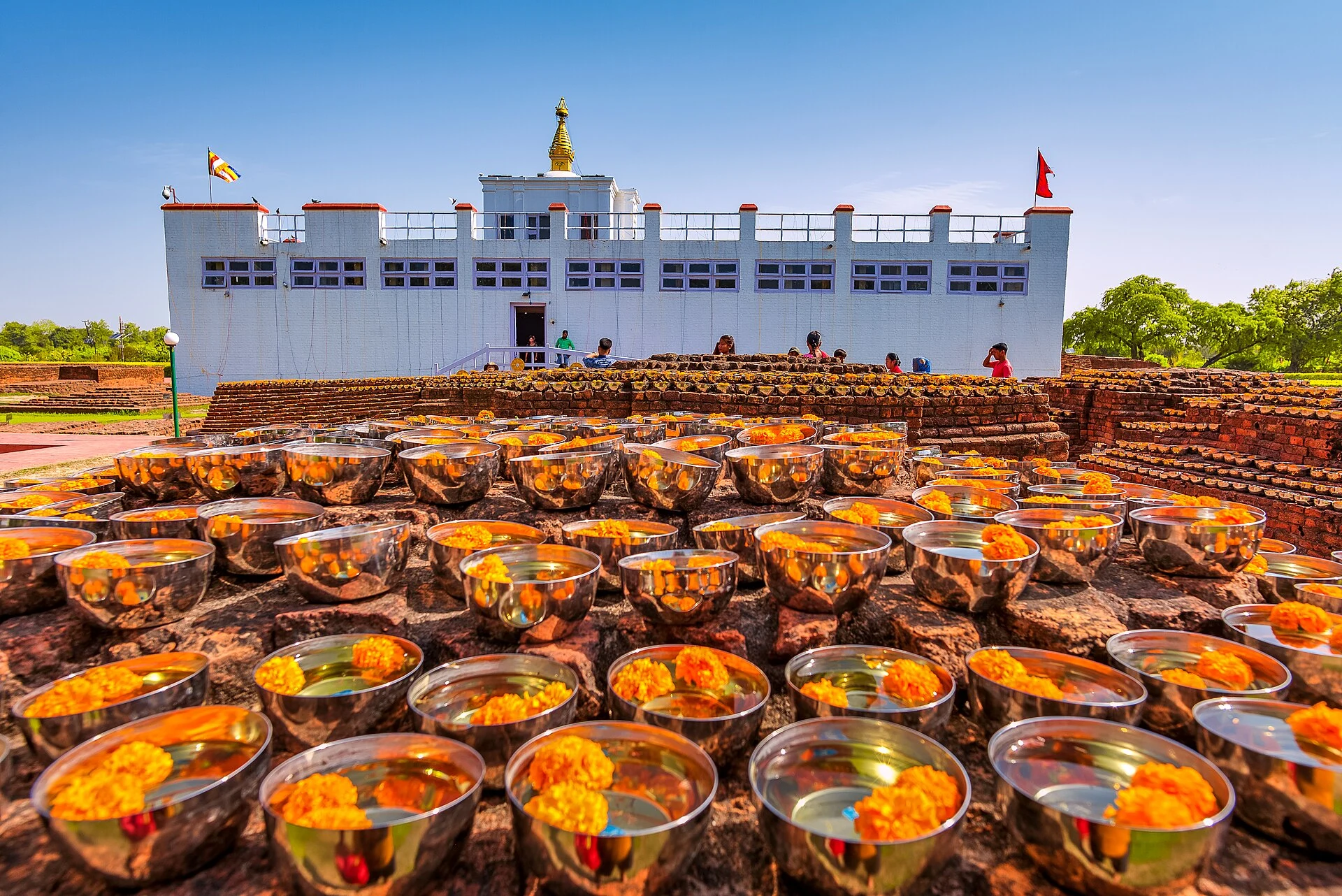
Going to Lumbini to “see the place where the Buddha was born” sounds simple, but the site is not a single monument. The UNESCO-listed property includes the Sacred Garden—with the Maya Devi Temple, the Asoka Pillar, the sacred pond and archaeological remains—within a broader plan that also incorporates a Monastic Zone and a cultural centre. The useful question is not how many temples to tick off on a map, but how much time to set aside for each layer and what kind of experience you are looking for: archaeology, religious practice, contemporary Buddhist architecture, or a restrained combination of all three.
Listen to Nepal
A documented soundscape that complements this guide to Nepal. Lumbini is best understood as a layered landscape: an archaeological and devotional core, a corridor of monasteries from different traditions, and a cultural zone. This guide suggests a day with pauses, considered choices, and room for the rhythms of a living place.
Audio by the_very_Real_Horst · Openverse · CC BY 4.0 · Duration: 09:21
First read the birthplace; then explore the monasteries
Begin with the Sacred Garden, not because it is a “main attraction”, but because it is the historical and spiritual core of the site. Here you will find the Maya Devi Temple, the stone marking the birthplace according to the tradition preserved in the temple, the Asoka Pillar, the Puskarini or sacred pond, and excavated layers of stupas and monasteries. The inscription on the pillar, erected in 249 BCE, is one of the material foundations linking the site to the birth of Siddhartha Gautama; the remains also reveal centuries of continuous pilgrimage.
This changes the way you visit: there is no need to rush in, photograph the temple and leave. Set aside the first part of the day to walk slowly among the remains, notice where the contemporary protective structures end and the archaeology begins, and leave room for the practices of those who have come on pilgrimage. Speak quietly, do not turn devotional acts into a spectacle, and always follow the site staff’s instructions. UNESCO itself identifies visitor pressure, humidity and the surrounding industrial development as conservation challenges. Moving through the site carefully is also a concrete way of avoiding unnecessary additional pressure.
The Monastic Zone is not a catalogue of façades
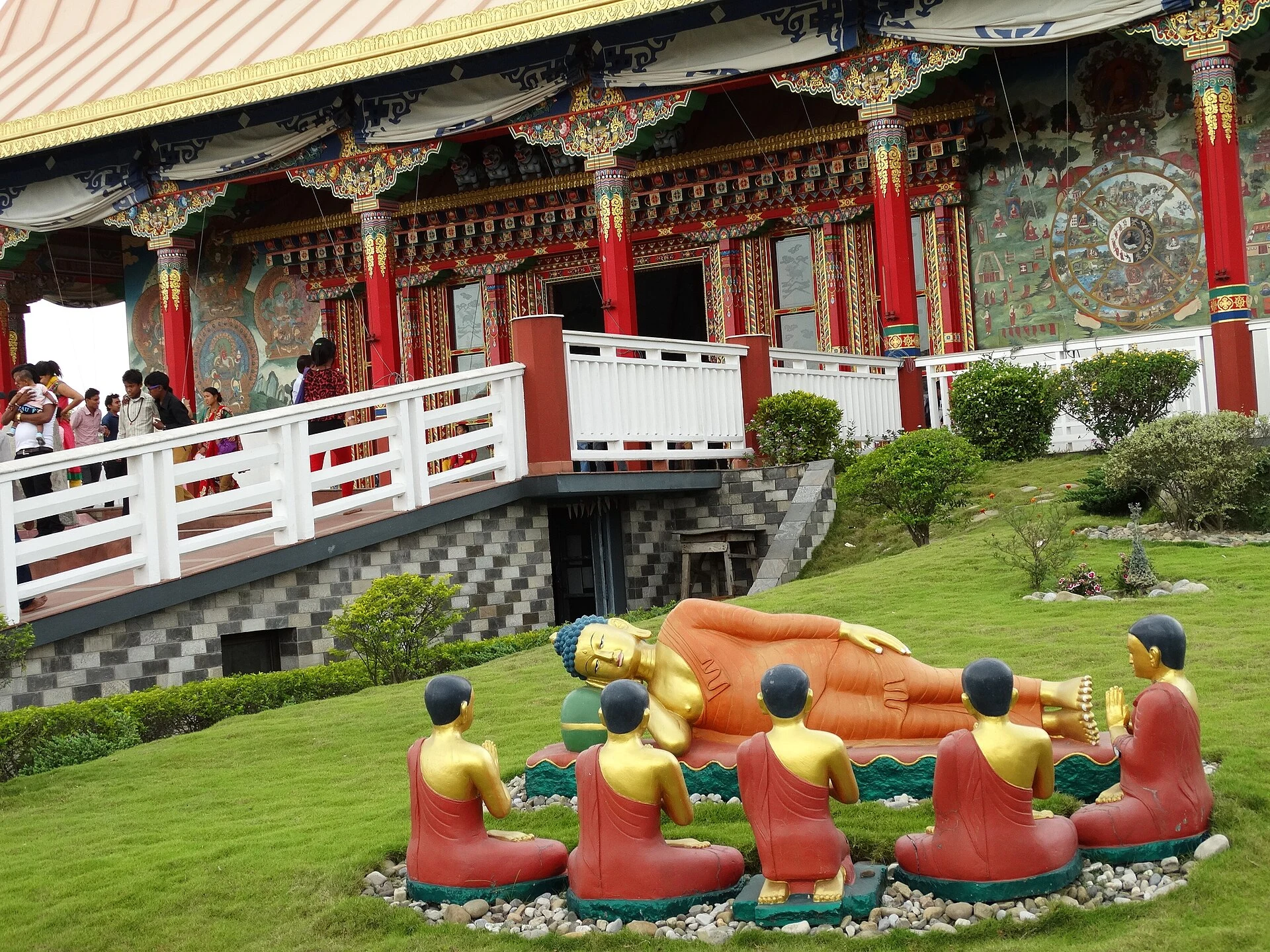
Lumbini’s master plan divides the site into three main areas: the Sacred Garden, the Monastic Zone and the Cultural Centre/New Lumbini Village. The Monastic Zone is divided by a 1.6-kilometre pedestrian walkway and canal: Theravada-related plots are grouped to the east and Mahayana-related traditions to the west. This is not a division between “beautiful temples” and “less important temples”, but a spatial way of showing the diversity of Buddhist communities involved in Lumbini.
Rather than trying to enter everywhere, choose two or three stops with a clear question in mind. You might compare a Theravada monastery with a Mahayana one; look at how materials, scale and prayer spaces differ; or set aside time for a meditation centre only if its rules and programme allow visitors. The Lumbini Development Trust lists operating monasteries and centres, but building access, ceremonies, interior entry and activities may vary. Confirm conditions on the day at the Visitor Information Centre, which the Trust identifies as a place for guidance, registration and fee payment.

A one-day itinerary that does not make you rush
A sensible sequence is to arrive early at the Sacred Garden, while you still have the attention to take in its archaeological and devotional context. Then move towards the Monastic Zone, selecting only a limited number of buildings; the central corridor and canal help you understand the plan’s real distances, rather than simply moving from one photograph to the next. Finish in the cultural area with the Lumbini Museum, if it is open: its collection includes coins, manuscripts, terracottas and sculptures, and helps connect the birthplace with the wider archaeological landscape.
If you have a second day, use it to go beyond the core and understand that Lumbini does not exhaust the geography associated with the Buddha’s early life. Nepal’s national tourism office mentions, among other places on the circuit, Tilaurakot, Kudan, Gotihawa, Niglihawa, Devdaha and Ramagrama. Do not add them as a checklist: distances, local transport and road conditions make it preferable to choose a single archaeological route and organise it in advance.
Logistics: plan from Bhairahawa, not from a promise of speed
When planning how to get there, think of Lumbini as a Terai destination rather than an instant excursion from Kathmandu. Nepal Tourism Board places Lumbini 22 kilometres from Bhairahawa and notes that Bhairahawa has air connections with Kathmandu; it also estimates the road distance from the capital at about 300 kilometres, taking roughly eight hours. Treat these figures only as an indication of scale, not as a timetable: flight frequency, traffic, road conditions, final transfers and weather must be checked before buying tickets or planning a tight connection.
The site is extensive and its points of interest are spread out. If you walk, narrow your selection; if you need to minimise distances or rely on a wheelchair, assisted mobility or a vehicle, do not assume comprehensive accessibility based on a map. Contact the Lumbini Development Trust beforehand to ask which routes, toilets, internal vehicles and entrances are available on your dates. Also check current fees, entry controls and opening times there: the national tourism office confirms that access to Lumbini’s gardens requires an admission fee, but it is unwise to give fixed prices or times in a guide intended to remain useful.
A responsible visit: less consumption of symbols, more attention to context
Lumbini is at once a sanctuary, an archaeological site and an evolving planning project. UNESCO stresses that protecting the site requires a balance between conserving archaeological remains and accommodating pilgrims, and that the protected area does not cover the entire associated archaeological landscape. This is an invitation to travel modestly: do not intrude into ritual spaces, leave the authorised route in search of “undiscovered” ruins, abandon waste, or present as a private experience a place sustained by religious communities, public institutions and conservation work.
Perhaps the best souvenir from Lumbini is not a collection of national monasteries, but an understanding of the difference between the archaeological birthplace, the Buddhist languages that coexist around it, and the Terai landscape that sustains it. If that perspective interests you, a night near the site offers more than trying to squeeze it between two modes of transport. If you are only looking for spectacular architecture, recognise that this may not be the right destination for a short, hurried visit.
References consulted during editorial review. Times, requirements and advisories may change: always confirm with the official source.
- https://whc.unesco.org/en/list/666whc.unesco.org
- https://trade.ntb.gov.np/tourist-destination/lumbini/trade.ntb.gov.np
- https://whc.unesco.org/document/219148whc.unesco.org
- https://trade.ntb.gov.np/travel-essentials/permits-fees-etc/trade.ntb.gov.np
- https://ntb.gov.np/en/lumbini-provincentb.gov.np
- https://whc.unesco.org/en/decisions/8807whc.unesco.org
- https://trade.ntb.gov.np/tourist-destination/trade.ntb.gov.np
- https://whc.unesco.org/en/statesparties/np/whc.unesco.org
- NepalWikidata · CC0 1.0 · Wikidata · Q837
- NepalWikidata · CC0 1.0 · Wikidata · Q2843253
- NepalWorld Bank Open Data · CC BY 4.0 · World Bank
- NepalDBpedia · CC BY-SA 3.0 · DBpedia