Czechia · South Moravia
Lednice-Valtice in two days: palaces, ponds and avenues
A practical escape for exploring the Lednice-Valtice cultural landscape without mistaking it for a collection of isolated monuments: what to prioritise, where to stay and when to use the train, bus or bicycle.
Conditions described in the guide: confirm current requirements and access with the official source before travelling.
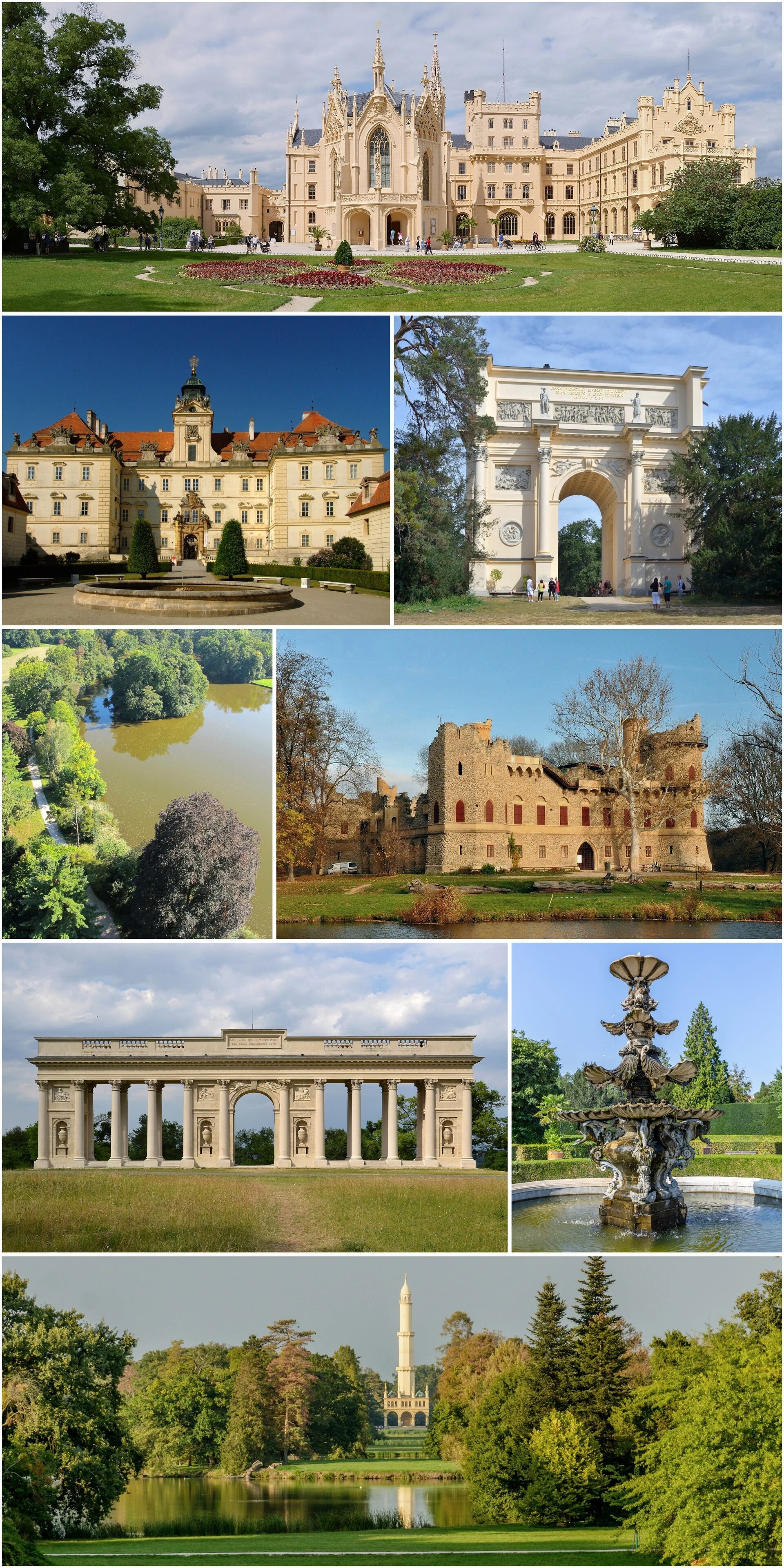
Lednice-Valtice rewards travellers who embrace one simple idea: here, the destination is the designed landscape, not just the castles of Lednice and Valtice. Avenues, pavilions, parks, ponds and vistas were shaped over centuries as a single territorial work of art. That is why trying to string together every stop in one day often turns a meaningful visit into a race for photographs.
Two days make it possible to separate the two main areas and leave time for travelling slowly between them. The bicycle is the most coherent way to link the sites; trains and buses make a visit without a car perfectly feasible, although they offer less freedom to stop at intermediate buildings and viewpoints.
Understand the whole before choosing your stops
The Lednice château, with its neo-Gothic appearance, and the Baroque château of Valtice are the two most obvious endpoints, but they are neither equivalent nor interchangeable. Lednice brings together a park, palm house and Minaret; Valtice centres on a small town around its château and opens the view towards the Reistna Colonnade. Between them lie ponds, wooded areas and stage-like structures such as the Temple of Diana, the Three Graces and Janův hrad.
The practical decision is to limit the number of interiors. Choose one château for an in-depth visit and treat the other as a shorter second chapter, leaving time for its park or urban surroundings. This reveals the relationship between architecture and landscape that underpins the area’s heritage recognition, rather than reducing it to a checklist of sights.
Not all pavilions offer the same kind of visit or follow the same calendar. Before setting out, check the official sources listed at the end for open routes, timed-entry requirements and temporary works or diversions.
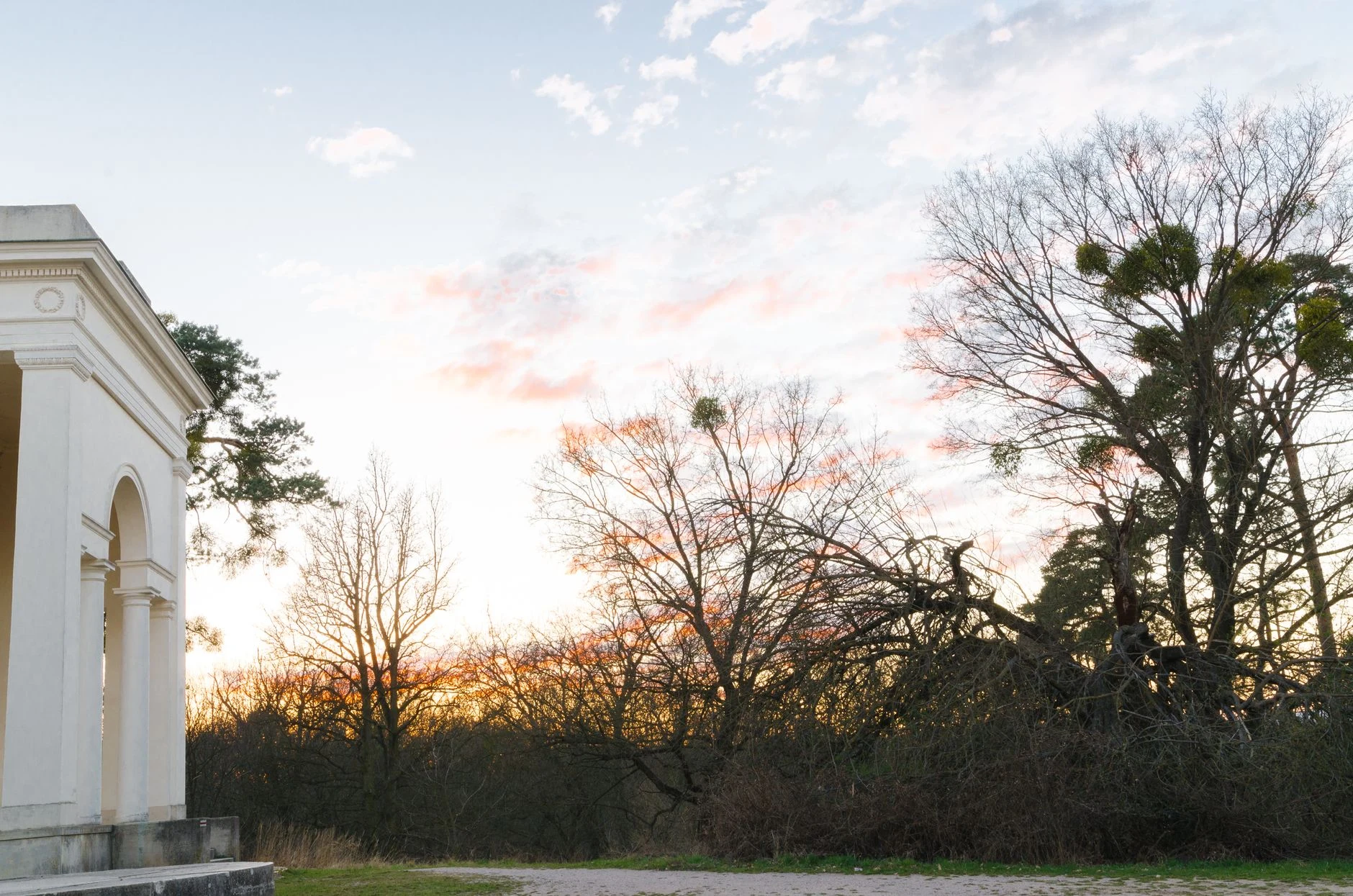
A two-day itinerary that leaves room for the journey
Day 1: Lednice and its park. Spend the morning at the château or palm house, depending on the kind of visit you prefer. Afterwards, walk through the park towards the Minaret and use the afternoon for a gentle route along the edge of the ponds. This is the right day to understand that the trees, water and sightlines are part of the historic project, not decoration around the building.
Day 2: Valtice and the architecture along the way. Begin at the château and in central Valtice. Then continue towards the Reistna Colonnade, or choose a cycling route linking Hlohovec with one of the scattered pavilions. There is no need to complete a long circuit: selecting two or three outdoor stops gives you a better sense of the scale of the ensemble.
The advantage of this division is clear: interior visits have their own opening hours and pace, while the landscape requires time to cycle, find your bearings and stop. If it rains or the wind is uncomfortable, focus that day on the interiors and leave the landscape connections for the following day.
Arriving without a car and deciding when a bicycle makes sense
Břeclav is a practical rail gateway to the area. From there, a railway line runs to Lednice; regional transport also links Lednice and Valtice. This combination makes it possible to base yourself in Břeclav, Lednice or Valtice without driving, but check the current journey planner: timetables, railway works and connections change.
To discover the territory between the two centres, a bicycle makes a real difference. Valtice Town Hall publishes signposted routes of varying lengths and difficulty; some connect the two castles, the ponds and several pavilions. If you hire a bicycle, carry water, plan your return before dark and download an offline map: detours to reach a monument can make the route much longer than expected.
There is one small but important restriction: in certain areas of Valtice château park, bicycles must be walked. This is a good reason not to think of the day as one continuous sporting route. Travellers who do not want to cycle can visit Lednice and Valtice on separate days using public transport and short walks, accepting that they will see less of the space between them.
Season, pace and caring for the landscape
The visit does not depend solely on the weather. Parks can generally be explored more continuously than interiors, but the opening of palaces, greenhouses and guided tours is seasonal and may change because of restoration work or programming. Even outside the main season, some spaces in Lednice and Valtice offer partial opening; do not assume that the itinerary you saw on another date will be available.
This is an inhabited and managed heritage landscape, not a closed theme park. Stay on signposted paths, do not take shortcuts across meadows or along pond edges, and respect sections where bicycles must be walked. The quality of the experience depends precisely on preserving the long views, plantings and relationship between water, paths and buildings.
For anyone needing to avoid steps, long walks or uneven surfaces, the most sensible approach is to choose one area per day and confirm the conditions of each interior route directly. Do not assume accessibility is uniform simply because these are historic palaces and parks.
Official sources to check before setting out
- UNESCO World Heritage Centre: boundaries, heritage values and interpretation of the cultural landscape.
- National Heritage Institute of Czechia: tours, ticket sales, opening times and possible works at Lednice and Valtice châteaux.
- Czech Railways: timetables and disruption notices for Břeclav and the Břeclav–Lednice line.
- Integrated Transport System of the South Moravian Region: regional services between Valtice, Lednice and their connections.
- Valtice Town Hall: local map, park cycling rules and suggested cycling routes.
References consulted during editorial review. Times, requirements and advisories may change: always confirm with the official source.
- https://whc.unesco.org/en/list/763whc.unesco.org
- https://whc.unesco.org/en/list/763/whc.unesco.org
- https://whc.unesco.org/en/list/763/documentswhc.unesco.org
- https://whc.unesco.org/document/222543whc.unesco.org
- https://whc.unesco.org/en/statesparties/czwhc.unesco.org
- https://whc.unesco.org/en/decisions/8925whc.unesco.org
- https://whc.unesco.org/document/154207whc.unesco.org
- https://www.unesco.org/en/world-heritage/listwww.unesco.org
- CzechiaWorld Countries — mledoze · ODbL 1.0 · World countries dataset by mledoze and contributors · ODbL 1.0
- CzechiaWorld Bank Open Data · CC BY 4.0 · World Bank