Bandar Seri Begawan · Everyday culture on the Brunei River
Kampong Ayer in Brunei, where boats connect a living neighbourhood
Kampong Ayer is best understood as a network of inhabited neighbourhoods, jetties, walkways, schools and small local economies—not as a photo excursion. This guide suggests a slower visit: start with context, then take a boat, and only afterwards walk, making practical choices about negotiating the fare, respecting privacy and recognising accessibility limits.
Conditions described in the guide: confirm current requirements and access with the official source before travelling.
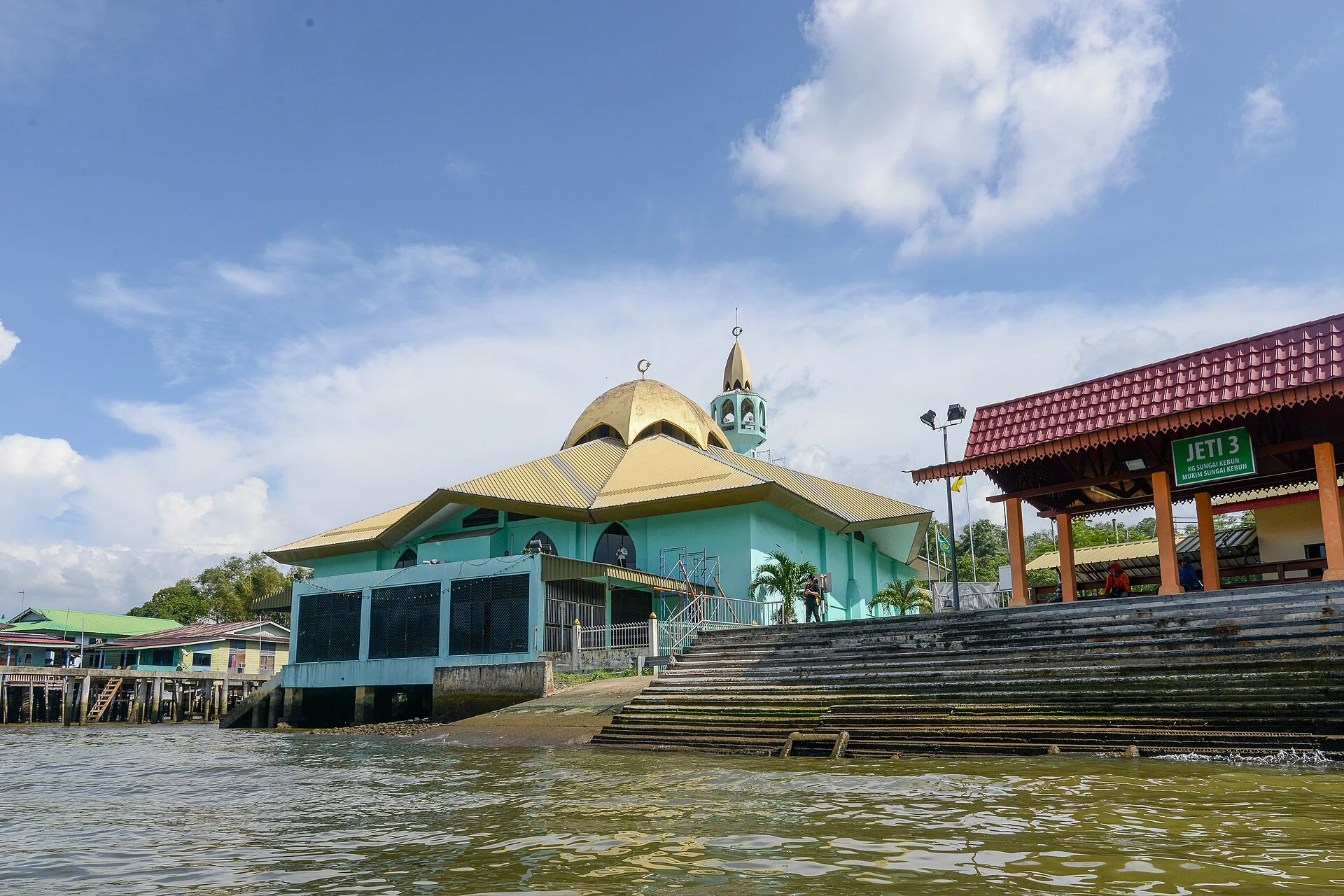
Just minutes from the centre of Bandar Seri Begawan, Kampong Ayer brings together stilt settlements connected by water and walkways. It is not an isolated relic: official documentation presents it as a place historically linked to Brunei’s administration and trade, with public services and everyday transport. The best visit is not about “seeing floating houses”—many do not float but rest on stilts—rather, it is about understanding how the river still shapes travel, neighbourhood life and work.
Start by changing the question: not “where is the photo?”, but “which parts are public?”
Kampong Ayer is neither a single monument nor a historical reproduction: it is a group of kampong, or villages and neighbourhoods, with homes and everyday facilities. Brunei’s public information describes schools, clinics, police stations, mosques, water and electricity networks, and waste management. That is why the walkways should be treated as residential streets, not as one continuous viewing platform. Walk slowly, keep your voice down, and do not point cameras at interiors, porches or people—especially children—without asking permission.
The label “Venice of the East”, popularised by tourism promotion, simplifies a geography and history of its own. If you use it at all, treat it as a hint that water is infrastructure here—not as permission to compare the neighbourhood with a European postcard.
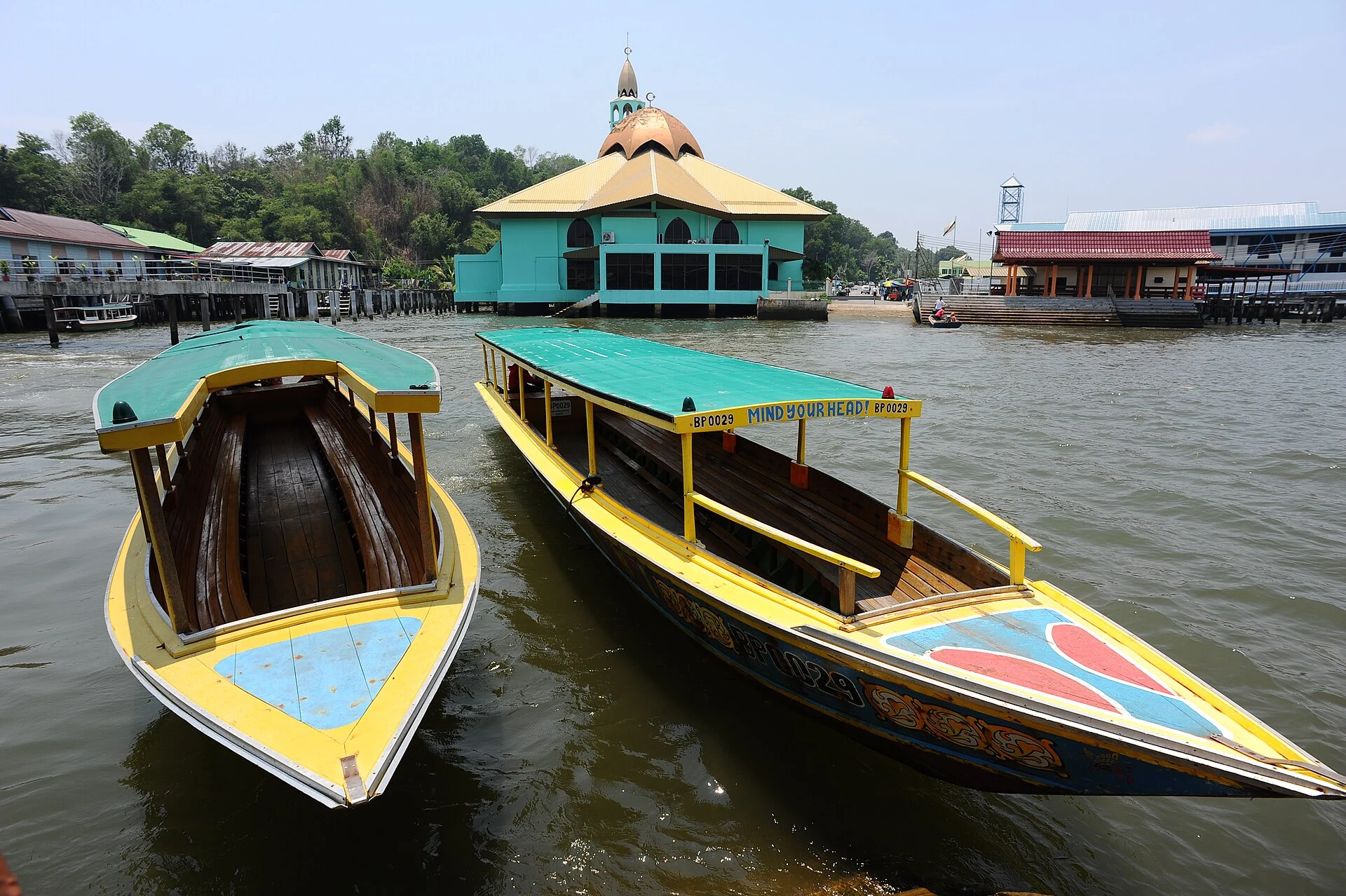
The sequence that gives a morning its meaning
First, set aside time for the Kampong Ayer Cultural and Tourism Gallery. Opened in 2009, it brings together objects, photographs and panels on the settlement’s traditions and history; its institutional mission links preservation and modernisation with support for local activities. This initial context helps you read what you later see from the boat: not just façades, but jetties, links between homes and patterns of movement.
Then take a boat to cross the river or travel along a specific stretch, saving the walk for a walkway where the crew or a local guide says it is appropriate to get off. Avoid asking the boat to enter every narrow channel simply for photographs: it creates extra noise and turns domestic routes into an exhibition circuit. Finish back on the mainland; that way, the river serves as the link between parts of the visit, rather than becoming the entire spectacle.
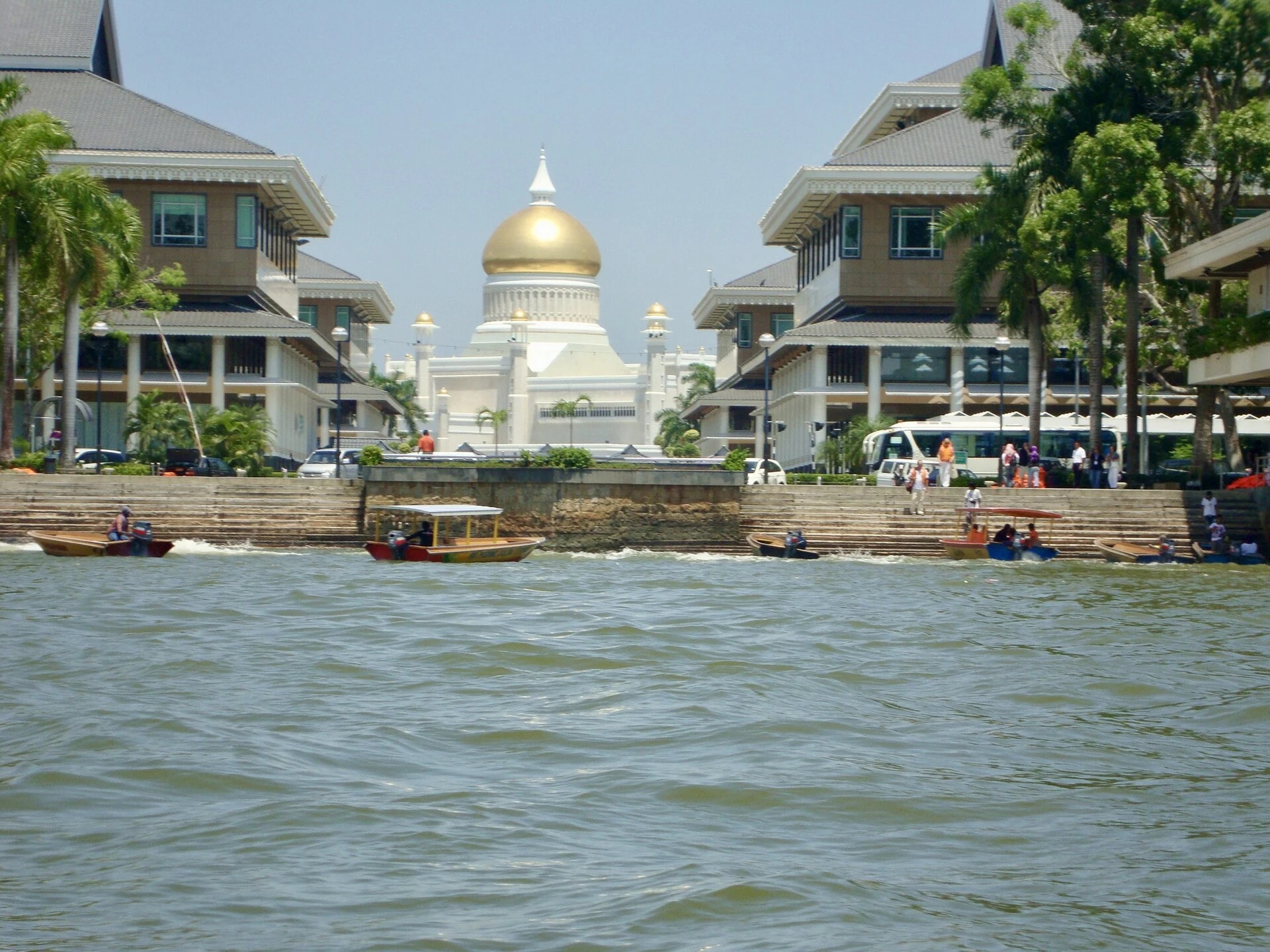
The boat is transport, but the sightseeing trip is negotiated
Water taxis are Kampong Ayer’s most common form of transport and can be requested at the Royal Wharf jetties; for sightseeing trips, the fare is negotiable according to government information. Before boarding, clearly agree on the duration, route, whether you will disembark and the total price per boat or per person. Do not assume there is a published fare, or pay in advance without understanding the agreement.
A simple, direct safety check is worthwhile: ask about life jackets and wear one if available; if the weather worsens or the river conditions do not feel reassuring, postpone the trip. Recent public documents acknowledge challenges involving regulation, accessibility and the integration of water transport, while an official communication proposed strengthening the use of life jackets and warnings about bad weather and tides.
A practical choice: visit with a guide or take a short independent route
A licensed local guide can offer something a quick circuit cannot: context, a less intrusive relationship with residents and help choosing where to walk. The tourism office recommends using an authorised local guide for certain river excursions; this is especially sensible if you want to talk with people, eat through a community initiative or move beyond the most visible routes.
If you prefer to explore independently, keep your ambitions modest: gallery, short crossing, one section of walkway that is clearly public, then return. Do not try to “cover” Kampong Ayer. Walkways may be narrow, have changes in level and lack the continuity needed by wheelchair users, pushchairs or people with reduced mobility. For these needs, a visit focused on the gallery and a pre-arranged boat trip that has been checked in advance is usually a more realistic option. This is a practical assessment, not a guarantee of accessibility.
Friday, clothing and cash: three details that prevent friction
Brunei is a Muslim-majority country, and the tourism office asks visitors to dress appropriately and behave quietly in mosques. It also warns that many shops, offices and attractions close between 12:00 and 14:00 on Fridays for prayers. Plan the river visit outside that period if you depend on services, and check the gallery’s opening hours before setting out: the official page warns that they may vary on public holidays.
Carry some small cash in addition to your usual payment methods for a negotiated boat trip. The Brunei dollar (BND) maintains parity with the Singapore dollar (SGD), but the central bank makes clear that businesses are not obliged to accept the other country’s currency. In other words, equivalence is no substitute for asking the boatman which cash he accepts.
References consulted during editorial review. Times, requirements and advisories may change: always confirm with the official source.
- https://www.bruneitourism.com/places/kampong-ayer/www.bruneitourism.com
- https://www.bruneitourism.com/cultural-heritage/www.bruneitourism.com
- https://www.bdcb.gov.bn/index.php/monetary-policy/monetary-policy-frameworkwww.bdcb.gov.bn
- https://cms.bdcb.gov.bn/storage/uploads/publications/17089426250171930.pdfcms.bdcb.gov.bn
- https://www.bruneitourism.com/brunei-muara/www.bruneitourism.com
- https://whc.unesco.org/en/statesparties/bn/whc.unesco.org
- https://www.bruneitourism.com/wp-content/uploads/2022/02/brunei-muara.pdfwww.bruneitourism.com
- https://cms.bdcb.gov.bn/storage/uploads/publications/17488546467134560.pdfcms.bdcb.gov.bn
- BrunéiWikidata · CC0 1.0 · Wikidata · Q921
- Brunei DarussalamWorld Bank Open Data · CC BY 4.0 · World Bank
- BruneiDBpedia · CC BY-SA 3.0 · DBpedia