Huế’s Imperial City and the Tombs of the Nguyễn Dynasty
The Imperial City is the starting point, not the whole story, of Huế. This guide offers a way to choose tombs, timing and transport in order to understand a political, ritual and funerary landscape spread along the Perfume River.
Huế was the capital of unified Vietnam from 1802 to 1945 under the Nguyễn dynasty, but reducing it to a quick visit to the Imperial City obscures the logic of the wider complex: palaces, ritual spaces, pagodas and mausoleums were positioned in relation to the Perfume River and the surrounding terrain. The UNESCO-listed site is serial: its components are spread throughout the city and its environs. The useful decision is not to “see everything”, but to combine the citadel with two tombs that reveal contrasts in scale, landscape and the representation of power.
Visual context for VietnamContext video selected for this guide; it does not by itself identify every place mentioned.Video by GIANG VU · Pexels · Pexels License · Duration: 00:16
♫
Listen to Vietnam
A documented soundscape that complements this guide to Vietnam. The Imperial City is the starting point, not the whole story, of Huế. This guide offers a way to choose tombs, timing and transport in order to understand a political, ritual and funerary landscape spread along the Perfume River.
Cultural or ambient audio selected as context; it does not necessarily represent every place mentioned. Audio by lmartins · Openverse · CC BY 4.0 · Duration: 01:1301
Start with the Imperial City, but don’t treat it as a mere first stop
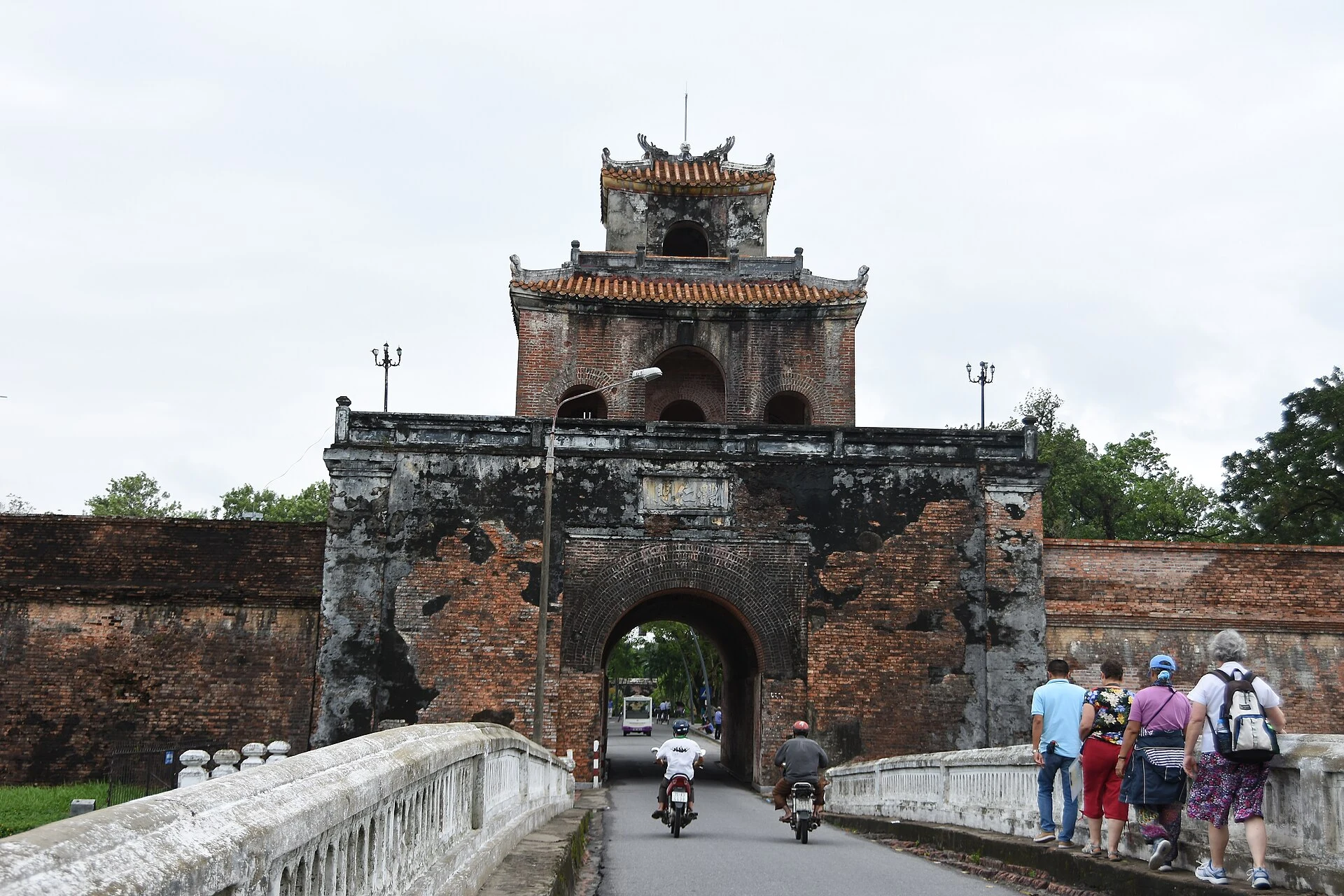
Set aside a full morning or afternoon for the Imperial City and the Forbidden Purple City. This is where the administrative and residential aspects of the former seat of power become clear: gates, courtyards, palaces, dynastic shrines and reconstructed areas stand alongside empty spaces and traces of destruction. Pausing here is not a flaw in your itinerary: the complex suffered through wars, and part of its heritage has been restored using traditional techniques and materials.
The practical conclusion is clear: if you have only one day, prioritise this compound and one tomb, not three. Rushing through extra mausoleums means collecting entrances rather than understanding the place. With two days, leave the citadel for the first day and group the tombs on the second, allowing time for breaks and planned transfers.
Choose tombs for contrast, not according to a list of “must-sees”
The mausoleums do not form a walkable ring around the centre. UNESCO lists, among others, the tombs of Tự Đức, Khải Định, Minh Mạng and Gia Long upstream or in the vicinity of the river; the heritage site’s official map shows a broad distribution, not a compact urban sequence.
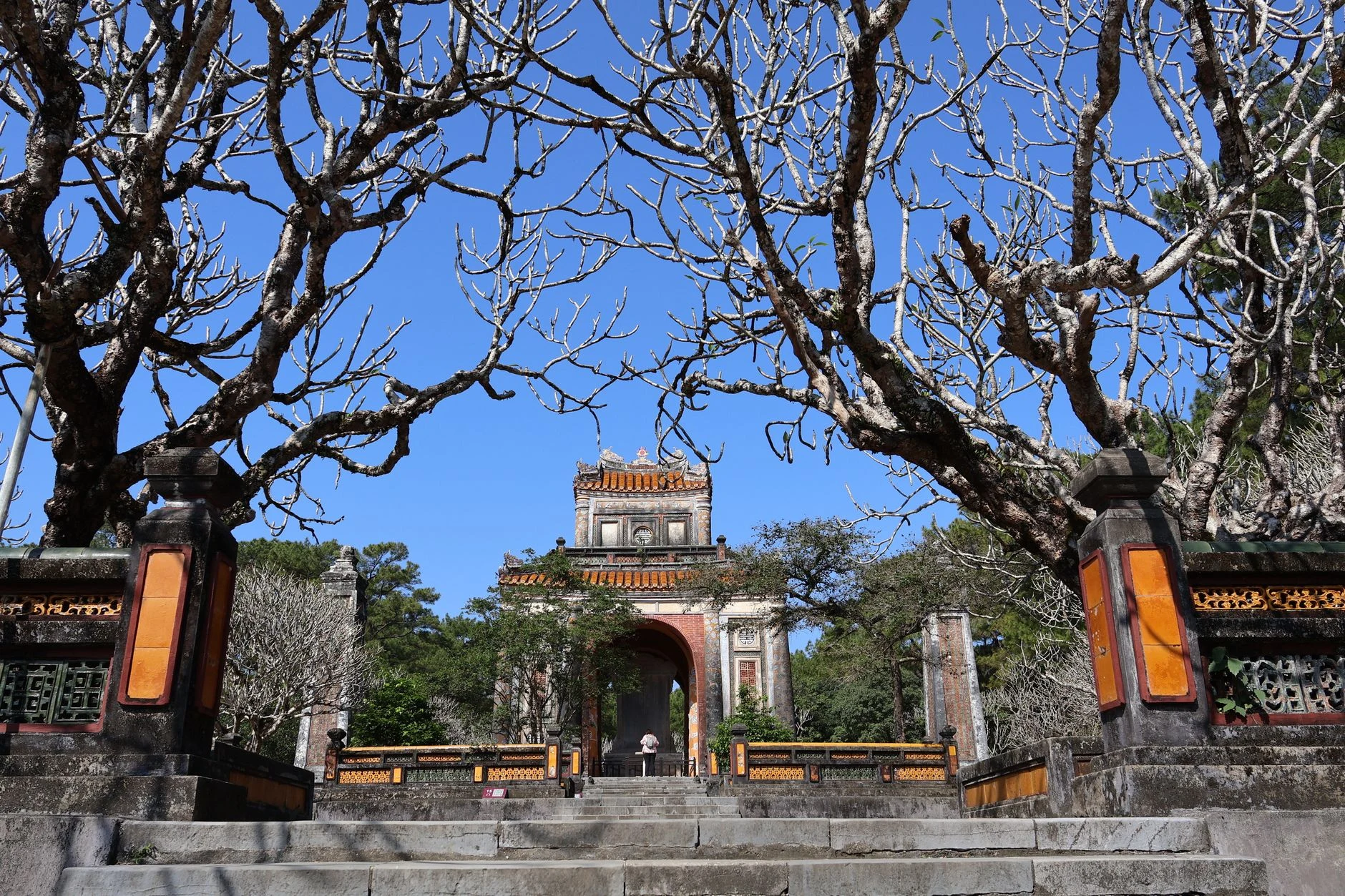
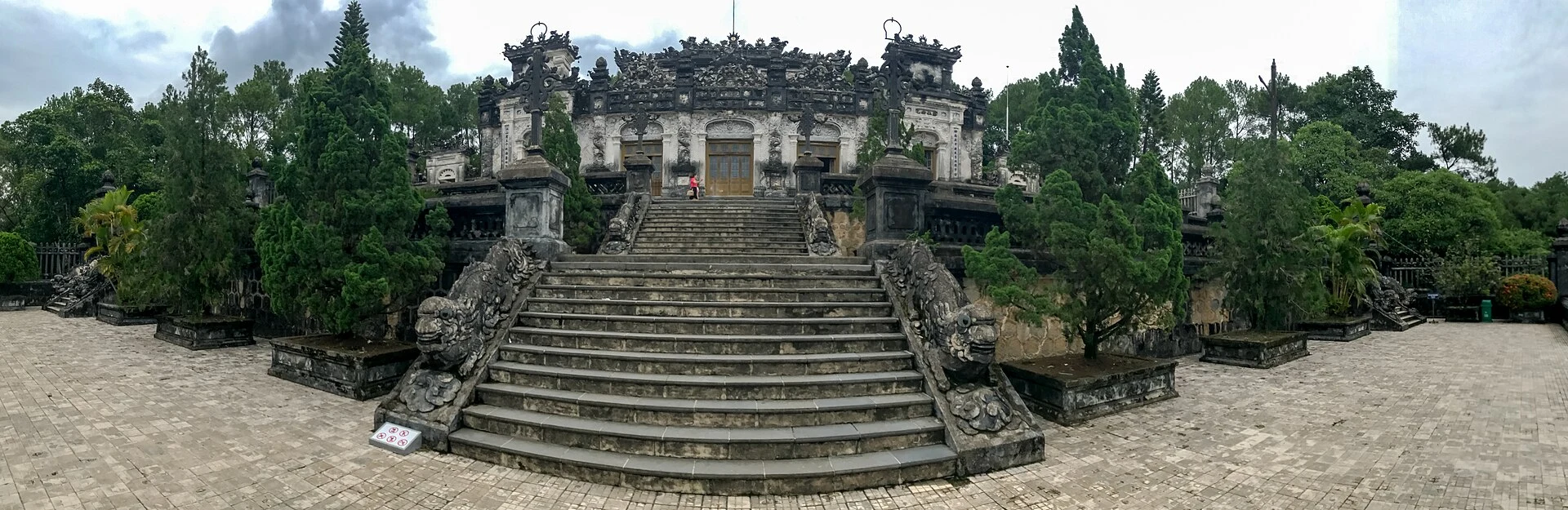
A sensible pairing for a first visit is Minh Mạng + Khải Định: the former helps you read the axial composition, courtyards and integration of the site with the landscape; the latter focuses attention on later architecture that is visually denser. If you would rather spend more time among pavilions, ponds and gardens, replace Khải Định with Tự Đức. There is no need to turn the choice into a history exam: look for two different experiences and give them time.
For a less predictable second day, consider Gia Long, Thiệu Trị, Đồng Khánh, An Định or the Museum of Royal Antiquities. The value of this choice is to spread your visit beyond the most frequently visited trio, not to claim that these places are “secret”. The managing authority publishes tickets for several of these monuments.
In Huế, getting around determines the pace. The tombs are separated from one another and from the Imperial City, so it is worth arranging a return route with a driver in advance, hiring a taxi for several stops or joining a small tour that clearly explains what is included and how much time it allows at each site. Cycling works better for urban journeys and for travellers prepared for heat, rain and traffic; it should not be an obligation for reaching distant mausoleums.
Avoid stringing visits together in the order of an online list. Open the official map of the complex, make the most distant tomb your first destination and leave the final stop close to your accommodation or the centre. This is a simple travel inference from the site’s geographical distribution: fewer vehicle changes mean more time inside the compounds.
04
Tickets, opening hours and access: check before you leave
The municipal portal publishes monument-by-monument prices and ticket combinations; online purchasing is also available, and tickets paid for online are described as non-refundable. Prices, opening hours, restoration closures and access conditions change: check on the same day or before buying through the complex’s official portal, especially if your route depends on a particular combination.
For visitors with reduced mobility, do not assume a step-free experience: different compounds include uneven surfaces, steps and considerable distances. The Imperial City advertises services such as electric vehicles and audio guides, but that does not mean every route is accessible. Ask the Conservation Centre which gates, paths and vehicles are operating on the date of your visit.
05
Read Huế as a living landscape, not courtly scenery
The Perfume River is more than a photographic backdrop: it links the citadel with places of worship and the tombs. UNESCO notes that the complex’s layout responds to geomantic principles and that the river landscape is essential to understanding it. Walking along the riverbank or stopping at a pagoda may be more revealing than adding a fourth mausoleum.
If you come across a nhã nhạc performance—Vietnamese court music—first check whether it is a presentation announced by a cultural institution, and listen to the context before treating it as background entertainment. This tradition was associated with court ceremonies, receptions, funerals and rituals; UNESCO recognises it as intangible cultural heritage.
Huế’s rainy season generally falls between September and December, and the local authority warns that rainfall can affect visits through flooding. Travelling then may mean fewer visitors, but it requires spare time, suitable footwear and checks of official weather and opening notices; do not build a tightly timed itinerary around an unconfirmed river journey or outdoor excursion.
Sources and checks
References consulted during editorial review. Times, requirements and advisories may change: always confirm with the official source.