Armenia · Kotayk
Garni and Geghard through the Azat Valley and the Basalt
A short trip from Yerevan linking an archaeological site, a gorge of basalt columns and a living monastery carved into the rock.
Garni and Geghard fit into a day trip from Yerevan, but they are not the same visit repeated twice. The first offers a view of ancient Armenia from a basalt archaeological site; the second calls for a slower approach to a monastic complex where stone becomes liturgical space. The connecting thread is the Azat Valley: allow time for it and treat the Symphony of the Stones as a route choice, not an automatic stop.
Start with Garni to take in the whole site, not just the temple
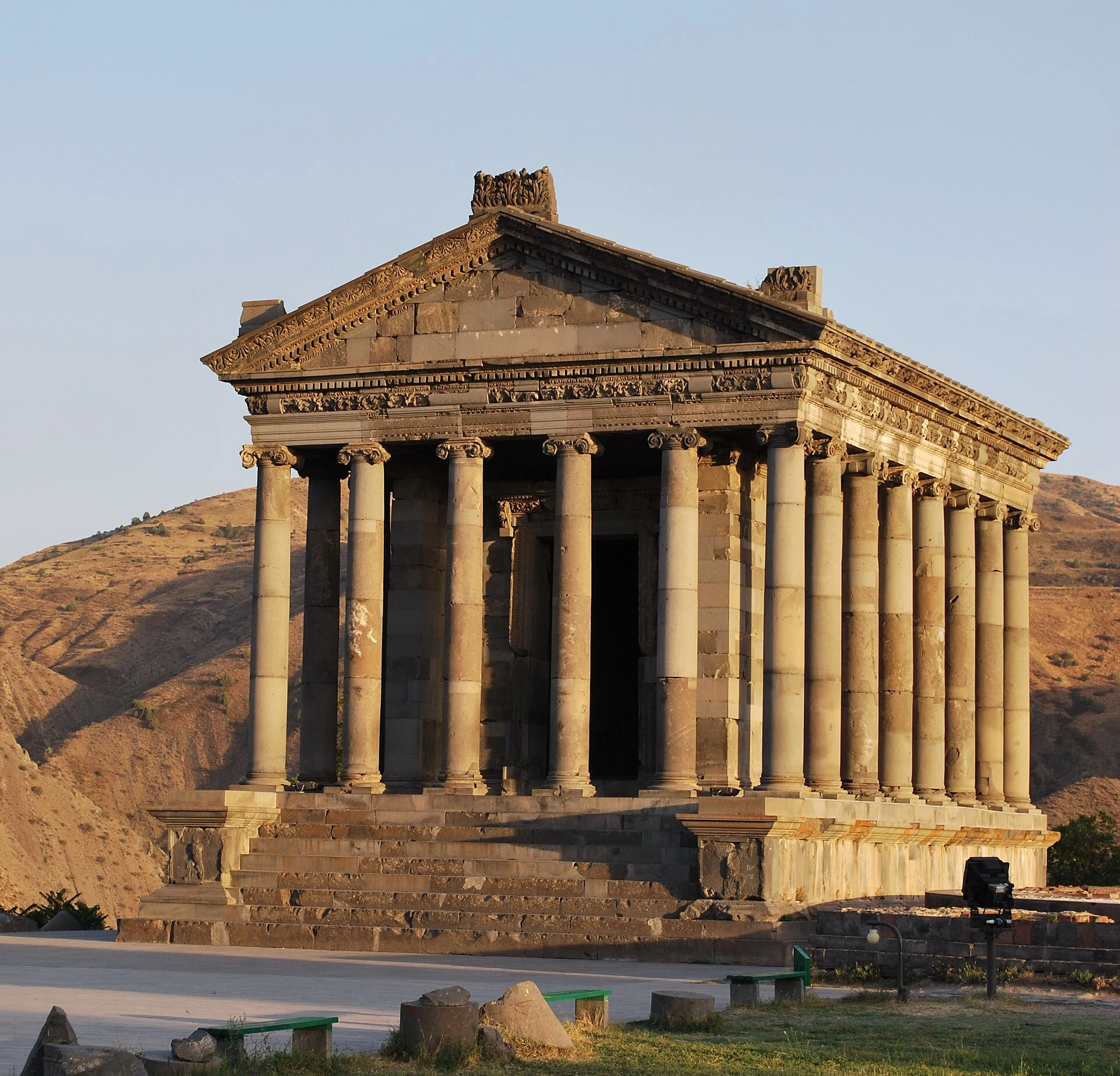
The Temple of Garni usually draws all the attention, but the site also preserves traces of fortifications, palace buildings, a Roman bath and a mosaic. Walking through it in this order—first the setting and additional structures, then the temple—makes clear that this is not an isolated building, but a place with political, ritual and domestic layers.
The present building is made of basalt, and its colonnade overlooks the gorge. The view is best appreciated by setting aside time for the edge of the site and the surrounding landscape, rather than reducing the visit to a frontal photograph. Garni’s archaeological story also prepares the contrast with Geghard: here, built architecture dominates; there, carved rock takes over.
The opening hours, fees, closing days and availability of guided tours should be confirmed with the Garni museum-reserve before setting out. These details may change depending on the season or how the site is managed.
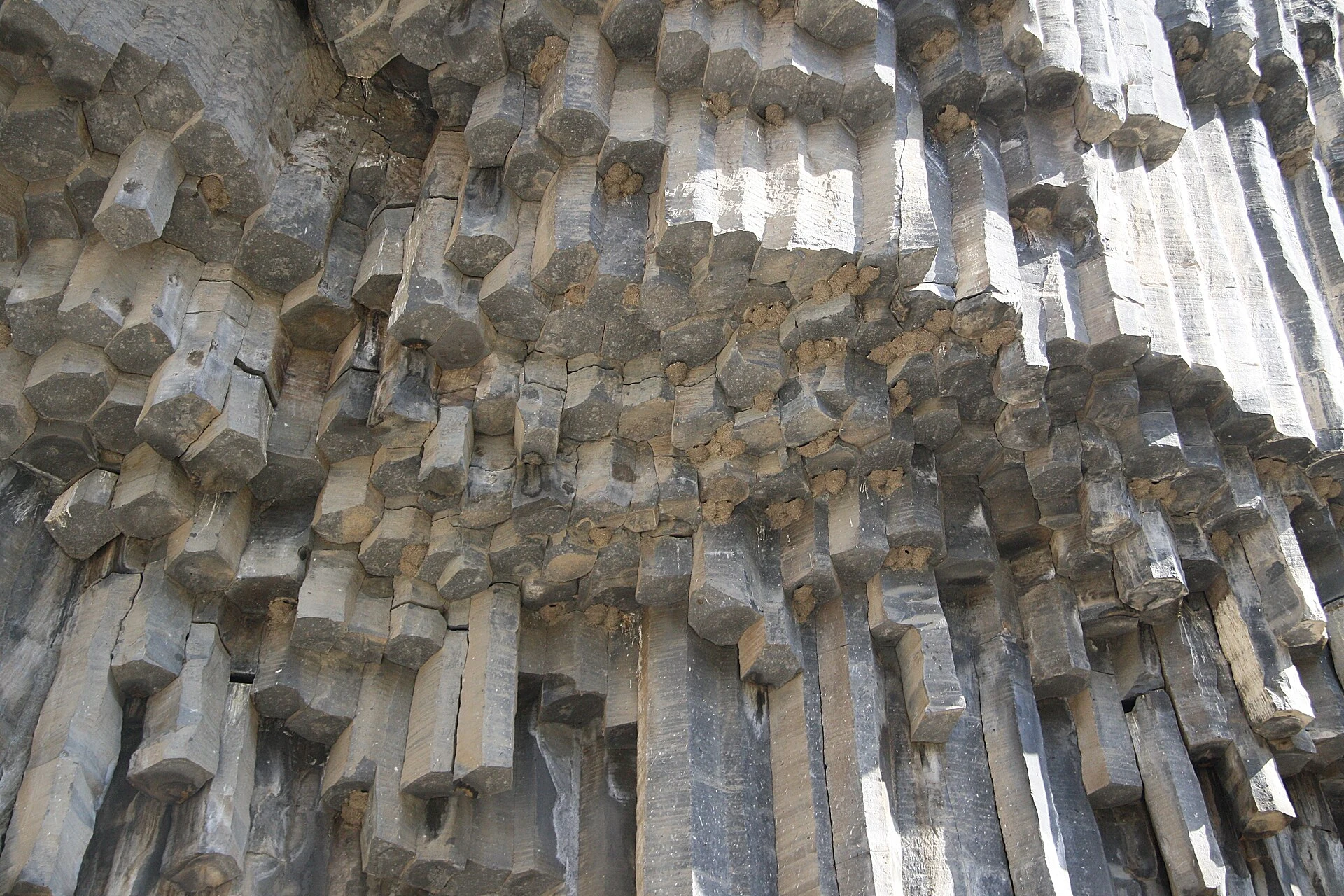
Choose the Symphony of the Stones according to your energy and transport
The Symphony of the Stones is a wall of basalt prisms in the Garni gorge, below the village. Its appeal does not lie in adding one more attraction to the day: it shows how the same valley changes scale, from the temple’s elevated site to the Azat’s enclosed riverbed.
There is a practical decision to make. You can descend by road towards the canyon or walk from the temple area; either option requires checking the condition of the surface, the time available and the energy you will need for the return. If you are travelling without a car, do not assume that you can easily link the temple, the canyon and Geghard: documented public transport from Yerevan reaches Garni, while onward connections should be checked locally.
Carry water, wear shoes with good grip and avoid climbing onto the columns or leaving the established paths. The gorge does not require a search for extreme angles: looking from the path and leaving room helps protect a fragile formation and share it with the people who live and work in the valley.
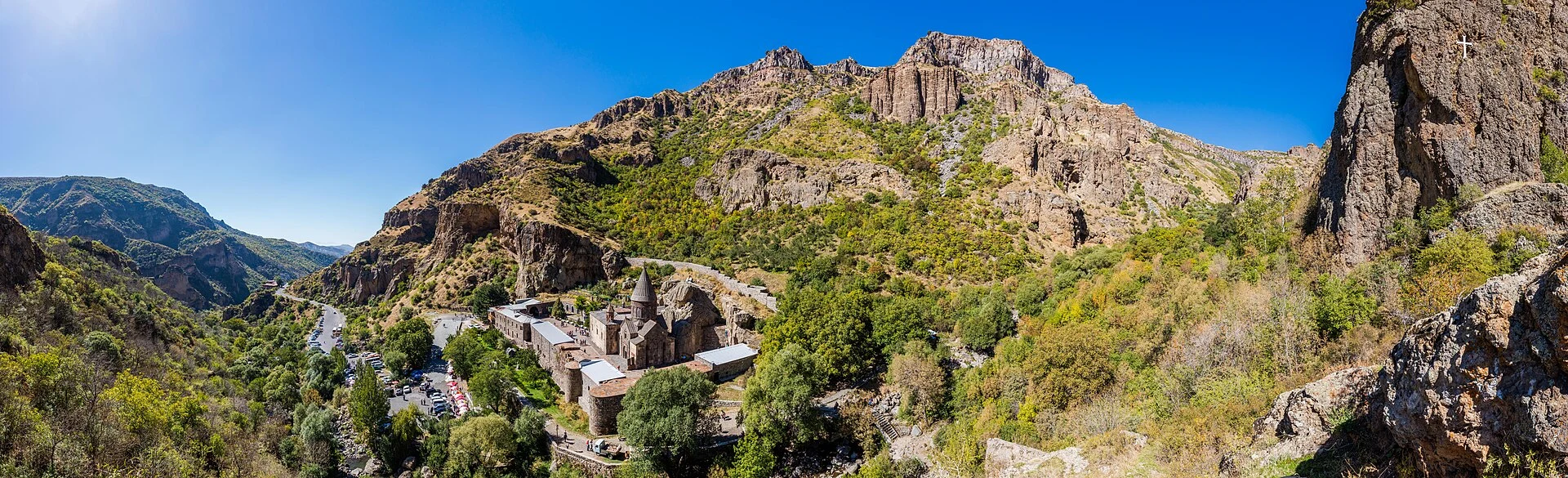
Geghard is best understood through its carved chambers and religious use
From Garni, the road continues towards Geghard, at the end of a narrow valley. The monastery forms part of the World Heritage site together with the upper Azat Valley. Its churches and chapels combine built walls with rooms carved directly into the mountain: rather than looking for a single façade, enter and compare the light, vaults, reliefs and acoustics of each space.
Geghard is an active place of worship, not a monumental stage set. Speak quietly, put your camera away during services or moments of prayer, and dress respectfully. If areas are restricted or staff provide instructions, follow them even if they change your planned route.
To make the most of the visit, leave some time at the end without photographic goals: the rock-cut chapels are easier to appreciate when the group spreads out and your ears adjust to the half-light. This pause also acknowledges that the site’s value lies in the relationship between architecture, topography and religious practice.
A day that works at two different paces
By car, hired taxi or organised excursion, Garni, the canyon and Geghard can be arranged in a single day from Yerevan. The clearest order is Garni in the morning, an optional descent to the gorge and Geghard afterwards; this allows the landscape to explain the transition between the two monuments.
Without a private vehicle, consider a more contained plan: reach Garni by public transport, visit the site and decide there whether the canyon fits into your actual schedule. Leaving Geghard for a trip with a confirmed transfer may be more relaxing than attempting uncertain connections. Do not turn the route into a race: giving up one section is usually preferable to returning after dark without clear transport.
Transport frequencies, road conditions, gorge access and visiting rules can change. Check them the day before with the organisations and operators listed below.
References for checking the visit
- Garni Historical-Cultural Museum-Reserve: institutional information on the temple, bath, mosaic and visits.
- UNESCO World Heritage Centre: the inscription and management plan for the Monastery of Geghard and the Upper Azat Valley.
- Armenia Travel: official guidance on Garni, the gorge, the Symphony of the Stones and access from Yerevan.
- History Museum of Armenia: context for the archaeological collections from Garni.
References consulted during editorial review. Times, requirements and advisories may change: always confirm with the official source.
- https://whc.unesco.org/en/list/960/documents/whc.unesco.org
- https://whc.unesco.org/document/223147whc.unesco.org
- https://whc.unesco.org/en/documents/223147whc.unesco.org
- https://whc.unesco.org/en/culturallandscapesprize/2011/whc.unesco.org
- https://whc.unesco.org/en/search/?category=Activities&criteria=geghard+monastery+armeniawhc.unesco.org
- https://whc.unesco.org/uploads/nominations/960.pdfwhc.unesco.org
- https://armenia.travel/places-to-go/top-villages/armenia.travel
- https://armenia.travel/newsroom/winter-in-armenia/armenia.travel
- ArmeniaWorld Countries — mledoze · ODbL 1.0 · World countries dataset by mledoze and contributors · ODbL 1.0
- ArmeniaWorld Bank Open Data · CC BY 4.0 · World Bank