Cameroon · Congo rainforest
Dja Faunal Reserve: deciding whether a slow expedition is right for you
Dja is not about collecting sightings: visiting requires permits, guides, several days and a genuine willingness to accept the rainforest’s uncertainty.
Conditions described in the guide: confirm current requirements and access with the official source before travelling.
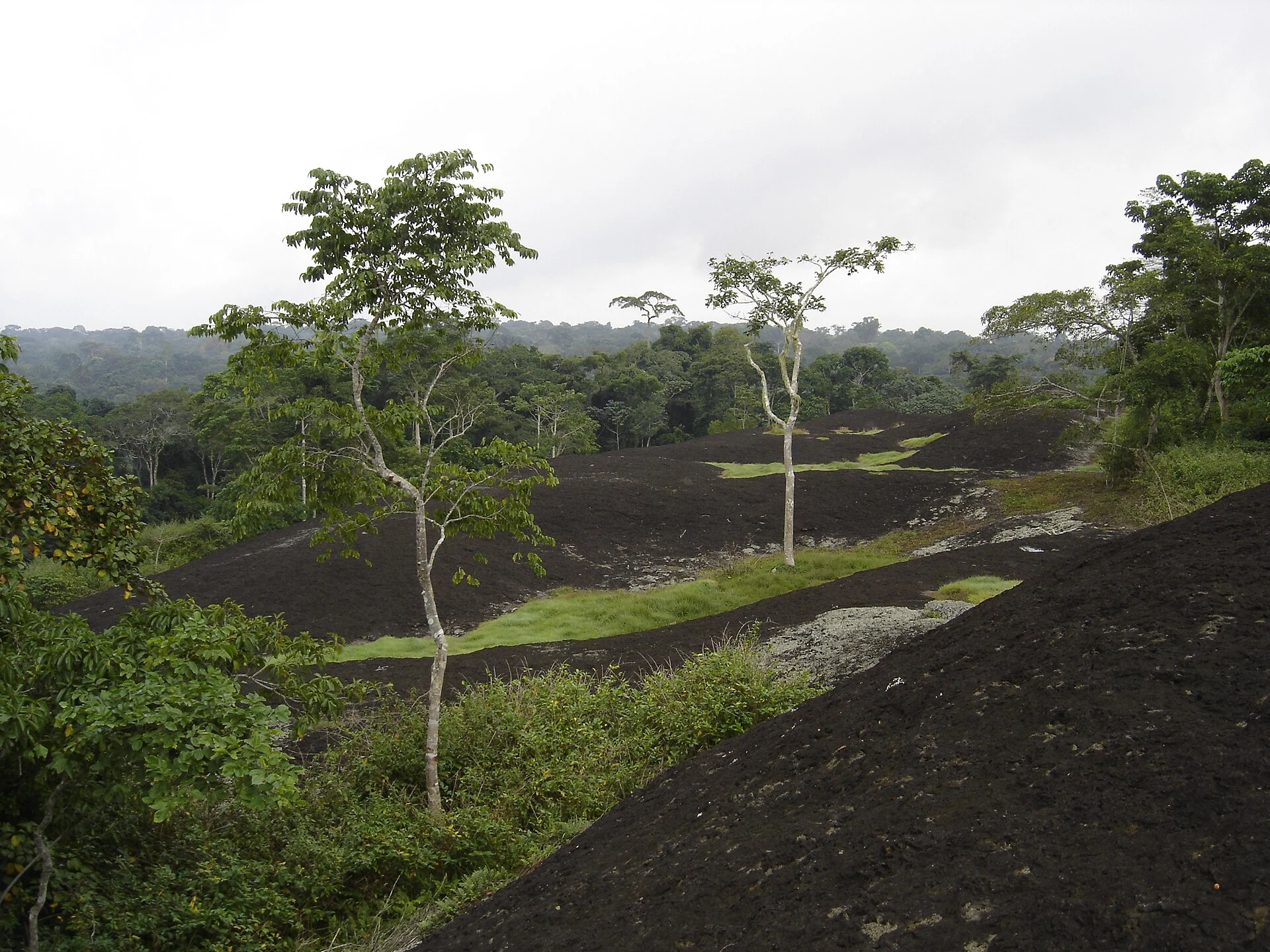
The Dja Faunal Reserve in southern Cameroon is neither a roadside safari nor an afternoon excursion. The dense forest, almost encircled by the Dja River, protects an important part of the Congo Basin and is home to primates, forest elephants and many other species. But the experience depends less on an animal checklist than on accepting its conditions: authorised entry, a small group, ecoguard accompaniment, nights in camp and unpredictable results.
This is a destination for travellers who want to understand a protected tropical forest slowly and without promises of wildlife encounters. It is not the right choice for anyone who needs fixed schedules, straightforward independent travel or certainty of seeing gorillas, chimpanzees or elephants.
The key decision: a forest expedition, not a scenic visit
Dja preserves an extensive area of equatorial rainforest, and its value is not limited to one emblematic species. The landscape is shaped by the river that borders much of the reserve, by its continuous forest and by biodiversity that requires distance, silence and time.
The reserve authority states that typical excursions last several days and that visitors sleep in tents once they enter the forest. This changes how you prepare: you need to think about self-sufficiency, luggage that can withstand humidity, tolerance for less predictable logistics and realistic expectations about seeing animals. The reserve itself warns that the wildlife is wild and that no encounter can be guaranteed.
That limitation is also a sound ethical rule: do not choose Dja to pursue one particular photograph. The best reason to go is to learn to read the forest—tracks, sounds, vegetation, rivers and conservation work—even if the animal you imagined never appears.
Permits, ecoguards and group size
Entry requires authorisation from the reserve administration. The offices identified for arranging access are in Somalomo, Lomié, Djoum and Meyomessala; it is advisable to plan an overnight stay in one of these towns before entering the forest.
Visits take place in groups of up to six people and are accompanied by two official guides or ecoguards; larger groups are split up. This is not a minor administrative detail: it affects the date, the composition of the expedition and the possibility of making last-minute changes. If you are looking for a private outing or travelling in a large group, first check whether there is capacity and what format can be authorised.
Before paying or travelling, verify the permit, ecoguard availability, meeting point, camping equipment included and access conditions. These operational details can change and must be confirmed directly with the Dja administration.
Choosing when to go: when rain stops being a minor detail
The reserve strongly advises against visiting during September, October and the first half of November because of the weather conditions. This should not be interpreted as a mere aesthetic preference: on a multi-day expedition, rain affects tracks, walking times, camp set-up and communications.
Instead of booking around a fixed date, leave room to adjust the trip. Ask about the condition of the access routes at that time and what alternative exists if conditions prevent entry. Also confirm whether you need a private vehicle with a driver or a rental vehicle; the reserve’s information allows for both options and notes that track conditions vary by season.
Before travelling, verify the recommended calendar and the actual state of access with the Dja Faunal Reserve. Seasonal advice does not replace a recent confirmation.
Responsible travel begins by lowering expectations
The reserve is part of an inhabited and managed forest landscape, not an exhibition enclosure. Keep a strict distance from any animal, do not attract wildlife with food or sounds, and follow the ecoguards’ instructions without exception. Take away any waste that cannot be managed at camp, and do not buy products derived from wildlife.
If the excursion includes conversations, services or work provided by people from nearby communities, treat these as professional relationships rather than an added spectacle. Ask for clear information about who provides the service, with what consent and how they are paid. A visit becomes more meaningful when spending is directed towards permits, guides, porters, accommodation and supplies contracted transparently, rather than turning people or wildlife into travel accessories.
National safety and logistics: the check that cannot be skipped
Dja lies outside the capital and requires overland coordination and prior communication. In addition to conditions within the reserve itself, you need to review Cameroon’s overall security situation and the exact route you plan to take. Official travel advice distinguishes risks by region and can change quickly.
Do not treat a general warning as a specific assessment of your itinerary, but do not ignore it either: review current government guidance, confirm feasibility with the reserve administration and share a contact plan with someone outside your group. Have a realistic strategy for medical care and evacuation, as services may be limited outside the main urban centres.
Before setting out, verify official security advice, areas to avoid and the condition of roads along your chosen route.
References to check before booking
- Dja Faunal Reserve — Visit planning: permits, access offices, group size, ecoguards, camping, vehicles and seasonal recommendation.
- UNESCO World Heritage Centre — Dja Faunal Reserve: ecological context, general boundaries of the protected property and conservation values.
- United States Department of State — Cameroon Travel Advisory: national security conditions and current regional warnings.
Consult these sources directly before committing to transport, accommodation or payments; access logistics, weather conditions and security advice are all time-sensitive.
References consulted during editorial review. Times, requirements and advisories may change: always confirm with the official source.
- https://travel.state.gov/en/international-travel/travel-advisories/cameroon.htmltravel.state.gov
- https://www.dja.cm/anglais/visite.phpwww.dja.cm
- https://www.unesco.org/en/mab/djawww.unesco.org
- https://mtcameroonnationalpark.org/visit-the-park/mtcameroonnationalpark.org
- https://www.dja.cm/francais/visite.phpwww.dja.cm
- https://whc.unesco.org/en/list/407whc.unesco.org
- https://travel.state.gov/en/international-travel/travel-advisories/destination.cmr.htmltravel.state.gov
- https://mintoul.gov.cm/tourisme/tourisme-balneaire/mintoul.gov.cm
- CamerúnWikidata · CC0 1.0 · Wikidata · Q1009
- KamerunWikidata · CC0 1.0 · Wikidata · Q668294
- CameroonWorld Countries — mledoze · ODbL 1.0 · World countries dataset by mledoze and contributors · ODbL 1.0
- CameroonWorld Bank Open Data · CC BY 4.0 · World Bank
- CameroonDBpedia · CC BY-SA 3.0 · DBpedia