Uganda · afromontane forest
Choose your Bwindi sector for gorilla tracking and forest trails
In Bwindi, your permit determines where you start. Choosing Buhoma, Ruhija, Rushaga or Nkuringo before booking accommodation avoids long transfers and leaves time to experience the forest.
Conditions described in the guide: confirm current requirements and access with the official source before travelling.
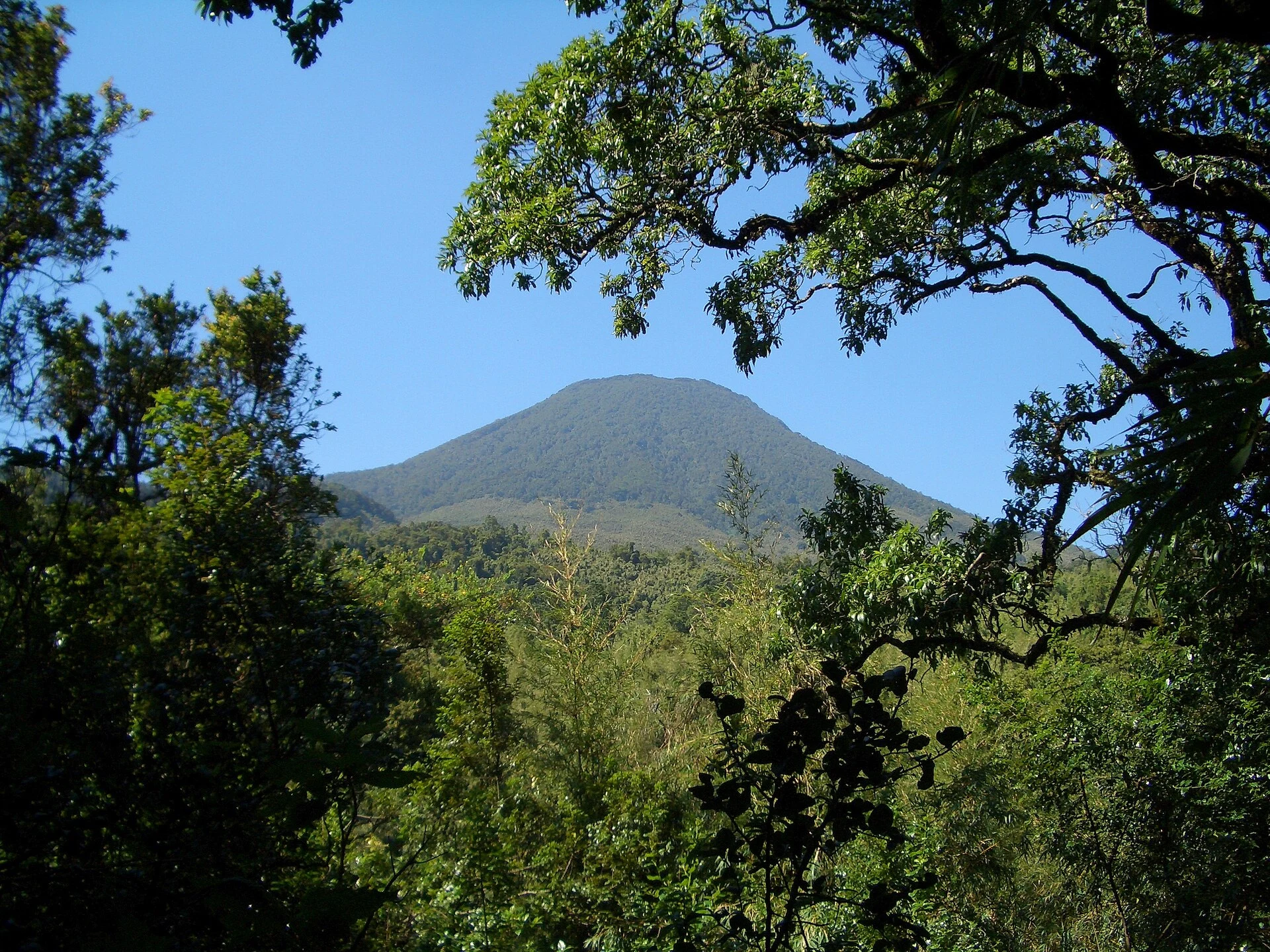
Bwindi Impenetrable National Park does not operate as a single safari base: its four tracking sectors—Buhoma, Ruhija, Rushaga and Nkuringo—shape accommodation, travel times and your day in the forest. The key decision is not finding the “easiest” family, which cannot be guaranteed because the animals move, but booking the permit for the right sector and accepting that tracking takes place on wet, changeable terrain and involves genuine physical exertion. Beyond the encounter with mountain gorillas, Bwindi deserves time for its afromontane forest, birds and interpretive trails.
Listen to Uganda
A documented soundscape that complements this guide to Uganda. In Bwindi, your permit determines where you start. Choosing Buhoma, Ruhija, Rushaga or Nkuringo before booking accommodation avoids long transfers and leaves time to experience the forest.
Audio by Laklop · Openverse · CC0 1.0 · Duration: 08:34
Choose the sector before the lodge
The Uganda Wildlife Authority organizes gorilla tracking in Buhoma, Ruhija, Rushaga and Nkuringo. Book the permit first, then look for accommodation in that same sector or close enough to reach the meeting point without relying on an uncertain transfer.
Buhoma lies in the north; Ruhija in the east; Rushaga in the south; and Nkuringo in the southwest. They should not be treated as adjoining neighborhoods: the park is a patchwork of slopes and dense forest, while the mountain roads run outside it. Switching sectors the night before to sleep somewhere that seems more convenient can turn a punctual morning into a full day on the road.
If your main interests include birdwatching and additional walks, Ruhija offers a specific reason to extend your stay: the Mubwindi Swamp trail and Bamboo Trail are associated with this sector. If the trip is focused exclusively on tracking, let official permit availability determine your base, not the other way around.
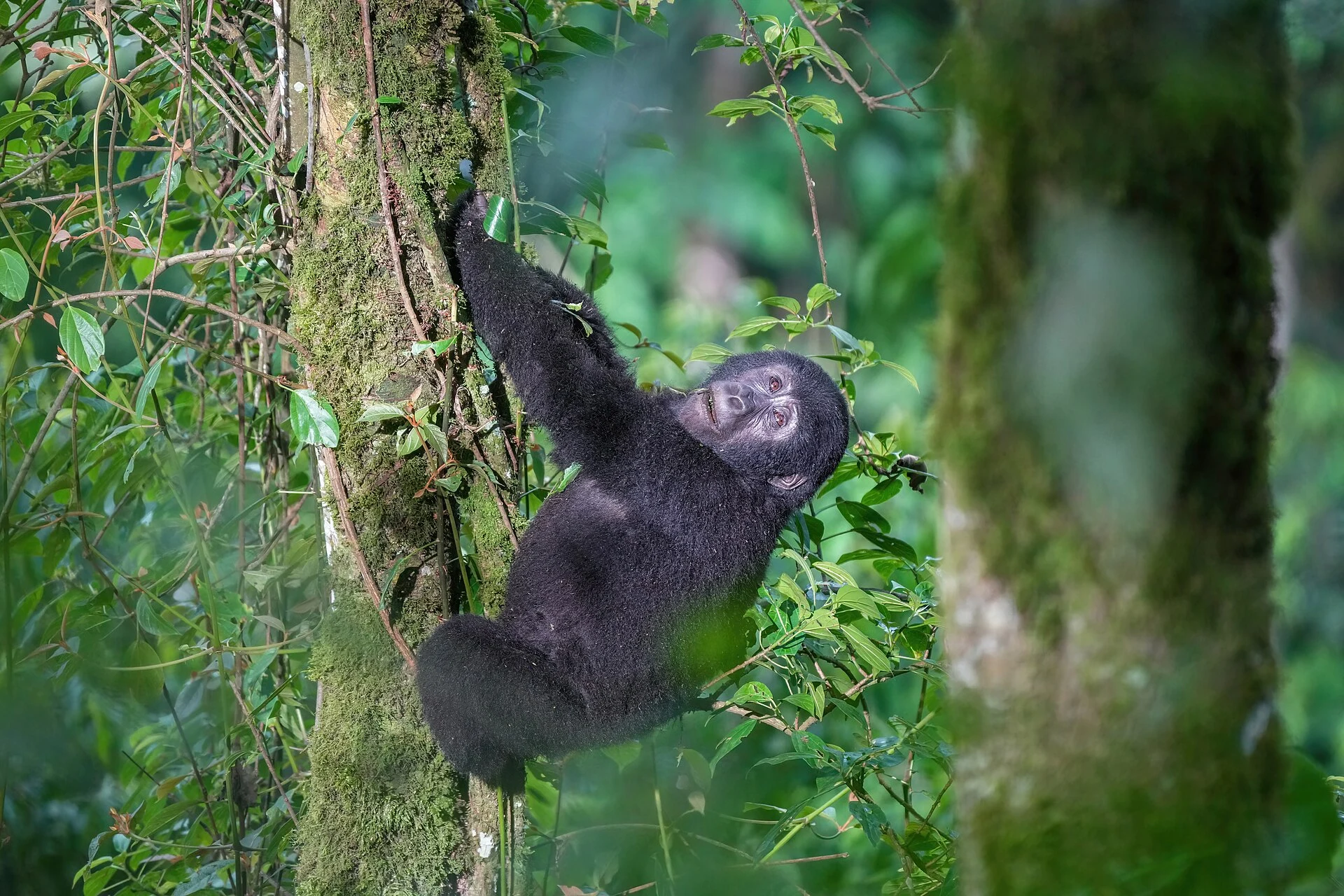
A short activity within an unpredictable day
Time with an accustomed gorilla family is limited, but reaching it has no fixed duration. The group may have moved on from the previous day’s location, so the walk may be relatively short or take up much of the day. Slopes, mud and vegetation mean that a modest distance is not necessarily an easy walk.
Wear grippy footwear, waterproof clothing and layers for damp conditions and the cool temperatures at higher elevations. The most useful plan is to leave the afternoon free of long onward connections. Do not base a later transport booking on an estimated return time.
Visitor rules also protect gorillas from human illnesses. The regulations published by the managing authority limit the size of each visitor group, set a minimum age and require a distance from the animals; anyone showing symptoms of a contagious illness must forgo the visit. These conditions, along with current health measures, should be checked before payment because they may be updated.
Give the forest a second day
Reducing Bwindi to a single hour with gorillas leaves out what explains its importance: a large continuous forest linking lower-altitude formations with montane environments and concentrating exceptional biodiversity in the Albertine Rift. The park is listed as a natural World Heritage site for its ecological values, not as a venue designed for quick visits.
Add an authorized walk or a birding outing if your schedule allows. In Buhoma, forest-edge walks and the waterfall trail offer a different way to experience the landscape; in Ruhija, trails associated with endemic birds give a slower stay a clear purpose. Do not leave authorized routes or look for wildlife on your own: in a forest with steep slopes, frequent rain and wild animals, following the park’s logistics is part of responsible travel.
Farming communities surround an isolated forest area with a high human population density. Choose transparent local providers, treat community visits as exchanges requiring time and consent—not as an automatic extension of the permit—and ask clearly what share of the payment reaches guides, staff and community projects.
Logistics to settle before you leave
Road access requires extra time: the final approaches cross mountainous terrain, and road conditions change with rain and construction. A suitable vehicle and a driver familiar with your reserved sector can simplify the last stretch, but they do not remove the need to build in contingency time. Flying may bring you closer to some sectors, although final overland transfers are still necessary.
Confirm in writing the exact sector, the reporting time and place, the permit type, the transfer from your accommodation and what happens if weather conditions alter the itinerary. Also check Uganda’s entry requirements, health advice, road safety, road conditions and official travel advisories from your country: these are time-sensitive details and should not be inferred from a destination guide.
The official rate published for July 2024–June 2026 no longer covers the date of this guide. Do not use old documents to calculate your budget: verify the rate, availability and booking procedure that apply to your dates directly.
References to check before booking
- Uganda Wildlife Authority, information on gorilla tracking and Bwindi sectors. Verify permits, availability, meeting point, health rules, minimum age and operational requirements.
- Uganda Wildlife Authority, regulations and conservation fee published for July 2024–June 2026. Use it only as background; request the current fee for your dates.
- UNESCO World Heritage Centre, profile of Bwindi Impenetrable National Park. Useful for understanding the park’s extent, ecological values and protection framework.
- International Gorilla Conservation Programme, guidance on conservation-compatible gorilla tourism. Useful for preparing low-impact conduct during the visit.
Information checked on 12 September 2026. Permits, fees, public health, roads, flights and access conditions must be reconfirmed with the organizations listed above before travel.
References consulted during editorial review. Times, requirements and advisories may change: always confirm with the official source.
- https://whc.unesco.org/en/list/682whc.unesco.org
- https://whc.unesco.org/en/decisions/3194whc.unesco.org
- https://whc.unesco.org/en/list/682/documents/whc.unesco.org
- https://whc.unesco.org/en/statesparties/ugwhc.unesco.org
- https://whc.unesco.org/archive/advisory_body_evaluation/682.pdfwhc.unesco.org
- https://whc.unesco.org/document/745whc.unesco.org
- https://whc.unesco.org/en/decisions/5866/whc.unesco.org
- https://whc.unesco.org/document/106679whc.unesco.org
- UgandaWikidata · CC0 1.0 · Wikidata · Q1036
- UgandaWikidata · CC0 1.0 · Wikidata · Q25893750
- UgandaWikidata · CC0 1.0 · Wikidata · Q7877575
- UgandaWorld Countries — mledoze · ODbL 1.0 · World countries dataset by mledoze and contributors · ODbL 1.0
- UgandaWorld Bank Open Data · CC BY 4.0 · World Bank
- UgandaDBpedia · CC BY-SA 3.0 · DBpedia