Lebanon · Beqaa Valley
Baalbek preserves its temples while travel is on hold
The Baalbek complex helps explain the religious and architectural scale of ancient Heliopolis. Today, official travel advisories recommend against arranging a tourist visit.
Baalbek brings together some of the most ambitious monumental remains of Roman antiquity in the Levant. But for anyone considering a trip, the decisive fact is not archaeological: as of September 12, 2026, current official advisories make it prudent to postpone tourist travel to Lebanon and, consequently, to the Beqaa Valley. This guide provides context on the site, explains what is protected and outlines what to check before reviving any plans.
A sanctuary built on a territorial scale
Baalbek stands at an altitude of around 1,150 metres, at the foot of the Anti-Lebanon range and beside the fertile Beqaa plain. Its importance does not lie in an isolated ruin, but in a ceremonial complex built and transformed over centuries on top of earlier settlements.
In the Hellenistic period it was known as Heliopolis; under Rome, the sanctuary brought together local and Roman cults dedicated to Jupiter, Venus and Mercury. It is worth viewing the site as an overlay of traditions, rather than as a decontextualised Roman setting: the scale of its platforms, stones and courtyards also speaks of resources, labour and power in a strategically important agricultural region.
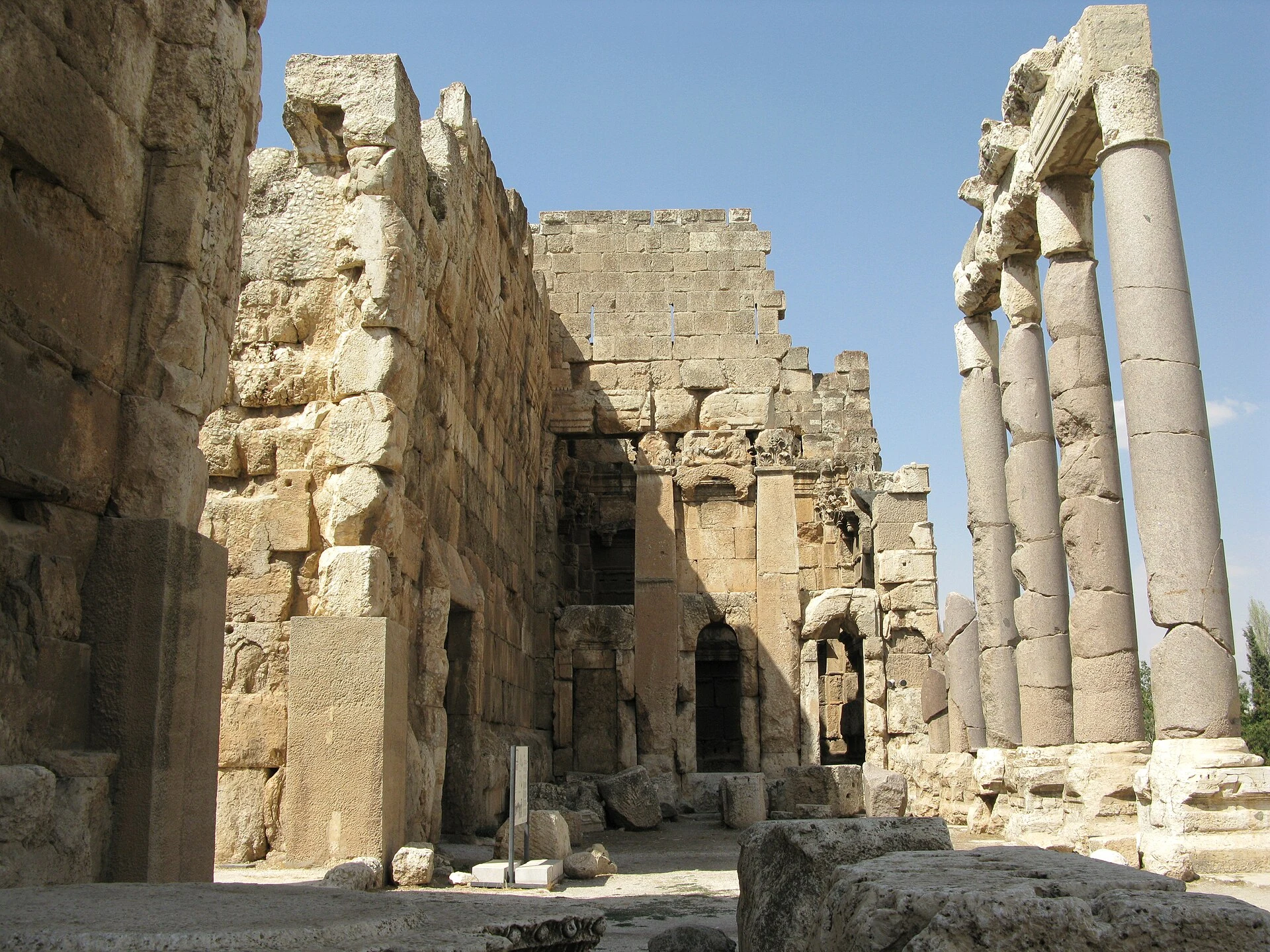
What sets the archaeological site apart
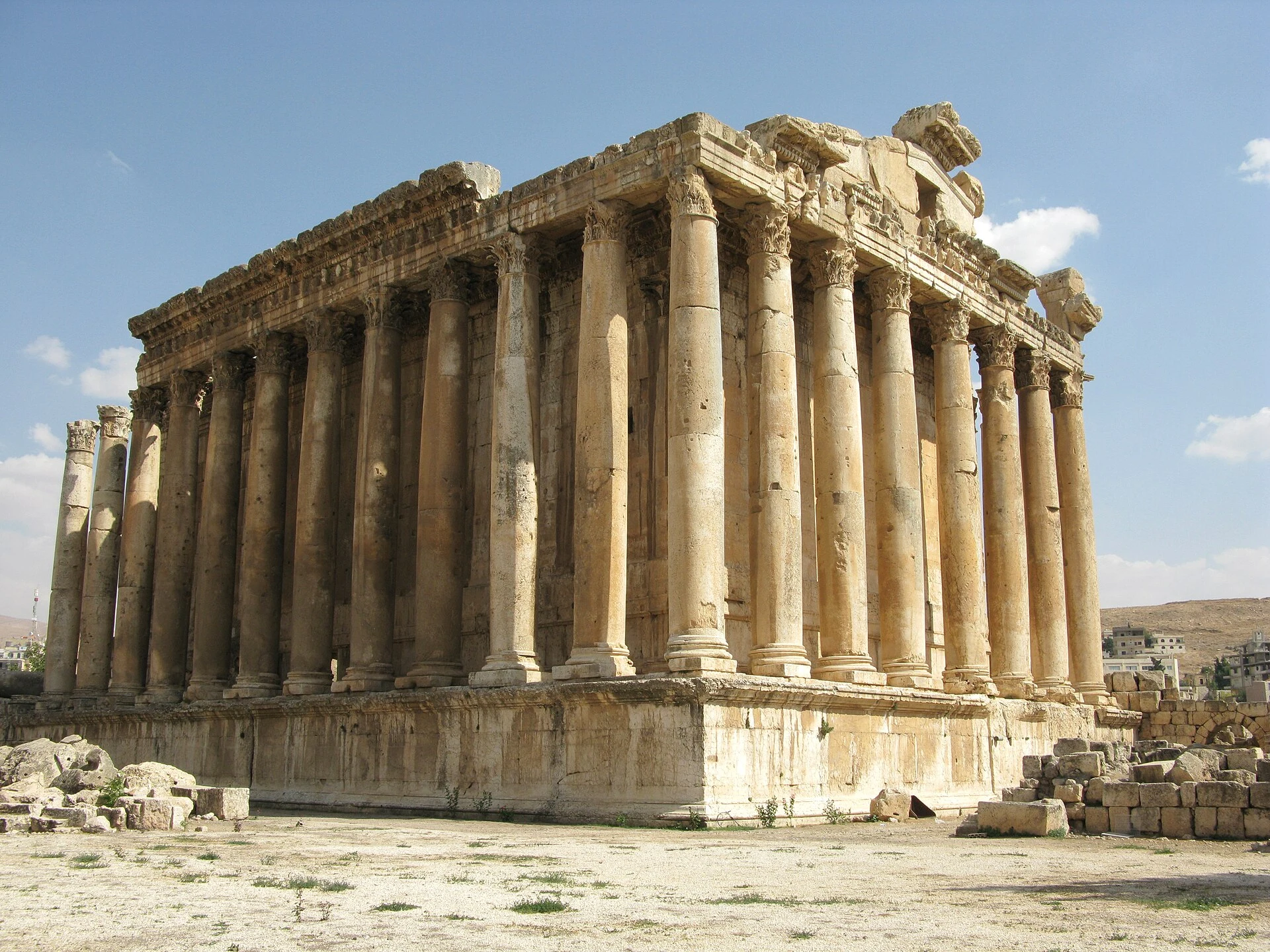
The historical route centres on the Temple of Jupiter, its great terrace and surviving columns, but the building that usually offers the clearest sense of the decoration and volume is the Temple of Bacchus. The circular temple associated with Venus introduces another scale and architectural language; the Odeon and the sanctuary of Mercury complete a broader reading of the ancient city.
The great platform and its monoliths are part of the complex’s appeal, although a visit should not be reduced to a search for records. What matters is observing how the entrances, courtyards, temples and Beqaa landscape relate to one another. The heritage designation also includes the historic urban fabric within the Arab walls and areas near the site.
Heritage that calls for attention, not fast consumption
Baalbek has a documented heritage vulnerability: its surroundings have come under urban pressure, and the site has required consolidation and restoration work. An international assessment carried out after the 2024 hostilities also recorded the destruction of a heritage building at the Bustan el-Khan entrance.
This does not justify drawing conclusions about the current condition of each temple or about access arrangements. It does call for a more careful future visit: respect boundaries and signs, do not climb structures or remove fragments, and give priority to information from site officials over old images or social-media accounts. Conservation is not a logistical detail: it determines which parts can be visited and how.
The practical decision now: do not book the itinerary
The immediate question is not whether to spend half a day or a full day at Baalbek, but whether to postpone tourist travel. The US advisory keeps Lebanon at Level 4, “Do Not Travel”; Canada advises avoiding all travel to the country because of regional volatility. The UK advisory maintains severe restrictions for various areas and notes that the situation can change rapidly.
In particular, the Beqaa and the Baalbek-Hermel Governorate appear in official notices citing risks that include armed activity and unexploded ordnance in certain areas. Do not plan road transfers, rural walks, accommodation or a combination with other Lebanese destinations while those recommendations remain in force. A change in the local situation does not replace an official update to the advisories and site conditions.
What to check when travel becomes viable again
When the authorities in your country withdraw or substantially reduce their recommendations, reassess Baalbek from the beginning. Confirm with Lebanon’s heritage or tourism authority the opening status, authorised access routes, ongoing works and any entry requirements for the site. Check consular notices again just before buying flights and once more before departure.
For a future stay, set aside time to explore the complex rather than treating it as a photo stop. Comparing the temples of Jupiter, Bacchus and Venus rewards an unhurried visit; but that decision will make sense only once travel safety and transport operations have been officially verified.
References to check before travelling
- US Department of State: Lebanon travel advisory, updated August 21, 2026.
- Government of Canada: travel advice and advisories for Lebanon, updated September 9, 2026.
- UK Foreign, Commonwealth & Development Office: travel advice for Lebanon, in force on September 11, 2026.
- UNESCO World Heritage Centre: Baalbek profile and 2025 conservation assessment.
- Lebanon Ministry of Tourism: background information on Baalbek and the Beqaa Valley.
These are the sources that should be checked for any time-sensitive information, especially security, flights, site access, works and visiting conditions.
References consulted during editorial review. Times, requirements and advisories may change: always confirm with the official source.
- https://whc.unesco.org/en/list/294whc.unesco.org
- https://whc.unesco.org/en/statesparties/lbwhc.unesco.org
- https://whc.unesco.org/en/documents/225832whc.unesco.org
- https://whc.unesco.org/en/statesparties/lb/documentswhc.unesco.org
- https://whc.unesco.org/en/list/294/documentswhc.unesco.org
- https://whc.unesco.org/en/decisions/3910whc.unesco.org
- https://whc.unesco.org/en/listwhc.unesco.org
- https://whc.unesco.org/en/decisions/5542/whc.unesco.org
- LíbanoWikidata · CC0 1.0 · Wikidata · Q822
- LíbanoWikidata · CC0 1.0 · Wikidata · Q1256428
- LibanoWikidata · CC0 1.0 · Wikidata · Q19968146