Visiting Yasawi’s Mausoleum and Its Surroundings in Turkistan
The Mausoleum of Khoja Ahmed Yasawi is Turkistan’s defining image, but it does not tell the whole story. A more attentive visit connects its great ceremonial hall with the underground Kyluet complex and the old hammam: three scales through which to understand a Sufi, urban pilgrimage centre without treating it as monumental scenery.
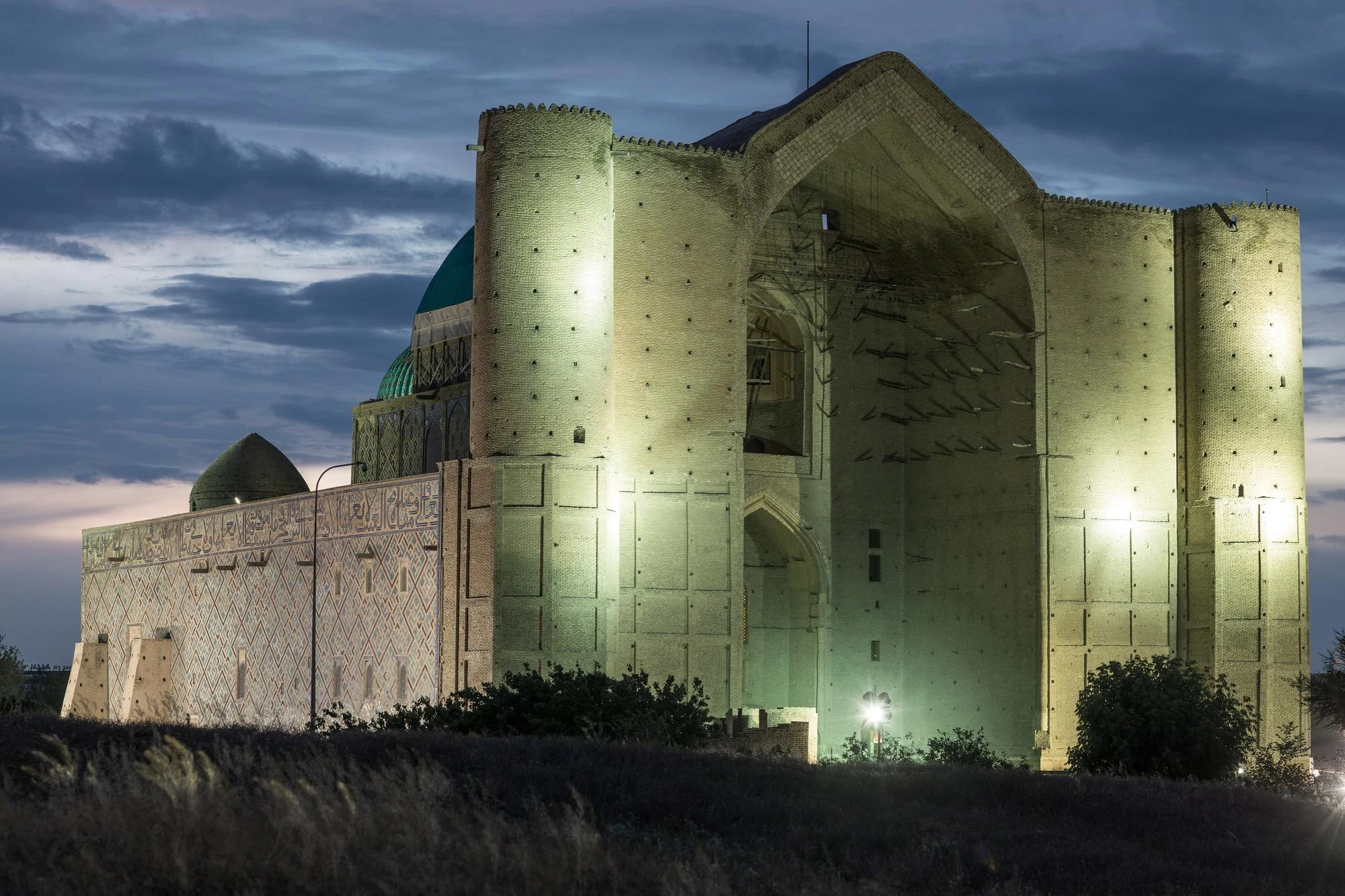
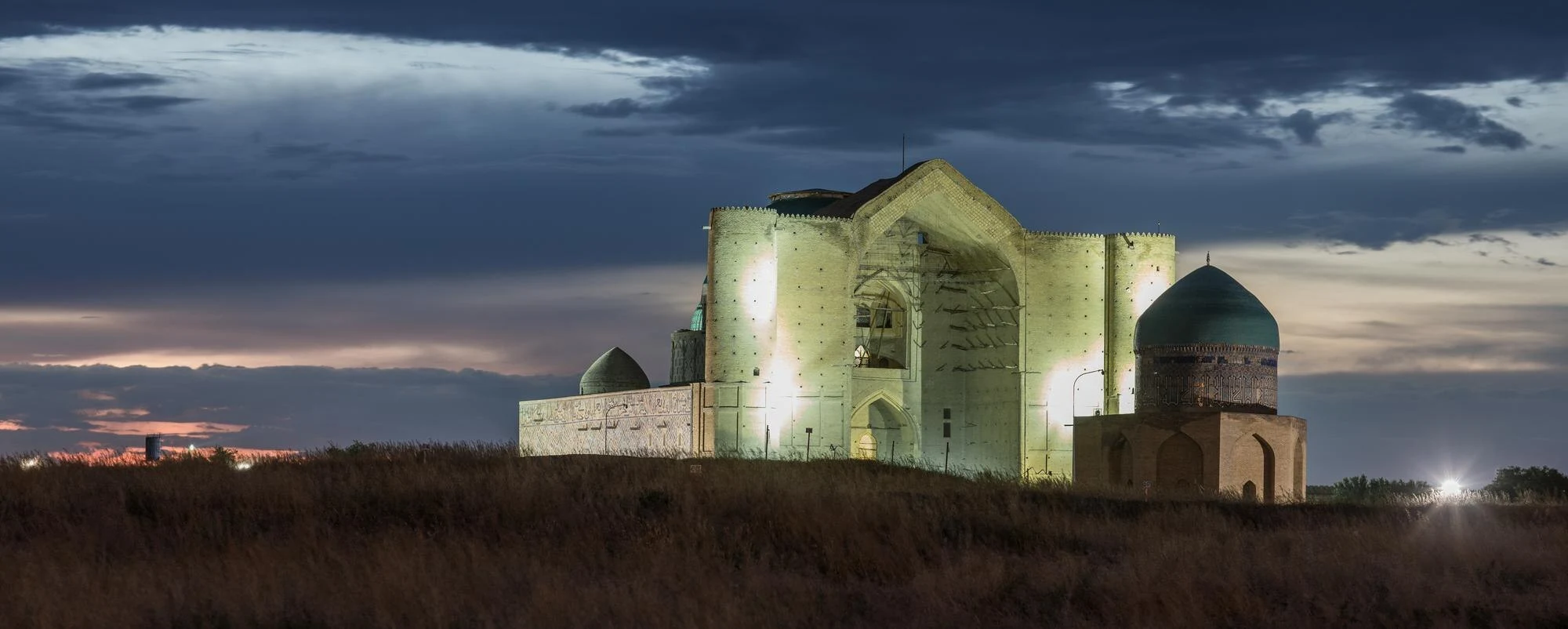
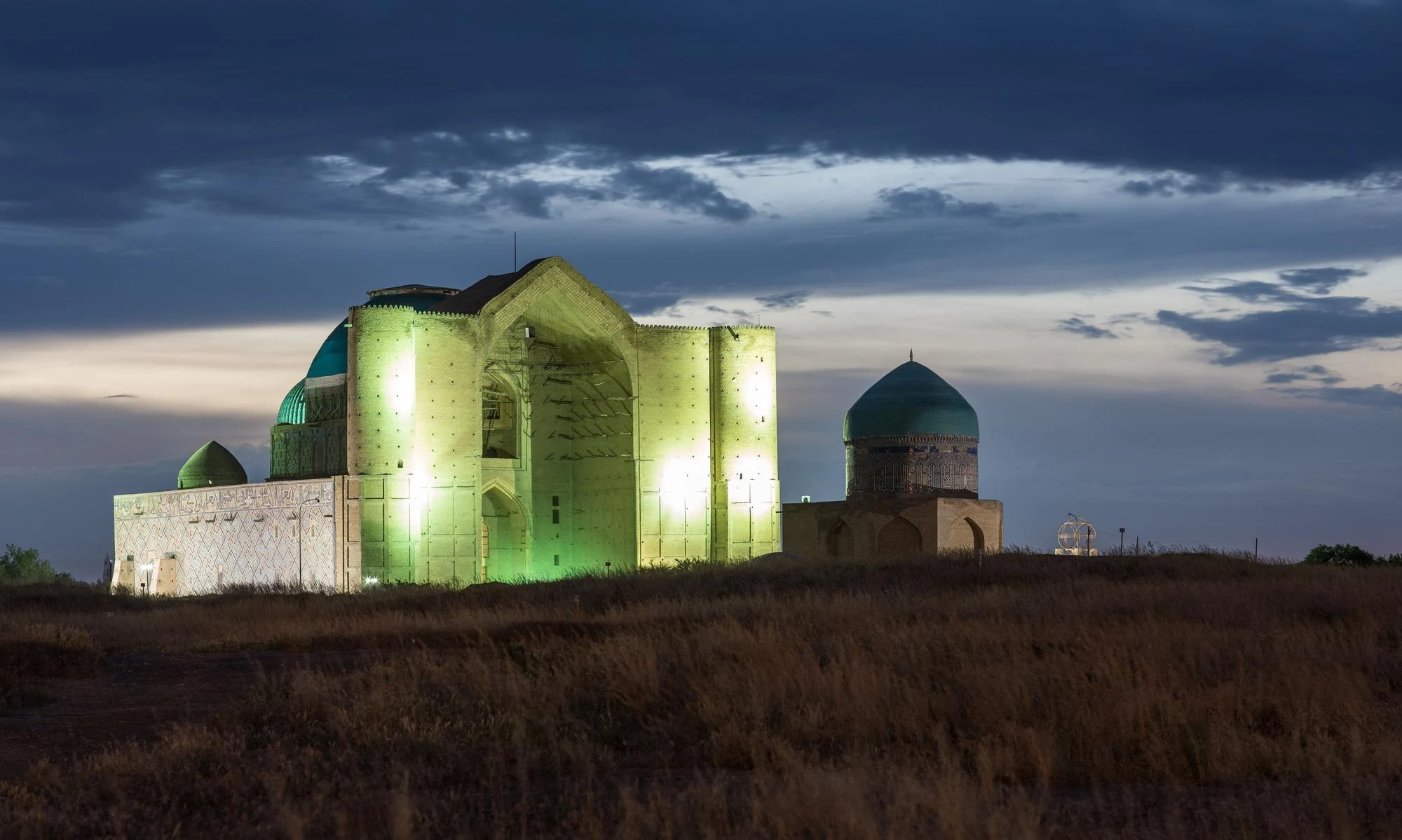
The useful decision in Turkistan is not how many attractions to add, but which relationship you want to understand. The Mausoleum of Khoja Ahmed Yasawi, inscribed by UNESCO in 2003, was built between 1389 and 1405 on Timur’s orders over the tomb of the 12th-century Sufi master; it was left partly unfinished and combines the functions of mausoleum, mosque and khanaqa. It is therefore neither an isolated monument nor merely a feat of tile and brick: it forms part of a broader religious and historic landscape in the ancient city of Yasi.
Visual context for KazakhstanContext video selected for this guide; it does not by itself identify every place mentioned.Video by Yussuf Muradov · Pexels · Pexels License · Duration: 00:25
♫
Listen to Kazakhstan
A documented soundscape that complements this guide to Kazakhstan. The Mausoleum of Khoja Ahmed Yasawi is Turkistan’s defining image, but it does not tell the whole story. A more attentive visit connects its great ceremonial hall with the underground Kyluet complex and the old hammam: three scales through which to understand a Sufi, urban pilgrimage centre without treating it as monumental scenery.
Cultural or ambient audio selected as context; it does not necessarily represent every place mentioned. Audio by artemditkovsky · Openverse · CC0 1.0 · Duration: 00:5301
Choose a three-layer visit, not a race between monuments
Set aside time for the mausoleum first. Inside, do not turn its rooms into a checklist of photographs: look for the scale of the main hall, the great dome, the logic of spaces for gathering and devotion, and the parts that were left unfinished. UNESCO identifies 35 rooms and highlights both its structural solutions and the remains of wall paintings, epigraphic decoration and muqarnas. Its unfinished state is a historical clue, not a flaw to overlook.
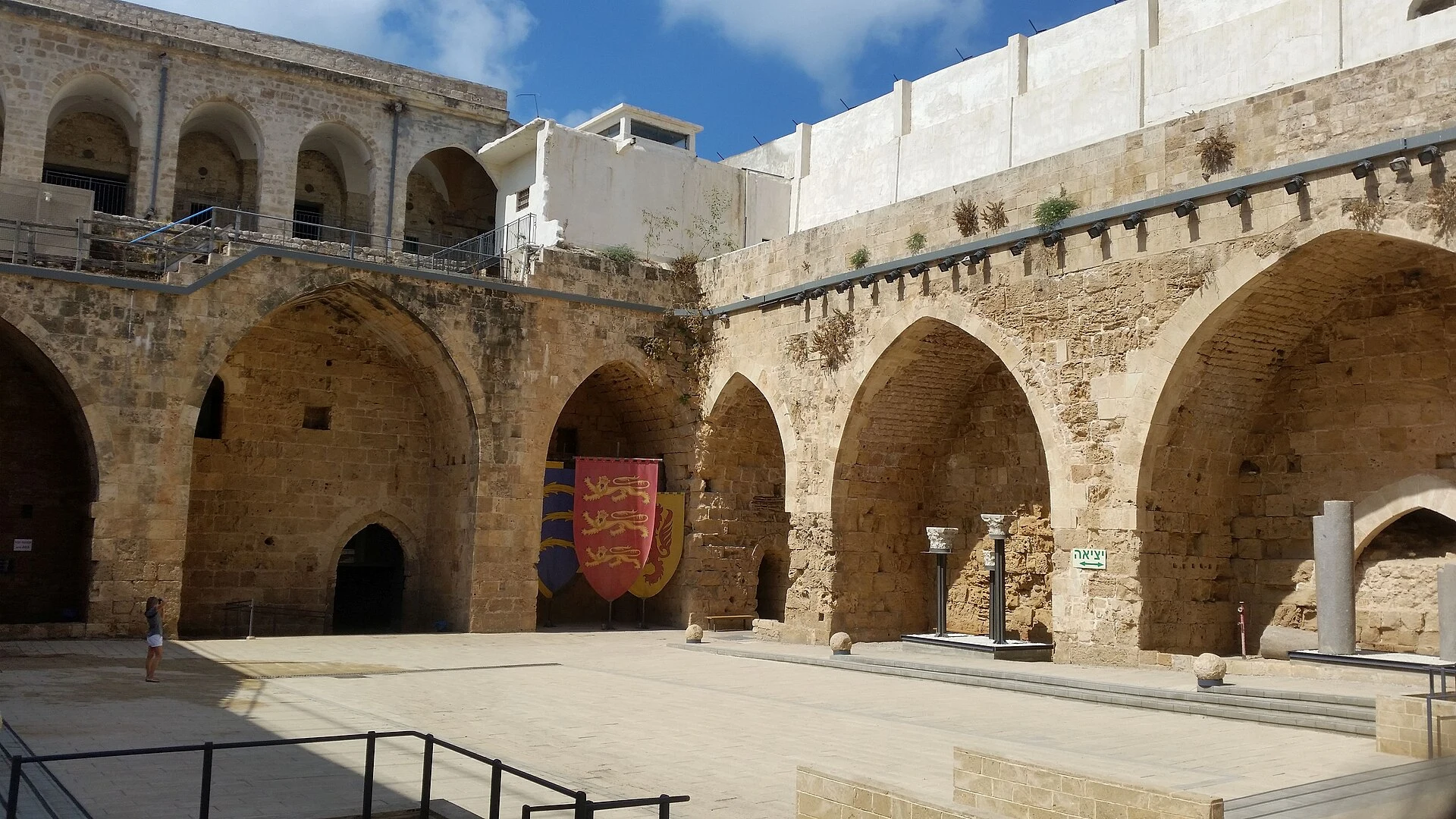
Then walk to the underground Kyluet complex, about 120 metres south of the mausoleum according to the museum-reserve. Its low, partly buried scale changes the way you read the site: unlike the mausoleum’s public monumentality, Kyluet evokes retreat, communal practice and the evolution of a compound used over centuries. The institution dates its oldest room, the gar, to the 12th century, while other parts were added between the 15th and 19th centuries.
Finish with the eastern hammam, approximately 80 metres south-west of the mausoleum. It is not a picturesque afterthought: the museum-reserve connects it with pilgrims and explains its system of rooms, water and heating. Alongside Kyluet, it reminds you that a pilgrimage city required daily care, the movement of people and services, not ceremonies alone.
With two or three hours, follow the compact triangle: mausoleum, Kyluet and hammam. It is the best option for anyone arriving by train or plane who wants a coherent first impression without relying on a long excursion. With half a day, add some unhurried time around the former compound without a photographic agenda, and look for the Friday Mosque, about 120 metres south-west of the mausoleum. Its uses, reconstructions and exhibitions have changed over time, so ask which spaces are open that day.
Leave Otrar and the Mausoleum of Arystan Bab for another day, or for an organised excursion with plenty of time. The national tourism office places Arystan Bab near Otrar, about 60 kilometres from Turkistan, and records the tradition of visiting Yasawi’s spiritual teacher first. It can be a valuable cultural extension, but it is not necessary for understanding Turkistan’s urban core and adds transfers that often compress the visit too much.
A living shrine calls for a different kind of behaviour
Wear modest clothing, keep your voice low and do not block entrances, prayer rooms or the path of pilgrims. Before photographing interiors or people, check the signs and ask permission where appropriate. If an area is reserved, closed for conservation or being used for worship, change your plan: the site’s value does not depend on your ability to record every corner.
This caution is also part of heritage protection. UNESCO warns that rising damp, condensation and salts can affect the building’s integrity, and that the archaeological and visual setting requires ongoing management. Do not climb structures, leave marked routes or rest tripods and luggage against historic surfaces.
04
Accessibility and logistics: decide before you arrive
The central route is short in distance, but not necessarily easy for everyone: Kyluet is partly underground, and historic buildings may include steps, changes in level, low light and uneven paving. If you travel with reduced mobility, use a wheelchair or pushchair, or need to avoid stairs, prioritise the exterior and the mausoleum, and confirm in advance which sections are accessible and whether assistance is available.
Opening hours, ritual closures, entrance routes and prices are not permanent details. Before setting out, check the information directly with the Azret Sultan museum-reserve and the municipal portal: in 2026 the city announced changes to the ticketing system, with the Visit Centre serving as the ticket point within the complex.
05
The idea to take away
Turkistan is best understood as a sequence of scales: the mausoleum’s great Timurid architecture, Kyluet’s ritual intimacy and the hammam’s urban infrastructure. Seeing only the façade gives you a powerful image; walking through these three layers gives you context. That difference encourages a less hurried visit, spreads your attention beyond the most photographed spot and recognises that the heritage still carries meaning for communities and pilgrims.
Sources and checks
References consulted during editorial review. Times, requirements and advisories may change: always confirm with the official source.