Heritage and responsible decision-making
Leptis Magna’s Ancient Port City and Why Travel Should Wait
Leptis Magna is best understood by tracing the relationship between the wadi, harbour, market, warehouses and neighbourhoods rather than chasing isolated monuments. But today, the first practical decision is not the itinerary: for US travellers, the current official recommendation is not to travel to Libya.
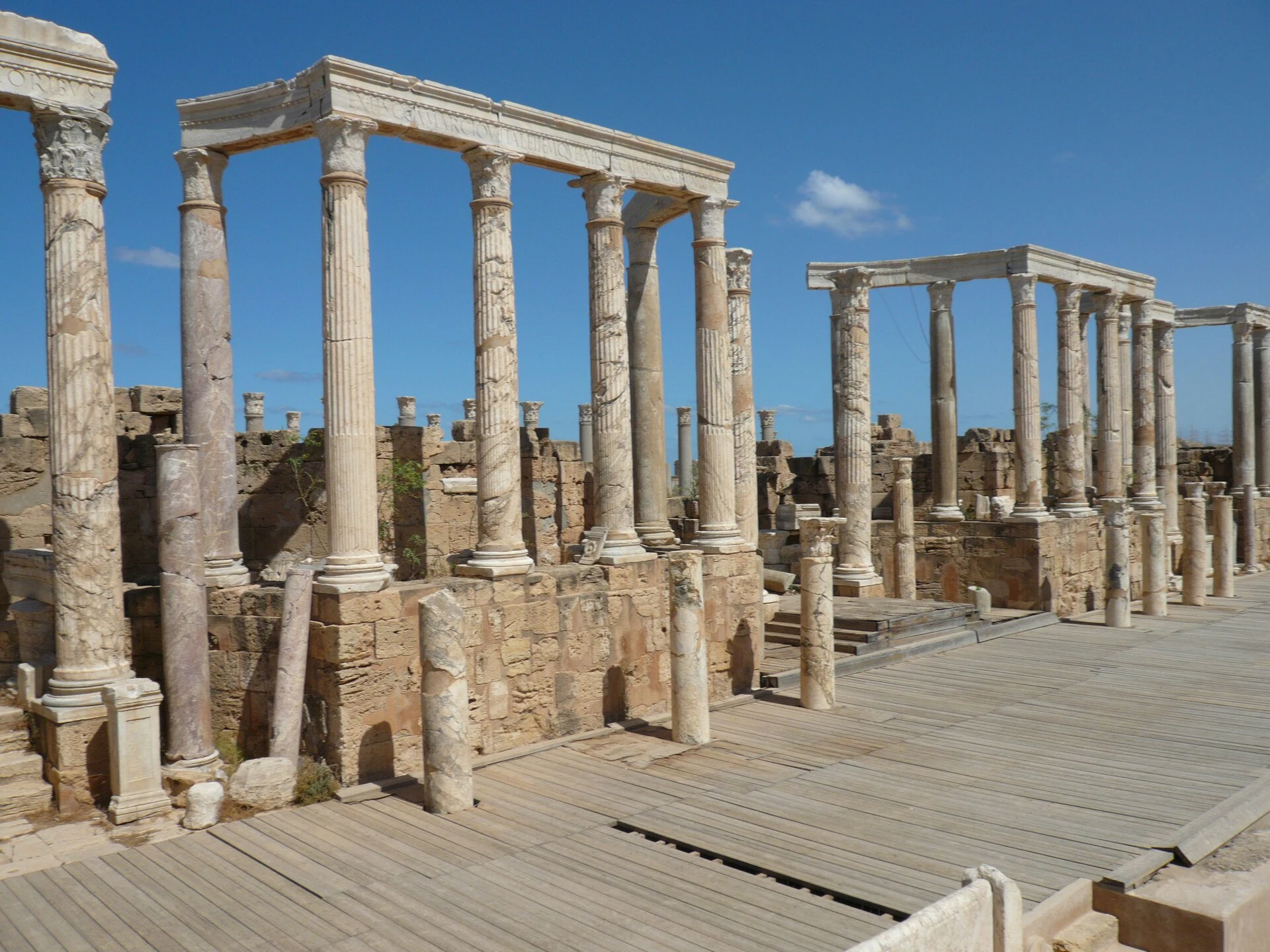
Leptis Magna calls for a slow reading. It is not simply a collection of forums, baths and an imperial arch, but a city whose life depended on port infrastructure built at the mouth of Wadi Lebda. UNESCO identifies that ensemble—a man-made basin, dam, canal, market, warehouses, workshops and residential areas—as one of the keys to understanding the city.
However, this is not a guide that turns that interest into an invitation to travel now. As of 5 September 2026, the US Department of State maintains a Level 4 “Do not travel” advisory for Libya, issued on 31 August 2026, because of risks including armed conflict, kidnapping, terrorism, crime and unexploded landmines.
The right question is not “which monuments should I see?” but “what made the city work?”
Start, mentally, with water and exchange. Leptis began as a Phoenician settlement in the 7th century BC and later expanded under Roman rule. Its ancient harbour, at the mouth of Wadi Lebda, combined an artificial basin with works designed to regulate the watercourse. That engineering explains the proximity of quays, storage facilities, commerce and civic representation.
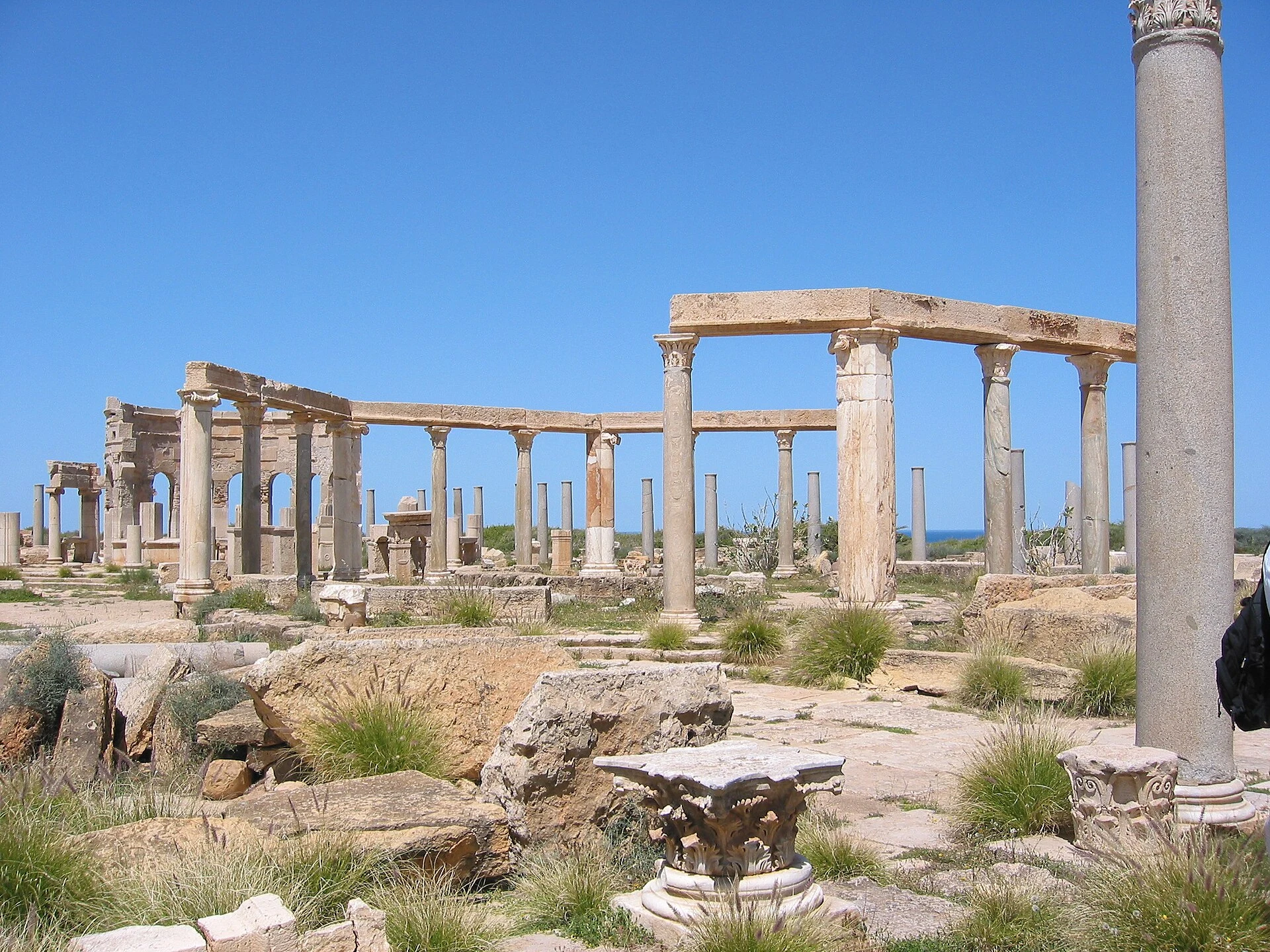
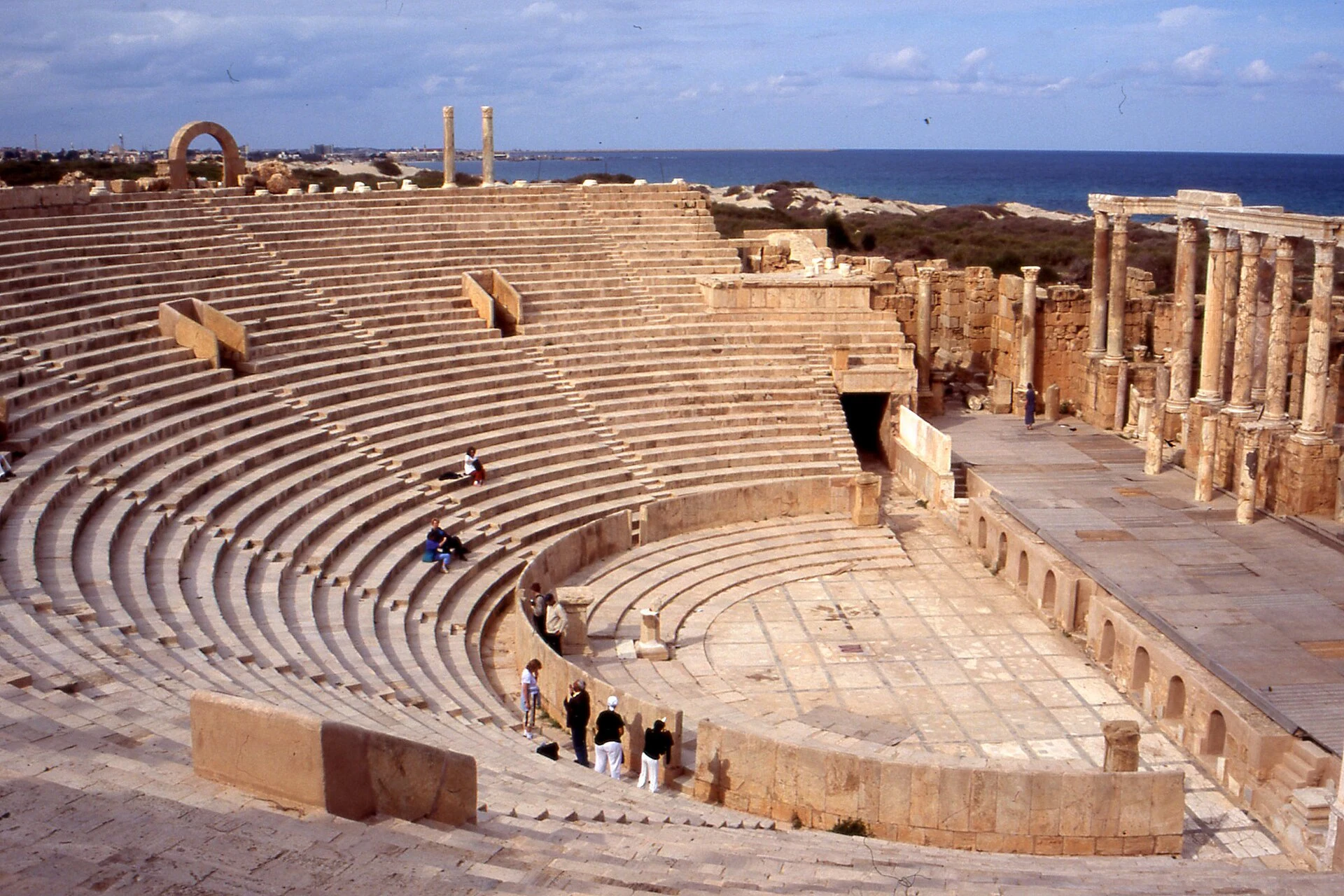
If conditions were to allow a responsible visit in the future, follow that order of interpretation: harbour and wadi edge; warehouses and market; forums and basilica; baths, theatre and houses. The Arch of Septimius Severus becomes more meaningful at the end—as part of a city projecting economic and political power, rather than as an isolated photo opportunity. UNESCO also highlights Punic, Roman, Greek and Hellenistic influences in the sculptures and architecture, another reason to avoid the shortcut of calling it simply “a Roman ruin”.
Published logistics do not replace a security assessment
Libya’s Ministry of Tourism and Traditional Industries places the site approximately 120 km east of Tripoli and publishes daily opening hours from 9:00 until sunset. These are changeable operational details: they must be confirmed directly with the official source before any decision and should not be interpreted as a guarantee of access, safe travel or actual opening.
For anyone travelling on a US passport, the current advisory is decisive: there is no operational US embassy in Libya, and the US government says it cannot provide emergency services there because of the security risks. In these circumstances, hiring transport, booking accommodation or planning a road journey does not make the trip prudent. The responsible decision is to postpone it and monitor developments through official sources from your own country, as well as the relevant Libyan authority.
Visiting heritage at risk means accepting limits, not seeking exclusivity
Leptis Magna has been on the World Heritage List since 1982 and has remained on the List of World Heritage in Danger since 2016. The state report submitted to UNESCO after 2025 reports vegetation clearance and minor restoration work, but identifies lack of resources, sustainable vegetation management and encroaching sand as ongoing challenges.
That changes the ethical framework for any future visit. The point is not to “get there before everyone else” or demand access to fragile areas; it is to respect closures, authorised routes, conservation work and the decisions of local authorities and communities. Nor should you assume that accessibility infrastructure exists: in the official information consulted, we found no verifiable details about step-free routes, wheelchairs, accessible toilets or on-site assistance. Anyone with mobility needs would have to request specific, up-to-date confirmation before considering the trip.
How to prepare for a visit without travelling yet
Useful preparation can be done from home. Study the plan with a specific hypothesis in mind: how did the harbour connect with the market? Where were goods stored or processed? What relationship exists between the Severan Forum, the basilica and the monumental roads? UNESCO describes the site as a provincial city offering exceptional evidence of public buildings as well as trade, production and everyday life.
Save two checks for a future in which conditions permit travel: UNESCO’s published conservation status and the visitor information issued by the Libyan ministry. If your government’s advisory still recommends against travel, the conclusion remains the same: postponing the trip does not mean losing Leptis Magna; it means refusing to treat a living, vulnerable place in a high-risk context as a trophy to tick off a list.
The decision, in one sentence
Leptis Magna deserves a long, attentive visit when conditions allow; today, for a US traveller, it chiefly calls for a clear decision not to go and to check official sources again before reopening any plans.
References consulted during editorial review. Times, requirements and advisories may change: always confirm with the official source.
- https://whc.unesco.org/en/list/183whc.unesco.org
- https://whc.unesco.org/en/documents/108961whc.unesco.org
- https://whc.unesco.org/en/statesparties/ly/documents/whc.unesco.org
- https://whc.unesco.org/document/141264whc.unesco.org
- https://tourism.gov.ly/landmarks/%D8%A7%D8%AB%D8%A7%D8%B1-%D9%84%D8%A8%D8%AF%D8%A9/tourism.gov.ly
- https://travel.state.gov/en/international-travel/travel-advisories/destination.lby.htmltravel.state.gov
- https://whc.unesco.org/en/search/?category=World+Heritage+Properties&criteria=archaeological+siteswhc.unesco.org
- https://whc.unesco.org/document/224419whc.unesco.org
- LibiaWikidata · CC0 1.0 · Wikidata · Q1016
- LibiaWikidata · CC0 1.0 · Wikidata · Q1129914
- LibiaWikidata · CC0 1.0 · Wikidata · Q3237870
- LibyaWorld Bank Open Data · CC BY 4.0 · World Bank
- LibyaDBpedia · CC BY-SA 3.0 · DBpedia
- LibiaDBpedia · CC BY-SA 3.0 · DBpedia
- El turismo inclusivo como modelo de innovaciónOpenAlex · CC0 1.0 · OpenAlex