Latvia · Kurzeme
Kuldīga and the Venta: a walk where the river shapes the city
In Kuldīga, the waterfall, brick bridge and historic centre are not separate stops: together they form a short route that reveals how water sustained trade, industry and the urban landscape.
Conditions described in the guide: confirm current requirements and access with the official source before travelling.
Kuldīga rewards a leisurely visit on a human scale. Its historic centre developed where the small Alekšupīte flows into the Venta: this relationship explains the waterside houses, bridges, great Venta Rapid waterfall and former commercial axis. It is an excellent choice for travellers who would rather walk and look closely than collect attractions.
The old town was inscribed as a UNESCO World Heritage Site in 2023. The distinction is not simply recognition of a picturesque façade: it acknowledges the continuity of the urban layout, its wooden and brick buildings, and the river landscape that has shaped local life for centuries.
A city understood by following two waterways
Start with the Alekšupīte, the stream that runs close to historic buildings and reappears time and again between streets and bridges. Its waterfall is not purely a natural feature: it was created and reinforced in the 17th century to harness the power of the water for a paper mill. It is a useful introduction to Kuldīga, because it encourages you to see heritage as everyday infrastructure rather than scenery.
From there, continue unhurriedly through the old town towards the Venta. Look out for the mix of wooden homes, masonry and crafted details: the city preserves traces of the commercial and technical exchanges of historic Courland. The interest lies in the continuity of the whole, not in searching for a single landmark building.
The essential route: bridge, waterfall and riverbank
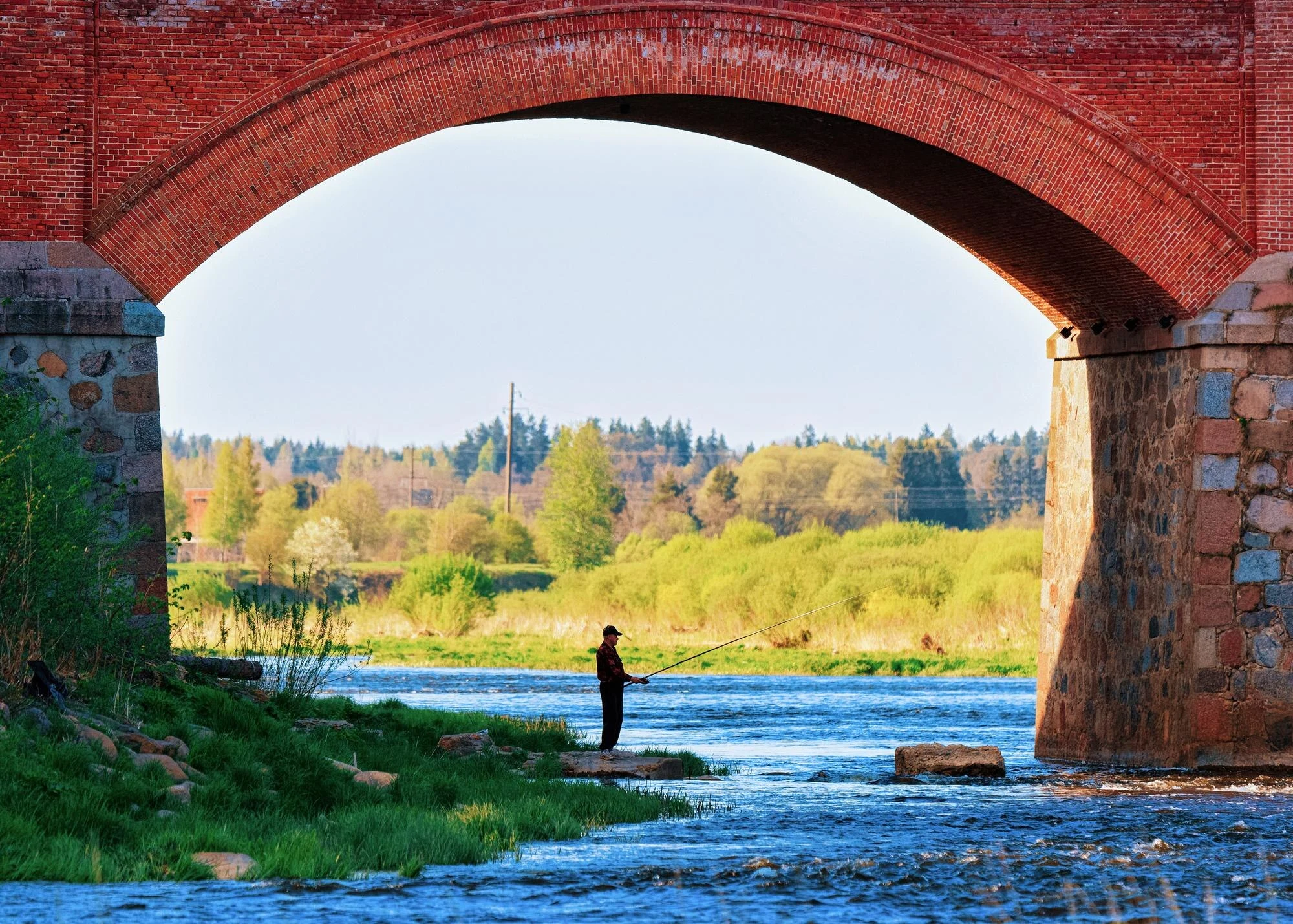
The historic brick bridge over the Venta is where landscape and engineering come together. Cross it or walk along it slowly to see how the city looks out over the river; then head towards Ventas Rumba. The waterfall is broad and low, so its visual impact depends greatly on the water level: it is best understood as a river threshold that for centuries forced people to stop, unload or reorganise journeys by water.
Set aside time for the riverside path and nearby viewpoints rather than settling for a photograph from the bridge. The route links the waterfall, the outline of the old houses and the urban garden beside the former castle site. For a short day, this walking circuit is enough; if you stay overnight, add the local museum and return to the riverbank in a different light.
The itinerary combines historic streets, cobblestones and stretches beside the river. Travellers with reduced mobility, a pushchair or a need for continuous paving should check the condition of the access routes in advance and choose the points that best suit their needs.
Spring is for observing, not chasing
In spring, fish can sometimes be seen trying to swim up Ventas Rumba. The phenomenon is linked to spawning migrations and should not be treated as a guaranteed spectacle: water levels and the timing of the migration determine what can be seen. If your visit coincides with it, observe from the bank or viewpoints, keep your distance and do not block the busiest passages.
The waterfall lies within the Venta Valley Nature Reserve, a protected area with riverside habitats, hillside forests, dry meadows and sensitive species. The simplest way to reduce your impact is to stay on existing routes, leave no waste and avoid descending into erodible areas simply to find another viewpoint.
The guided option that changes the scale of the visit
A guided excursion along the rocky bed of the Alekšupīte is available, passing beneath small bridges and tackling minor waterfalls. This is not a peaceful alternative to the urban walk: it involves moving across uneven ground, crouching and accepting that it is a physical activity. It may appeal to anyone who wants to understand the city from the water, but it is not necessary to get to know Kuldīga.
The activity is offered with a guide and by prior appointment. Before travelling, check its availability, requirements, language, equipment, price and conditions according to the water level.
Deciding whether one day is enough or you should stay overnight
A day trip works if your aim is to explore the centre, Ventas Rumba, the bridge and the riverbank. Staying overnight makes sense if you want to spread out the walk, visit the Kuldīga District Museum or spend time at Bangert Villa, devoted in part to local life at the beginning of the 20th century. This second option makes it easier to understand that the Venta landscape and domestic heritage belong to the same urban history.
Do not base your plan on fixed opening hours for museums, tourist information offices, guided activities or intercity transport: these details change. Check them directly with the official organisations listed below before booking accommodation or planning connections.
Official references to check before travelling
- UNESCO World Heritage Centre: information on the Old Town of Kuldīga, its inscription, boundaries and heritage values.
- Kuldīga Tourist Information Centre: up-to-date information on Ventas Rumba, the Alekšupīte waterfall, walking routes, guides and local services.
- Nature Conservation Agency of Latvia: information on the Venta Valley Nature Reserve, its protection and ecological values.
- Kuldīga District Museum: exhibitions, access, opening hours and admission prices for Bangert Villa and the open-air collection.
Consult these sources to confirm visiting conditions, accessibility, bookable activities, opening hours, prices and any temporary changes.
References consulted during editorial review. Times, requirements and advisories may change: always confirm with the official source.
- https://whc.unesco.org/en/list/1658/whc.unesco.org
- https://whc.unesco.org/en/statesparties/lv/whc.unesco.org
- https://www.unesco.org/en/world-heritage/listwww.unesco.org
- https://whc.unesco.org/en/statesparties/lv/documents/whc.unesco.org
- https://whc.unesco.org/en/documents/191728whc.unesco.org
- https://whc.unesco.org/document/199662whc.unesco.org
- https://whc.unesco.org/en/listwhc.unesco.org
- https://whc.unesco.org/en/list/852/whc.unesco.org
- LetoniaWikidata · CC0 1.0 · Wikidata · Q211
- LetoniaWikidata · CC0 1.0 · Wikidata · Q6497226
- LatviaWorld Countries — mledoze · ODbL 1.0 · World countries dataset by mledoze and contributors · ODbL 1.0
- LatviaWorld Bank Open Data · CC BY 4.0 · World Bank
- LatviaDBpedia · CC BY-SA 3.0 · DBpedia