Zambia · Kasanka National Park
Kasanka During Bat Season: Choosing Dates, a Base and the Right Pace
The arrival of straw-coloured fruit bats transforms Kasanka between late October and December. This guide helps you decide when to go, what to expect and how to plan a stay that does not depend on sunset alone.
Conditions described in the guide: confirm current requirements and access with the official source before travelling.
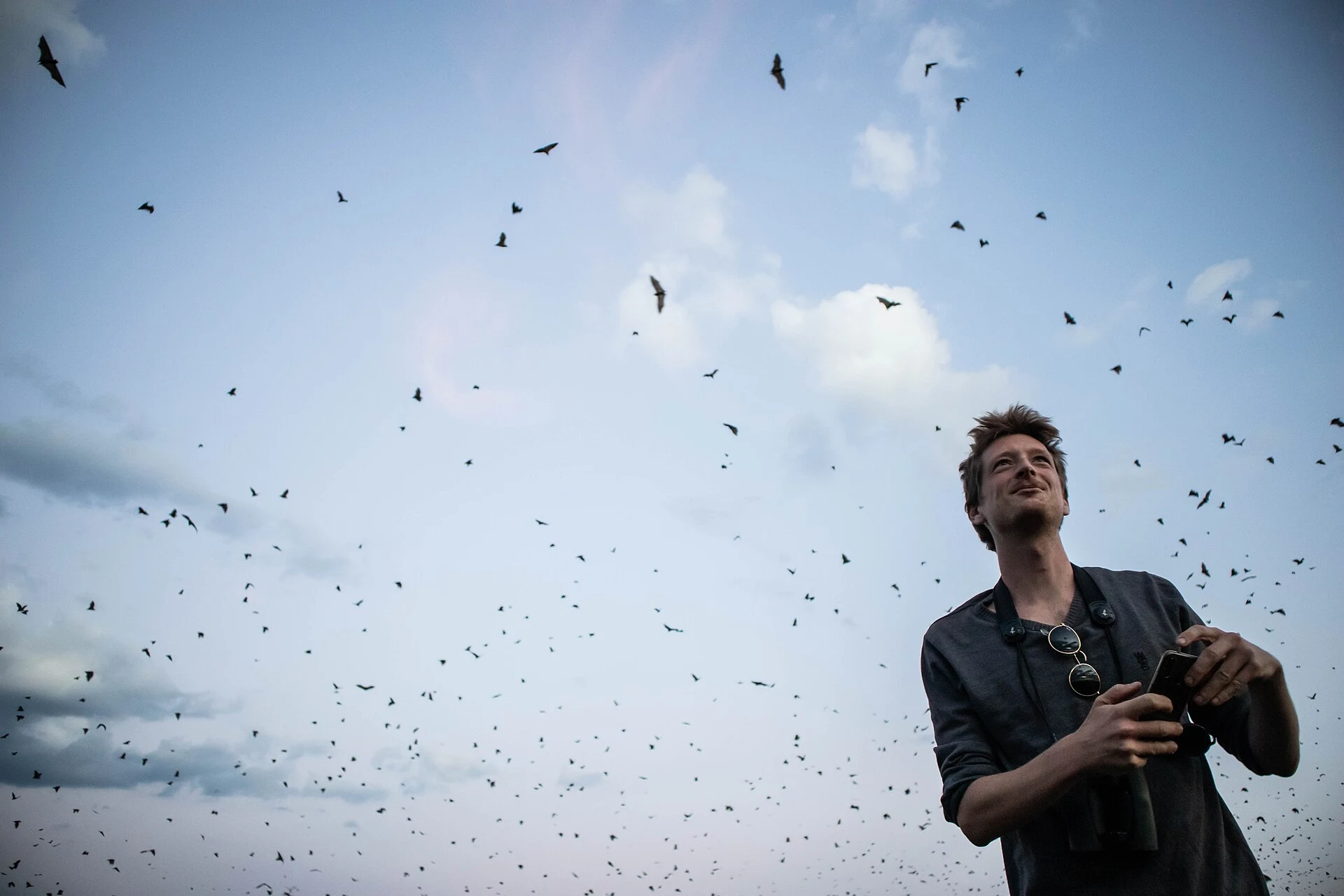
Kasanka rewards careful planning. In this park in central Zambia, the seasonal arrival of millions of straw-coloured fruit bats focuses attention on a small mushitu swamp forest, but the trip works best when understood as a stay centred on wetlands, woodland and unhurried observation. This is not the park for travellers seeking large concentrations of wildlife at every hour; it is for those willing to time their visit around a natural phenomenon and accept that the quality of the experience depends on light, patience and the conditions of each season.
Your dates shape the trip
The migration window generally runs from the second half of October to the end of December. Zambian tourism sources identify November and December as the most favourable months for seeing it, while the park manager describes arrivals from mid-October. These dates should not be taken as a guarantee of identical density every night: animal numbers and access conditions vary from season to season. For a trip focused on the bats, November is the clearest choice; to combine the visit with other wildlife sightings, the dry season from May to October usually makes driving and terrestrial viewing easier, although it does not fully overlap with the main flight.
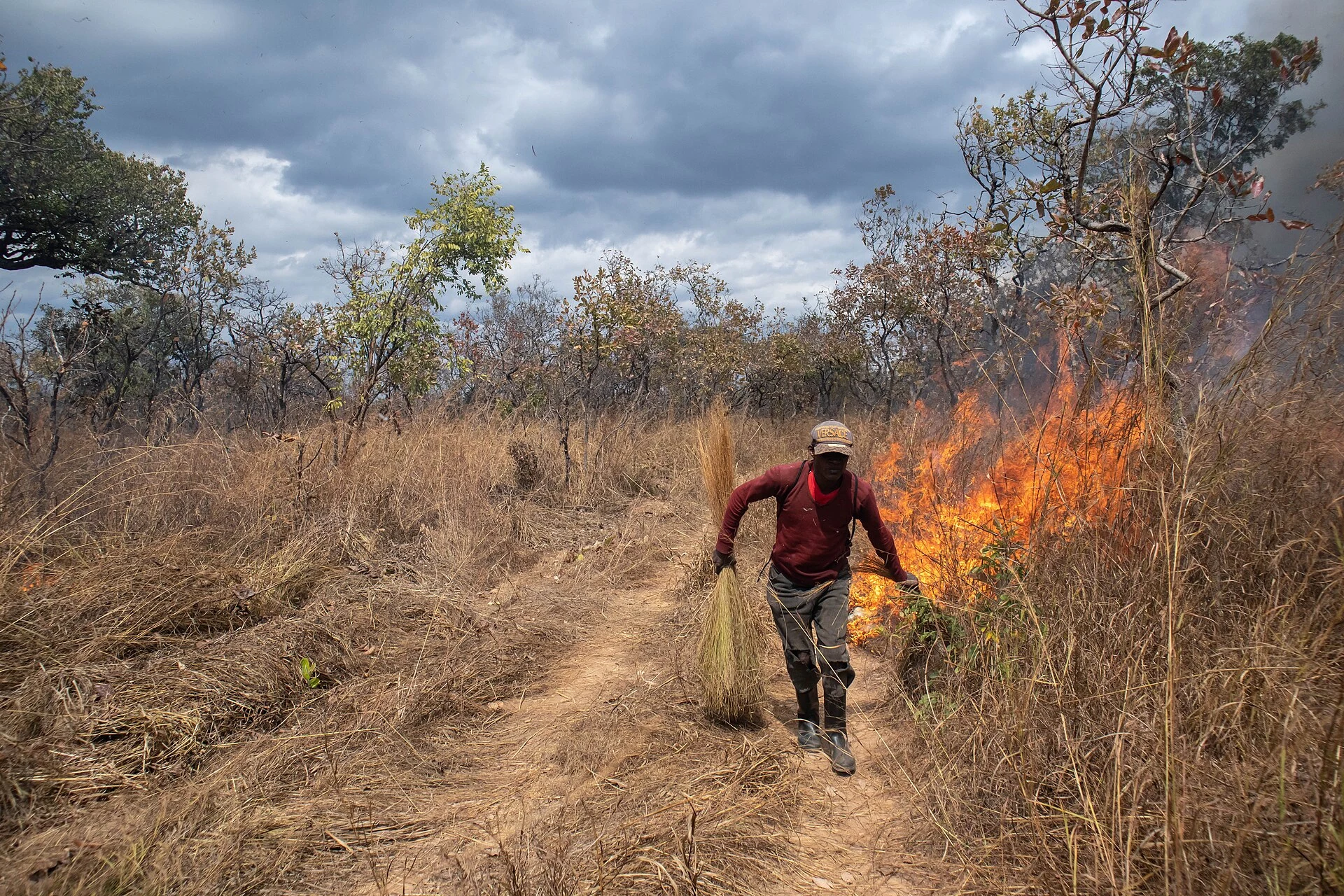
What you actually see from the mushitu forest
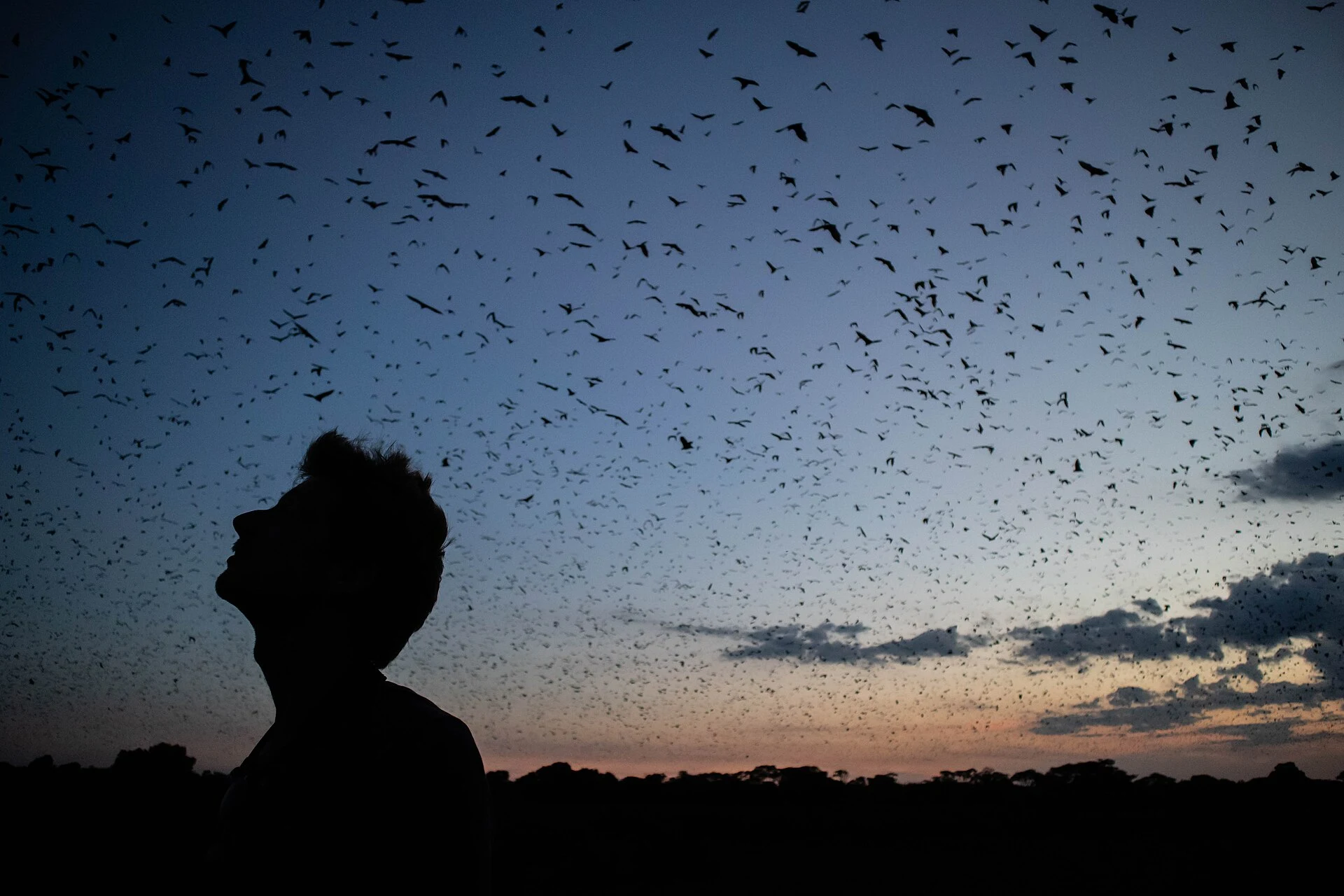
The key moment comes at dusk, when the bats leave their roosts to feed through the night, and again before dawn as they return. Elevated platforms allow you to watch the flight above the canopy and make it worthwhile to set aside enough time for more than one outing: an evening with flat light, rain or scattered activity can feel very different from another. Guided walks are available during the day to explore the forest and see the colony at rest. Keep your visit to the routes and platforms designated by staff: the experience depends on a small roosting area and wildlife that must not be forced to move.
Do not treat it like a big-herd safari
Kasanka is a small, diverse park of miombo woodland, swamp forest, plains, rivers and wetlands near the Bangweulu basin. Its scale is better suited to attentive birdwatching and looking for wetland antelopes, especially sitatunga, than to a constant succession of large mammals. The elevated hide beside Kapabi Swamp can be useful for looking for sitatunga early or late in the day; the plains and lagoons add waterbirds and open landscapes to the itinerary. Realistic expectations prevent the bats from becoming a rushed stop between more conventional safari parks.
Choose accommodation around your observation hours
Your base changes the experience. Wasa Lodge is near the entrance and the Mulembo airstrip; Luwombwa Lodge lies farther inside, beside the Luwombwa River and approximately one hour by road from Wasa. There are also campsites and simple options in the conservation centre. For a first short stay, prioritise the logistics of transfers to the bat forest and confirm which activities depart from each base. Some options operate without Wi-Fi or phone coverage, so download maps, carry contact details and agree on timings before entering the park.
Arrive by road and leave yourself some margin
The usual self-drive route begins on the Great North Road, then turns after Kapiri Mposhi towards Serenje and continues in the direction of Samfya to the signposted Malaushi turn-off. This is a reasonable option for travellers already using their own vehicle, but road times should not be treated as fixed, especially as the rainy season approaches. The alternative by air is a charter flight to the park airstrip. Before setting out, confirm the condition of the final stretch with the park, the gate opening time, fuel availability along your route and the current entry and accommodation conditions.
A visit that also supports the park
Kasanka is managed through a partnership between the national parks authority and Kasanka Trust. The trust links tourism income to area management, wildlife protection and community and educational programmes. For travellers, the practical choice is straightforward: book with authorised operators and accommodation providers, follow the guides’ instructions and do not turn nocturnal viewing into a pursuit of animals. Kasanka’s value lies precisely in witnessing a concentrated ecological process, not in getting closer than the setting allows.
References and details to confirm before booking
Consult the Zambia Tourism Authority for general seasonality, the Department of National Parks and Wildlife for management and park information, and Kasanka Trust for accommodation, internal transfers and activities. Check directly with these organisations for the effective dates of next season’s migration, bookings, fees, access hours, road conditions, campsite availability and charter-flight arrangements; these operational details can change.
References consulted during editorial review. Times, requirements and advisories may change: always confirm with the official source.
- https://www.zambia.travel/batmigration.htmlwww.zambia.travel
- https://www.zambiatourism.com/destinations/national-parks/kasanka-national-park/www.zambiatourism.com
- https://www.zambia.travel/kasankanp.htmlwww.zambia.travel
- https://www.zambiatourism.com/activities/kasanka-national-park/www.zambiatourism.com
- https://www.mot.gov.zm/dnpw/?page_id=1726www.mot.gov.zm
- https://kasanka.com/accommodation/kasanka.com
- https://www.zambia.travel/annualreports/ZTA_ANNUAL_REPORT_2024.pdfwww.zambia.travel
- https://www.kasanka.com/accommodationkasanka.htmwww.kasanka.com
- ZambiaWikidata · CC0 1.0 · Wikidata · Q953
- ZambiaWorld Countries — mledoze · ODbL 1.0 · World countries dataset by mledoze and contributors · ODbL 1.0
- ZambiaWorld Bank Open Data · CC BY 4.0 · World Bank
- ZambiaDBpedia · CC BY-SA 3.0 · DBpedia