Heritage, agricultural landscapes and memory
Heritage route through Monte Café, Água Izé and São João in São Tomé
Three former plantations show why a roça is more than an isolated farm: it was an infrastructure for production, housing and control. This route invites you to visit them with time and context.
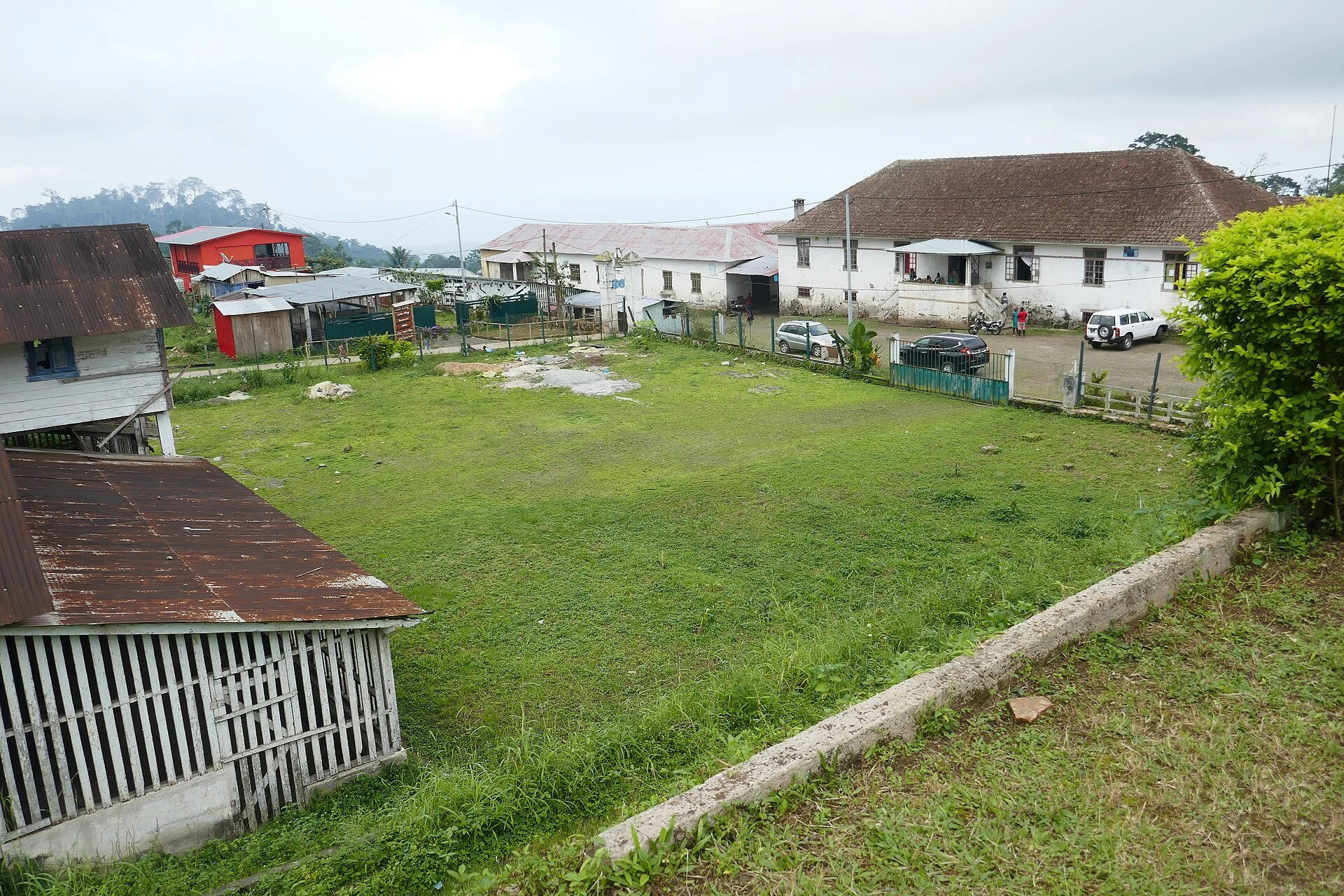
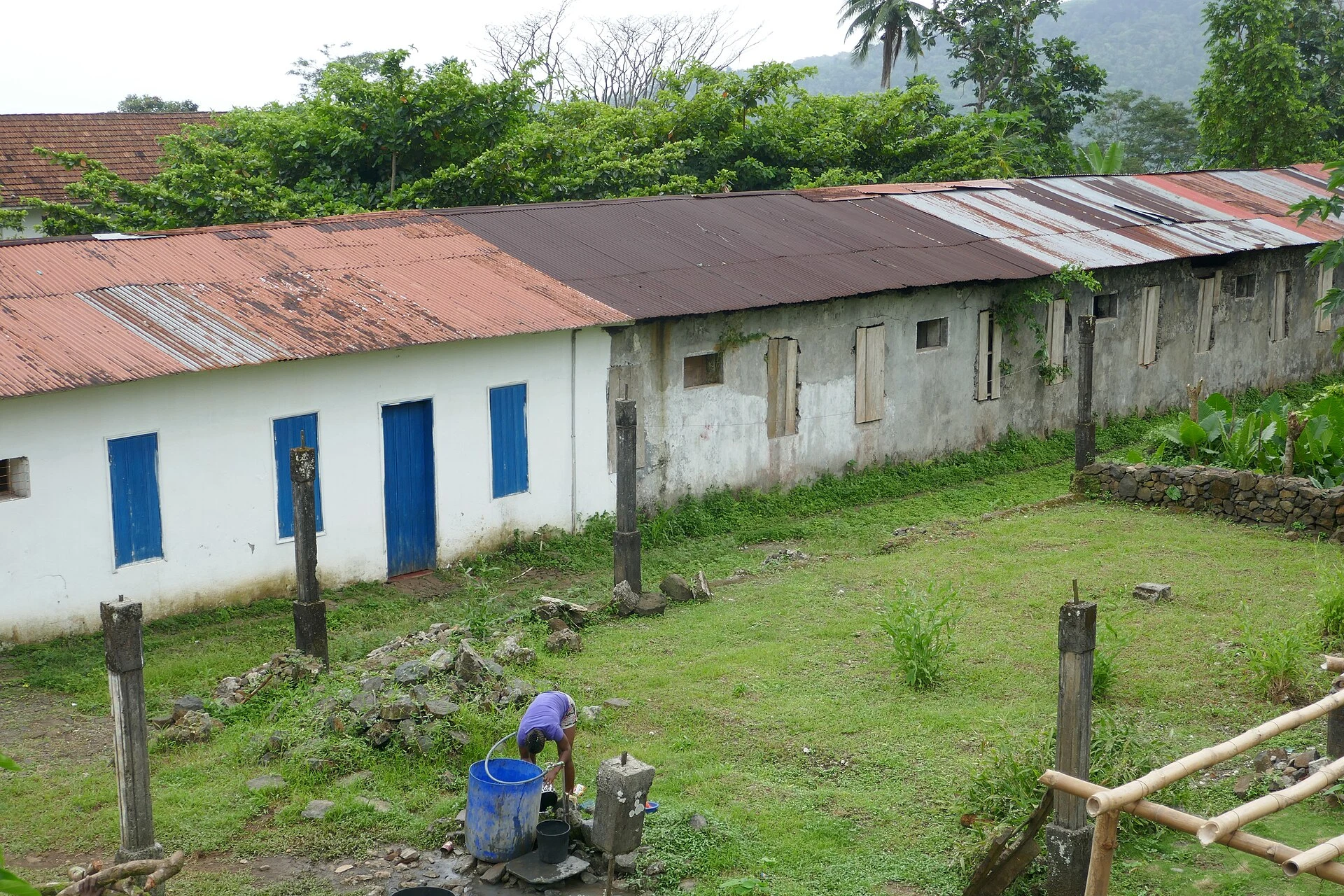
In São Tomé, a roça encompasses far more than cocoa or coffee. It is a constructed landscape where crops, warehouses, transport routes, administrative houses, services and workers’ accommodation existed side by side. Monte Café, Água Izé and São João reveal these layers in different ways, without turning a history of forced labour into a rural stage set.
A route through three roças, not a collection of stops
The three roças are part of the property inscribed on the World Heritage List in 2026, together with Diogo Vaz, Sundy and Belo Monte. The inscription recognises a colonial agro-industrial system that brought together coffee and cocoa production, architecture, infrastructure and social organisation from the late 19th century to the mid-20th century.
It is best to approach the visit as a comparative reading. Monte Café helps trace coffee from cultivation to processing; Água Izé makes especially clear the technical scale of a large plantation linked to the railway and shipping; São João introduces another contemporary layer, with former buildings reused for cultural activities. These are not three interchangeable versions of the same photograph.
Monte Café: begin with the coffee process
Monte Café, in the interior of São Tomé Island, is the best first stop if you want to understand the agricultural dimension. The Coffee Museum explains the stages of cultivation, harvesting, drying and production, while the local coffee route links communities between Bemposta, Novo Destino and Monte Café.
Give this stop the most unhurried part of the route: observe which buildings were used for processing, which organised the residential space and how the terrain shaped the layout of the complex. If a guided visit is available, use it to ask about local place names and current uses rather than assuming that every building has a museum function.
Museum opening times, visits and any access conditions should be confirmed before leaving São Tomé.
Água Izé: follow the infrastructure, not just the façade
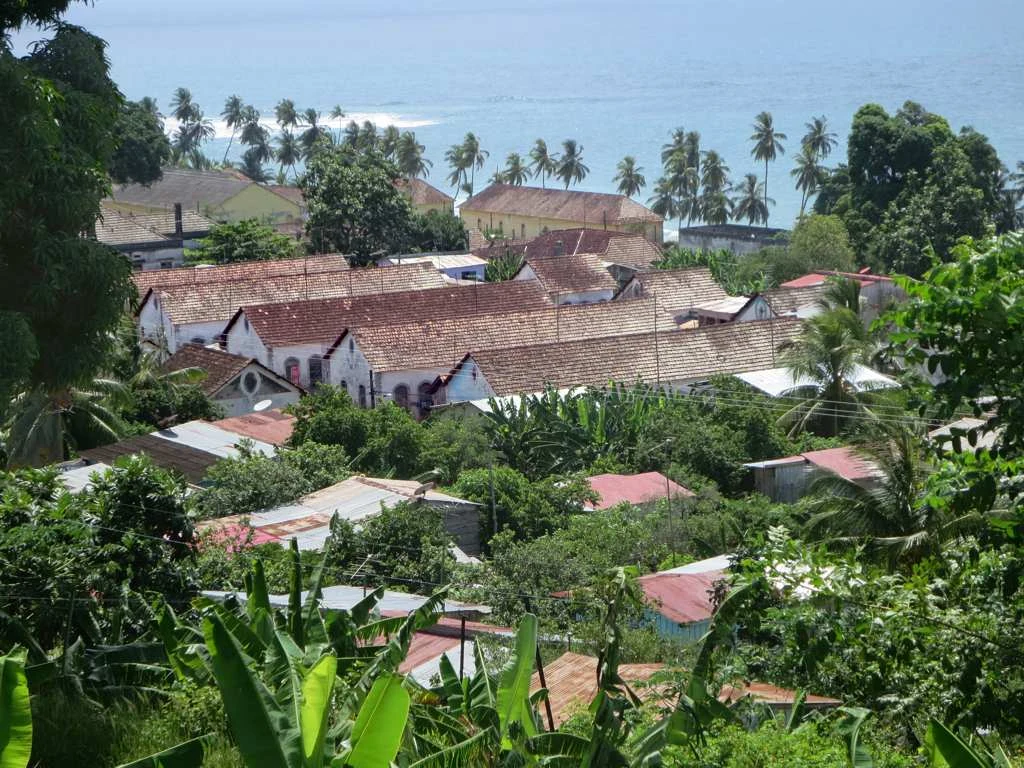
Água Izé was one of the archipelago’s major plantations and stands out for the relationship between production and the movement of goods: it had its own pier and an extensive railway network. That scale is the key to the visit. Look at the roça as a system: courtyards, sheds, drying areas, internal routes and connections to the coast explain its history better than an isolated view of the main house.
The spatial hierarchy also matters. In the roças, the concentration of housing, warehouses, sanitary facilities and administrative buildings was not accidental: it formed part of an organisation designed to control work and everyday life. Naming that structure prevents cocoa from being reduced to a tasting experience or heritage to the aesthetics of ruins.
São João: a roça with a contemporary cultural use
São João introduces a different question: what happens when a building inherited from the plantation changes function? National tourism information identifies the former hospital as a space for artist residencies and the warehouses as a gallery. That is a reason to visit with attention to present-day uses, not only to the architectural past.
Ask which spaces are open that day, whether there is a cultural programme and what the rules are for entering or taking photographs. In places connected to communities and ongoing activities, a camera does not replace consent. Buying a visit, meal or product only when it is offered directly and clearly is a more respectful way to contribute than seeking informal access.
The practical decision: two days in São Tomé or an extension to Príncipe
For these three roças, allow two days on São Tomé Island: one focused on Monte Café and another for combining Água Izé and São João only if transport, access and the pace of the visit make it feasible. Trying to rush between them reduces the route to journeys and façades.
If you want to understand the entire heritage property, add Príncipe: Sundy and Belo Monte are two of its six components. This requires arranging an inter-island transfer and accepting that flight schedules may change. If you cannot spare the time, it is better to recognise that you will experience a substantial part of the property, not the whole of it.
São Tomé Airport provides information about taxis, vehicle hire and accommodation. For this route, confirm return transport in advance, especially if you plan to visit more than one roça on the same day.
When this route fits best
The heritage route can be taken year-round, but conditions change if you combine it with walks inland. The national tourism office identifies June to September as the driest period and the most favourable for trails; between March and May, and in October and November, expect a wetter landscape and waterfalls with a greater flow. Do not treat this climate guidance as a guarantee: check road conditions, access and local activities just before travelling.
The value of these visits lies in accepting their contrasts: internationally recognised heritage, buildings in varying states of conservation, productive landscapes and memories that do not belong to the visitor. Make time to listen, ask before interpreting and avoid treating the roças as abandoned scenery.
References to check before travelling
UNESCO, the entry for The Roças of São Tomé and Príncipe: colonial agricultural system and forced migration, inscribed in 2026.
ICOMOS, the 2026 evaluation of the heritage nomination for the roças of São Tomé and Príncipe.
São Tomé and Príncipe Tourism Directorate, sections on historic plantations, museums, arrival in the country and the best time to travel.
Check with these sources and with local operators for the Coffee Museum’s opening times, visit availability, entry and photography conditions, road access, taxi or car-hire options, and flights between São Tomé and Príncipe. These operational details may change.
References consulted during editorial review. Times, requirements and advisories may change: always confirm with the official source.
- https://whc.unesco.org/en/list/1750/whc.unesco.org
- https://whc.unesco.org/en/tentativelists/6644/whc.unesco.org
- https://www.principecollection.com/en/unesco-world-heritagewww.principecollection.com
- https://www.principecollection.com/pt/patrimonio-mundial-unescowww.principecollection.com
- https://whc.unesco.org/document/226090whc.unesco.org
- https://www.unesco.org/en/mab/ilha-de-sao-tome?hub=66369www.unesco.org
- https://www.thechocolateislands.com/sao-tome-rocaswww.thechocolateislands.com
- https://turismo.gov.st/enturismo.gov.st
- Santo Tomé y PríncipeWikidata · CC0 1.0 · Wikidata · Q1039
- São Tomé and PríncipeWorld Countries — mledoze · ODbL 1.0 · World countries dataset by mledoze and contributors · ODbL 1.0
- Sao Tome and PrincipeWorld Bank Open Data · CC BY 4.0 · World Bank
- Santo Tomé y PríncipeCrossref · Metadatos públicos; derechos específicos por campo cuando correspondan · Crossref
- Santo Tomé y PríncipeCrossref · Metadatos públicos; derechos específicos por campo cuando correspondan · Crossref
- Santo Tomé y PríncipeCrossref · Metadatos públicos; derechos específicos por campo cuando correspondan · Crossref
- Santo Tomé y PríncipeCrossref · Metadatos públicos; derechos específicos por campo cuando correspondan · Crossref
- Santo Tomé y PríncipeCrossref · Metadatos públicos; derechos específicos por campo cuando correspondan · Crossref
- Santo Tomé y PríncipeCrossref · Metadatos públicos; derechos específicos por campo cuando correspondan · Crossref
- Santo Tomé y PríncipeCrossref · Metadatos públicos; derechos específicos por campo cuando correspondan · Crossref
- Santo Tomé y PríncipeCrossref · Metadatos públicos; derechos específicos por campo cuando correspondan · Crossref