Azerbaijan · heritage and landscape
Gobustan: Petroglyphs and Mud Volcanoes on a Day Trip from Baku
A visit to Gobustan works best when you separate two experiences: taking time to read the petroglyphs and then deciding whether to add the mud volcanoes.
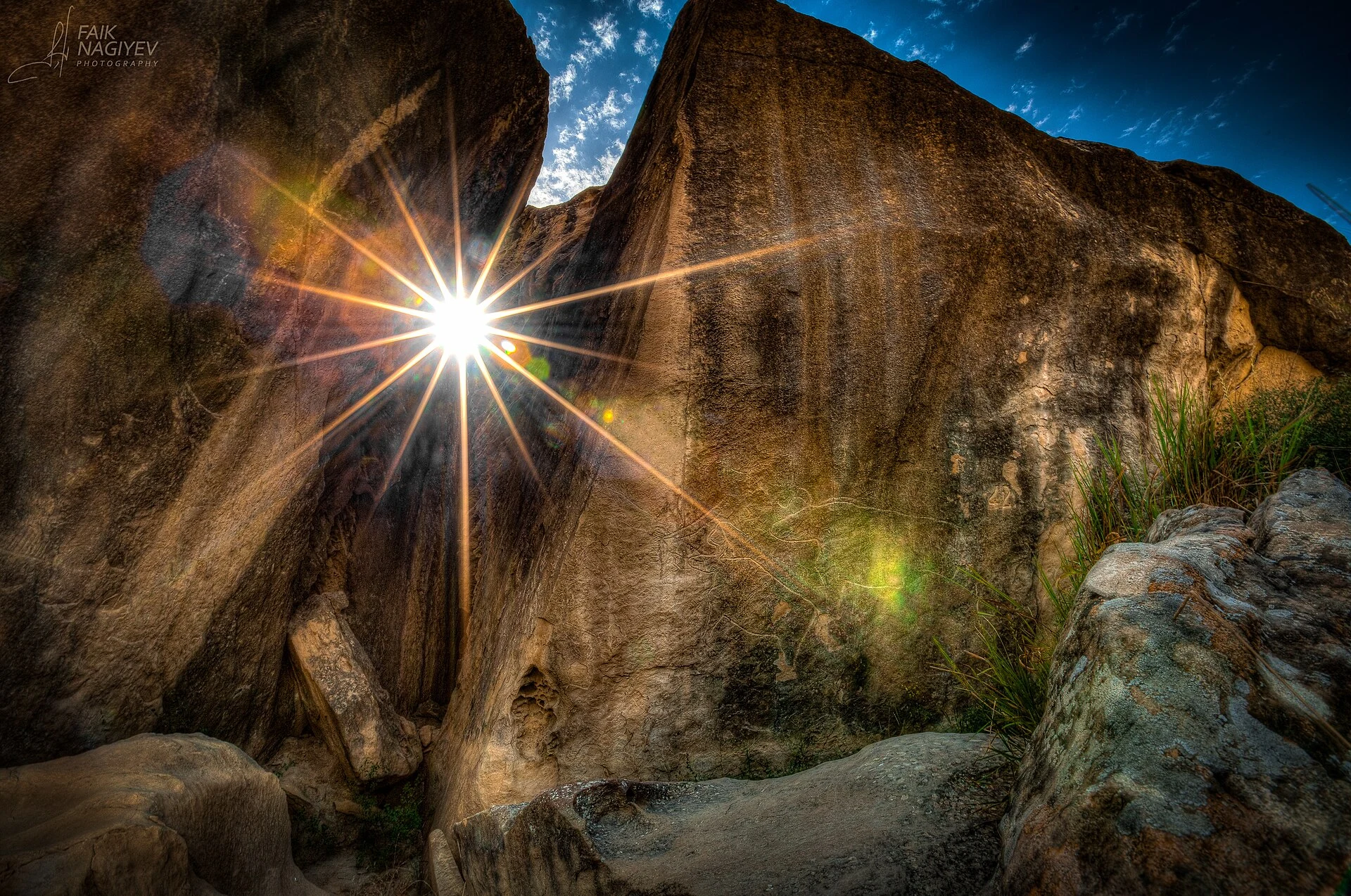
Gobustan is not an outing for collecting two quick stops from Baku. Its appeal lies in contrasting a landscape of engraved rock with one shaped by geological activity: first, the panels, shelters and traces of human occupation on the plateau; then, if time and transport allow, the mud volcanoes. Understanding that these are distinct places—with their own pace, access arrangements and rules—helps you plan a more attentive and less hurried visit.
Start with the carvings, not the panoramic photo
The Gobustan Rock Art Cultural Landscape contains more than 6,000 rock engravings, as well as caves, settlements and burial sites linked to a long history of human occupation. Images of people, animals, boats, hunting and fishing are not an isolated backdrop: they invite you to consider how the climate, vegetation and relationship with the Caspian changed over thousands of years.
Give Böyükdaş priority and walk among the panels slowly. Before heading into the open area, spend time in the site’s interpretive space: arriving with some context helps you avoid mistaking recent incisions, cracks or natural stains for petroglyphs. Look for scenes of boats, human figures and animals, and observe both the size and position of each panel; the landscape is part of the reading.
Do not touch, trace or highlight the lines to photograph them. The visitor’s best contribution is simple: stay on the designated paths, keep your distance from the rock and accept that some images are easier to make out in sidelight than in a front-facing photograph.
The Roman inscription and the resonant stone change the scale
Two features prevent Gobustan from being reduced to a single period. On the one hand, a Latin inscription attributed to a unit of the Roman army shows that the site remained connected to later movements and presences after prehistory. On the other, the qaval daş, a stone that produces a percussive sound when struck, links the surrounding geology with musical practices and Azerbaijani cultural memory.
Both should be approached with precision and distance. The inscription does not turn the whole site into a Roman ruin, nor is the resonant stone an invitation to improvise a concert. Ask staff which features may be viewed up close and which have restrictions on use. This adds context without forcing a single interpretation onto a place whose chronology extends from prehistory to the medieval period.
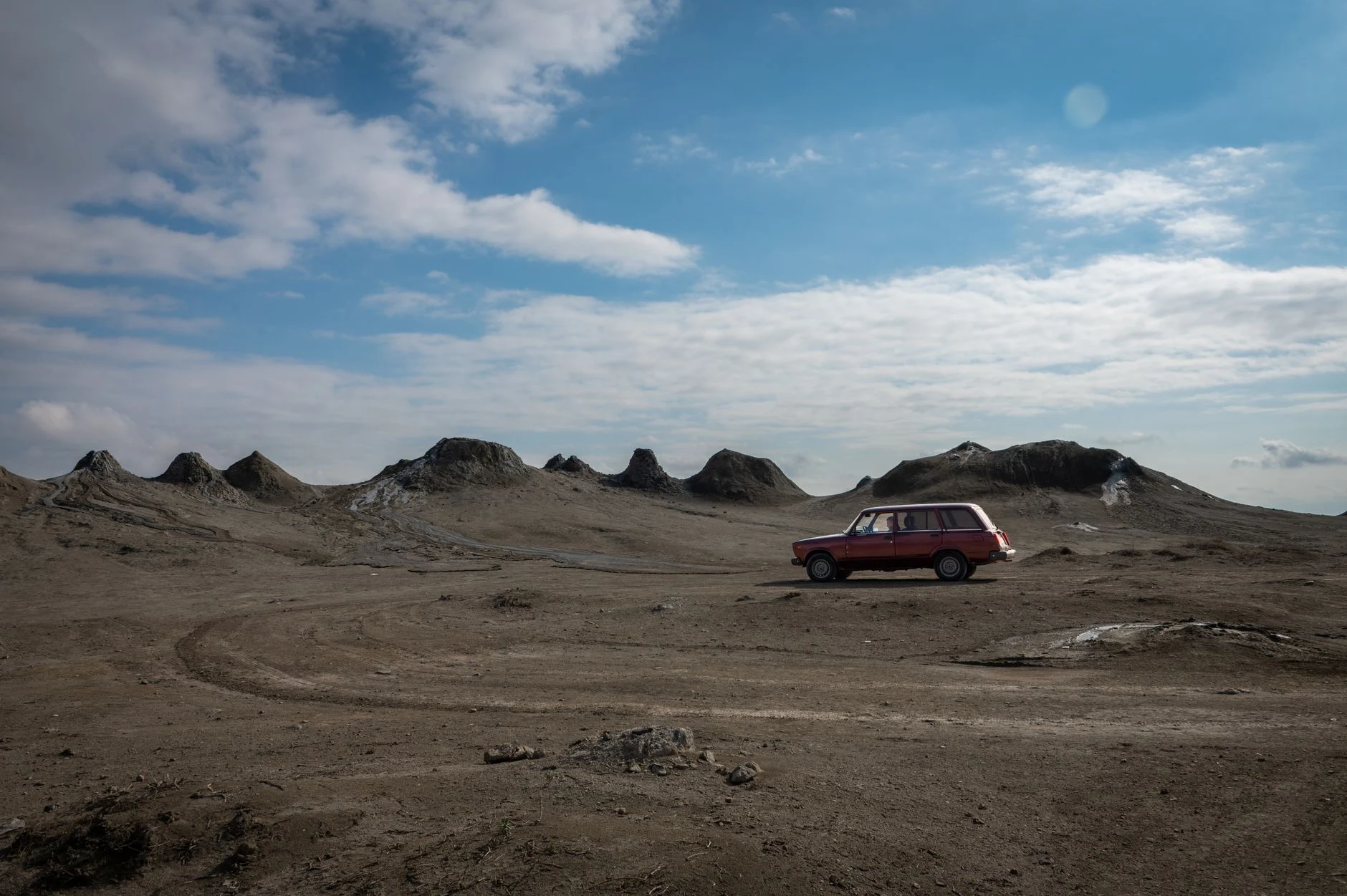
The mud volcanoes are a second destination, not an automatic add-on
The nearby mud volcanoes belong to a different landscape register. They expel mud, gases, water and fragments of rock; their existence is linked to deep geological processes and areas containing hydrocarbons. Azerbaijan is home to a notable concentration of these phenomena, and the Mud Volcanoes Tourism Complex offers a more structured way to approach them.
The practical choice is to treat the two visits separately. If you have only a few hours, stay in Gobustan and allow time to understand the rock art. Add the volcanoes if you have private or hired transport, enough time for the journeys and the desire to spend a day outdoors amid two very different landscapes. Do not approach craters, cracks or emissions outside the designated areas, and avoid turning the mud into a bodily souvenir: this is a geological environment, not a spa.
Opening hours, access conditions and the complex’s safety rules may change. Confirm them on the same day or before setting out using its official information.
Plan the journey before leaving Baku
Gobustan is about 65 kilometres from Baku, but distance alone does not describe the day. The archaeological site and the volcanoes are not part of one continuous urban visit: there are stretches of road, waiting times and considerable exposure to sun and wind. To link them reliably, a car with a driver, a taxi arranged by the hour or an organised tour will usually simplify the logistics; if you choose public transport to get closer, do not assume it will solve the final stretch between stops and sites.
Agree in advance which places the journey includes, how long the driver will wait and the exact pick-up point. Bring water, sun protection, a windproof layer and closed shoes with good grip. If you travel with reduced mobility, a pushchair or any support needs, ask the site beforehand for a specific description of the available route, surfaces and resting points: because the site is outdoors, planning with direct information is preferable.
Before you go, check opening hours, admission, payment methods, works or temporary closures. These are operational details and therefore should not be assumed to be permanent.
A day with two possible endings
For a first visit, spend the morning at the Gobustan site: interpretation, the main panels and time to look without rushing. Then choose one of two options. The first is to return to Baku after the archaeological site, a sensible choice for anyone who prefers heritage, wants to avoid stringing journeys together or would like to keep the afternoon for the city. The second is to continue to the mud volcanoes and accept a longer day that depends on having a vehicle.
The trade-off is clear: the shorter itinerary offers better concentration; the combined one provides landscape contrast but may leave less time to observe the carvings. There is no obligation to do both. Gobustan stands on its own when visited as an archaeological landscape alive in the stone, rather than as a quick stop on the way to another attraction.
Sources to check before setting out
- State Service for the Protection, Development and Restoration of Cultural Heritage of Azerbaijan: listing for the Historical-Artistic National Museum-Reserve of Qobustan. Check opening hours, access, routes and visiting conditions.
- UNESCO World Heritage Centre: dossier on the Gobustan Rock Art Cultural Landscape. Use it to place the three inscribed sectors and understand the site’s archaeological value.
- Mud Volcanoes Tourism Complex: official information on arrival, visiting rules, safety and opening hours. Confirm these details just before travelling.
- Azerbaijan Tourism Board: travel context on Gobustan, its petroglyphs, the Roman inscription and the qaval daş.
References consulted during editorial review. Times, requirements and advisories may change: always confirm with the official source.
- https://whc.unesco.org/en/list/1076whc.unesco.org
- https://whc.unesco.org/en/list/1076/maps/whc.unesco.org
- https://whc.unesco.org/en/statesparties/az/whc.unesco.org
- https://whc.unesco.org/en/list/1076/gallery/whc.unesco.org
- https://whc.unesco.org/en/culturallandscapewhc.unesco.org
- https://whc.unesco.org/document/5301whc.unesco.org
- https://whc.unesco.org/en/documents/121880whc.unesco.org
- https://whc.unesco.org/en/newproperties/meeting%3D31COM%26mode%3Dlist%26inscribed%3D0whc.unesco.org
- AzerbaiyánWikidata · CC0 1.0 · Wikidata · Q227
- AzerbaijanWorld Countries — mledoze · ODbL 1.0 · World countries dataset by mledoze and contributors · ODbL 1.0
- AzerbaijanWorld Bank Open Data · CC BY 4.0 · World Bank
- AzerbaijanDBpedia · CC BY-SA 3.0 · DBpedia