Malawi · Dedza · living heritage
Planning a Visit to Chongoni’s Rock Art with a Local Guide
At Chongoni, the best plan is not to collect rock shelters. It is to choose a feasible visit, go with a guide and accept that a ceremonial landscape is not always available to visitors.
Conditions described in the guide: confirm current requirements and access with the official source before travelling.
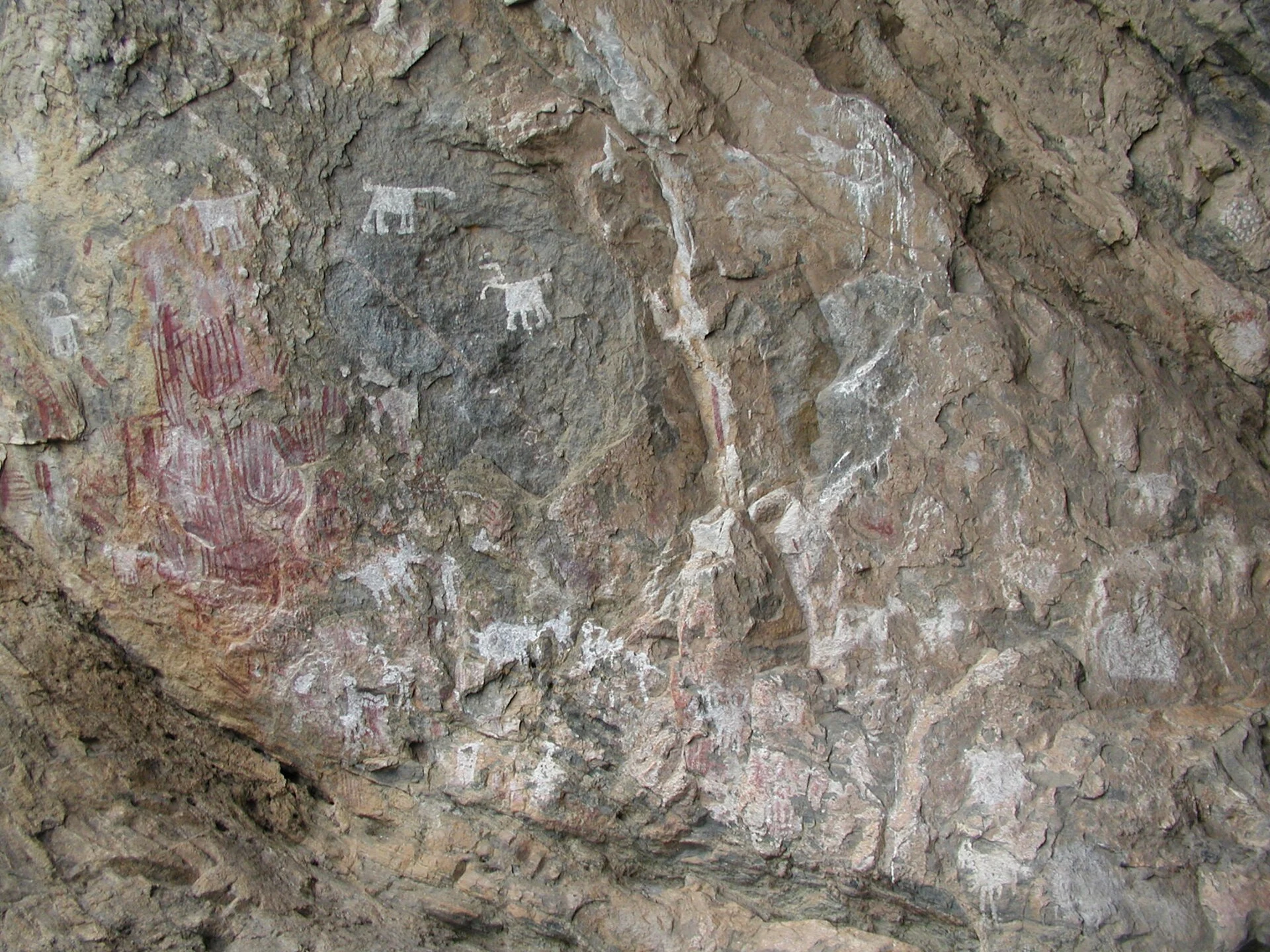
A few kilometres from Dedza, Chongoni brings together 127 rock shelters with rock art among granite hills and woodland. But it is not an open-air museum with a single route: the paintings belong to BaTwa/Akafula and Chewa traditions, and several sites retain active ritual connections. The practical decision is a modest one: choose a single shelter according to your time, access needs and mobility, and let cultural availability shape the plan.
First, understand what you are visiting: a landscape, not a collection of “caves”
Chongoni is not defined solely by the age of some of its images. UNESCO recognises it for its concentration of rock art, the continuity of Chewa practices, and the relationship between the paintings, initiation rites, rain, funerals and Nyau society. Some images are particularly associated with women’s practices; others relate to hunter-gatherer groups and later farming communities. It is therefore best not to ask for a quick interpretation or treat ceremonial symbols as simple photo backdrops.
The scale of the complex also matters: 127 sites do not equal 127 possible visits. Malawi’s official cultural information identifies Chentcherere, Namzeze and Mphunzi as the three shelters open to the public, while a local provider working with guides trained by the government department currently advertises trips to Mphunzi and Namzeze. Treat this difference as a practical warning: do not build your day around a particular shelter without confirming it first.
Choose Mphunzi if you want a more contained visit
Mphunzi is the sensible option if Chongoni is part of a journey between Lilongwe and the south of the country, if you have only a short half-day, or if you prefer to spend less time on tracks. The excursion currently advertised from Dedza indicates around 30 minutes by vehicle on roads considered reasonable, arrival by car at the site, and a total duration of approximately two to three hours.
That does not make Mphunzi universally accessible: the terrain, entrance to the shelter, weather and assistance available can all vary. For a person with reduced mobility, the right question when booking is not “Can we get there by car?” but “Can I get down, approach the panel and return without steps, uneven rock or unaided walking?” Check the answer with the person who will guide you before setting out.
Choose Namzeze if you have time for the journey and want to read two traditions together
Namzeze rewards visitors who accept that access is part of the experience. The same local operator says that the distance from Dedza is similar to Mphunzi’s, but that the condition of the track can extend the vehicle journey to as much as an hour; after that, there is a 15- to 30-minute walk up a slope described as steep. Allow about four hours for the outing, rather than treating it as a quick stop. These are operational details and should be checked when booking, especially after rain.
The interpretive advantage is clear: Namzeze preserves visible examples of red and white paintings, two traditions that help avoid reading Chongoni as the art of a single people or period. The British Museum describes it as one of the emblematic, visitable sites, with an isolated shelter overlooking the valley. Choose Namzeze if the walk is comfortable for you and you are interested in the landscape’s context as much as the panel itself.
Do not turn Chentcherere into a fixed promise
Chentcherere may appear in official materials as one of the three places open to the public, but the local offer currently visible is concentrated on Mphunzi and Namzeze. This does not necessarily mean that Chentcherere is closed; it means that the public information is not consistent enough to treat it as a guaranteed booking. Confirm the available site, meeting point, vehicle required, actual duration and whether an authorised guide will be present in advance. The government tourism portal maintains a Chongoni listing with an option to request a visit, making it a reasonable way to cross-check local arrangements.
If the visit cannot be confirmed, do not force your way in along tracks or unmarked paths. UNESCO warns that managing access has been a challenge for the site’s integrity; arriving without coordination may be disrespectful to ceremonies, local custodians and the conservation of the panels.
A responsible way to be there
Book in advance: the local provider organising excursions from Dedza requests at least 48 hours’ notice, although that period may vary. Bring water, sun protection and shoes with stable soles—not because Chongoni is a major hike, but because time is spent on rural roads and uneven surfaces. Before setting out, check track conditions, weather, cost, payment method and any access restrictions with the official channel or guide.
At the shelter, let the guide indicate where to wait and where to observe from. Do not touch the rock or lean objects against the walls; do not move ahead of the explanation to explore side areas; and ask before photographing people, rituals or any community practice. If a ceremony or local instruction limits access, changing your plan is part of visiting Chongoni properly, not a failure of the trip.
References consulted during editorial review. Times, requirements and advisories may change: always confirm with the official source.
- https://www.malawitourism.com/regions/central-malawi/chongoni-rock-art/www.malawitourism.com
- https://visitmalawi.mw/cultural-places-to-visit/visitmalawi.mw
- https://www.malawitourism.com/experiences/culture/www.malawitourism.com
- https://mtc.mw/best-places-to-visit/mtc.mw
- https://www.pa.mw/tourism/booking.php?webcode=qrYrvfTEwww.pa.mw
- https://www.pa.mw/tourism/facility.php?webcode=YyNaKzUzwww.pa.mw
- https://www.malawitourism.com/regions/south-malawi/lake-malawi-national-park/www.malawitourism.com
- https://tourism.malawian.com/destinations/cape-maclear-lake-malawi-national-park/tourism.malawian.com
- MalawiWorld Countries — mledoze · ODbL 1.0 · World countries dataset by mledoze and contributors · ODbL 1.0
- MalawiWorld Bank Open Data · CC BY 4.0 · World Bank
- MalawiDBpedia · CC BY-SA 3.0 · DBpedia