Poland · Podlachia
Białowieża for understanding old-growth forest and bison
In Białowieża, the key decision is not finding an animal, but choosing which kind of forest you want to experience and under what rules.
Conditions described in the guide: confirm current requirements and access with the official source before travelling.
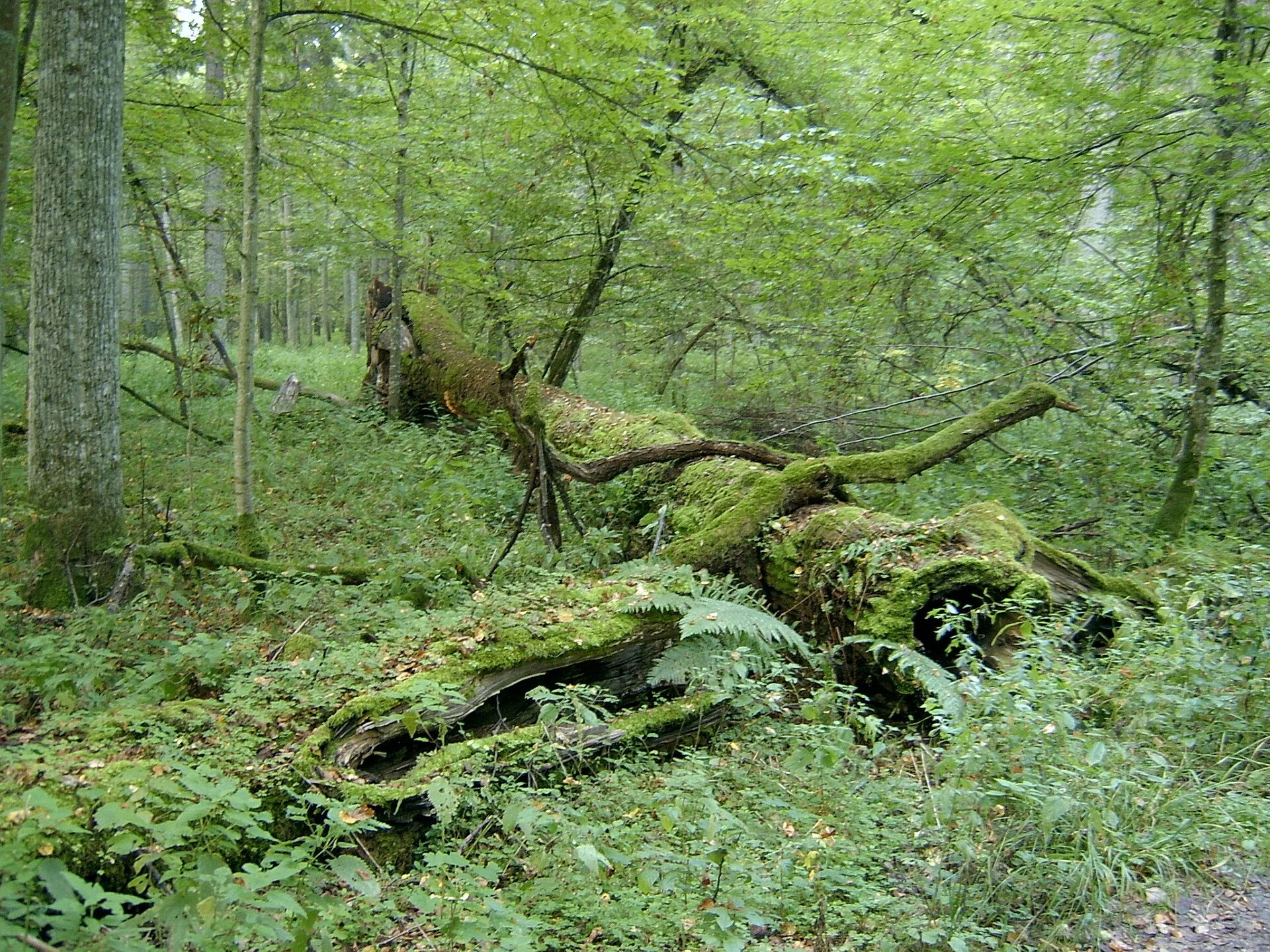
Białowieża rewards travellers who arrive with a clear idea: old-growth forest is not a backdrop or a single attraction, and the European bison should not become a wildlife-sighting promise. On the Polish side, Białowieża National Park allows visitors to combine experiences at different scales: a strict protection area requiring a guide, more independent trails, a museum providing context and a bison exhibition reserve. Separating these experiences avoids both a rushed itinerary and the frustration of waiting for wildlife where it is not meant to be seen.
The practical base is the village of Białowieża, beside Poland’s eastern border. Treat it as a destination for at least one night: public transport reaches the village, but connections are less flexible than in major cities, and entry times shape the day.
Listen to Poland
A documented soundscape that complements this guide to Poland. In Białowieża, the key decision is not finding an animal, but choosing which kind of forest you want to experience and under what rules.
Audio by Askap64 · Wikimedia Commons · CC BY-SA 4.0 · Duration: 01:52
Start by deciding what “seeing Białowieża” means
The first useful distinction is between three areas. The Orłówka strict protection area preserves forest processes involving old trees, decaying wood and defined routes; it is visited with an authorised park guide. It suits visitors who want to understand why this landscape has exceptional protection, not those looking for an improvised walk.
The Hwoźna unit offers a different experience: marked trails that individuals or small groups can explore independently. The appeal here is walking at your own pace and observing the structure of the forest, without mistaking this access for permission to leave the paths. The Palace Park, beside the museum and administration offices, is a shorter and more accessible stop within the village.
Finally, the Bison Exhibition Reserve offers the chance to observe animals in a managed enclosure. It is an educational and predictable visit, but it is not the same as encountering wildlife in the wild. If seeing a wild bison is your only priority, Białowieża offers no guarantees: the responsible choice is to enjoy the forest even if none appears.
A full day needs a museum, a guide and a trail
For a first visit, combine three different rhythms rather than accumulating kilometres. Set aside the morning for the Museum of Nature and Forest, whose exhibition helps explain the relationships between trees, wetlands, fungi, insects and large mammals. Seeing it before the guided walk changes how you read the landscape: fallen wood no longer looks like neglect, but becomes habitat.
Afterwards, take the guided visit in Orłówka. The park sets the routes, group sizes and access conditions; there is a short route with sections of boardwalk open to all visitors, as well as longer routes for specialist groups requiring additional authorisation. Wear closed shoes and clothing suitable for insects and rain, and expect the route to be adapted to conservation needs rather than to the desire to approach an animal.
Leave Hwoźna or the Palace Park for the afternoon. This arrangement provides time to spare for admissions, local transfers and changes caused by rain or wind. It also prevents a guided visit from becoming a race to fit in another trail on the same day.
The bison is an ecological clue, not a photographic target
Białowieża’s importance comes from a mosaic of deciduous and coniferous forests, wet meadows, waterways and natural processes that remain active on a large scale. The European bison is its emblem, but it shares the territory with many other forms of life, including species dependent on dead wood. The right way to read the place is therefore ecosystem-wide.
Stay on authorised routes, do not use drones or sound lures, and avoid turning animal tracks into a chase. Park regulations prohibit leaving the paths, abandoning waste, lighting fires and disturbing the silence; access with dogs is also restricted in certain areas. These rules are not bureaucratic extras: they protect an environment in which human observation should occupy very little space.
The World Heritage property covers territory in Poland and Belarus, but the border situation and the management of both sides should not be treated as an ordinary cross-border excursion. Plan your stay entirely on the Polish side and check the current official notices before travelling to areas near the border.
Arriving without a car is possible, with one night to spare
Białowieża can be visited without a private vehicle from Warsaw: a common combination involves a train to Białystok or Hajnówka followed by a bus to Białowieża. The park also lists a direct bus connection from Warsaw on certain services. However, frequencies and changes make a same-day return trip a fragile option, especially if you want to visit the museum or join a guided tour.
The most sensible choice is to sleep in Białowieża, arrive the day before and start early. You can then explore the centre on foot and choose between the museum, the Palace Park and an organised visit without depending on a return connection. The Bison Exhibition Reserve is approximately three kilometres from the village, beside the road to Hajnówka; arrange this section in advance if you are not driving.
Train and bus timetables, seasonal routes and any bicycle services are changeable information. Confirm them through the transport planner recommended by the park and in regional notices, rather than relying on old itineraries or social-media screenshots.
Accessibility and expectations: two necessary conversations
The park reports architectural solutions such as ramps and lifts in several buildings, and identifies facilities for wheelchair users at the museum, the Palace Park and the Bison Exhibition Reserve. The strict protection area, by contrast, has limited facilities: boardwalks cover part of the short route, but the terrain, duration and environmental conditions require individual confirmation.
Before booking, tell the park or tour operator what you need: mobility support, assistance, language, walking pace and opportunities to rest. Do not assume that an accessible facility solves the entire route between accommodation, the bus stop and the entrance. This advance enquiry helps you choose a realistic programme and prevents the guided visit from becoming the point of exclusion.
It is also worth discussing expectations within the group. Someone looking for wildlife photography, someone wanting a quiet walk and someone needing scientific interpretation may not need the same itinerary. In Białowieża, the best decision is often to prioritise one main experience and leave room for the forest’s unpredictability.
What to check before setting out
Prices, opening hours, capacity limits, tour languages, weather conditions, temporary trail closures and transport connections may change. Verify this information just before travelling using the following official sources:
- Białowieża National Park: visitor rules, access to Orłówka and Hwoźna, museum, Bison Exhibition Reserve, tickets, accessibility and directions.
- Białowieża National Park ticket portal: tourist notices and operational availability.
- Polish State Forests, Białowieża Forest District: notices about roads, trails and temporary restrictions outside the national park.
- UNESCO World Heritage Centre: boundaries and conservation of the transboundary Białowieża Forest property.
- The national transport planner indicated by the park: current train and bus timetables.
Also consult official notices concerning Poland’s eastern border if your route passes through the Białowieża area.
References consulted during editorial review. Times, requirements and advisories may change: always confirm with the official source.
- https://whc.unesco.org/en/list/33whc.unesco.org
- https://whc.unesco.org/en/list/33/documentswhc.unesco.org
- https://whc.unesco.org/en/list/33/maps/whc.unesco.org
- https://whc.unesco.org/document/166337whc.unesco.org
- https://bpn.com.pl/index.php?Itemid=280&id=638&lang=en&option=com_content&task=viewbpn.com.pl
- https://whc.unesco.org/en/statesparties/plwhc.unesco.org
- https://bpn.com.pl/index.php?Itemid=181&id=111&lang=en&option=com_content&task=viewbpn.com.pl
- https://whc.unesco.org/en/decisions/8743whc.unesco.org
- PoloniaWikidata · CC0 1.0 · Wikidata · Q36
- PoloniaWikidata · CC0 1.0 · Wikidata · Q19731014
- PoloniaWikidata · CC0 1.0 · Wikidata · Q50749595
- PoloniaWikidata · CC0 1.0 · Wikidata · Q7225936
- PolòniaWikidata · CC0 1.0 · Wikidata · Q2688944
- PoloniaWikidata · CC0 1.0 · Wikidata · Q7208888
- PolandWorld Countries — mledoze · ODbL 1.0 · World countries dataset by mledoze and contributors · ODbL 1.0
- PolandWorld Bank Open Data · CC BY 4.0 · World Bank
- Polonia de Ribas, mulata y dueña de esclavos: una historia alternativa. Xalapa, siglo XVIICrossref · Metadatos públicos; derechos específicos por campo cuando correspondan · Crossref