Saint Vincent and the Grenadines · Bequia
Bequia Through Its Boats, Models and Maritime Memory
A short route from Port Elizabeth for understanding the island through its bay, boatbuilders and a maritime history that calls for attention and personal judgment.
Conditions described in the guide: confirm current requirements and access with the official source before travelling.
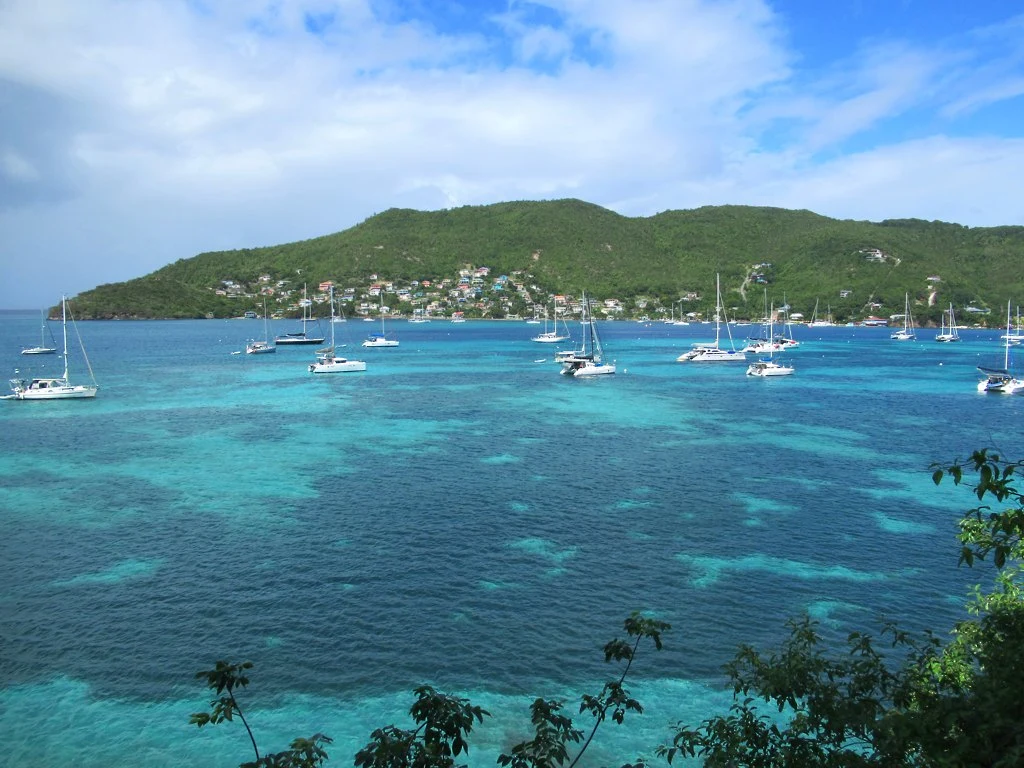
Bequia rewards visitors who do more than link one beach to the next. Around Admiralty Bay, the walk connects the harbour, model-making workshops and an accessible stretch of coast; farther inland, the maritime museum places that scene within a history of sailing, boatbuilding and whaling. The key is to distinguish short distances from routes that are genuinely walkable, and to leave room to listen, observe the craft and decide which aspects of that memory you wish to engage with.
A logical base: Port Elizabeth and the shore of Admiralty Bay
Port Elizabeth is the most practical arrival point when coming by ferry from Kingstown. From the jetty, Front Street brings together everyday services, shops and several makers of sailing-ship models; it is a good place to begin before the island’s story becomes more scattered.
Set aside the first part of the morning for an unhurried walk along the waterfront, and ask workshop owners about the piece’s provenance, the wood used and how long it took to make. The models are not merely souvenirs: they continue a tradition connected with fishing boats, schooners and local regattas. If you buy one, prioritise a piece attributed to its maker and do not assume that every miniature on display was made in a Bequia workshop.
Ferry timetables, possible changes caused by sea conditions or public holidays, and the availability of transport on the island should be confirmed on the same day with the organisations listed at the end.
The Belmont Walkway: a nearby coast, but not entirely flat
From Port Elizabeth, the Belmont Walkway follows the southern shore of Admiralty Bay. It is the easiest part of a day on foot, linking accommodation, small businesses and the start of the coastal trail towards Princess Margaret Beach. The route turns the bay into an everyday portrait of Bequia: anchored boats, arrivals by sea and local-scale commercial activity.
To continue towards Princess Margaret Beach, you need to allow for a steep path or trail. It is not suitable for people with very limited mobility, bulky luggage or unstable sandals. A sensible alternative is to travel there overland and return by water taxi if sea conditions and the service allow it; confirm that option at the jetty before setting out.
There is no need to turn this coastline into a beach-hopping race. Port Elizabeth, Belmont and Princess Margaret make a coherent half-day route; Lower Bay should be added only if the terrain, heat and your pace make it advisable.
From the harbour to the museum: understanding boatbuilding beyond the display case
The Bequia Maritime Museum in St. Hilaire provides the second half of the route. It is not on the immediate harbour promenade, so it is worth combining with a local taxi or a tour around the island, agreeing the price before setting off. There, attention can turn to the boats, tools, photographs and stories that explain why boatbuilding became such a decisive activity in Bequia.
The visit gains meaning when connected with what you saw in Port Elizabeth: the models are an artisanal continuation, not an isolated decorative invention. Local history includes inter-island sailing, fishing, trade and the construction of boats of different sizes. The museum therefore works best as context for the island rather than as a quick stop between swims.
Confirm the museum’s opening directly before travelling there: small institutions may have changeable hours, and it is unwise to organise the day around an unverified visit.
Whaling: a historical and contemporary reality that calls for an informed visit
Bequia’s maritime culture also includes humpback whaling. The International Whaling Commission classifies it as regulated aboriginal subsistence whaling for Saint Vincent and the Grenadines; the current limit for the 2026–2031 period sets a total maximum of 24 whales. This regulatory framework is not the same as a schedule of activity and does not mean that a catch can be expected during a particular stay.
For visitors, the useful choice is not to treat the subject as entertainment or to expect an event. The museum and historic boats make it possible to learn about the relationship between sailing, food, work and whaling without turning a living and controversial practice into an attraction. If the subject is difficult for you, you can focus your visit on boatbuilding, models and navigation; if you want to understand it better, read the International Whaling Commission’s documentation first and ask questions respectfully, without demanding personal explanations from people who work or live on the island.
A one- or two-day pace
With one night in Port Elizabeth, the first day can be devoted to arrival, Front Street and the Belmont Walkway. Treat the beach as a pause, not as a compulsory item on the route. On a second morning, arrange a taxi to the museum and, if you are interested, a short tour of the island’s communities and viewpoints with a local driver.
The trade-off is clear: staying near Admiralty Bay makes short journeys on foot easier and reduces dependence on taxis for eating out or walking, but it does not replace transport for visiting St. Hilaire, Friendship, Hamilton or other areas. Choosing a more outlying base offers a different relationship with the coast, at the cost of more day-to-day coordination.
Avoid collecting shells, coral or pieces of beach wood as souvenirs. The gesture most consistent with a visit focused on craft is to spend time choosing an identifiable handmade piece, use local services when you need transport and let the island set a less compressed pace.
Sources to check before travelling
- Saint Vincent and the Grenadines Tourism Authority — Bequia information and ferry timetables. Check departures, operational changes and connections before buying tickets or planning a same-day arrival.
- Bequia Tourism Association — information on Port Elizabeth, the Belmont Walkway, the trail to Princess Margaret Beach, the museum and island history. Use it to confirm local access and the museum’s opening.
- International Whaling Commission — the framework for aboriginal subsistence whaling and the current humpback-whale limit for Saint Vincent and the Grenadines between 2026 and 2031.
- Ministry of Tourism of Saint Vincent and the Grenadines — institutional information and public destination contacts.
References consulted during editorial review. Times, requirements and advisories may change: always confirm with the official source.
- https://www.bequiatourism.com/www.bequiatourism.com
- https://www.tobagocays.org/regulations-fees/www.tobagocays.org
- https://iwc.int/management-and-conservation/whaling/aboriginal/bequiaiwc.int
- https://ww.bequiatourism.com/history.htmww.bequiatourism.com
- https://bequia.travel/history-culture.htmlbequia.travel
- https://tourism.gov.vc/tourism/index.phptourism.gov.vc
- https://bequia.net/BequiaHeritageFoundation.pdfbequia.net
- https://www.bequiatourism.com/history.htmwww.bequiatourism.com
- Saint Vincent and the GrenadinesWorld Countries — mledoze · ODbL 1.0 · World countries dataset by mledoze and contributors · ODbL 1.0
- St. Vincent and the GrenadinesWorld Bank Open Data · CC BY 4.0 · World Bank