Botswana · northwestern Ngamiland
Tsodilo Hills: walking among rock art and sacred landscape
A visit to Tsodilo Hills is best enjoyed as a slow day out: choose a trail, arrange a local guide and understand that the paintings are part of a living landscape.
Conditions described in the guide: confirm current requirements and access with the official source before travelling.
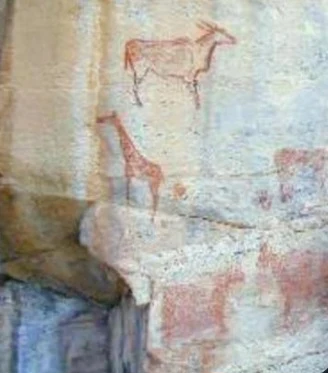
Tsodilo Hills is not a quick stop to tick off on an itinerary through northern Botswana. Its quartzite outcrops, rock paintings, caves and waterholes hold a long history of human occupation, while also retaining ongoing spiritual importance for San and Hambukushu communities. The useful question is not how many images you can see, but how much time you can give to listening to the place, walking through it carefully and accepting that rock art is fragile.
A destination for a full day, not a rushed detour
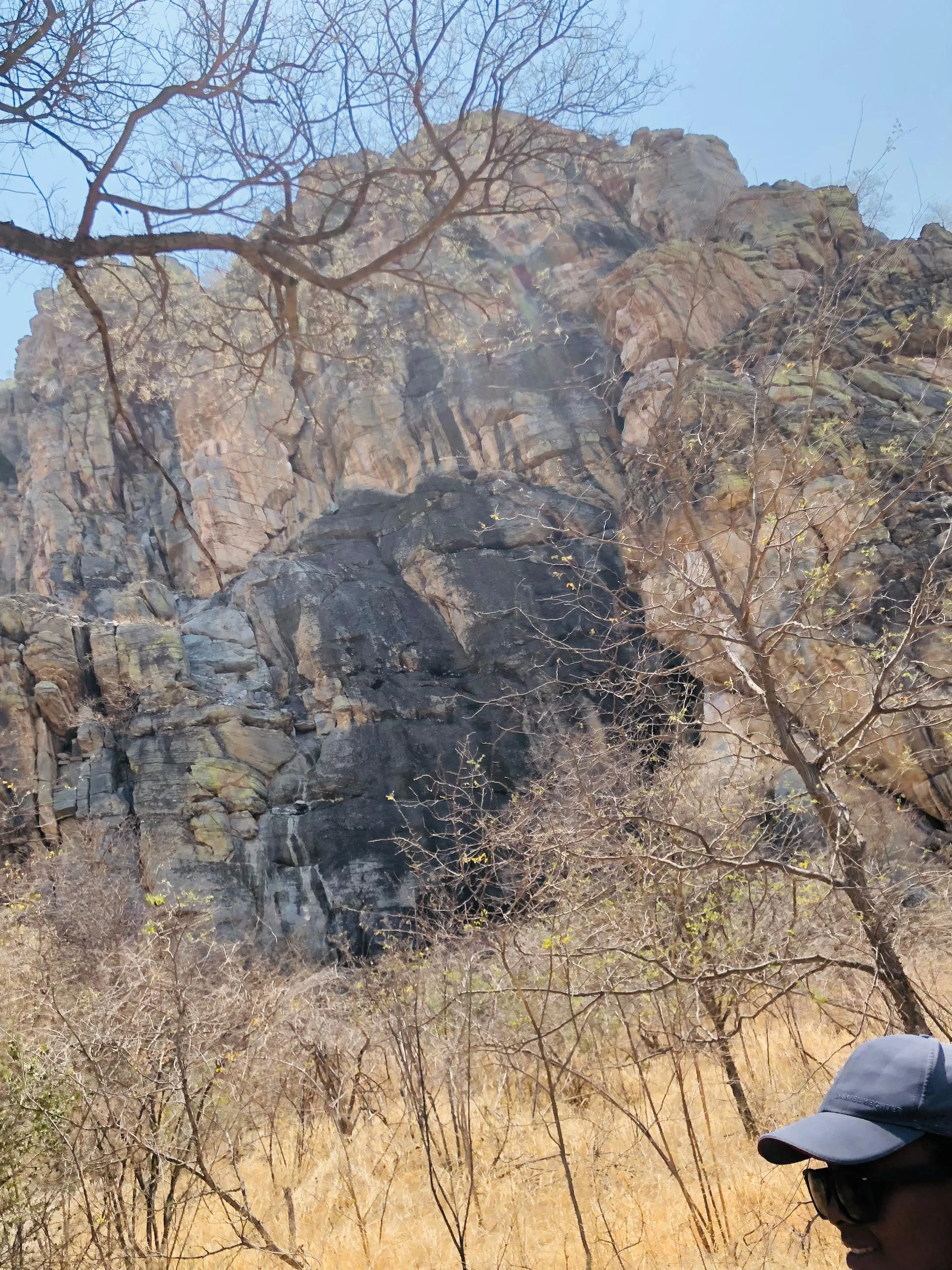
The visit centres on Male, Female and Child Hills, in a wide-open Kalahari landscape. Several marked routes are available, including the Rhino, Lion and Cliff Trails, combining walking with the observation of rock-art panels. If you have one day, choose a single main trail: trying to link them all usually turns the experience into a hurried search for famous motifs.
The Rhino Trail can be a first choice for anyone seeking a concentrated introduction to the paintings and the terrain; Lion and Cliff offer a broader connection between rock shelters, views and archaeology. Do not assume that trail conditions, trail access or camping availability will be unchanged: these details are sensitive to local operations and should be confirmed before setting out.
The usual practical approach is to organise the excursion from the Shakawe area or arrive with your own route already planned. Bring enough water, sun protection, closed shoes and plenty of time: the appeal lies not in urban infrastructure, but in walking and pausing.
The paintings do not belong to a single story
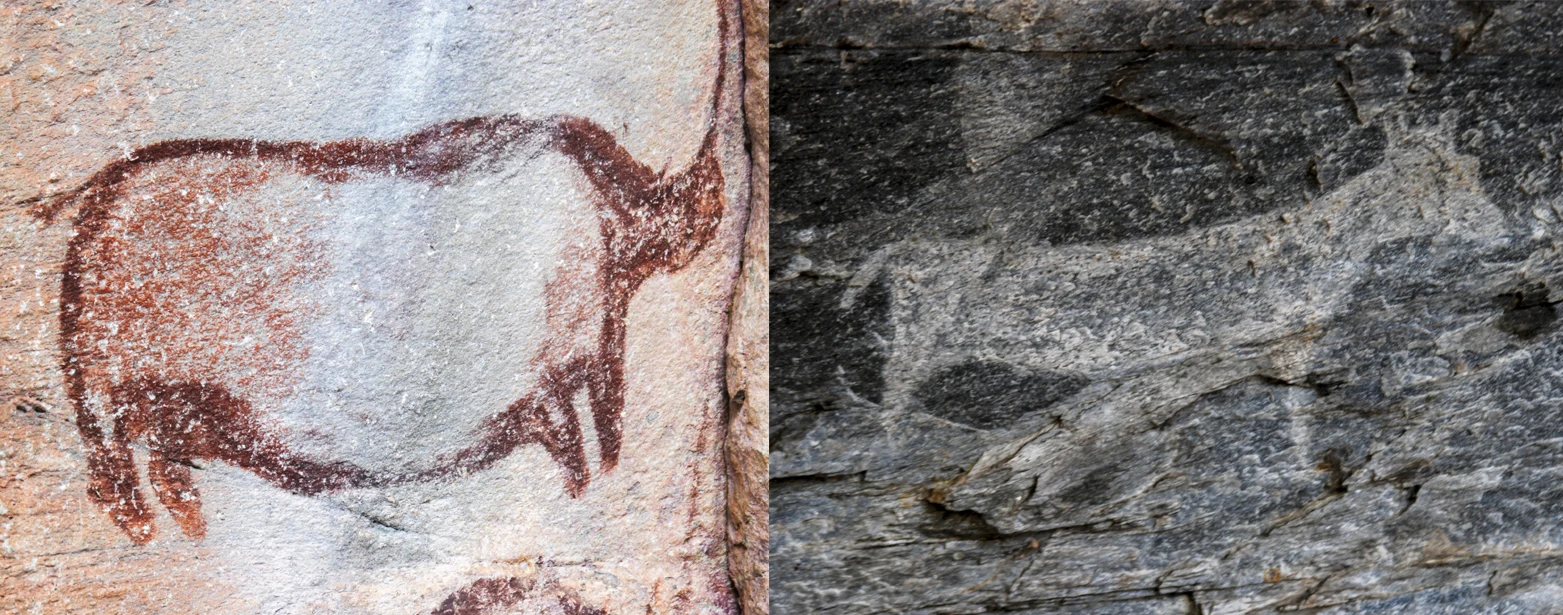
More than 4,500 paintings are preserved within a relatively small area, but they do not make up a uniform archive or a frozen scene from a single people. The collection reflects successive occupations and different techniques: fine images associated with the ancestors of San communities, alongside later paintings linked to pastoralists and farmers who lived in or travelled through the region.
This diversity changes the way you look. Animals, human figures and geometric signs should not automatically be read as illustrations of everyday life. Some panels relate to knowledge, exchanges and ritual practices whose meaning cannot be exhausted by a brief archaeological explanation. Ask for context before taking photographs; it is more valuable than accumulating close-ups.
The waterholes, cavities and hills themselves are part of the site’s meaning. For that reason, avoid descriptions that reduce Tsodilo to an “open-air gallery”: it is a living cultural landscape, not a museum without communities.
A local guide offers orientation—and a more respectful relationship
The Botswana tourism office indicates that guides from nearby San and Hambukushu communities can be arranged. Choosing this option helps identify panels that might otherwise go unnoticed and offers a situated reading of the hills. It also helps prevent a heritage visit from being mistaken for permission to enter, touch or freely interpret every rock shelter.
When booking, ask clearly which trail will be followed, how long it lasts, which language is offered and what rules apply to photography. If music, dance or another community activity is proposed, agree on the format and payment in advance: these practices are not an automatic add-on to an excursion. Do not pressure anyone for access to rituals, and do not turn a conversation about beliefs into a demand for a performance.
Conservation partly depends on simple behaviour: stay on the authorised route, do not touch pigments or rock, do not wet panels to improve a photograph and avoid leaning against painted walls. Sun, wind, water and human intervention already affect these vulnerable images.
Match your journey to the pace of the place
Tsodilo fits especially well into a trip that sets aside time for heritage, rather than focusing only on the wildlife of the Okavango Delta. It can be combined with a stay in the northwest, but it deserves its own planning because of the distances, transfers and walking time involved. If your itinerary leaves only a few uncertain hours between journeys, it is better to postpone the visit than to rush through it.
Anyone staying in the area should regard camping as a basic option, not accommodation with extensive services. Travellers who do not want to depend on a vehicle or feel uncomfortable on remote tracks should consider an organised excursion from a nearby base. In either case, confirm the current conditions for arrival, guiding and overnight stays directly.
Responsible travel here means accepting limits: some knowledge is not accessible to visitors, some panels may require greater distance and operational changes can alter the plan. That willingness is part of an attentive, low-impact visit.
References for preparing and checking your visit
- UNESCO World Heritage Centre, Tsodilo entry: inscription context, the property’s extent, the concentration of rock art, archaeological values and continuing religious significance.
- Botswana Tourism Organisation, Tsodilo Hills: trails mentioned, the possibility of community guides, the museum and camping options. Check here before travelling for access, services and actual availability.
- The Metropolitan Museum of Art, Tsodilo Hills, Botswana: specialists’ and a San guide’s perspectives on painting techniques, the plurality of communities connected to the site and conservation risks.
- Botswana Daily News, June 2025 community consultation: residents’ perspectives on memory, belonging, conservation and tourism; an additional reason to visit with attentiveness and without extractive expectations.
Entry requirements, fees, opening hours, track conditions, bookings, guide availability and camping conditions are subject to change and should be checked with the organisations above and the local administration before setting out.
References consulted during editorial review. Times, requirements and advisories may change: always confirm with the official source.
- https://whc.unesco.org/document/208817whc.unesco.org
- https://dailynews.gov.bw/news-detail/90623dailynews.gov.bw
- https://www.botswanaspeaks.gov.bw/media/COMMITTEE%20OF%20SUPPPLY%20SPEECHES/MET%20COMMITTEE%20OF%20SUPPLY%20-%20FINAL-%2006%20March%202026.pdfwww.botswanaspeaks.gov.bw
- https://dailynews.gov.bw/news-detail/42472dailynews.gov.bw
- https://dailynews.gov.bw/common_up/dailynews/dailynews_pdf/20-03-2026_07-22-15_1773984135_dailynews_pdf.pdfdailynews.gov.bw
- https://dailynews.gov.bw/news-detail/5517dailynews.gov.bw
- https://whc.unesco.org/fr/actualites/2230/whc.unesco.org
- https://dailynews.gov.bw/news-detail/86867dailynews.gov.bw
- BotswanaWikidata · CC0 1.0 · Wikidata · Q52345641
- BotswanaWorld Countries — mledoze · ODbL 1.0 · World countries dataset by mledoze and contributors · ODbL 1.0
- BotswanaWorld Bank Open Data · CC BY 4.0 · World Bank
- BotswanaDBpedia · CC BY-SA 3.0 · DBpedia