Alberta, Canada
Head-Smashed-In Buffalo Jump and the landscape of communal hunting
A visit to southern Alberta to understand a Niitsitapi/Blackfoot landscape, explore its viewpoints and plan a stop that depends on having a car.
Conditions described in the guide: confirm current requirements and access with the official source before travelling.
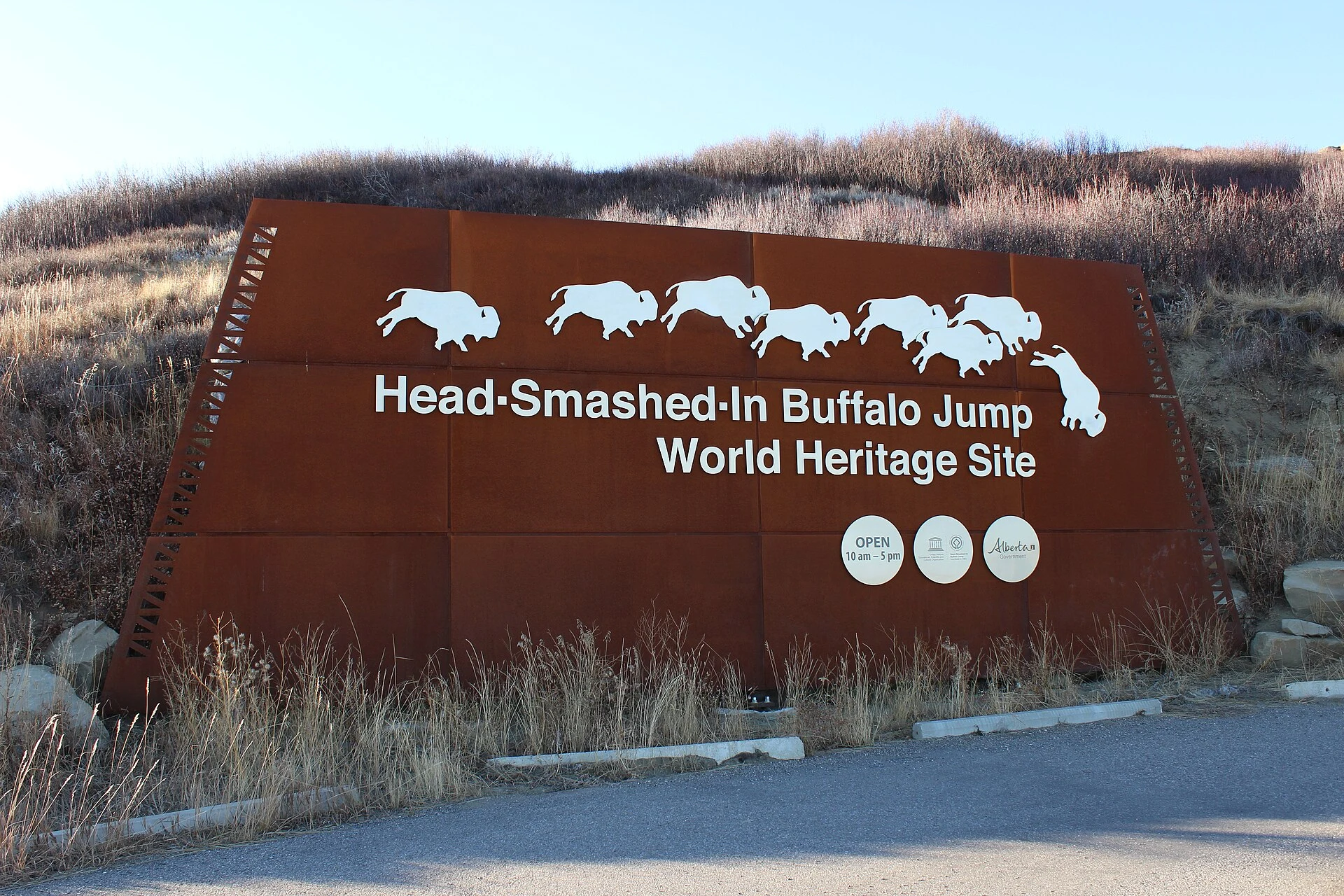
Head-Smashed-In Buffalo Jump, in the foothills of southern Alberta, is not simply an isolated cliff: it is an archaeological and cultural landscape where topography, bison-drive routes and collective labour formed a single system. The interpretive centre helps visitors grasp that scale without turning a Niitsitapi/Blackfoot tradition into a scene frozen in the past. The key practical decision is straightforward: arrive with plenty of time, by car, and ready to alternate between exhibitions, viewpoints and open landscape.
A cliff that only makes sense at landscape scale
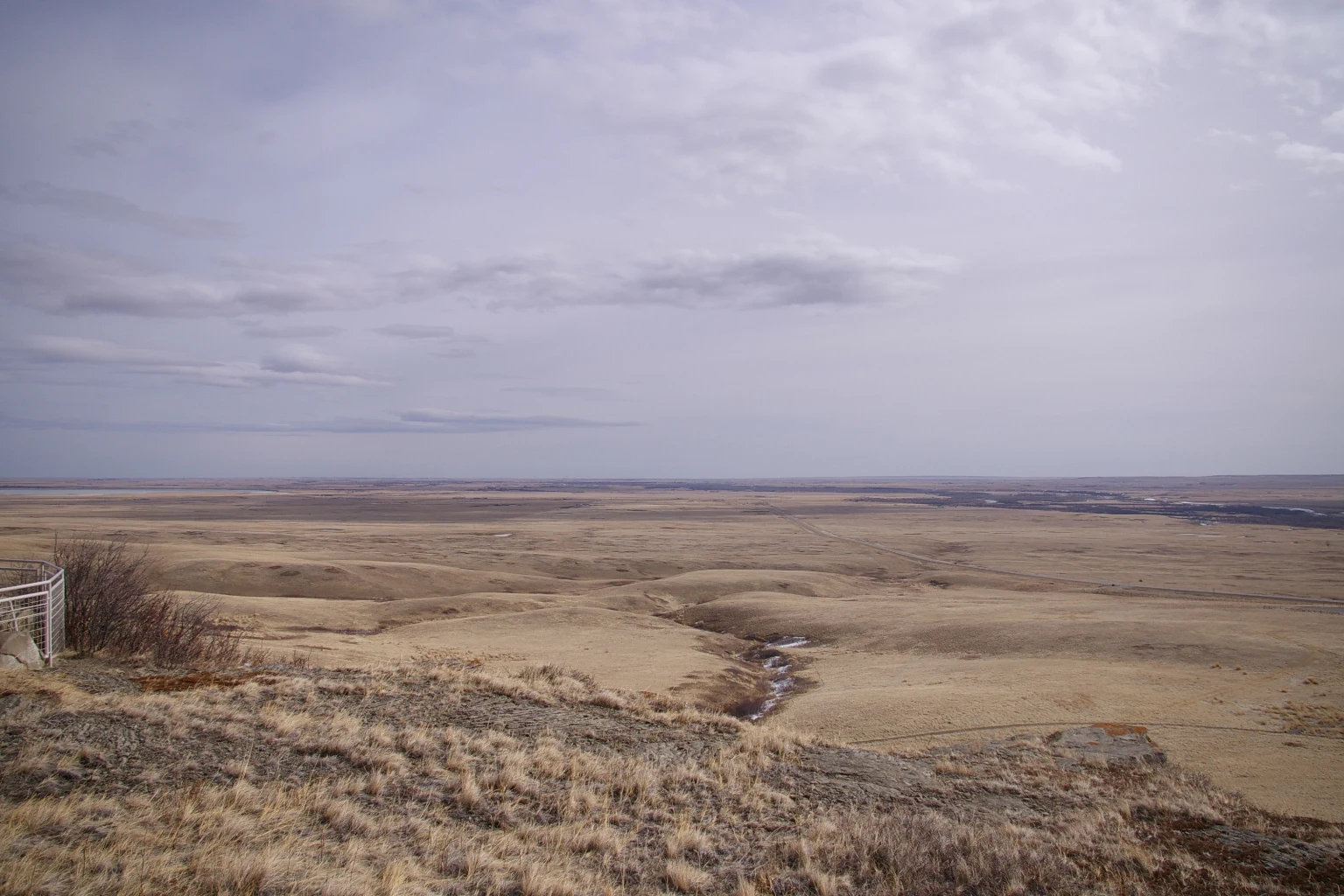
The drop-off point is the most immediate image, but it is only one part of a larger system: gathering basins, corridors marked in the terrain, the cliff edge and processing areas below. For millennia, Plains groups coordinated bison drives by taking advantage of the landform and their knowledge of the animals.
It is best to start at the interpretive centre and then go up to the upper viewpoint. This order helps you see from above why the land’s undulations and passages mattered as much as the precipice. During your visit, stay on the trails and do not collect stones, bones or other materials: at an archaeological site, even seemingly modest objects are part of the evidence.
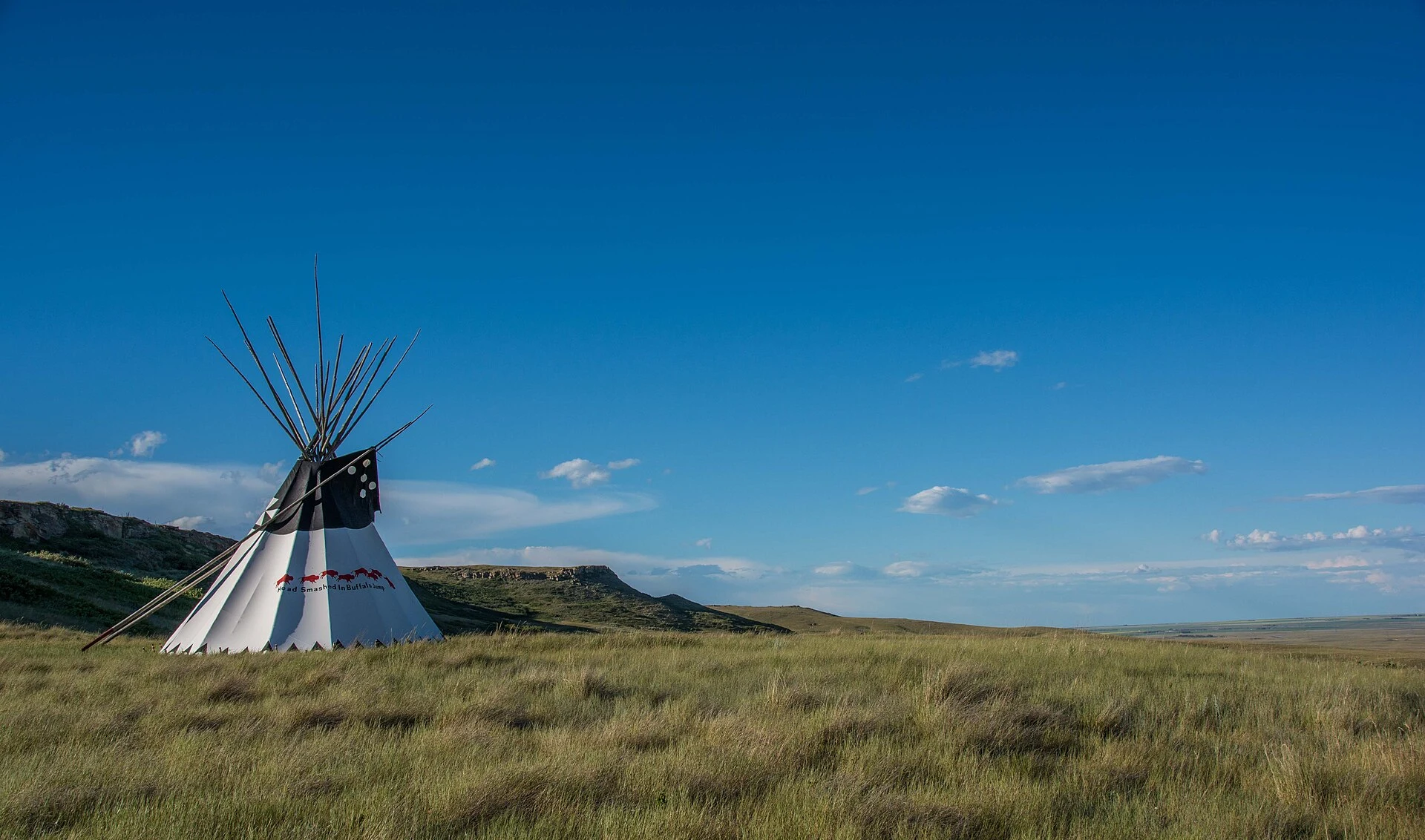
The visit should include Blackfoot voices, not just archaeology
The site’s value does not lie only in the age of its archaeological deposits. Head-Smashed-In is associated with the history and knowledge of the Blackfoot or Niitsitapi peoples, for whom bison provided food, shelter, clothing, tools and forms of social organisation. The site’s interpretation brings that cultural continuity together with archaeological research.
Look for content explaining how a communal hunt was organised, rather than focusing only on the material result. If you are travelling in a group, check in advance whether a Blackfoot-led tour is available; this option exists for groups, while individual visitors can explore independently. The distinction matters: a guide adds context, but is not required to understand the centre.
How to fit it into a southern Alberta route
The entrance is beside Secondary Highway 785, around 18 kilometres northwest of Fort Macleod. This is a stop that works better as part of a road trip than as an improvised outing by public transport: arrange your own vehicle, a rental car or an operator with a confirmed itinerary before deciding where to stay.
From Calgary, the drive usually takes about an hour and a half, so a day trip there and back is possible, although tight if you want to explore the galleries at an unhurried pace. Fort Macleod can help break up the journey; it may also make sense to combine the visit with other cultural landscapes in southern Alberta, provided you do not turn the day into a collection of brief stops.
Allow at least two hours for the seven floors of exhibitions, the film screening and the upper viewpoint. Bring water and a simple meal if needed: food services may change, and it is unwise to rely on an on-site café.
Trails, mobility and weather: what to really expect
The centre has lifts, and the upper-trail viewpoint is described as wheelchair accessible. Wheelchairs and strollers are also available in limited numbers. These are good conditions for an indoor and viewpoint visit, but they do not replace checking in advance if you need specific support, assistance or confirmation about surface conditions.
Outside the building there are two distinct options: a short walk of about 200 metres to the high viewpoint and a lower trail of approximately 1.2 kilometres at the foot of the cliff. The second offers a view of the cliff face from below and remains accessible outside the centre’s opening hours, but it requires self-sufficiency in an exposed setting where wind, cold and storms are possible. It is not an especially demanding hike, but check the weather and your footwear before setting out.
The site is open year-round, with seasonal hours and possible temporary closures during severe weather. In winter, fewer opening days can affect an itinerary completely; check opening times, trail access and closure notices just before driving there.
A responsible way to end the visit
The site’s name may attract attention, but the real lesson lies in understanding a complex system of subsistence, territorial knowledge and cooperation sustained over thousands of years. Take a few unhurried minutes at the end to look across the landform: the drive routes and cliff edge explain more together than separately.
If you encounter cultural activities or performances, treat them as opportunities for learning, not decorative extras. Follow guidance about photography, participation and access areas. The visitor’s best contribution is to listen, remain in designated areas and adjust expectations to a place alive in cultural memory, not a reconstruction.
References to check before travelling
- Official Head-Smashed-In Buffalo Jump site: seasonal hours, fees, service status, trails, accessibility and group visits.
- Parks Canada: heritage recognition, the Blackfoot designation and the archaeological elements that make up the site.
- UNESCO World Heritage Centre: the scope of the inscribed landscape, its history of use and protection principles.
Operational information reviewed on 13 September 2026. Always confirm current conditions directly with the site before setting out.
References consulted during editorial review. Times, requirements and advisories may change: always confirm with the official source.
- https://whc.unesco.org/en/list/158/whc.unesco.org
- https://whc.unesco.org/en/list/158/documents/whc.unesco.org
- https://whc.unesco.org/document/216243whc.unesco.org
- https://whc.unesco.org/en/decisions/7971whc.unesco.org
- https://whc.unesco.org/en/listwhc.unesco.org
- https://whc.unesco.org/en/tentativelists/6342whc.unesco.org
- https://whc.unesco.org/en/review/50whc.unesco.org
- https://whc.unesco.org/archive/2000/whc-00-conf204-21e.pdfwhc.unesco.org
- CanadáWikidata · CC0 1.0 · Wikidata · Q16
- CanadaWikidata · CC0 1.0 · Wikidata · Q14624136
- CanadáWikidata · CC0 1.0 · Wikidata · Q2569593
- CanadaWikidata · CC0 1.0 · Wikidata · Q13265725
- CañadaWikidata · CC0 1.0 · Wikidata · Q41660719
- CanadaWorld Countries — mledoze · ODbL 1.0 · World countries dataset by mledoze and contributors · ODbL 1.0
- CanadaWorld Bank Open Data · CC BY 4.0 · World Bank
- CanadaDBpedia · CC BY-SA 3.0 · DBpedia