South Korea · Heritage and planning
Gyeongju in Two Days: Silla’s Historic Capital
A two-day itinerary combining royal tombs, urban archaeology, a museum and mountain temples without mistaking a historic city for a theme park.
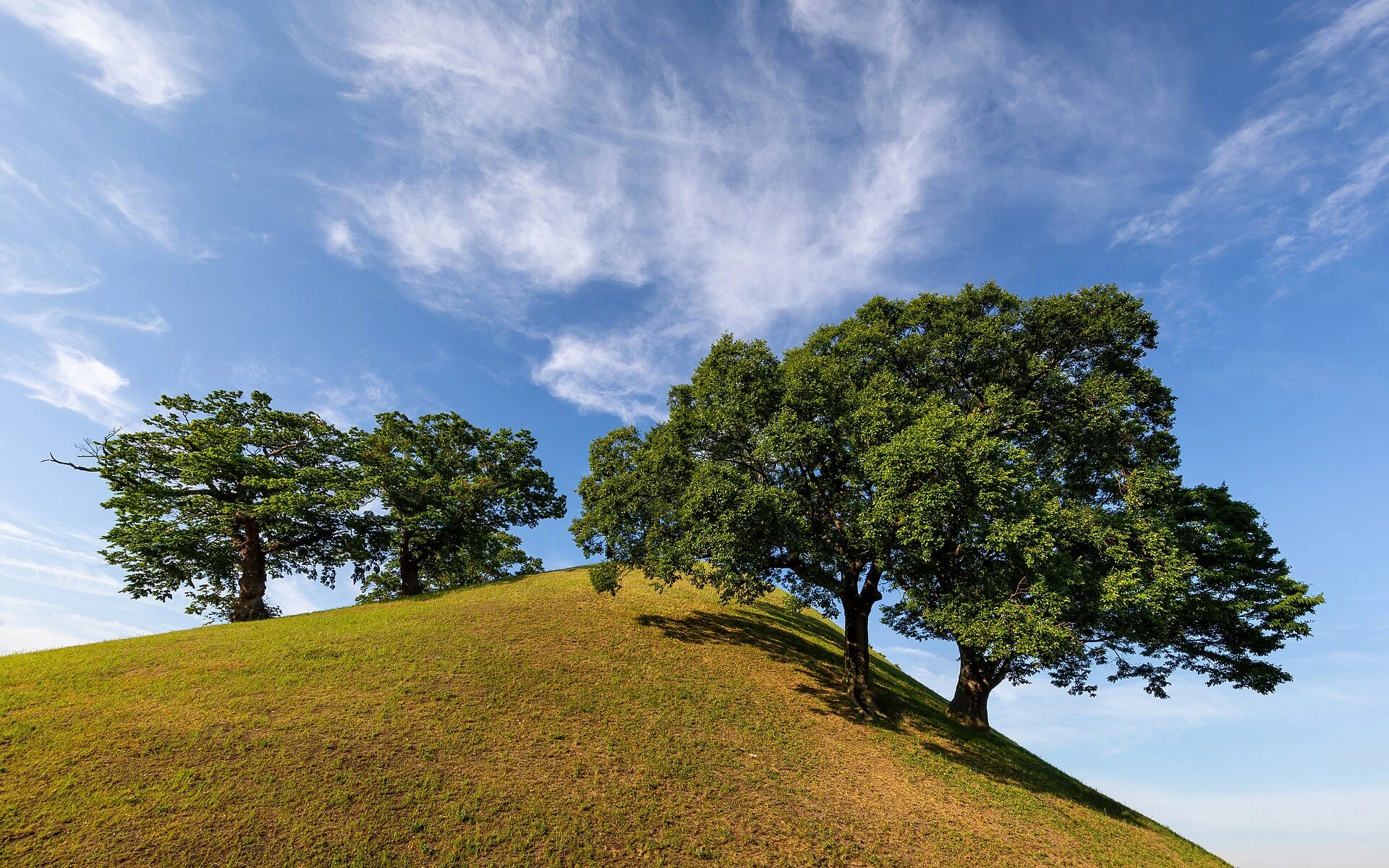
Gyeongju works best when visited as a sprawling archaeological capital, not as a succession of isolated monuments. The former seat of the Silla kingdom left burial mounds, palaces, pagodas, waterworks and sculptures scattered between the city centre and the slopes of Tohamsan. Two days are enough to build a coherent picture if you separate the centre’s funerary and palace landscape from the mountain Buddhist sanctuaries; trying to fit everything into a single route often makes the transfers the main memory of the trip.
Listen to South Korea
A documented soundscape that complements this guide to South Korea. A two-day itinerary combining royal tombs, urban archaeology, a museum and mountain temples without mistaking a historic city for a theme park.
Audio by RTB45 · Openverse · CC BY 4.0 · Duration: 06:13
Day one: objects, tombs and the former royal precinct
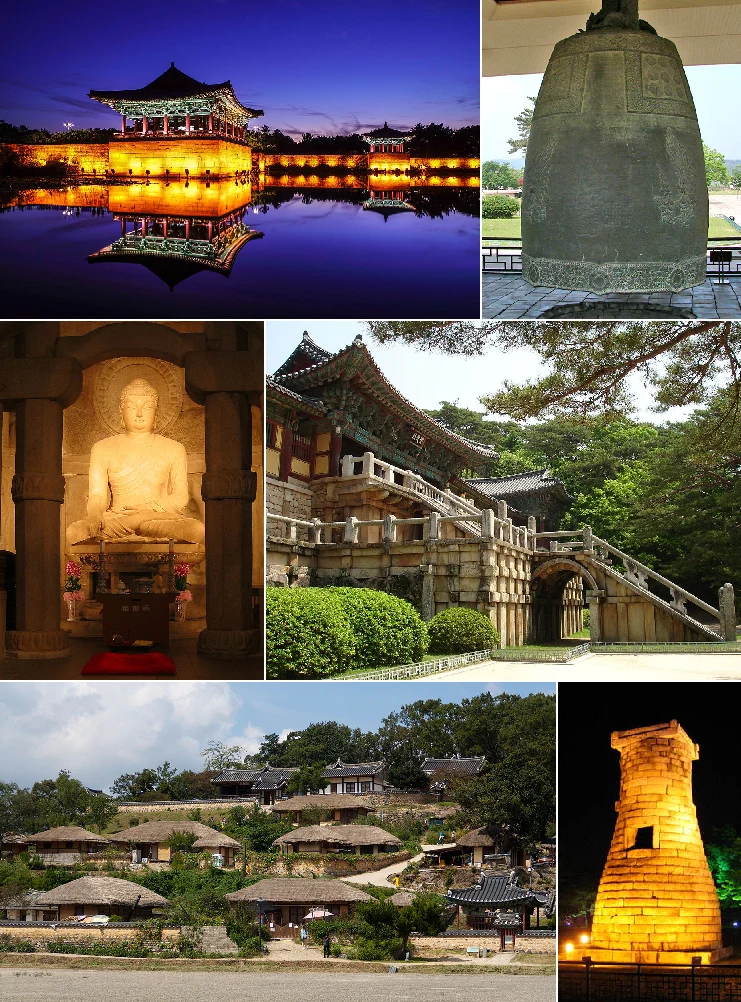
Start at the Gyeongju National Museum. It is not merely a rainy-day option: its Silla galleries, collection from Donggung and Wolji, and outdoor displays help you recognise in the field what a tomb, roof tile, pagoda or palace-pond find actually represents. Galleries may close or be reorganised temporarily, so check the exhibition status before setting out.
From there, spend the rest of the day exploring the walkable core: the Daereungwon area and its burial mounds, Cheomseongdae, the Wolseong area, and Donggung with Wolji Pond. Do not expect an intact ancient city: much of what you visit consists of archaeological traces, funerary mounds and spaces whose scale is easier to understand when you connect them on foot. The burial mounds speak of hierarchy and ritual; Wolseong and Wolji of government, residence and ceremony. Ending by the pond makes sense if you want to observe how water and architecture organised the palace, rather than simply photograph its reflection.
Allow time to walk slowly, and do not treat Hwangnidan-gil as an obligatory part of the heritage itinerary: it can be a convenient place to eat or rest, but it does not replace interpretation of the sites. Opening hours, partial closures, admission and photography rules should be checked on the official sources on the day itself.
Day two: Bulguksa and Seokguram as a single ensemble
Devote the second day to Bulguksa and Seokguram, on the slopes of Tohamsan. The two visits are connected, but they offer different experiences. Bulguksa is understood through movement: stone terraces, stairways, bridges and the Seokgatap and Dabotap pagodas organise a precinct conceived as an earthly image of the Buddhist realm. Seokguram, by contrast, focuses attention on an artificial granite grotto and its monumental Buddha surrounded by reliefs.
The practical difference matters: conservation measures limit the visual access to Seokguram’s interior; do not approach the visit as an experience of freely moving around inside the chamber. Protection from humidity and environmental fluctuations explains the distance between visitors and the sculpture. Viewing it from outside is not an incomplete visit, but part of how the site is cared for today.
Both places require local transport from the centre and planning separate from the urban walking route. Gyeongju’s bus network makes it possible to travel without a car, but frequencies, stops, mountain connections and possible service changes vary. Check the municipal journey planner and allow extra time; if the logistics do not work, prioritise Bulguksa rather than turning Seokguram into a race.
Getting there, getting around and choosing where to stay
High-speed trains arrive at Singyeongju, while the concentration of tombs, the bus terminal and many accommodation options lies elsewhere in the city. Treat the arrival at Singyeongju as a journey in its own right and check the current connection to your base before buying tickets with a tight transfer. Rail and intercity bus options are available from Seoul, Busan and Daegu, but published timetables change and should be confirmed with the relevant operator.
For a two-day visit, staying near the historic centre simplifies the first day and reduces evening travel; staying near Tohamsan makes an early temple visit easier but makes exploring the central sites on foot less convenient. It is a trade-off between travel time and atmosphere, not a question of hotel category.
In the city, organise each day by adjoining areas and use buses for longer jumps. Carry a rechargeable transport card if your itinerary depends on several journeys: the city government states that it can be used on urban buses and to access operational information. Routes, fares, last services and construction works are details to confirm immediately before travelling.
What changes when you see Gyeongju as a conservation landscape
Gyeongju’s scale comes from accumulation: an active Silla capital for almost a millennium left evidence of royal power, court life, defence and Buddhism. Its Historic Areas bring together five sectors — Namsan, Wolseong, the burial mounds, Hwangnyongsa and the fortifications — while Bulguksa and Seokguram form another heritage inscription linked to eighth-century religious architecture. They are not equivalent or interchangeable: one explains the historic city as a whole; the other presents an especially concentrated expression of Buddhist art and thought.
Responsible visiting means accepting marked paths, not climbing structures or touching stone, and not seeking shortcuts across excavated areas or burial slopes. These limits do not diminish the journey: they help ensure that your understanding of the place rests on its evidence rather than intrusive reconstructions. If you have only one day, choose between the archaeological centre with the museum and the Bulguksa–Seokguram ensemble; that choice is more honest than rushing through both.
References to check before travelling
UNESCO — Gyeongju Historic Areas: boundaries of the five sectors, Silla chronology and heritage criteria.
UNESCO — Seokguram Grotto and Bulguksa Temple: the significance of the ensemble, architectural elements and the reasons for conserving the grotto.
Gyeongju National Museum: permanent galleries, closure notices, guided visits and access rules.
Gyeongju City Government: trains, urban buses and operational changes. Check timetables, fares, connections and entry conditions here before travelling.
References consulted during editorial review. Times, requirements and advisories may change: always confirm with the official source.
- https://whc.unesco.org/en/list/736whc.unesco.org
- https://whc.unesco.org/en/statesparties/krwhc.unesco.org
- https://whc.unesco.org/en/decisions/637/whc.unesco.org
- https://whc.unesco.org/en/decisions/2533/whc.unesco.org
- https://whc.unesco.org/archive/2012/whc12-36com-8Ee.pdfwhc.unesco.org
- https://whc.unesco.org/en/search/?category=State+of+Conservation&criteria=koreawhc.unesco.org
- https://whc.unesco.org/en/news/1183whc.unesco.org
- https://whc.unesco.org/archive/WHList03-ENG.pdfwhc.unesco.org
- Corea del SurWikidata · CC0 1.0 · Wikidata · Q884
- South KoreaWorld Countries — mledoze · ODbL 1.0 · World countries dataset by mledoze and contributors · ODbL 1.0
- Korea, Rep.World Bank Open Data · CC BY 4.0 · World Bank
- La incorporación del darwinismo en la cultura cívica de Occidente y Oriente: un estudio comparado de España y Corea del SurCrossref · Metadatos públicos; derechos específicos por campo cuando correspondan · Crossref
- LA EDUCACIÓN EN COREA DEL SURCrossref · Metadatos públicos; derechos específicos por campo cuando correspondan · Crossref
- Los Juegos de la Paz: Prensa internacional y relaciones diplomáticas entre Corea del Norte y Corea del Sur durante los Juegos Olímpicos de Invierno de 2018Crossref · Metadatos públicos; derechos específicos por campo cuando correspondan · Crossref