Barbados · urban culture
Bridgetown and the Garrison: port, power and memory on foot
A leisurely route through Barbados’s only site inscribed on the World Heritage List, from Bridgetown’s waterfront to the Garrison’s military landscape.
Conditions described in the guide: confirm current requirements and access with the official source before travelling.
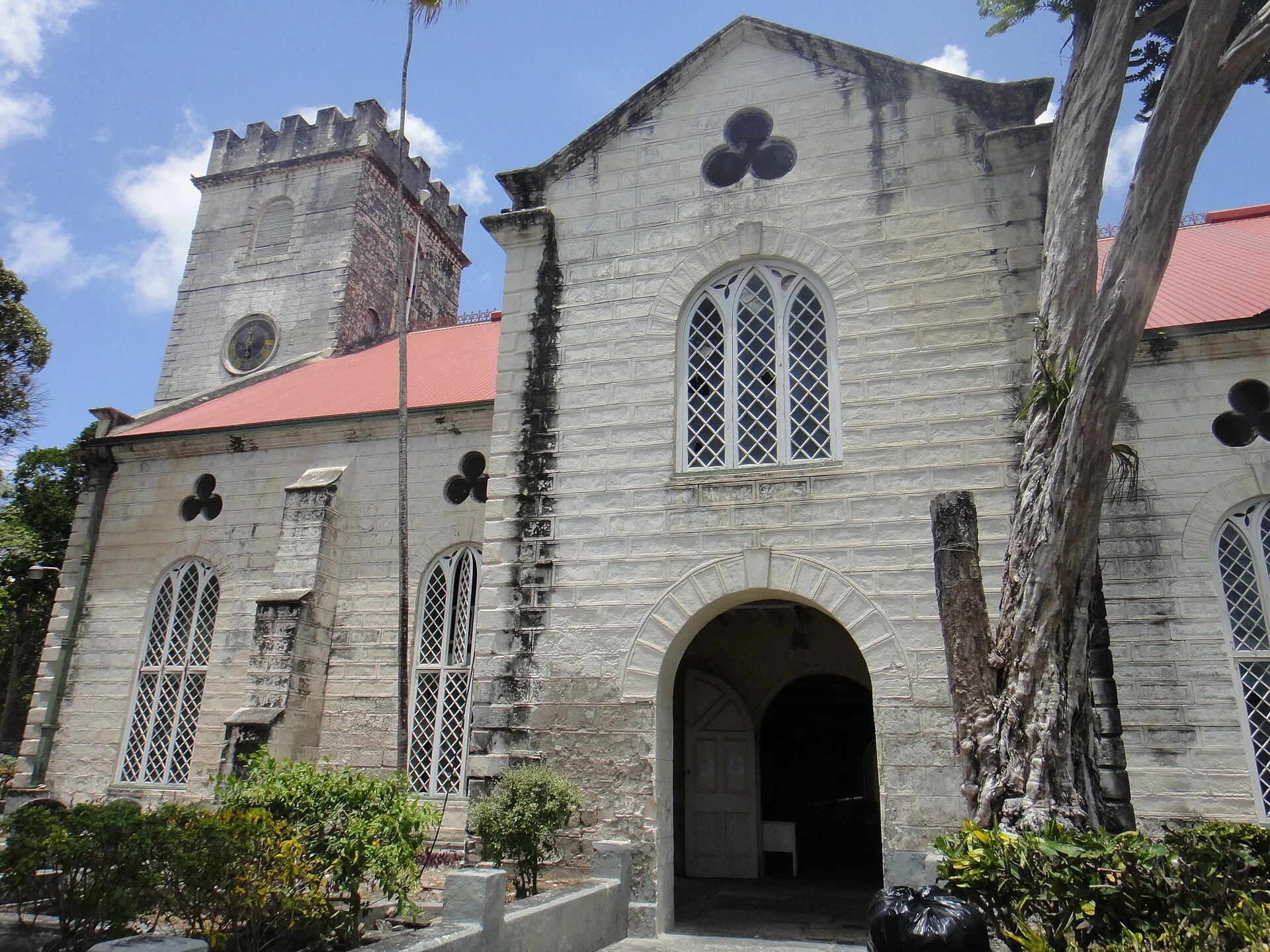
Bridgetown and the Garrison form a single heritage ensemble, but they offer different experiences. The historic centre retains the pulse of an active commercial capital; to the south, the Garrison organises the landscape around former military buildings and the Savannah. Walking through both helps explain how Barbados’s port, sugar economy, trafficking and enslavement, colonial administration and contemporary life became inscribed in its streets.
A route for reading two urban landscapes
The best approach is not to treat the visit as a succession of buildings. Divide the route into two parts connected by the Bay Street corridor, which runs along Carlisle Bay and links the historic centre with the Garrison.
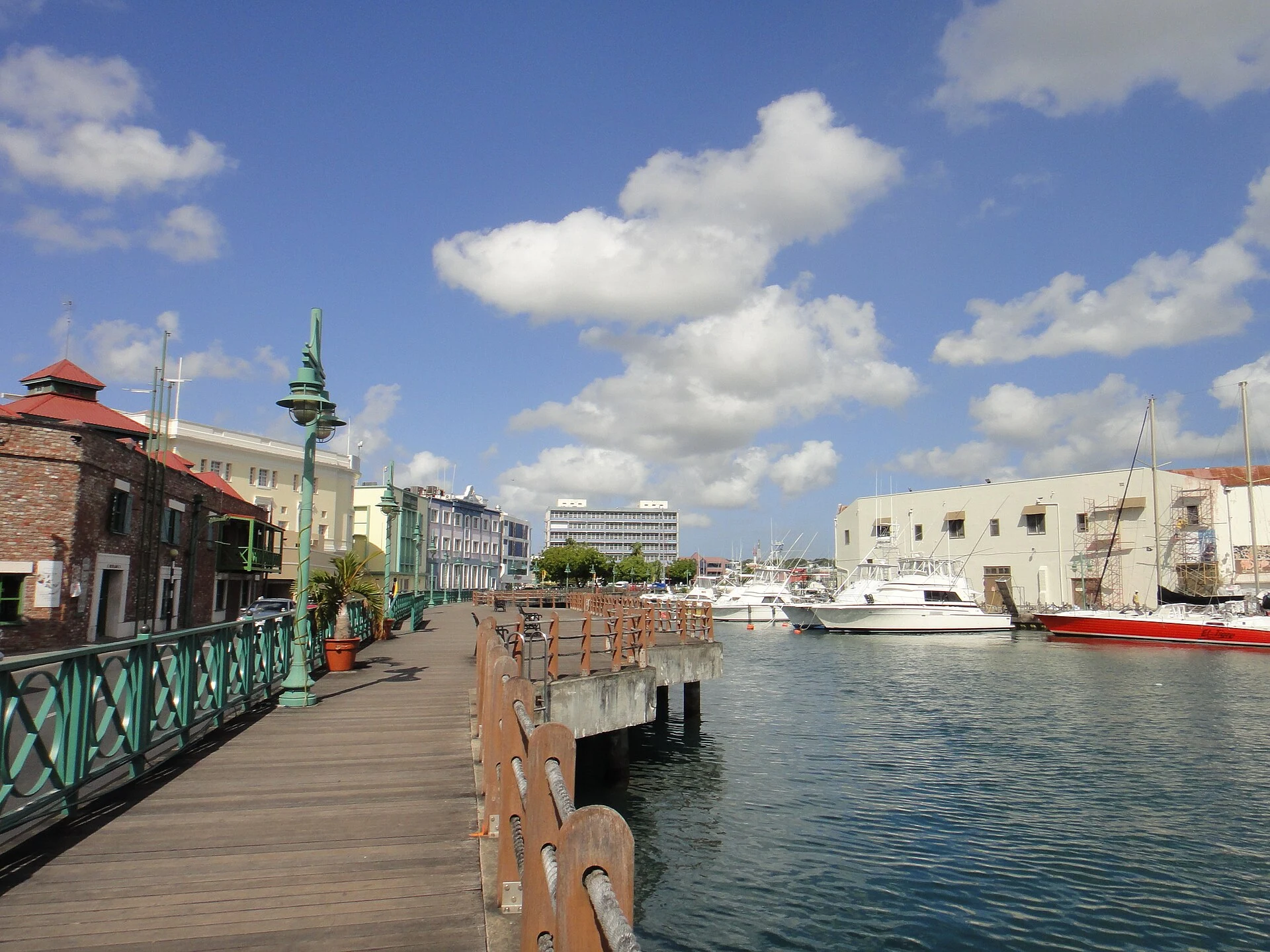
Begin in Bridgetown, around the Careenage, Independence Square and the Parliament Buildings. Here, it is more useful to observe the urban fabric than to look for a uniform aesthetic: the streets retain a winding pattern that is unusual in Caribbean colonial cities laid out on a grid. The port was a centre for exchanging goods and enslaved people; this reality should be part of how the place is read, rather than being reduced to an architectural backdrop.
Then continue towards the Garrison. The distance between the two areas is roughly two kilometres, so allow time for the journey, stops and heat. Do not try to cover every marked point: a day with pauses works better than a race between landmarks.
Bridgetown’s centre: trade, institutions and memory
In the urban core, focus on three questions: what moved through the port, who controlled that trade, and how the city changed after emancipation and independence. The former warehouses, the edge of the Careenage and the civic institutions make it possible to follow this sequence without separating the city from its everyday present.
If you would like to include an interior visit, choose according to your interests. The Exchange Interactive Centre focuses on the histories of trade and banking; Parliament and the National Heroes Gallery add perspectives on government, public figures and nation-building. Nidhe Israel Synagogue contributes another layer to the city’s religious and commercial history.
Do not turn these places into a nostalgic version of the imperial past. Bridgetown was an important component of the British Atlantic economy and the system of enslavement. The visit gains depth when the architecture, the forced labour that sustained that economy and the Barbadian ways of life that developed within and after that order are considered together.
The Garrison: from military infrastructure to museum and public space
The Garrison was designed to protect British military and commercial interests in the Caribbean. Its scale is best understood from Garrison Savannah, where the buildings, roads and open spaces reveal a logic different from that of the port centre: military organisation, surveillance and administration take precedence here.
The Barbados Museum & Historical Society, housed in a former military prison, is an especially useful stop if you do not want to rely solely on the exterior. Its collections bring social, natural and military history together in one place. You can also visit George Washington House, an eighteenth-century residence associated with George Washington’s stay in Barbados in 1751 and later incorporated into the Garrison setting.
Choose one of these two visits if you have limited time. The museum offers a broader perspective on Barbados; the house provides a domestic scale and a specific entry point into the Atlantic connections of the eighteenth century. Visiting both makes sense if you set aside a full day and want to explore in greater depth.
Independently or with a guide?
The outdoor route is well suited to exploring independently, using the signage and a route prepared in advance. This is the right option if you want to linger at the port, observe the capital’s activity and decide along the way which interiors to visit.
A guided visit is preferable if you are looking for concentrated historical context. The Barbados Museum & Historical Society organises walking tours of Bridgetown and the Garrison, as well as a version combining the Garrison and the museum. Advance booking is required for these walks; confirm availability, language, duration, price and meeting point directly with the institution.
A balanced formula is to explore Bridgetown independently in the morning and book a guided or museum visit for the Garrison. This prevents the interpretation from being limited to façades and plaques, while leaving time to understand that both areas belong to a living city, not a closed site.
Responsible planning and details worth checking
This is an urban destination: respect the everyday uses of streets, offices, shops, religious spaces and buildings with institutional functions. Do not assume that every heritage property admits visitors, or that ceremonies, religious services or military areas are open to the public.
Before setting out, check opening hours, admission fees, holiday closures, access conditions and any changes to guided routes. Also confirm whether Parliament is sitting before planning an interior visit. If you make the entire journey on foot, carry water and use interior visits as breaks rather than adding unnecessary kilometres in the sun.
Official references to check before your visit
- UNESCO, the Historic Bridgetown and its Garrison entry: context for the inscribed site, the relationship between the port and the Garrison, and its Atlantic history.
- Barbados Museum & Historical Society: museum opening hours and booking conditions for guided walking tours.
- Visit Barbados, the heritage-site guide: points of interest, signage, self-guided routes and context for Bridgetown.
- George Washington House: visitor information and historical content relating to the residence and its surroundings.
References consulted during editorial review. Times, requirements and advisories may change: always confirm with the official source.
- https://whc.unesco.org/en/list/1376whc.unesco.org
- https://whc.unesco.org/en/list/1376/documents/whc.unesco.org
- https://whc.unesco.org/en/statesparties/bbwhc.unesco.org
- https://whc.unesco.org/document/152514whc.unesco.org
- https://whc.unesco.org/en/documents/115723whc.unesco.org
- https://whc.unesco.org/en/listwhc.unesco.org
- https://barbados.org/garrison.htmbarbados.org
- https://whc.unesco.org/en/list/whc.unesco.org
- BarbadosWikidata · CC0 1.0 · Wikidata · Q244
- BarbadosWikidata · CC0 1.0 · Wikidata · Q807306
- BarbadosWikidata · CC0 1.0 · Wikidata · Q4858589
- BarbadosWikidata · CC0 1.0 · Wikidata · Q16950300
- BarbadosWikidata · CC0 1.0 · Wikidata · Q4858586
- BarbadosWikidata · CC0 1.0 · Wikidata · Q10426260
- BarbadosWorld Countries — mledoze · ODbL 1.0 · World countries dataset by mledoze and contributors · ODbL 1.0
- BarbadosWorld Bank Open Data · CC BY 4.0 · World Bank
- BarbadosDBpedia · CC BY-SA 3.0 · DBpedia